Institute of Human Genetics, Saarland University, 66421 Homburg, Germany
Institute of Human Genetics, Saarland University, 66421 Homburg, Germany.
J Immunother Cancer. 2020 Nov;8(2). doi: 10.1136/jitc-2020-001617.
In 2016 the first-in-human phase I study of a miRNA-based cancer therapy with a liposomal mimic of microRNA-34a-5p (miR-34a-5p) was closed due to five immune related serious adverse events (SAEs) resulting in four patient deaths. For future applications of miRNA mimics in cancer therapy it is mandatory to unravel the miRNA effects both on the tumor tissue and on immune cells. Here, we set out to analyze the impact of miR-34a-5p over-expression on the CXCL10/CXCL11/CXCR3 axis, which is central for the development of an effective cancer control.
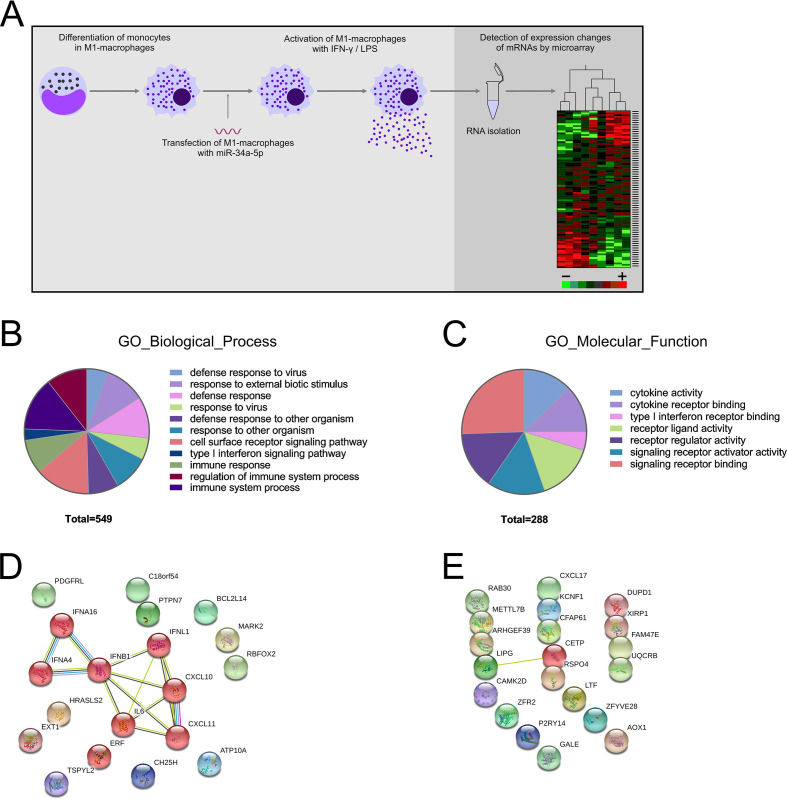
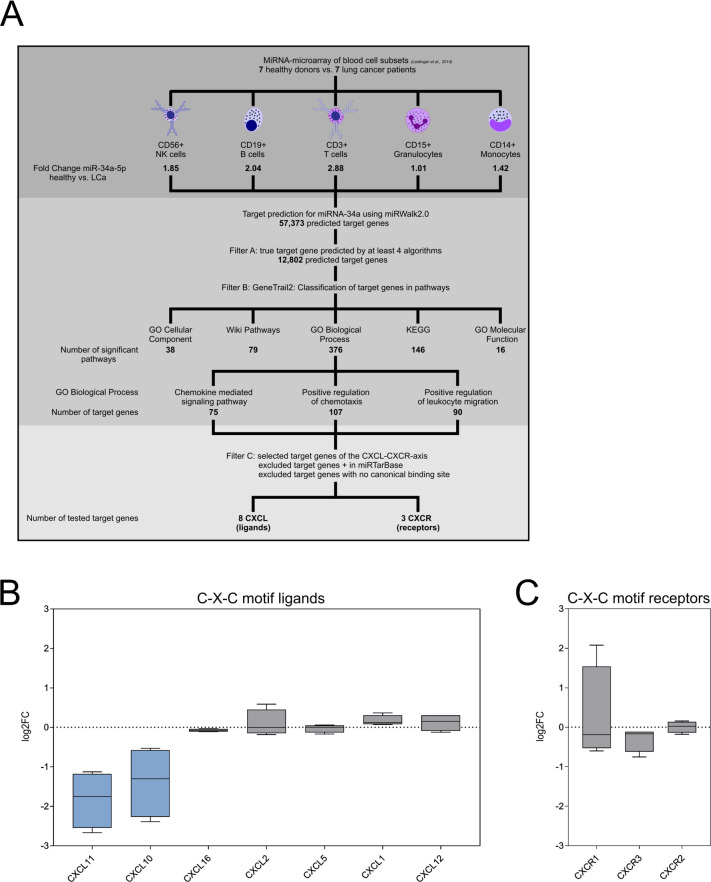
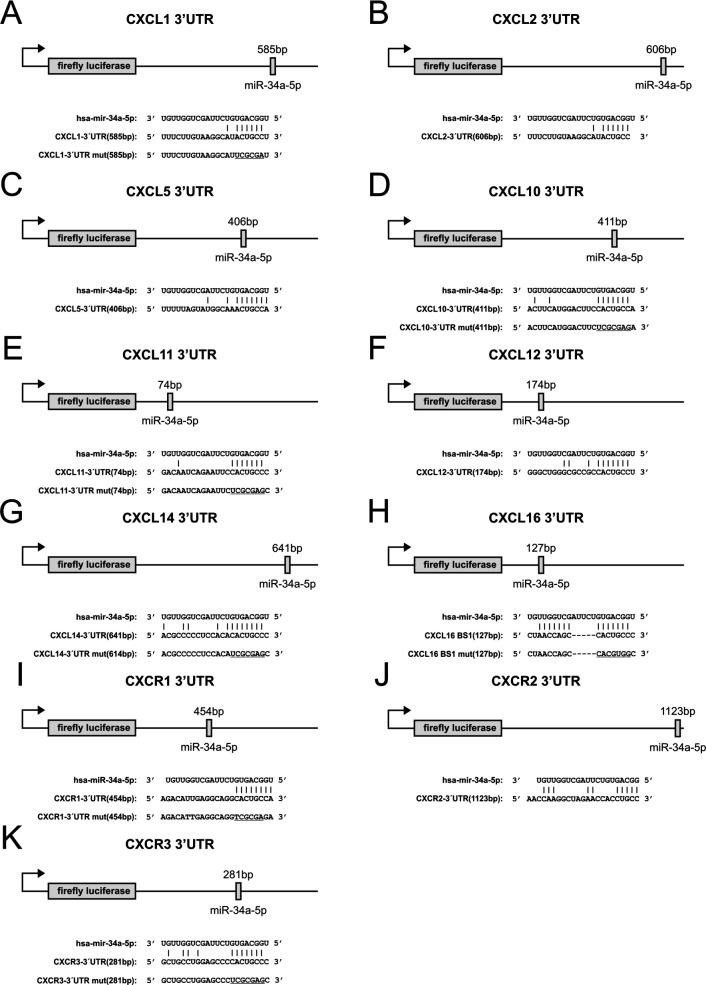
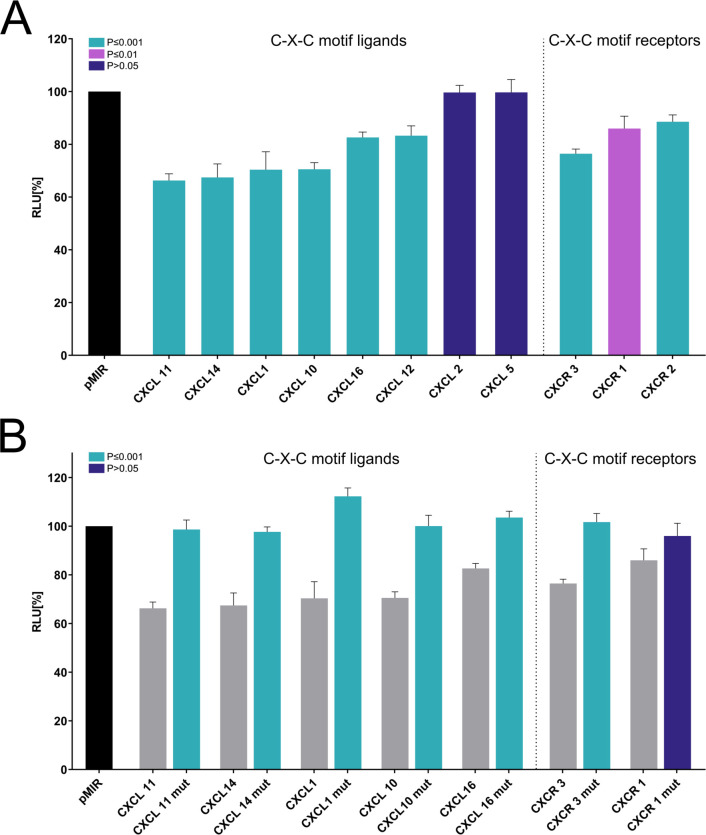
We performed a whole genome expression analysis of miR-34a-5p transfected M1 macrophages followed by an over-representation and a protein-protein network analysis. In-silico miRNA target prediction and dual luciferase assays were used for target identification and verification. Target genes involved in chemokine signaling were functionally analyzed in M1 macrophages, CD4 and CD8 T cells.
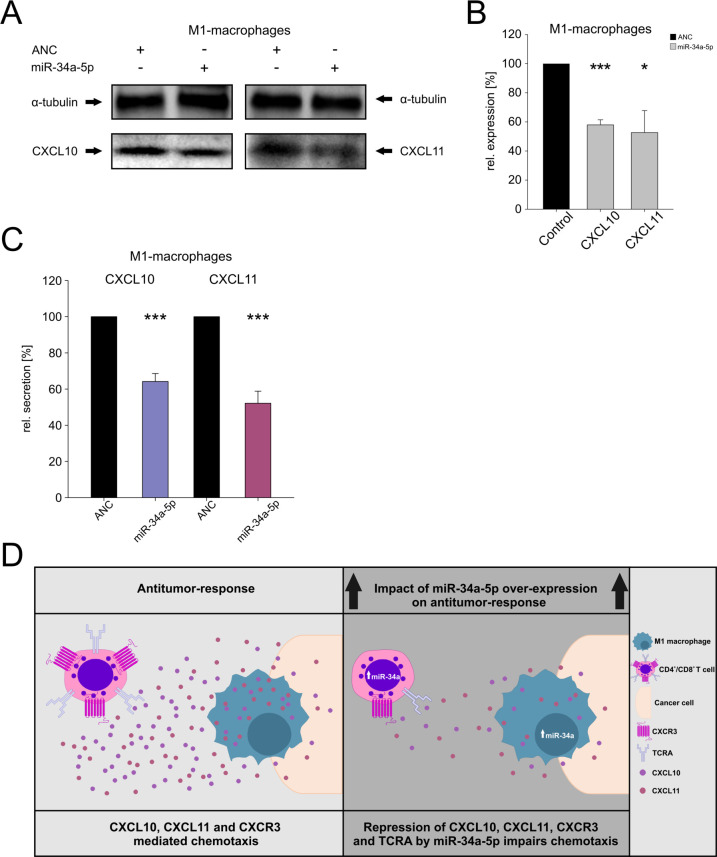
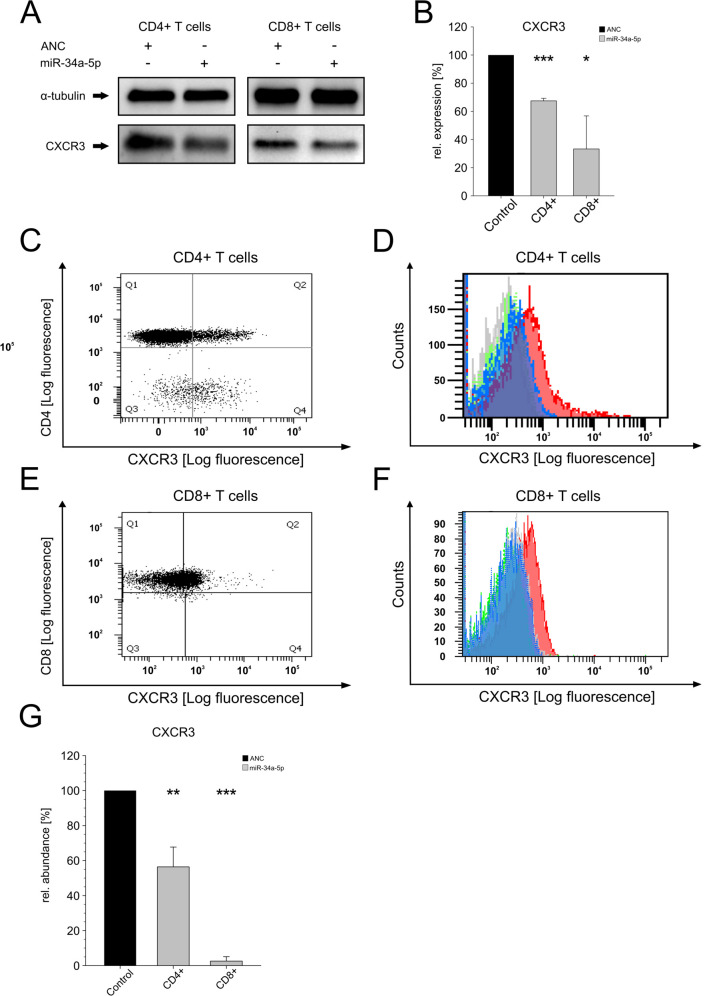
A whole genome expression analysis of M1 macrophages with induced miR-34a-5p over-expression revealed an interaction network of downregulated target mRNAs including and In-silico target prediction in combination with dual luciferase assays identified direct binding of miR-34a-5p to the 3'UTRs of and . Decreased CXCL10 and CXCL11 secretion was shown on the endogenous protein level and in the supernatant of miR-34a-5p transfected and activated M1 macrophages. To complete the analysis of the CXCL10/CXCL11/CXCR3 axis, we activated miR-34a-5p transfected CD4 and CD8 T cells by PMA/Ionomycin and found reduced levels of endogenous CXCR3 and CXCR3 on the cell surface.
MiR-34a-5p mimic administered by intravenous administration will likely not only be up-taken by the tumor cells but also by the immune cells. Our results indicate that miR-34a-5p over-expression leads in M1 macrophages to a reduced secretion of CXCL10 and CXCL11 chemokines and in CD4 and CD8 T cells to a reduced expression of CXCR3. As a result, less immune cells will be attracted to the tumor site. Furthermore, high levels of miR-34a-5p in naive CD4 T cells can in turn hinder Th1 cell polarization through the downregulation of CXCR3 leading to a less pronounced activation of cytotoxic T lymphocytes, natural killer, and natural killer T cells and possibly contributing to lymphocytopenia.
2016 年,首例基于 miRNA 的癌症治疗的人体 I 期临床试验因 5 例与免疫相关的严重不良事件(SAE)而关闭,导致 4 例患者死亡,这些 SAE 事件导致了 microRNA-34a-5p(miR-34a-5p)的脂质体模拟物。为了在癌症治疗中应用 miRNA 模拟物,必须阐明 miRNA 对肿瘤组织和免疫细胞的影响。在这里,我们着手分析 miR-34a-5p 过表达对 CXCL10/CXCL11/CXCR3 轴的影响,该轴对于有效控制癌症的发展至关重要。
我们对转染 miR-34a-5p 的 M1 巨噬细胞进行了全基因组表达分析,然后进行了过度表达和蛋白质-蛋白质网络分析。通过双荧光素酶报告基因实验和靶基因预测,进行了 miRNA 靶基因鉴定和验证。对 M1 巨噬细胞、CD4 和 CD8 T 细胞中涉及趋化因子信号的靶基因进行了功能分析。
M1 巨噬细胞中诱导 miR-34a-5p 过表达的全基因组表达分析显示,下调的靶 mRNA 之间存在相互作用网络,包括 和 。通过计算机预测和双荧光素酶报告基因实验鉴定出 miR-34a-5p 与 和 的 3'UTR 直接结合。在转染和激活的 M1 巨噬细胞的内源性蛋白和上清液中,CXCL10 和 CXCL11 的分泌均减少。为了完成 CXCL10/CXCL11/CXCR3 轴的分析,我们用 PMA/离子霉素激活转染 miR-34a-5p 的 CD4 和 CD8 T 细胞,发现细胞表面的内源性 CXCR3 和 CXCR3 水平降低。
静脉注射 miR-34a-5p 模拟物不仅会被肿瘤细胞摄取,还会被免疫细胞摄取。我们的结果表明,M1 巨噬细胞中 miR-34a-5p 的过表达导致 CXCL10 和 CXCL11 趋化因子的分泌减少,而在 CD4 和 CD8 T 细胞中则导致 CXCR3 的表达减少。因此,较少的免疫细胞将被吸引到肿瘤部位。此外,在幼稚的 CD4 T 细胞中高水平的 miR-34a-5p 可以通过下调 CXCR3 阻碍 Th1 细胞极化,从而导致细胞毒性 T 淋巴细胞、自然杀伤细胞和自然杀伤 T 细胞的激活不明显,可能导致淋巴细胞减少。