Ma Cui, Gu Rui, Wang Xiaoying, He Siyu, Bai June, Zhang Lixin, Zhang Junting, Li Qian, Qu Lihui, Xin Wei, Jiang Yuan, Li Fei, Zhao Xijuan, Zhu Daling
Central Laboratory of Harbin Medical University (Daqing), Daqing 163319, PR China.
College of Medical Laboratory Science and Technology, Harbin Medical University (Daqing), Daqing 163319, PR China.
Mol Ther Nucleic Acids. 2020 Sep 23;22:530-541. doi: 10.1016/j.omtn.2020.09.018. eCollection 2020 Dec 4.
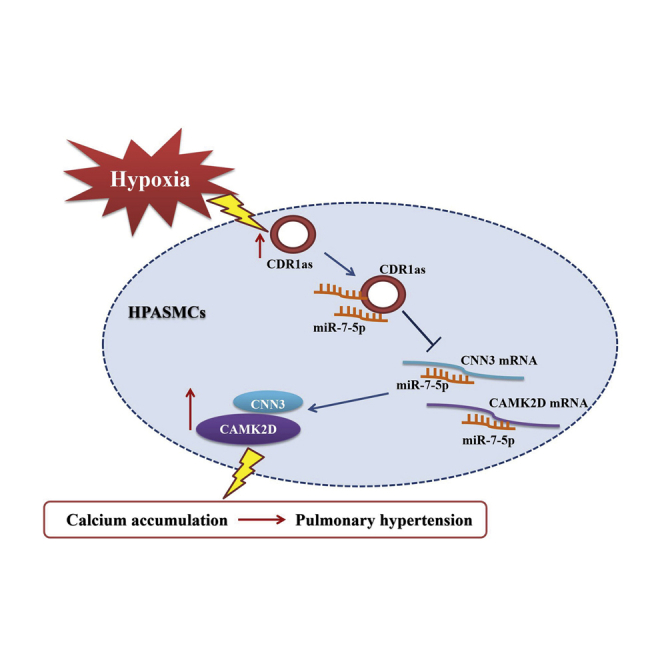
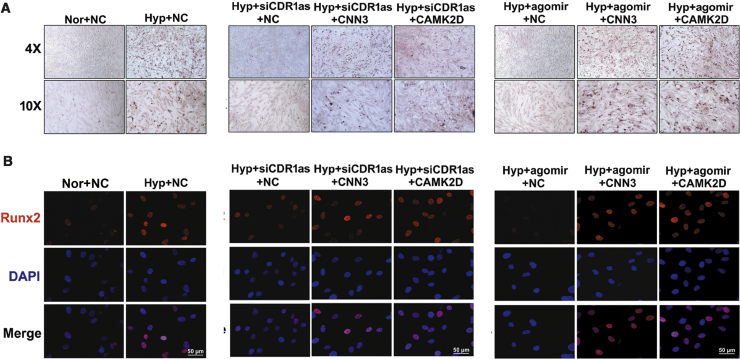
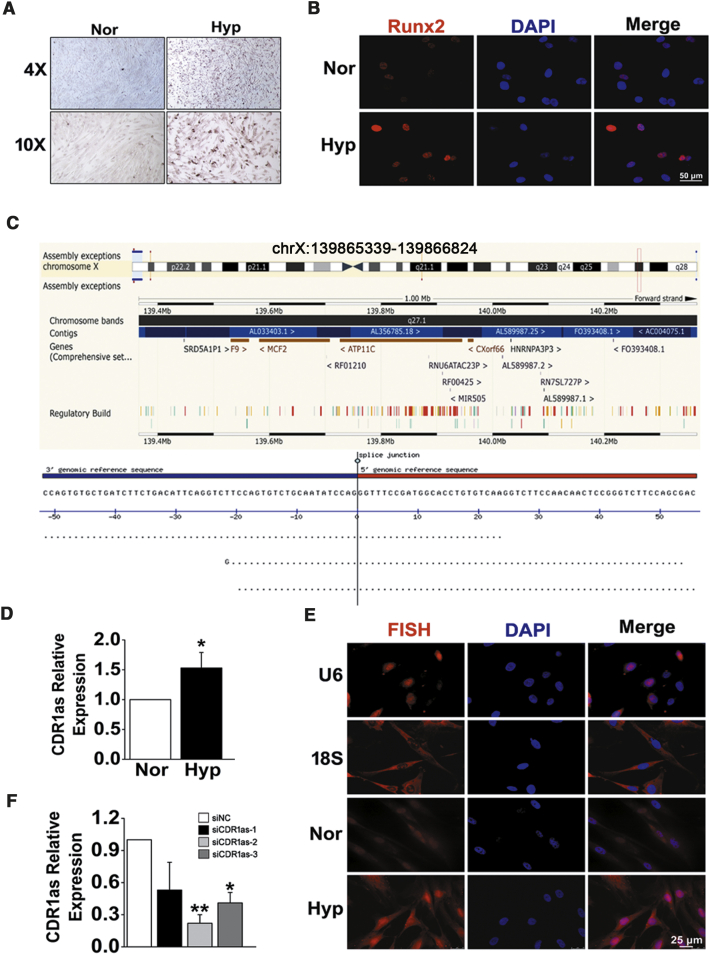
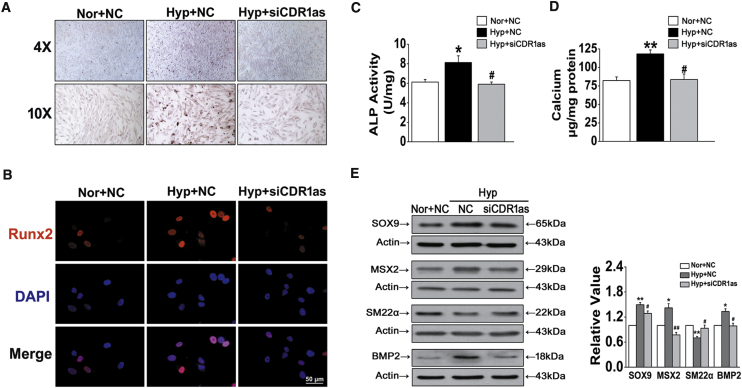
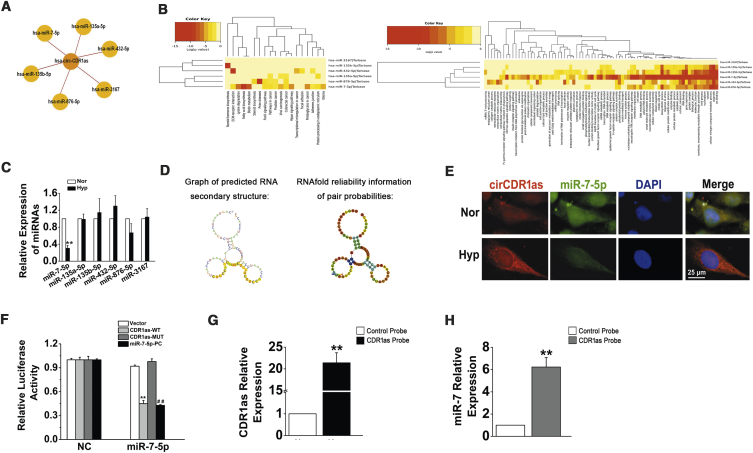
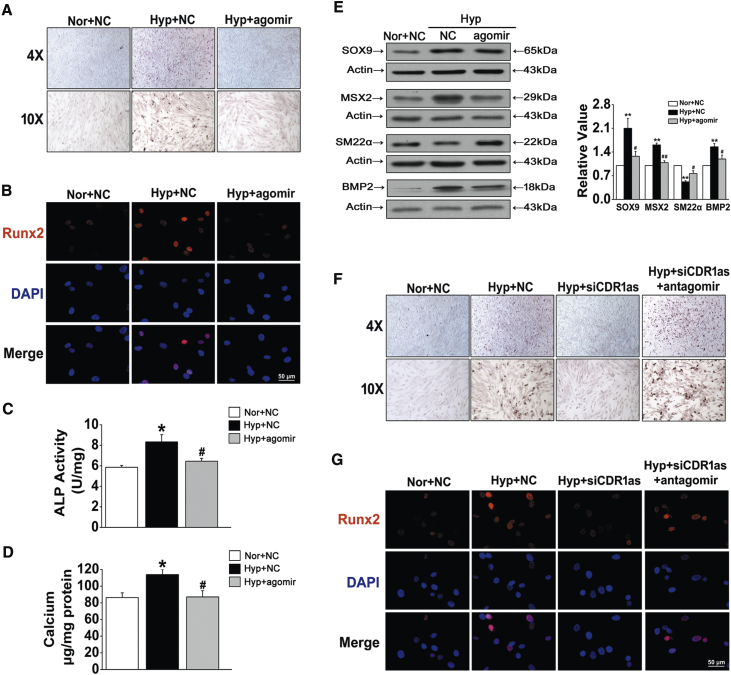
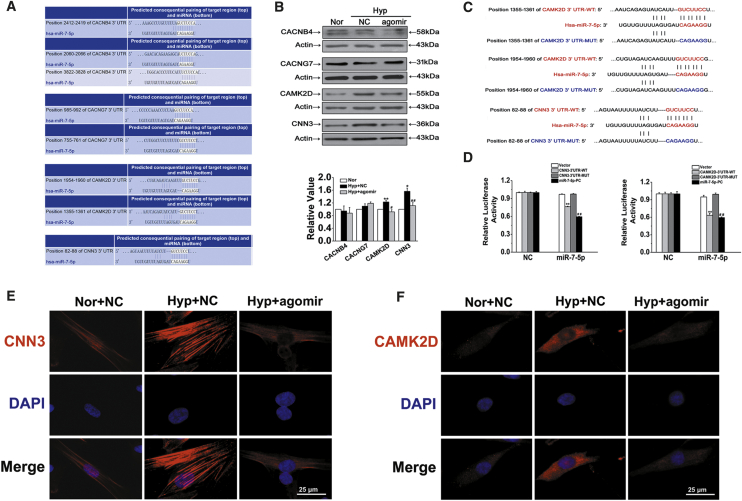
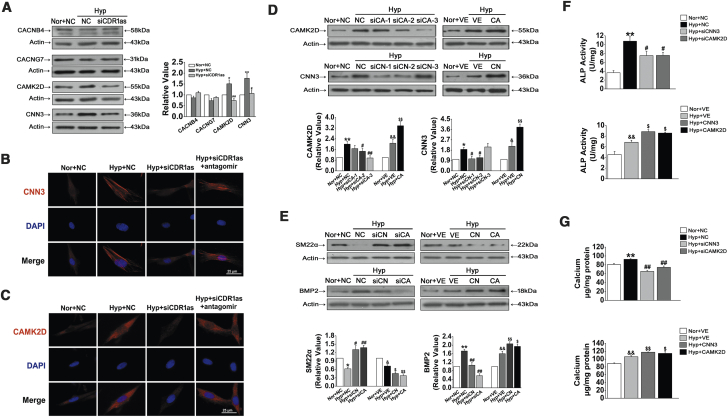
Emerging evidence has suggested that circular RNAs (circRNAs) are involved in multiple physiological processes and participate in a variety of human diseases. However, the underlying biological function of circRNAs in pulmonary hypertension (PH) is still ambiguous. Herein, we investigated the implication and regulatory effect of a typical circRNA, CDR1as, in the pathological process of vascular calcification in PH. Human pulmonary artery smooth muscle cell (HPASMC) calcification was analyzed by western blotting, immunofluorescence, alizarin red S staining, alkaline phosphatase activity analysis, and calcium deposition quantification. CDR1as targets were identified by bioinformatics analysis and validated by dual-luciferase reporter and RNA antisense purification assays. We identified that CDR1as was upregulated in hypoxic conditions and promoted a phenotypic switch of HPASMCs from a contractile to an osteogenic phenotype. Moreover, microRNA (miR)-7-5p was shown to be a target of CDR1as, and calcium/calmodulin-dependent kinase II-delta (CAMK2D) and calponin 3 (CNN3) were suggested to be the putative target genes and regulated by CDR1as/miR-7-5p. The results showed that the CDR1as/miR-7-5p/CNN3 and CAMK2D regulatory axis mediates HPASMC osteoblastic differentiation and calcification induced by hypoxia. This evidence reveals an approach to the treatment of PH.
新出现的证据表明,环状RNA(circRNA)参与多种生理过程,并参与多种人类疾病。然而,circRNA在肺动脉高压(PH)中的潜在生物学功能仍不明确。在此,我们研究了一种典型的circRNA,即CDR1as,在PH血管钙化病理过程中的作用及调控效应。通过蛋白质免疫印迹法、免疫荧光法、茜素红S染色、碱性磷酸酶活性分析和钙沉积定量分析对人肺动脉平滑肌细胞(HPASMC)钙化进行了分析。通过生物信息学分析鉴定CDR1as的靶标,并通过双荧光素酶报告基因和RNA反义纯化试验进行验证。我们发现,CDR1as在低氧条件下上调,并促进HPASMCs从收缩表型向成骨表型的转变。此外,微小RNA(miR)-7-5p被证明是CDR1as的一个靶标,钙/钙调蛋白依赖性激酶II-δ(CAMK2D)和钙调蛋白3(CNN3)被认为是推定的靶基因,并受CDR1as/miR-7-5p调控。结果表明,CDR1as/miR-7-5p/CNN3和CAMK2D调控轴介导低氧诱导的HPASMC成骨分化和钙化。这一证据揭示了一种治疗PH的方法。