Uddin Mohammad Mohi, Akter Amrin, Khaleduzzaman A B M, Sultana Mst Nadira, Hemme Torsten
Integrated Dairy Research Network (IDRN), Department of Animal Nutrition, Bangladesh Agricultural University, Mymensingh, 2202, Bangladesh.
Department of Livestock Services (DLS), Ministry of Fisheries and Livestock, Government of the People's Republic of Bangladesh, Dhaka, Bangladesh.
Trop Anim Health Prod. 2020 Nov 23;53(1):33. doi: 10.1007/s11250-020-02471-8.
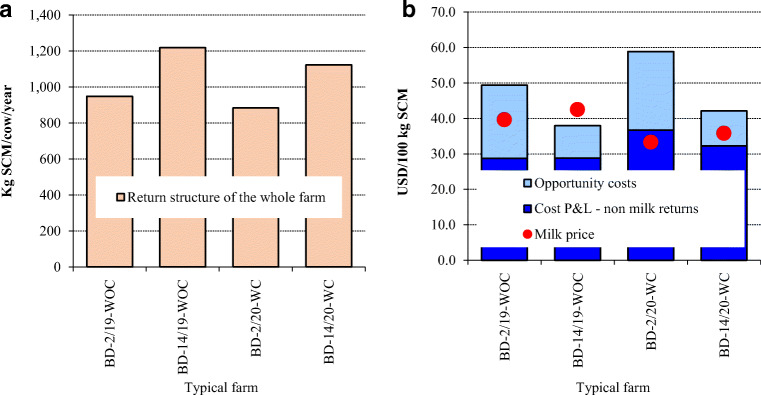
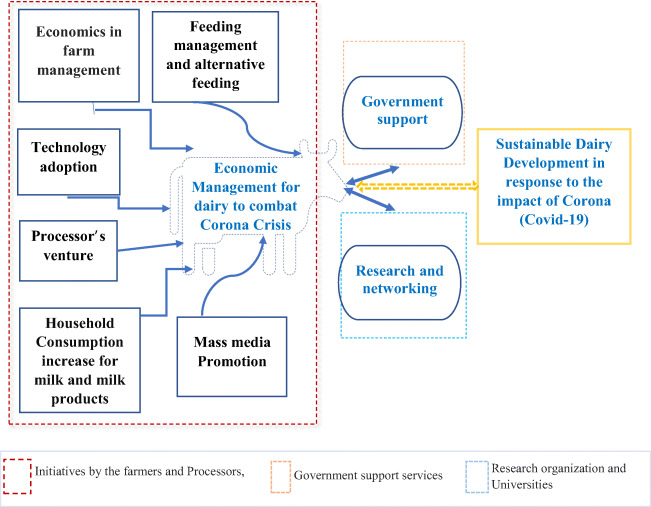
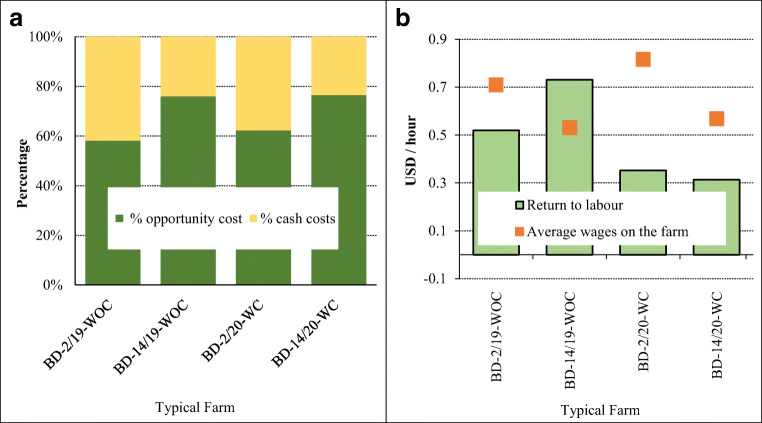
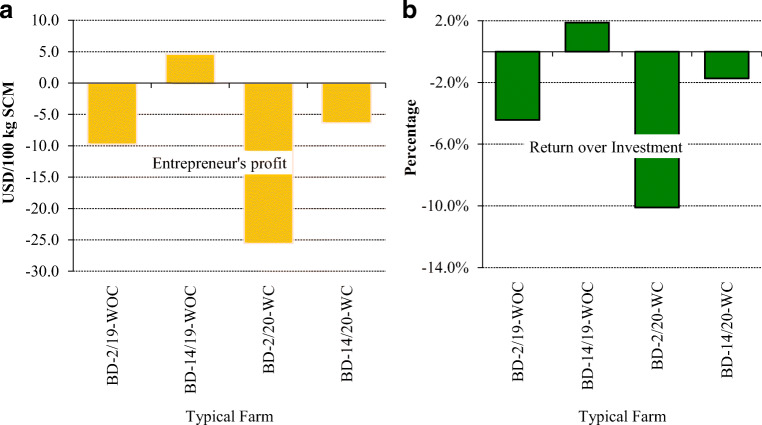
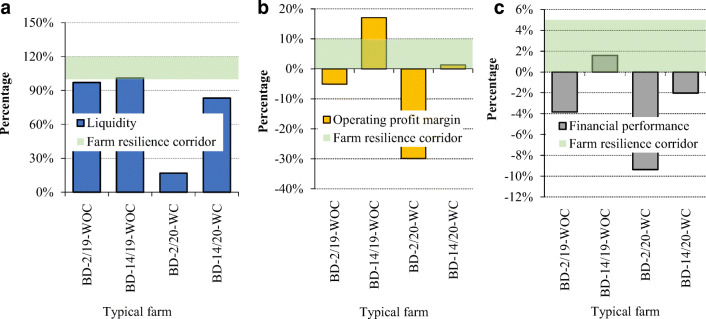
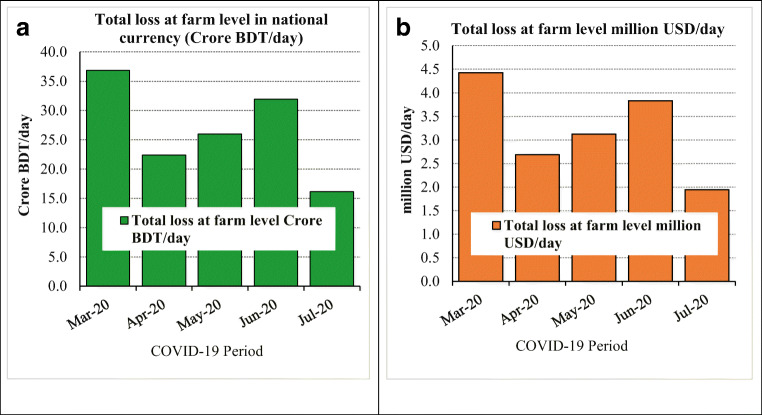
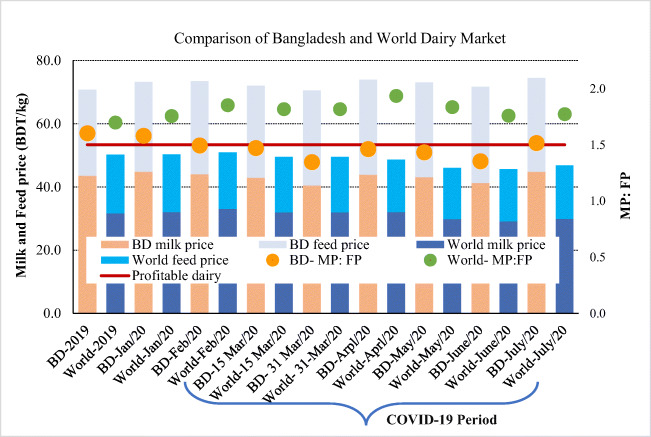
The objective of this paper is to quantify the economic loss of the dairy farms due to the pandemic novel Coronavirus (COVID-19) infection by analyzing the real-time data of two typical farms (BD-2 and BD-14 cow) in Bangladesh and propose a strategic plan of action to make policy decisions in order to support the dairy industry. The International Farm Comparison Network (IFCN) Farm Simulation Approach and Technology Impact Policy Impact Calculations (TIPICAL) model was used considering with Corona (WC) and without Corona (WOC). The Integrated Dairy Research Network (IDRN) database (January 2019 to July 2020) was used for simulation of IFCN two typical farms. The milk price is decreased by 17% and feed price is increased by 3.7% due to COVID-19 in March which was used as the base for farm simulation. This resulted in a decrease in milk yield by 7.9% and 8.9% for small household and family farms, respectively. The cost of milk production increased by 19.10% and 10.9% for household and family farms, respectively. This has an overall negative impact on farm income which accounted for national economic loss from dairy farms in Bangladesh to 4.43 million USD/day (36.84 crore BDT). This loss has been fluctuated from April onward and was higher in June (3.83 million USD/day) due to a combination of COVID-19, flood, and seasonality effect on lowering milk production. At the same time, the farmers' response to the resilience capacity (liquidity, operating profit margin, and financial performance) to combat COVID-19-induced situation has been declined substantially. Based on this, we conclude that the government might take a strategy to support farmers by providing financial support for increasing the operating capital and decreasing the cost of milk production. The outcome of this study is expected to be beneficial for policymakers, farmers, and processors in Bangladesh and similar other countries elsewhere.
本文的目的是通过分析孟加拉国两个典型农场(BD - 2和BD - 14奶牛场)的实时数据,量化新型冠状病毒(COVID - 19)疫情给奶牛场造成的经济损失,并提出一项战略行动计划,以便做出政策决策,支持乳制品行业。采用了国际农场比较网络(IFCN)的农场模拟方法和技术影响政策影响计算(TIPICAL)模型,分别考虑有新冠疫情(WC)和无新冠疫情(WOC)的情况。利用综合乳制品研究网络(IDRN)数据库(2019年1月至2020年7月)对IFCN的两个典型农场进行模拟。由于3月份的COVID - 19疫情,牛奶价格下降了17%,饲料价格上涨了3.7%,以此作为农场模拟的基础。这导致小家庭农场和家庭农场的牛奶产量分别下降了7.9%和8.9%。家庭农场和家庭农场牛奶生产成本分别增加了19.10%和10.9%。这对农场收入产生了总体负面影响,使孟加拉国奶牛场的国民经济损失达到每天443万美元(3.684亿孟加拉塔卡)。从4月起,这一损失出现波动,6月份由于COVID - 19、洪水以及牛奶产量下降的季节性影响,损失更高(每天383万美元)。与此同时,农民应对COVID - 19疫情导致的情况的恢复能力(流动性、营业利润率和财务表现)大幅下降。基于此,我们得出结论,政府可能采取一项战略,通过提供财政支持来增加运营资本并降低牛奶生产成本,从而支持农民。预计本研究结果将对孟加拉国及其他类似国家的政策制定者、农民和加工商有益。