Department of Neurology, Cooper University Hospital and Cooper Medical School of Rowan University, Camden, NJ, USA.
Biomedical Research Center, National Institute On Aging, National Institutes of Health, Baltimore, MD, 21224, USA.
Sci Rep. 2020 Nov 24;10(1):20490. doi: 10.1038/s41598-020-77526-9.
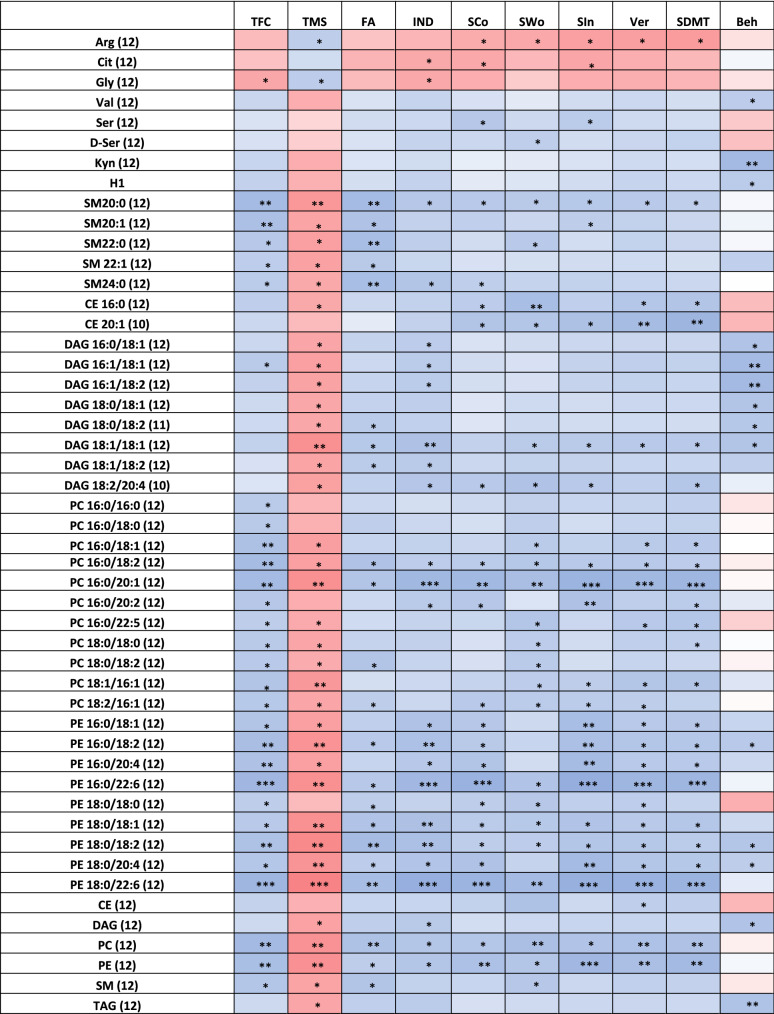
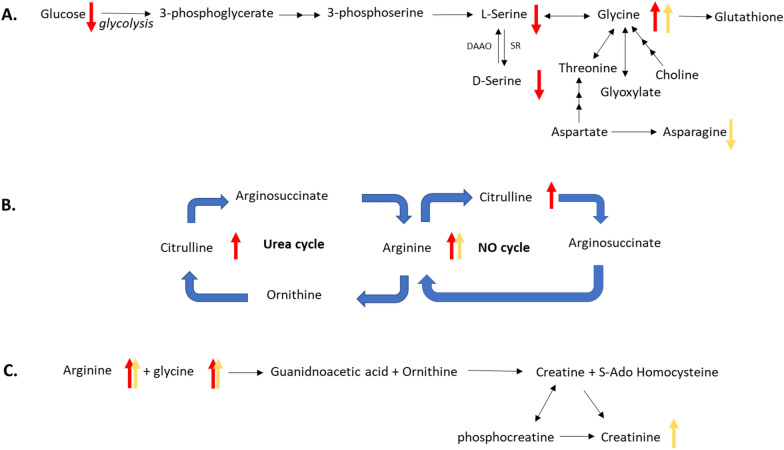
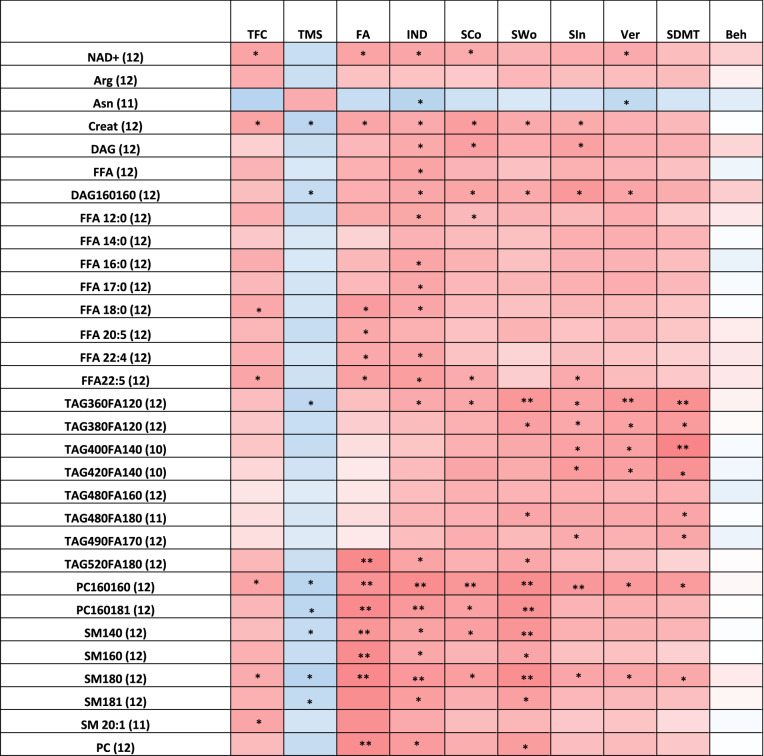
Huntington's Disease (HD) is a progressive, fatal neurodegenerative condition. While generally considered for its devastating neurological phenotype, disturbances in other organ systems and metabolic pathways outside the brain have attracted attention for possible relevance to HD pathology, potential as therapeutic targets, or use as biomarkers of progression. In addition, it is not established how metabolic changes in the HD brain correlate to progression across the full spectrum of early to late-stage disease. In this pilot study, we sought to explore the metabolic profile across manifest HD from early to advanced clinical staging through metabolomic analysis by mass spectrometry in plasma and cerebrospinal fluid (CSF). With disease progression, we observed nominally significant increases in plasma arginine, citrulline, and glycine, with decreases in total and D-serine, cholesterol esters, diacylglycerides, triacylglycerides, phosphatidylcholines, phosphatidylethanolamines, and sphingomyelins. In CSF, worsening disease was associated with nominally significant increases in NAD, arginine, saturated long chain free fatty acids, diacylglycerides, triacylglycerides, and sphingomyelins. Notably, diacylglycerides and triacylglyceride species associated with clinical progression were different between plasma and CSF, suggesting different metabolic preferences for these compartments. Increasing NAD levels strongly correlating with disease progression was an unexpected finding. Our data suggest that defects in the urea cycle, glycine, and serine metabolism may be underrecognized in the progression HD pathology, and merit further study for possible therapeutic relevance.
亨廷顿病(HD)是一种进行性、致命的神经退行性疾病。虽然通常认为它的神经表型具有破坏性,但大脑外其他器官系统和代谢途径的紊乱已经引起了人们的关注,因为它们可能与 HD 病理学有关,可能成为治疗靶点,或者作为疾病进展的生物标志物。此外,HD 大脑中的代谢变化与整个早期到晚期疾病谱的进展之间的相关性尚未确定。在这项初步研究中,我们通过质谱法在血浆和脑脊液(CSF)中进行代谢组学分析,试图探索从早期到晚期临床分期的明显 HD 中的代谢特征。随着疾病的进展,我们观察到血浆中精氨酸、瓜氨酸和甘氨酸的名义上显著增加,而总 D-丝氨酸、胆固醇酯、二酰甘油、三酰甘油、磷脂酰胆碱、磷脂酰乙醇胺和神经鞘磷脂的含量下降。在 CSF 中,病情恶化与 NAD、精氨酸、饱和长链游离脂肪酸、二酰甘油、三酰甘油和神经鞘磷脂的名义上显著增加有关。值得注意的是,与临床进展相关的二酰甘油和三酰甘油种类在血浆和 CSF 之间存在差异,这表明这些隔室对代谢物具有不同的偏好。与疾病进展强烈相关的 NAD 水平升高是一个意外的发现。我们的数据表明,尿素循环、甘氨酸和丝氨酸代谢的缺陷可能在 HD 病理进展中被低估,值得进一步研究其治疗相关性。