Ou Zhen-Yi Andy, Byrne Lauren M, Rodrigues Filipe B, Tortelli Rosanna, Johnson Eileanoir B, Foiani Martha S, Arridge Marzena, De Vita Enrico, Scahill Rachael I, Heslegrave Amanda, Zetterberg Henrik, Wild Edward J
UCL Huntington's Disease Centre, UCL Queen Square Institute of Neurology, University College London, London, WC1N 3BG, UK.
UK Dementia Research Institute at UCL, London, WC1E 6BT, UK.
Sci Rep. 2021 Feb 10;11(1):3481. doi: 10.1038/s41598-021-83000-x.
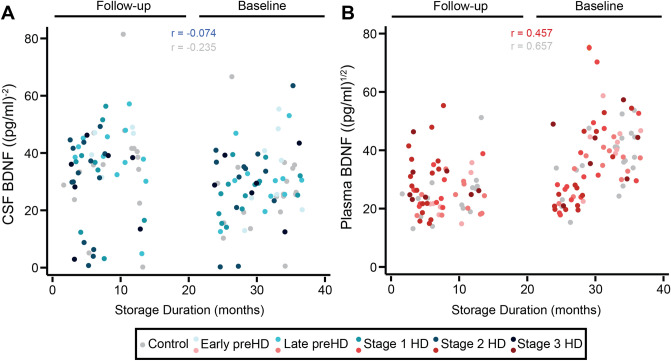
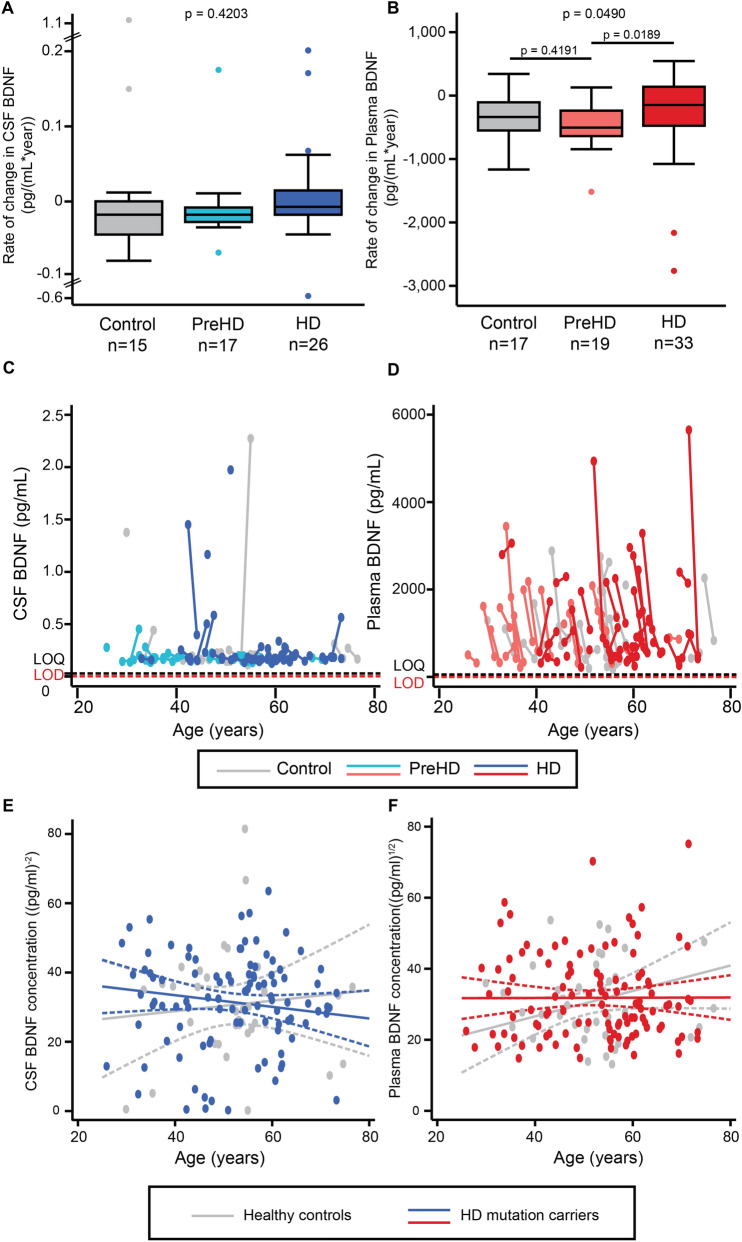
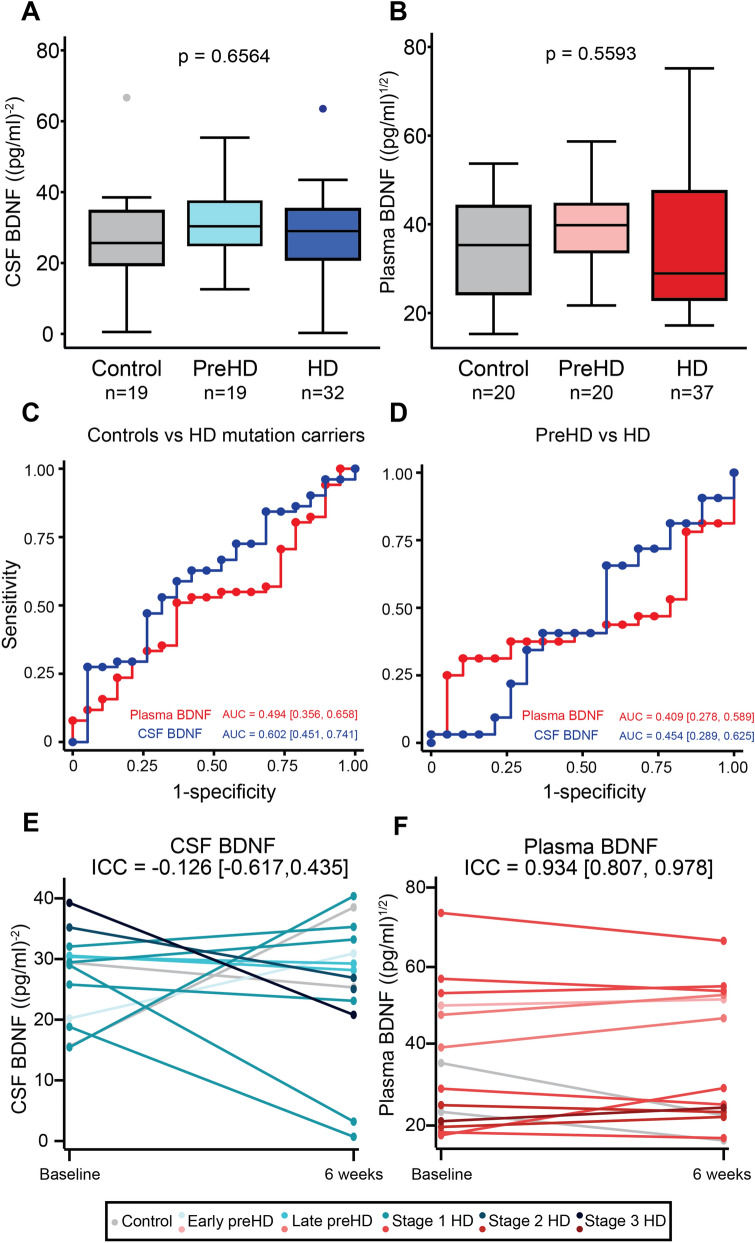
Brain-derived neurotrophic factor (BDNF) is implicated in the survival of striatal neurons. BDNF function is reduced in Huntington's disease (HD), possibly because mutant huntingtin impairs its cortico-striatal transport, contributing to striatal neurodegeneration. The BDNF trophic pathway is a therapeutic target, and blood BDNF has been suggested as a potential biomarker for HD, but BDNF has not been quantified in cerebrospinal fluid (CSF) in HD. We quantified BDNF in CSF and plasma in the HD-CSF cohort (20 pre-manifest and 40 manifest HD mutation carriers and 20 age and gender-matched controls) using conventional ELISAs and an ultra-sensitive immunoassay. BDNF concentration was below the limit of detection of the conventional ELISAs, raising doubt about previous CSF reports in neurodegeneration. Using the ultra-sensitive method, BDNF concentration was quantifiable in all samples but did not differ between controls and HD mutation carriers in CSF or plasma, was not associated with clinical scores or MRI brain volumetric measures, and had poor ability to discriminate controls from HD mutation carriers, and premanifest from manifest HD. We conclude that BDNF in CSF and plasma is unlikely to be a biomarker of HD progression and urge caution in interpreting studies where conventional ELISA was used to quantify CSF BDNF.
脑源性神经营养因子(BDNF)与纹状体神经元的存活有关。在亨廷顿舞蹈病(HD)中,BDNF功能降低,这可能是因为突变的亨廷顿蛋白损害了其皮质-纹状体转运,导致纹状体神经变性。BDNF营养途径是一个治疗靶点,血液中的BDNF已被认为是HD的潜在生物标志物,但尚未对HD患者脑脊液(CSF)中的BDNF进行定量。我们使用传统酶联免疫吸附测定(ELISA)和超灵敏免疫测定法对HD-CSF队列(20名症状前和40名症状期HD突变携带者以及20名年龄和性别匹配的对照者)的脑脊液和血浆中的BDNF进行了定量。BDNF浓度低于传统ELISA的检测限,这让人对先前关于神经变性的脑脊液报告产生怀疑。使用超灵敏方法,所有样本中的BDNF浓度均可定量,但对照组与HD突变携带者的脑脊液或血浆中的BDNF浓度无差异,与临床评分或MRI脑容量测量无关,区分对照组与HD突变携带者以及症状前与症状期HD的能力较差。我们得出结论,脑脊液和血浆中的BDNF不太可能是HD进展的生物标志物,并敦促在解释使用传统ELISA对脑脊液BDNF进行定量的研究时要谨慎。