Department of Radiobiology, Institute of Radiation Medicine, Fudan University, Shanghai 200032, P.R. China.
Mol Med Rep. 2021 Jan;23(1). doi: 10.3892/mmr.2020.11728. Epub 2020 Nov 25.
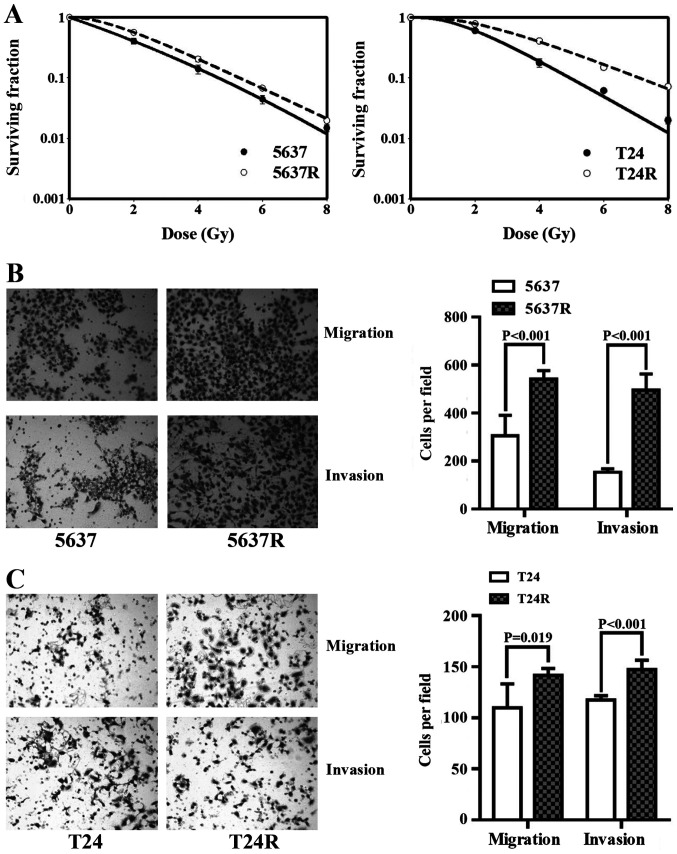
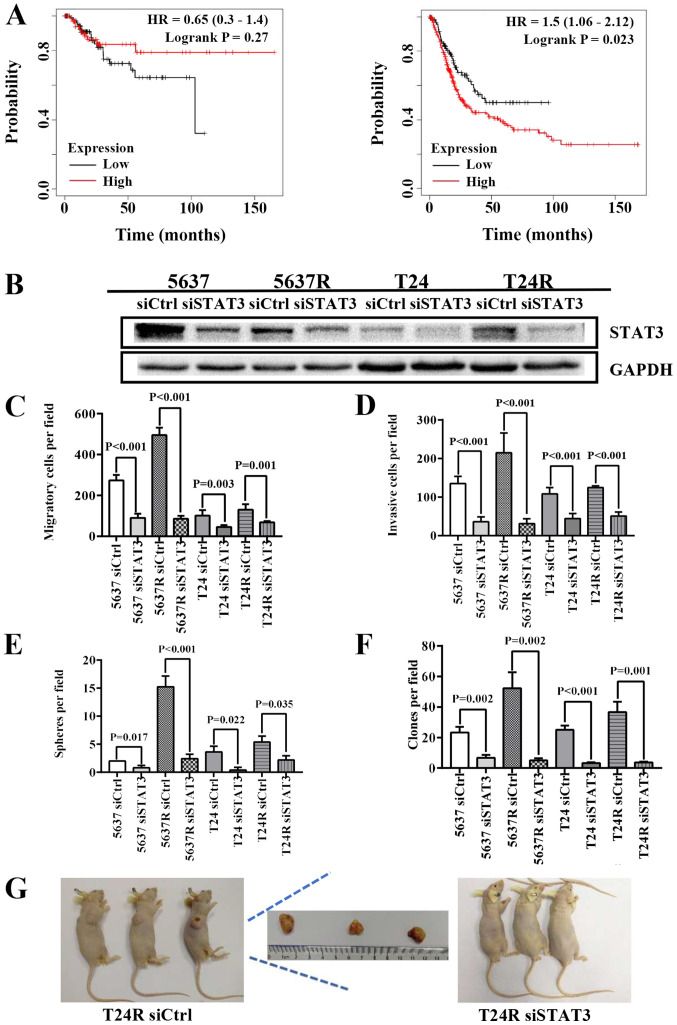
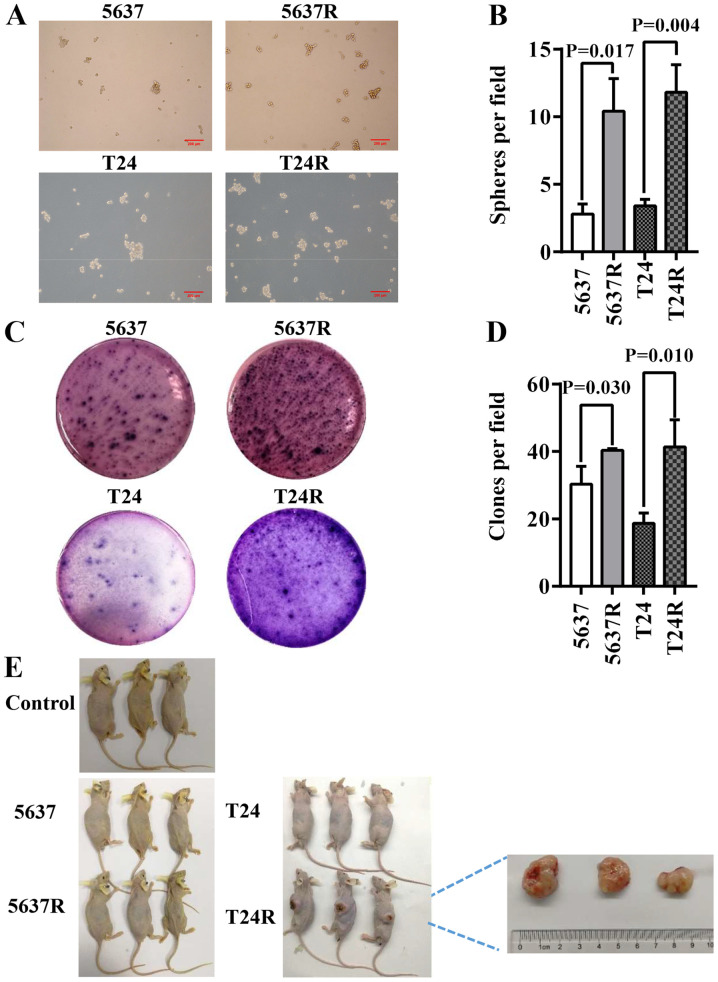
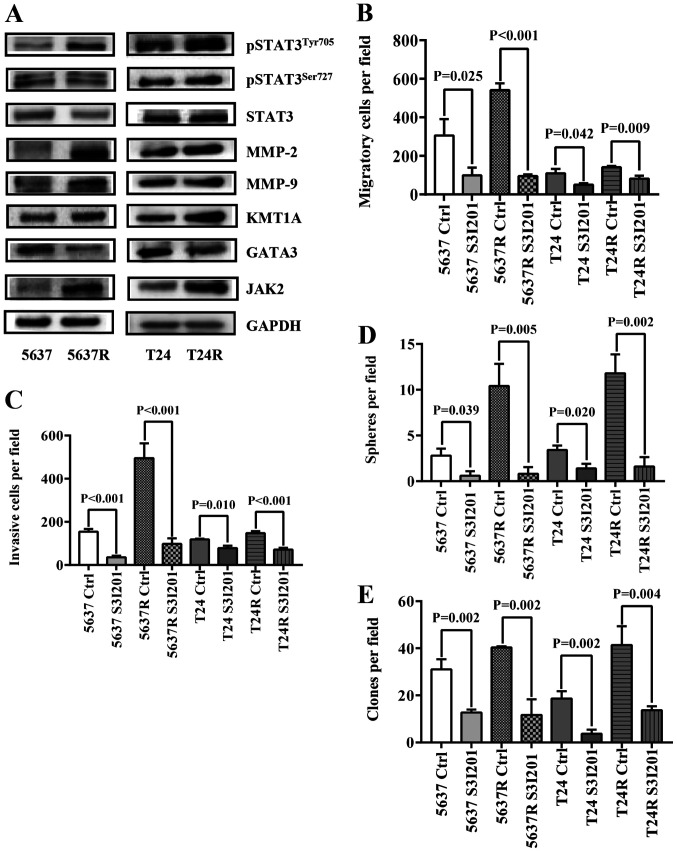
Bladder cancer (BCa) is the most common cancer of the human urinary system, and is associated with poor patient prognosis and a high recurrence rate. Cancer stem cells (CSCs) are the primary cause of tumor recurrence and metastasis, possessing self‑renewal properties and resistance to radiation therapy. Our previous studies indicated that phosphorylated signal transduction and transcription activator 3 (STAT3) may be a potential biomarker to predict radiation tolerance and tumor recurrence in patients with BCa, following conventional radiotherapy. The aim of the present study was to investigate the underlying mechanism of STAT3 in the radio‑resistance of BCa cells. It was found that fractionated irradiation promoted the activation of two STAT3‑associated CSCs signaling pathways in BCa cells, namely suppressor of variegation 3‑9 homolog 1/GATA binding protein 3/STAT3 and Janus kinase 2/STAT3. Surviving cells exhibited elevated migratory and invasive abilities, enhanced CSC‑like characteristics and radio‑resistance. Furthermore, knockdown of STAT3 expression or inhibition of STAT3 activation markedly decreased the self‑renewal ability and tumorigenicity of radiation‑resistant BCa cells. Kaplan‑Meier analysis revealed that decreased STAT3 mRNA levels were associated with increased overall survival times in patients with BCa. Taken together, these data indicated that STAT3 may be an effective therapeutic target for inhibiting the progression, metastasis and recurrence of BCa in patients receiving radiotherapy.
膀胱癌(BCa)是人类泌尿系统最常见的癌症,与患者预后不良和高复发率有关。癌症干细胞(CSCs)是肿瘤复发和转移的主要原因,具有自我更新特性和对放射治疗的抵抗力。我们之前的研究表明,磷酸化信号转导和转录激活因子 3(STAT3)可能是预测接受常规放射治疗的 BCa 患者放射耐受性和肿瘤复发的潜在生物标志物。本研究旨在探讨 STAT3 在 BCa 细胞放射抵抗中的潜在机制。研究发现,分次照射促进了 BCa 细胞中两种与 STAT3 相关的 CSCs 信号通路的激活,即变异抑制 3-9 同源物 1/GATA 结合蛋白 3/STAT3 和 Janus 激酶 2/STAT3。存活细胞表现出更高的迁移和侵袭能力,增强了 CSC 样特征和放射抵抗性。此外,STAT3 表达的敲低或 STAT3 激活的抑制显著降低了放射抗性 BCa 细胞的自我更新能力和致瘤性。Kaplan-Meier 分析显示,STAT3 mRNA 水平降低与 BCa 患者总生存时间延长有关。综上所述,这些数据表明,STAT3 可能是抑制接受放疗的 BCa 患者进展、转移和复发的有效治疗靶点。