Papafilippou Lana, Claxton Andrew, Dark Paul, Kostarelos Kostas, Hadjidemetriou Marilena
Nanomedicine Lab, Faculty of Biology, Medicine and Health, AV Hill Building, The University of Manchester, Manchester, M13 9PT, UK.
Department of Critical Care, Salford Royal Foundation Trust, Stott Lane, Salford, M6 8HD, UK.
Adv Healthc Mater. 2021 Jan;10(1):e2001378. doi: 10.1002/adhm.202001378. Epub 2020 Nov 25.
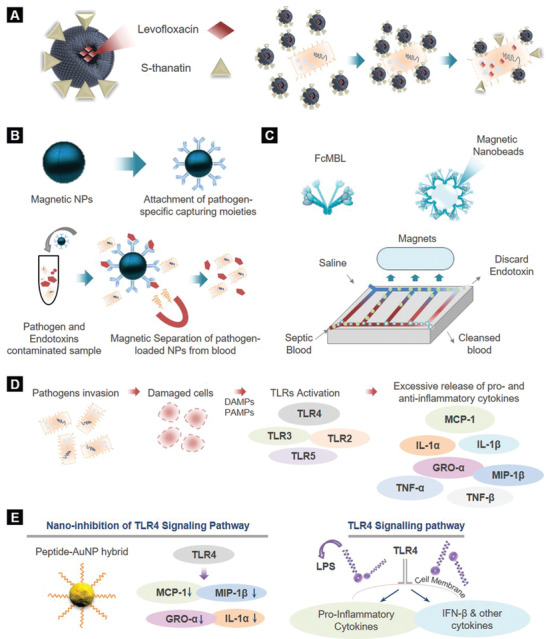
Sepsis is one of the leading causes of death worldwide with high mortality rates and a pathological complexity hindering early and accurate diagnosis. Today, laboratory culture tests are the epitome of pathogen recognition in sepsis. However, their consistency remains an issue of controversy with false negative results often observed. Clinically used blood markers, C reactive protein (CRP) and procalcitonin (PCT) are indicators of an acute-phase response and thus lack specificity, offering limited diagnostic efficacy. In addition to poor diagnosis, inefficient drug delivery and the increasing prevalence of antibiotic-resistant microorganisms constitute significant barriers in antibiotic stewardship and impede effective therapy. These challenges have prompted the exploration for alternative strategies that pursue accurate diagnosis and effective treatment. Nanomaterials are examined for both diagnostic and therapeutic purposes in sepsis. The nanoparticle (NP)-enabled capture of sepsis causative agents and/or sepsis biomarkers in biofluids can revolutionize sepsis diagnosis. From the therapeutic point of view, currently existing nanoscale drug delivery systems have proven to be excellent allies in targeted therapy, while many other nanotherapeutic applications are envisioned. Herein, the most relevant applications of nanomedicine for the diagnosis, prognosis, and treatment of sepsis is reviewed, providing a critical assessment of their potentiality for clinical translation.
脓毒症是全球主要的死亡原因之一,死亡率高,且病理复杂性阻碍了早期准确诊断。如今,实验室培养检测是脓毒症病原体识别的典范。然而,其一致性仍是一个有争议的问题,经常出现假阴性结果。临床使用的血液标志物,如C反应蛋白(CRP)和降钙素原(PCT)是急性期反应的指标,因此缺乏特异性,诊断效能有限。除了诊断不佳外,药物递送效率低下以及抗生素耐药微生物的日益流行,在抗生素管理方面构成了重大障碍,阻碍了有效治疗。这些挑战促使人们探索追求准确诊断和有效治疗的替代策略。纳米材料在脓毒症的诊断和治疗方面都得到了研究。纳米颗粒(NP)在生物流体中捕获脓毒症病原体和/或脓毒症生物标志物可彻底改变脓毒症诊断。从治疗角度来看,目前现有的纳米级药物递送系统已被证明是靶向治疗的优秀盟友,同时还设想了许多其他纳米治疗应用。本文综述了纳米医学在脓毒症诊断、预后和治疗方面的最相关应用,并对其临床转化潜力进行了批判性评估。