Ma Jing-Yi, Shao Shuai, Wang Gang
Department of Dermatology, Xijing Hospital, Fourth Military Medical University, Xi'an, Shaanxi 710032, China.
Chin Med J (Engl). 2020 Nov 20;133(24):2966-2975. doi: 10.1097/CM9.0000000000001240.
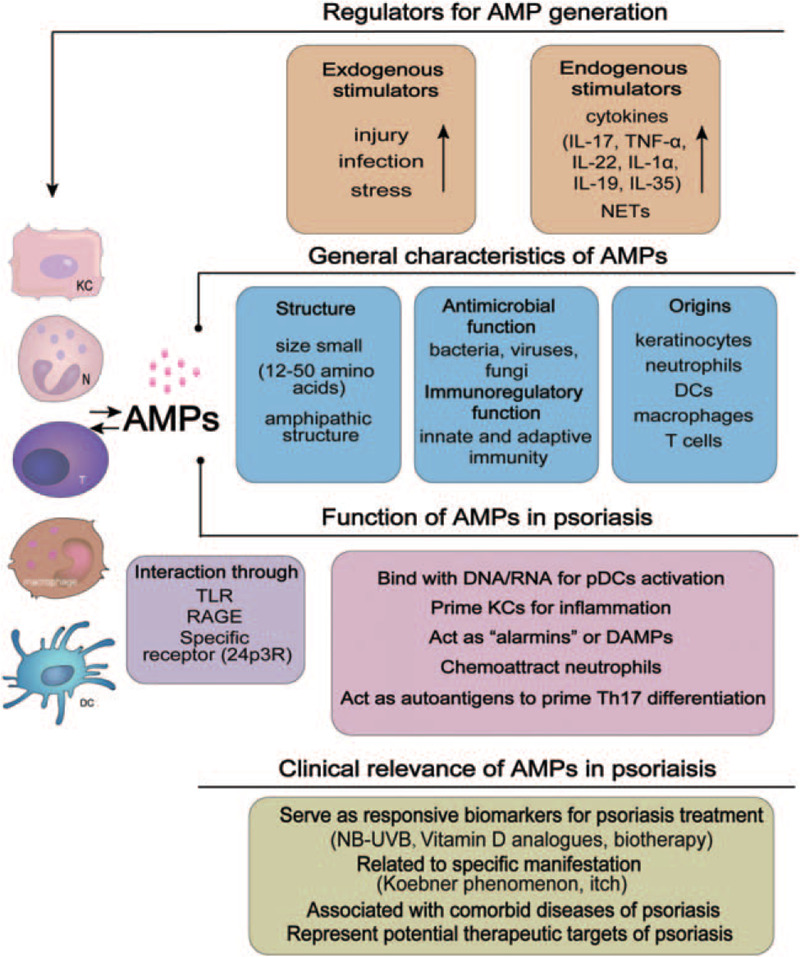
Antimicrobial peptides (AMPs) are small molecules produced by a myriad of cells and play important roles not only in protecting against infections and sustaining skin barrier homeostasis but also in contributing to immune dysregulation under pathological conditions. Recently, increasing evidence has indicated that AMPs, including cathelicidin (LL-37), human β-defensins, S100 proteins, lipocalin 2, and RNase 7, are highly expressed in psoriatic skin lesions. These peptides broadly regulate immunity by interacting with various immune cells and linking innate and adaptive immune responses during the progression of psoriasis. In this review, we summarize the recent findings regarding AMPs in the pathogenesis of psoriasis with a main focus on their immunomodulatory abilities.
抗菌肽(AMPs)是由众多细胞产生的小分子,不仅在抵御感染和维持皮肤屏障稳态中发挥重要作用,而且在病理条件下导致免疫失调方面也有作用。最近,越来越多的证据表明,抗菌肽,包括cathelicidin(LL-37)、人β-防御素、S100蛋白、lipocalin 2和RNase 7,在银屑病皮肤病变中高度表达。这些肽通过与各种免疫细胞相互作用并在银屑病进展过程中连接先天免疫和适应性免疫反应来广泛调节免疫。在本综述中,我们总结了关于抗菌肽在银屑病发病机制中的最新发现,主要关注它们的免疫调节能力。