Amore-Pacific Research and Development Center, Yongin, Korea.
Yonsei University, Seoul, Korea.
J Cosmet Dermatol. 2021 Sep;20(9):2924-2931. doi: 10.1111/jocd.13861. Epub 2020 Dec 9.
Studies have shown that there is a high correlation between atopic dermatitis and decrease in ceramide content in the lipid bilayer of skin. Moreover, it has been shown that the reduction in ceramide content in the stratum corneum is unique to atopic dermatitis, indicating that there are particular structural differences between the lipid bilayers of normal and atopic skin.
This study aimed to compare the lipid bilayer of the atopic skin with that of the healthy skin and to establish a structural model of the lipid bilayer for atopy.
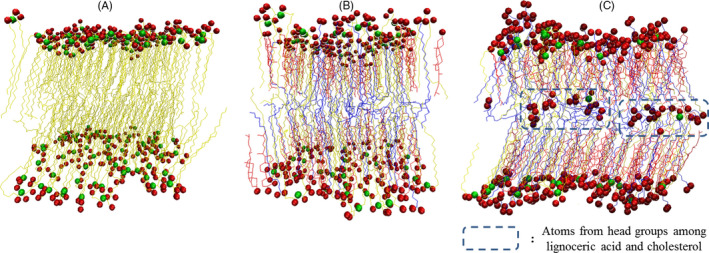
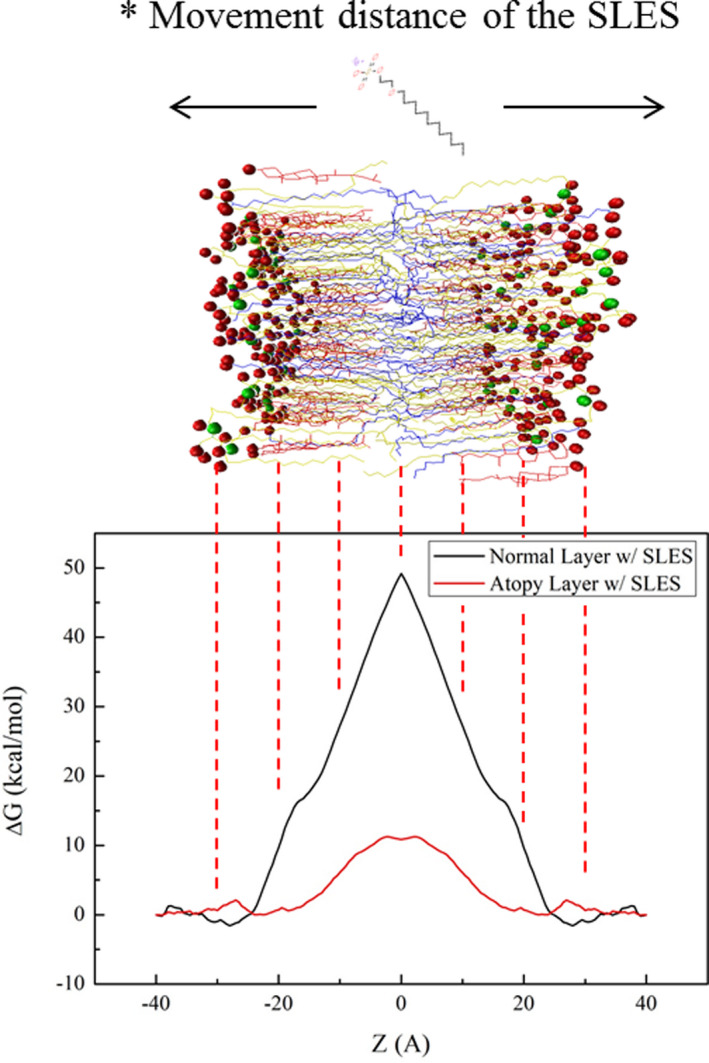
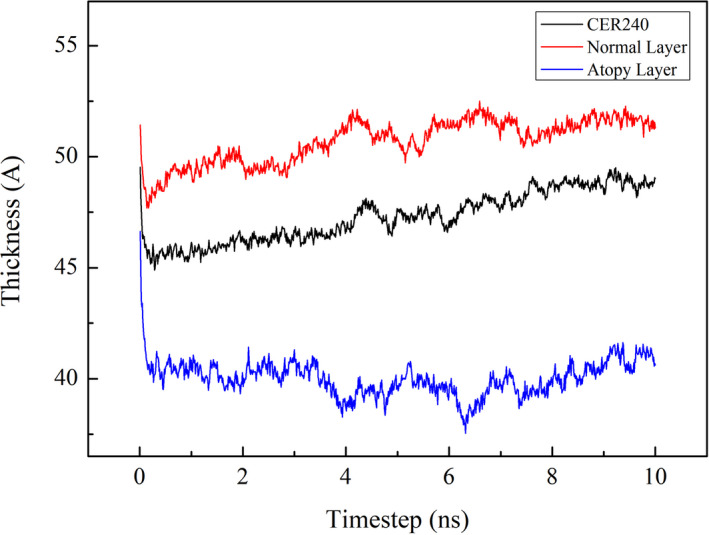
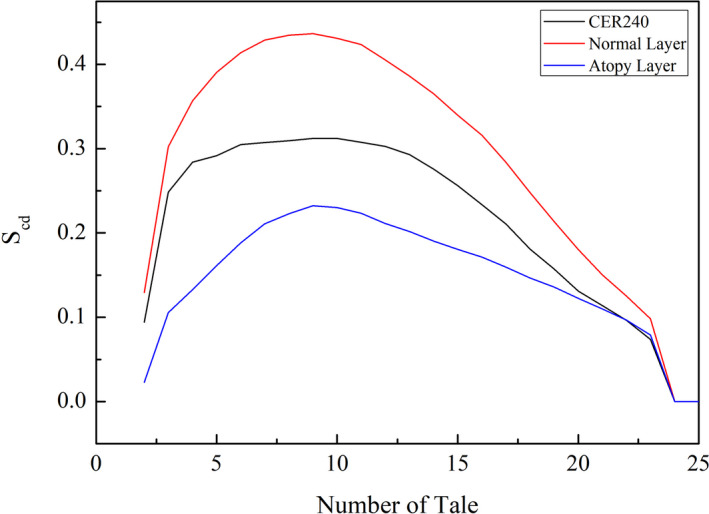
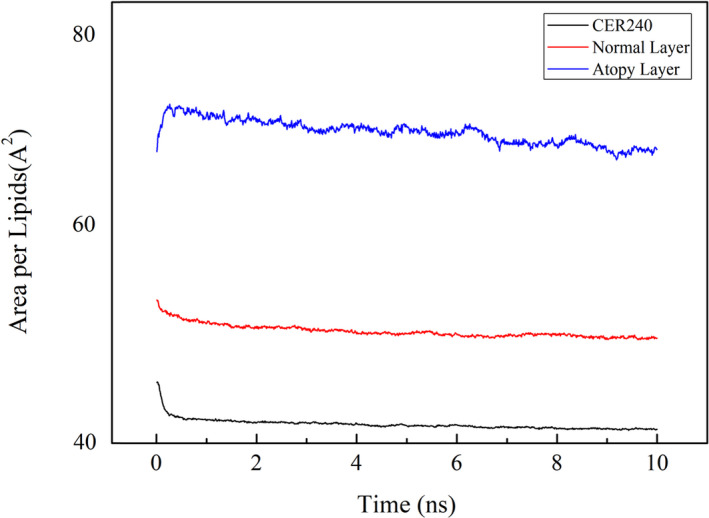
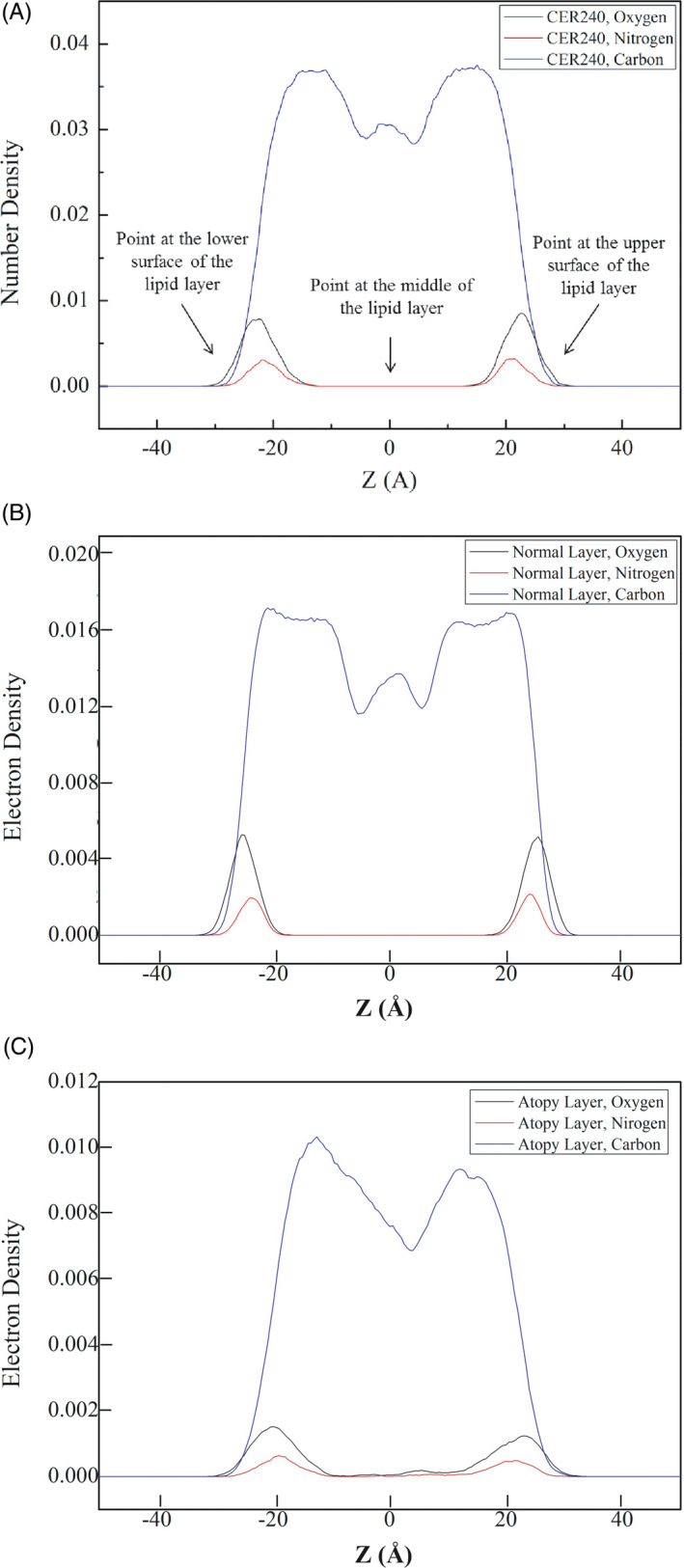
Molecular dynamics simulations were performed using NAMD 2.8. Models of lipid bilayers of normal skin and atopic skin, and a model of lipid bilayer containing only ceramide were built with CHARMM-GUI. The thickness, area occupied per lipid, and alignment of lipids were compared among the three models. Potential mean force (PMF) of the sodium laureth sulfate (SLES) on lipid bilayers was calculated to predict the affinity between SLES and lipid bilayers.
Potential mean force calculations showed that the lipid bilayer of atopic skin was able to absorb the surfactant more easily than that of normal skin.
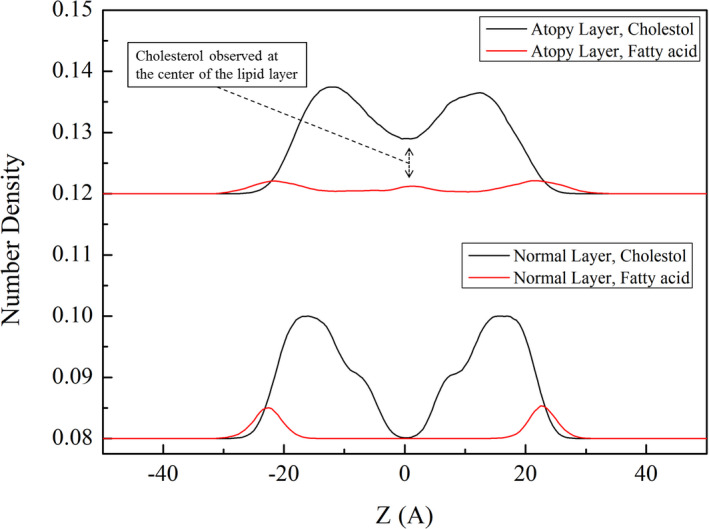
When the ceramide ratio is low, the thickness of lipid bilayer is reduced and its structure is weakened. Other structural differences between the lipid layers of normal and atopic skin included increased area per lipid and poor alignment of lipids. Further, the atopy lipid bilayer model was found to absorb more SLES than the normal skin lipid bilayer model.
研究表明,特应性皮炎与皮肤脂质双层中神经酰胺含量的减少之间存在高度相关性。此外,已经表明角质层中神经酰胺含量的减少是特应性皮炎所特有的,这表明正常和特应性皮肤的脂质双层之间存在特殊的结构差异。
本研究旨在比较特应性皮炎皮肤的脂质双层与健康皮肤的脂质双层,并建立特应性脂质双层的结构模型。
使用 NAMD 2.8 进行分子动力学模拟。使用 CHARMM-GUI 构建了正常皮肤和特应性皮肤的脂质双层模型,以及仅含有神经酰胺的脂质双层模型。比较了这三个模型的厚度、每个脂质所占面积和脂质的排列方式。计算了十二烷基硫酸钠(SLES)对脂质双层的平均势能(PMF),以预测 SLES 与脂质双层之间的亲和力。
平均势能计算表明,特应性皮炎皮肤的脂质双层比正常皮肤的脂质双层更容易吸收表面活性剂。
当神经酰胺比例较低时,脂质双层的厚度会减小,结构会减弱。正常和特应性皮肤的脂质层之间的其他结构差异包括脂质面积增加和排列不良。此外,发现特应性脂质双层模型比正常皮肤脂质双层模型吸收更多的 SLES。