Chen Yin-Ju, You Guo-Rung, Lai Meng-Yu, Lu Long-Sheng, Chen Chang-Yu, Ting Lai-Lei, Lee Hsin-Lun, Kanno Yuzuka, Chiou Jeng-Fong, Cheng Ann-Joy
Graduate Institute of Biomedical Materials and Tissue Engineering, College of Biomedical Engineering, Taipei Medical University, Taipei 11031, Taiwan.
International Ph.D. Program in Biomedical Engineering, College of Biomedical Engineering, Taipei Medical University, Taipei 11031, Taiwan.
Cancers (Basel). 2020 Nov 23;12(11):3482. doi: 10.3390/cancers12113482.
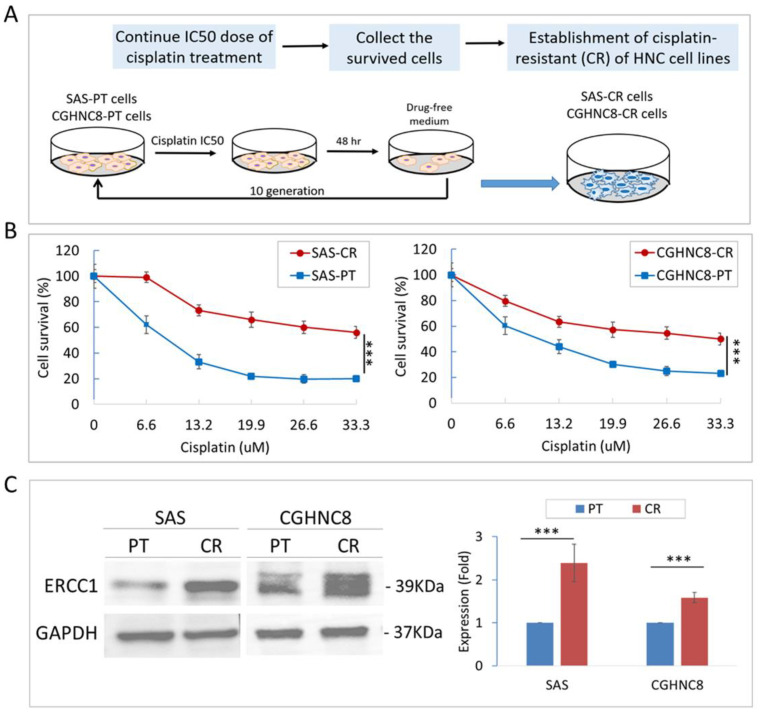
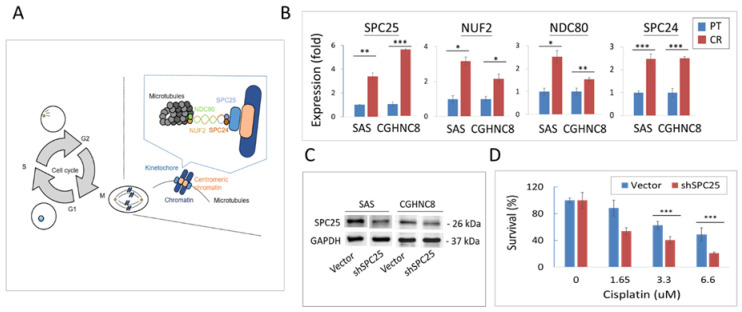
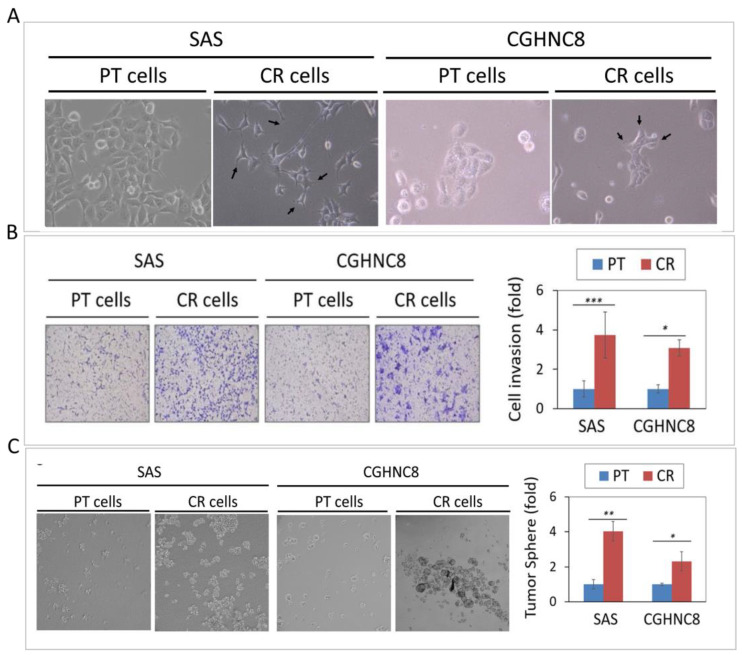
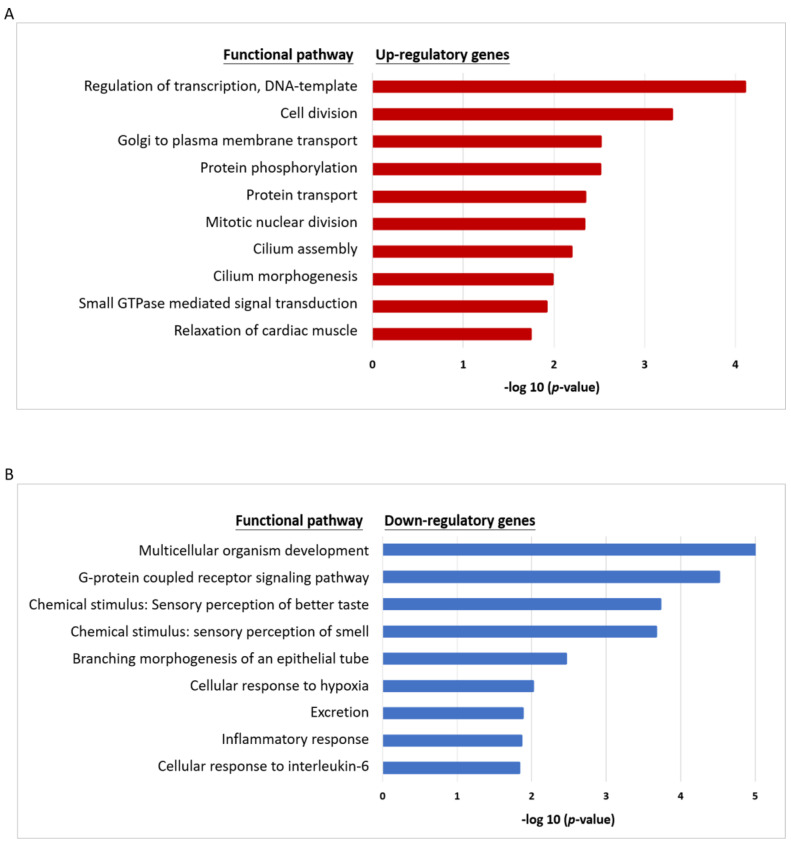
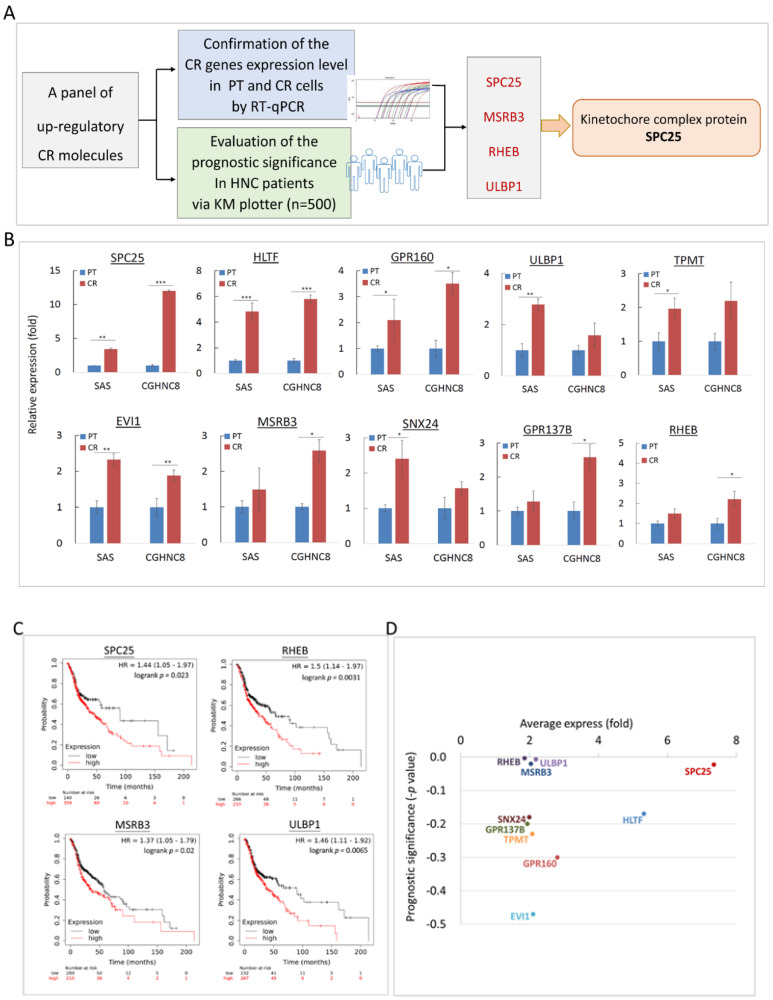
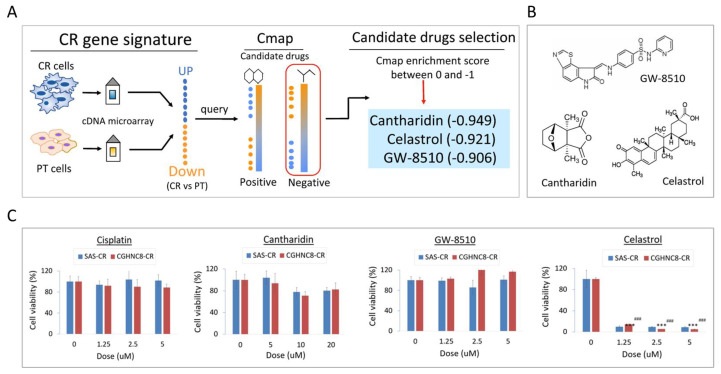
Cisplatin is the first-line chemotherapy agent for head and neck cancer (HNC), but its therapeutic effects are hampered by its resistance. In this study, we employed systemic strategies to overcome cisplatin resistance (CR) in HNC. CR cells derived from isogenic HNC cell lines were generated. The CR related hub genes, functional mechanisms, and the sensitizing candidates were globally investigated by transcriptomic and bioinformatic analyses. Clinically, the prognostic significance was assessed by the Kaplan-Meier method. Cellular and molecular techniques, including cell viability assay, tumorsphere formation assay, RT-qPCR, and immunoblot, were used. Results showed that these CR cells possessed highly invasive and stem-like properties. A total of 647 molecules was identified, and the mitotic division exhibited a novel functional mechanism significantly related to CR. A panel of signature molecules, MSRB3, RHEB, ULBP1, and spindle pole body component 25 (SPC25), was found to correlate with poor prognosis in HNC patients. SPC25 was further shown as a prominent molecule, which markedly suppressed cancer stemness and attenuated CR after silencing. Celastrol, a nature extract compound, was demonstrated to effectively inhibit SPC25 expression and reverse CR phenotype. In conclusion, the development of SPC25 inhibitors, such as the application of celastrol, maybe a novel strategy to sensitize cisplatin for the treatment of refractory HNC.
顺铂是头颈部癌(HNC)的一线化疗药物,但其治疗效果因耐药性而受到阻碍。在本研究中,我们采用系统性策略来克服HNC中的顺铂耐药性(CR)。我们从同基因HNC细胞系中生成了CR细胞。通过转录组学和生物信息学分析全面研究了与CR相关的枢纽基因、功能机制以及致敏候选物。在临床上,采用Kaplan-Meier法评估预后意义。使用了细胞和分子技术,包括细胞活力测定、肿瘤球形成测定、RT-qPCR和免疫印迹。结果表明,这些CR细胞具有高度侵袭性和干细胞样特性。共鉴定出647个分子,有丝分裂显示出与CR显著相关的新功能机制。发现一组标志性分子,即硫氧还蛋白还原酶3(MSRB3)、Ras同源物富集在脑(RHEB)、UL16结合蛋白1(ULBP1)和纺锤极体组件25(SPC25),与HNC患者的不良预后相关。进一步表明SPC25是一个突出分子,沉默后可显著抑制癌症干性并减弱CR。雷公藤红素,一种天然提取物化合物,被证明可有效抑制SPC25表达并逆转CR表型。总之,开发SPC25抑制剂,如应用雷公藤红素,可能是使顺铂敏感以治疗难治性HNC的新策略。