Department of Urology, The First Affiliated Hospital of Chongqing Medical University, No.1 Youyi Road, Yuan Jiagang, Yuzhong District, Chongqing, 400010, People's Republic of China.
Department of Urology, The People's Hospital of Nan Chuan, Chongqing, 408400, People's Republic of China.
J Transl Med. 2020 Apr 7;18(1):160. doi: 10.1186/s12967-020-02323-x.
Prostate cancer (PCa) is one of the most prevalent cancers that occur in men worldwide. Autophagy-related genes (ARGs) may play an essential role in multiple biological processes of prostate cancer. However, ARGs expression signature has rarely been used to investigate the association between autophagy and prognosis in PCa. This study aimed to identify and assess prognostic ARGs signature to predict overall survival (OS) and disease-free survival (DFS) in PCa patients.
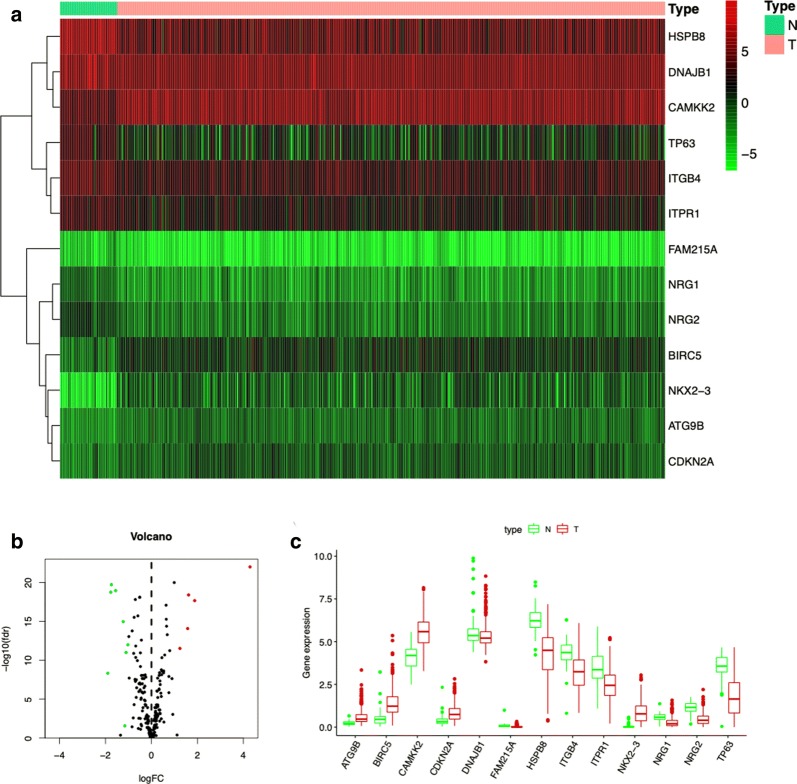
First, a total of 234 autophagy-related genes were obtained from The Human Autophagy Database. Then, differentially expressed ARGs were identified in prostate cancer patients based on The Cancer Genome Atlas (TCGA) database. The univariate and multivariate Cox regression analysis was performed to screen hub prognostic ARGs for overall survival and disease-free survival, and the prognostic model was constructed. Finally, the correlation between the prognostic model and clinicopathological parameters was further analyzed, including age, T status, N status, and Gleason score.
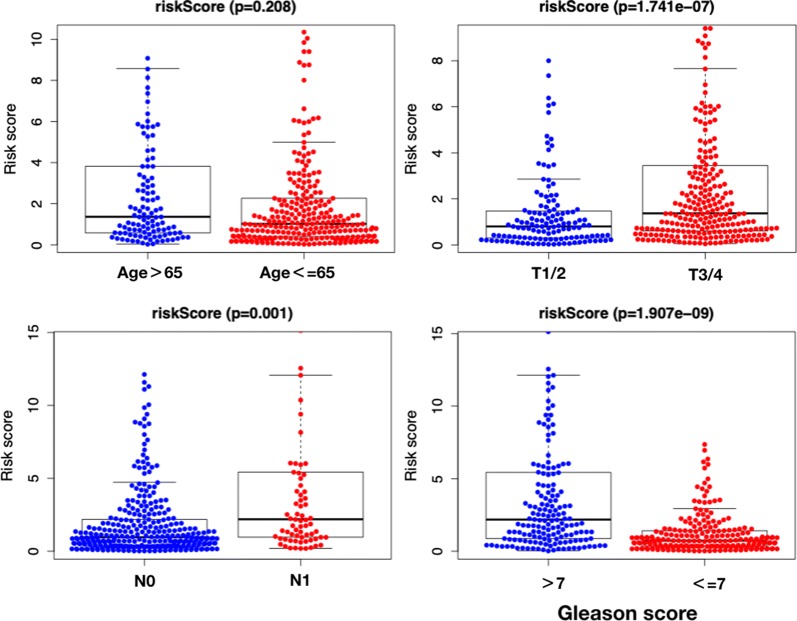
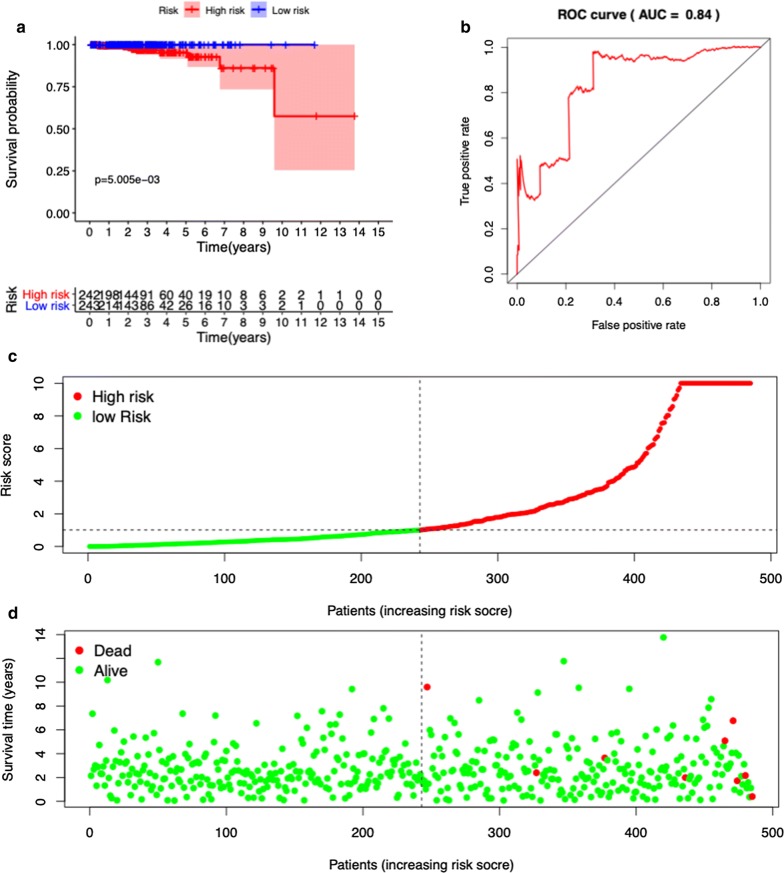
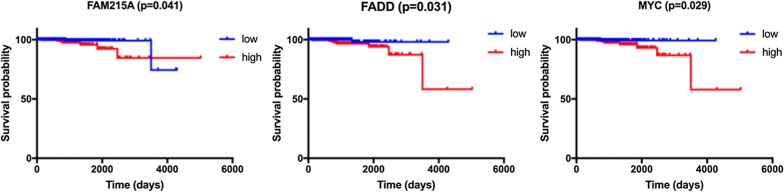
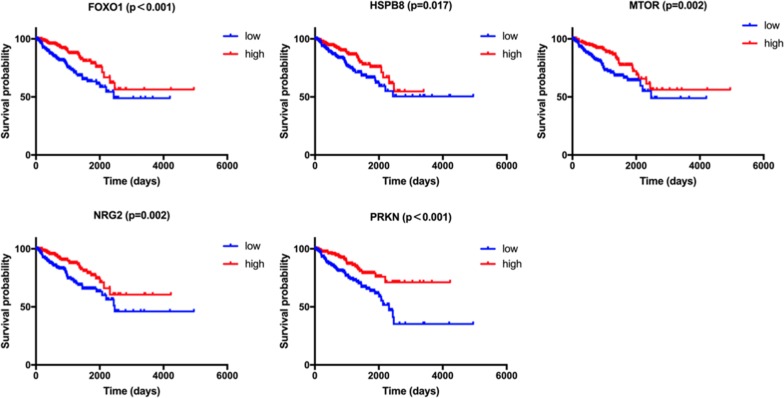
The OS-related prognostic model was constructed based on the five ARGs (FAM215A, FDD, MYC, RHEB, and ATG16L1) and significantly stratified prostate cancer patients into high- and low-risk groups in terms of OS (HR = 6.391, 95% CI = 1.581- 25.840, P < 0.001). The area under the receiver operating characteristic curve (AUC) of the prediction model was 0.84. The OS-related prediction model values were higher in T3-4 than in T1-2 (P = 0.008), and higher in Gleason score > 7 than ≤ 7 (P = 0.015). In addition, the DFS-related prognostic model was constructed based on the 22 ARGs (ULK2, NLRC4, MAPK1, ATG4D, MAPK3, ATG2A, ATG9B, FOXO1, PTEN, HDAC6, PRKN, HSPB8, P4HB, MAP2K7, MTOR, RHEB, TSC1, BIRC5, RGS19, RAB24, PTK6, and NRG2), with AUC of 0.85 (HR = 7.407, 95% CI = 4.850-11.320, P < 0.001), which were firmly related to T status (P < 0.001), N status (P = 0.001), and Gleason score (P < 0.001).
Our ARGs based prediction models are a reliable prognostic and predictive tool for overall survival and disease-free survival in prostate cancer patients.
前列腺癌(PCa)是全球男性中最常见的癌症之一。自噬相关基因(ARGs)可能在前列腺癌的多个生物学过程中发挥重要作用。然而,ARGs 表达谱很少被用于研究自噬与前列腺癌预后之间的关系。本研究旨在确定和评估与预后相关的 ARGs 特征,以预测前列腺癌患者的总生存期(OS)和无病生存期(DFS)。
首先,从人类自噬数据库中获得了总共 234 个自噬相关基因。然后,根据癌症基因组图谱(TCGA)数据库,确定前列腺癌患者中差异表达的 ARGs。使用单变量和多变量 Cox 回归分析筛选与总生存和无病生存相关的关键预后 ARGs,并构建预后模型。最后,进一步分析预后模型与临床病理参数的相关性,包括年龄、T 分期、N 分期和 Gleason 评分。
基于五个 ARGs(FAM215A、FDD、MYC、RHEB 和 ATG16L1)构建了 OS 相关的预后模型,并根据 OS 将前列腺癌患者分为高风险和低风险组(HR=6.391,95%CI=1.581-25.840,P<0.001)。预测模型的接收者操作特征曲线(ROC)下面积(AUC)为 0.84。T3-4 期的 OS 相关预测模型值高于 T1-2 期(P=0.008),Gleason 评分>7 期的高于≤7 期(P=0.015)。此外,基于 22 个 ARGs(ULK2、NLRC4、MAPK1、ATG4D、MAPK3、ATG2A、ATG9B、FOXO1、PTEN、HDAC6、PRKN、HSPB8、P4HB、MAP2K7、MTOR、RHEB、TSC1、BIRC5、RGS19、RAB24、PTK6 和 NRG2)构建了 DFS 相关的预后模型,AUC 为 0.85(HR=7.407,95%CI=4.850-11.320,P<0.001),与 T 分期(P<0.001)、N 分期(P=0.001)和 Gleason 评分(P<0.001)密切相关。
我们基于 ARGs 的预测模型是预测前列腺癌患者总生存期和无病生存期的可靠预后和预测工具。