University of Gdańsk, Faculty of Chemistry, 80-308 Gdańsk, Poland.
Medical University of Vienna, Institute of Immunology, Division of Immune Receptors and T cell Activation, 1090 Vienna, Austria.
Int J Mol Sci. 2020 Nov 23;21(22):8876. doi: 10.3390/ijms21228876.
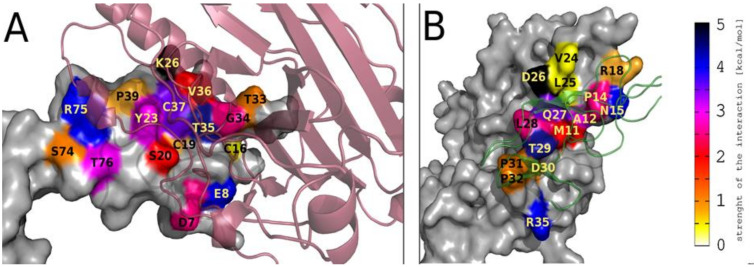
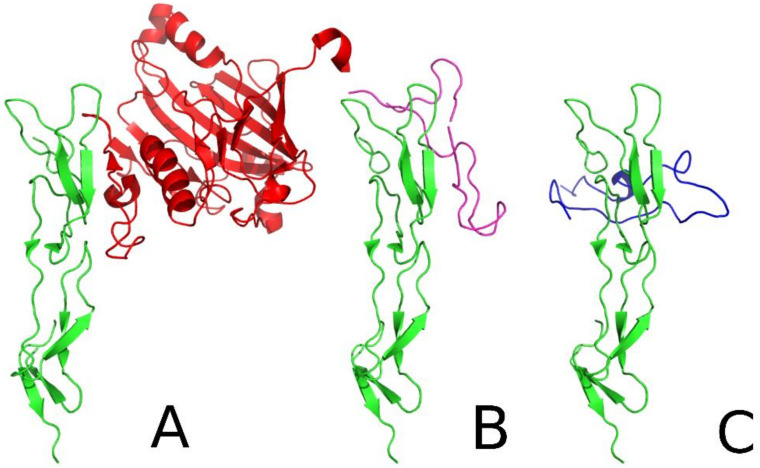
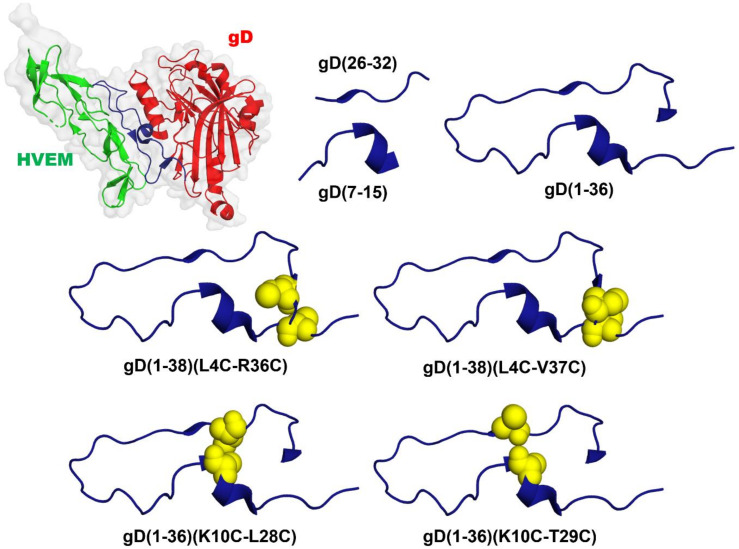
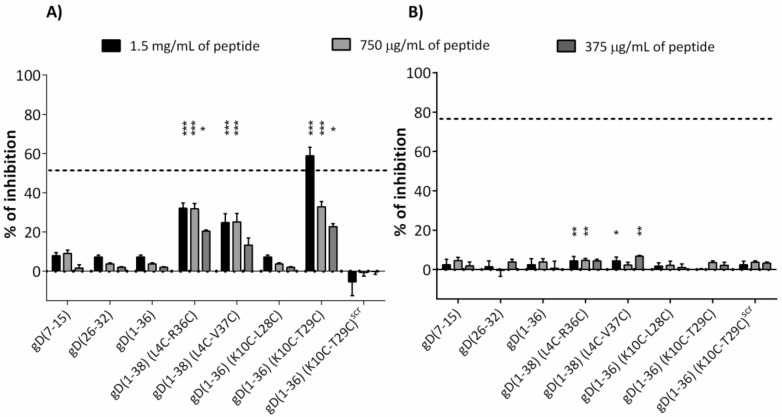
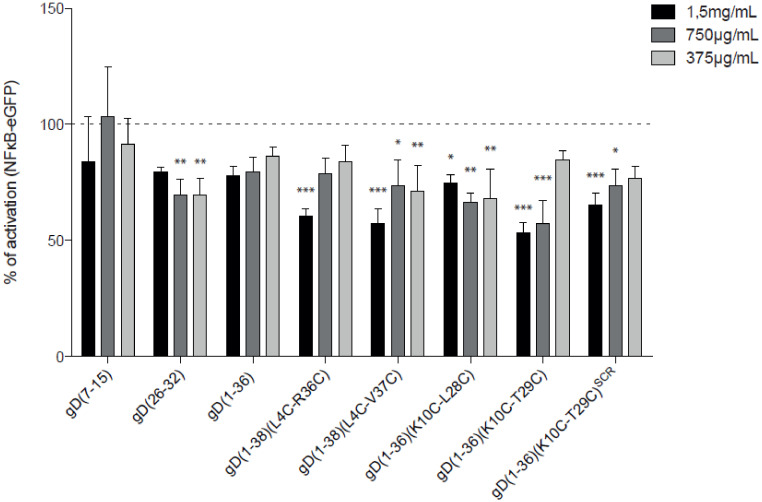
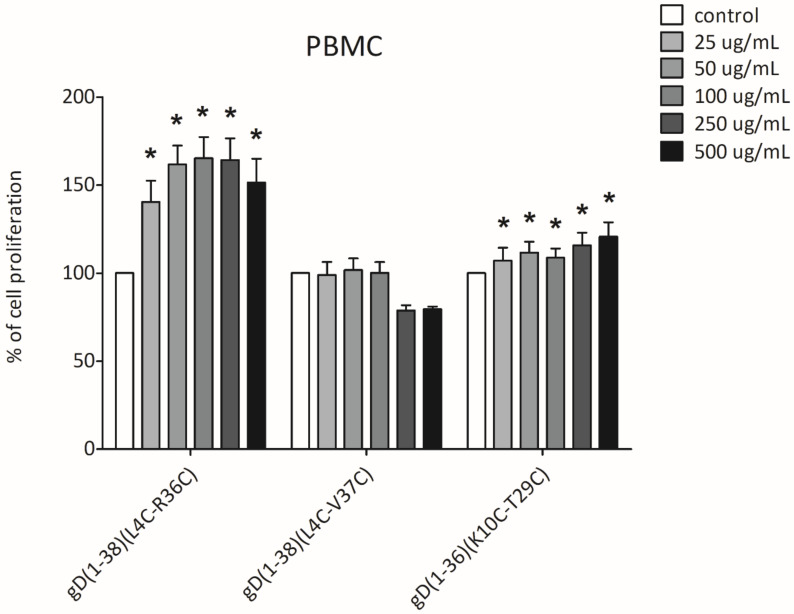
One of the major current trends in cancer immunotherapy is the blockade of immune checkpoint proteins that negatively regulate the immune response. This has been achieved through antibodies blocking PD-1/PD-L1 and CTLA-4/CD80/CD86 interactions. Such antibodies have revolutionized oncological therapy and shown a new way to fight cancer. Additional (negative) immune checkpoints are also promising targets in cancer therapy and there is a demand for inhibitors for these molecules. Our studies are focused on BTLA/HVEM complex, which inhibits T-cell proliferation and cytokine production and therefore has great potential as a new target for cancer treatment. The goal of the presented studies was the design and synthesis of compounds able to block BTLA/HVEM interactions. For that purpose, the -terminal fragment of glycoprotein D (gD), which interacts with HVEM, was used. Based on the crystal structure of the gD/HVEM complex and MM/GBSA analysis performed on it, several peptides were designed and synthesized as potential inhibitors of the BTLA/HVEM interaction. Affinity tests, ELISA tests, and cellular-based reporter assays were performed on these compounds to check their ability to bind to HVEM and to inhibit BTLA/HVEM complex formation. For leading peptides candidates, all-atom and subsequent docking simulations with a coarse-grained force field were performed to determine their binding modes. To further evaluate their potential as drug candidates, their stability in plasma and their cytotoxicity effects on PBMCs were assessed. Our data indicate that the peptide gD(1-36)(K10C-T29C) is the best candidate as a future drug. It interacts with HVEM protein, blocks the BTLA/HVEM interaction, and is nontoxic to cells. The present study provides a new perspective on the development of BTLA/HVEM inhibitors that disrupt protein interactions.
癌症免疫疗法的当前主要趋势之一是阻断负调节免疫反应的免疫检查点蛋白。这是通过阻断 PD-1/PD-L1 和 CTLA-4/CD80/CD86 相互作用的抗体来实现的。这些抗体彻底改变了肿瘤学治疗,并为抗击癌症提供了新途径。其他(负)免疫检查点也是癌症治疗中有前途的靶点,因此需要这些分子的抑制剂。我们的研究集中在 BTLA/HVEM 复合物上,该复合物抑制 T 细胞增殖和细胞因子产生,因此具有作为癌症治疗新靶点的巨大潜力。本研究的目的是设计和合成能够阻断 BTLA/HVEM 相互作用的化合物。为此,使用了与 HVEM 相互作用的糖蛋白 D (gD) 的 -末端片段。基于 gD/HVEM 复合物的晶体结构和对其进行的 MM/GBSA 分析,设计并合成了几种肽作为 BTLA/HVEM 相互作用的潜在抑制剂。对这些化合物进行了亲和力测试、ELISA 测试和基于细胞的报告基因检测,以检查它们与 HVEM 结合的能力以及抑制 BTLA/HVEM 复合物形成的能力。对候选的领先肽进行了全原子和随后的粗粒度力场对接模拟,以确定它们的结合模式。为了进一步评估它们作为候选药物的潜力,评估了它们在血浆中的稳定性及其对 PBMC 的细胞毒性作用。我们的数据表明,肽 gD(1-36)(K10C-T29C) 是作为未来药物的最佳候选物。它与 HVEM 蛋白相互作用,阻断 BTLA/HVEM 相互作用,并且对细胞无毒。本研究为开发破坏蛋白相互作用的 BTLA/HVEM 抑制剂提供了新的视角。