Department of Neurology, Massachusetts General Hospital, Boston, MA 02114
Harvard Medical School, Boston, MA 02114.
eNeuro. 2021 Mar 9;8(2). doi: 10.1523/ENEURO.0208-20.2020. Print 2021 Mar-Apr.
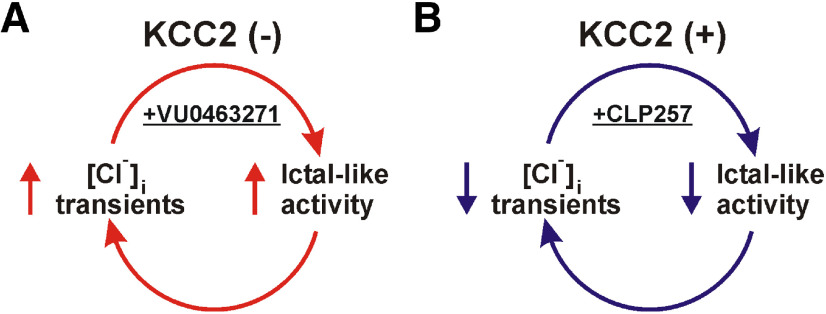
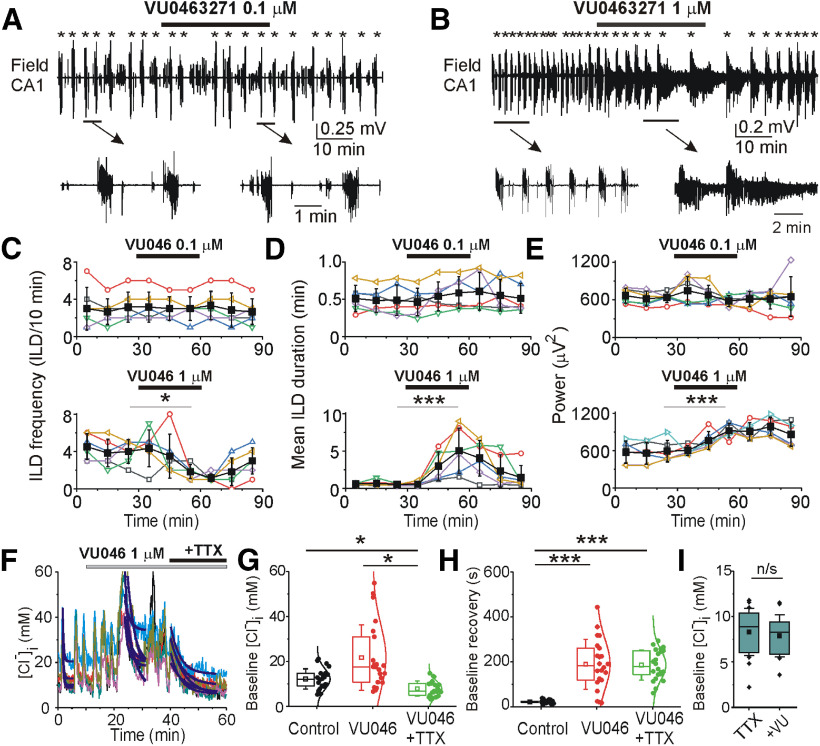
Recurrent seizures intensely activate GABA receptors (GABA-Rs), which induces transient neuronal chloride ([Cl]) elevations and depolarizing GABA responses that contribute to the failure of inhibition that engenders further seizures and anticonvulsant resistance. The K-Cl cotransporter KCC2 is responsible for Cl extrusion and restoration of [Cl] equilibrium (E) after synaptic activity, but at the cost of increased extracellular potassium which may retard K-Cl extrusion, depolarize neurons, and potentiate seizures. Thus, KCC2 may either diminish or facilitate seizure activity, and both proconvulsant and anticonvulsant effects of KCC2 inhibition have been reported. It is now necessary to identify the loci of these divergent responses by assaying both the electrographic effects and the ionic effects of KCC2 manipulation. We therefore determined the net effects of KCC2 transport activity on cytoplasmic chloride elevation and Cl extrusion rates during spontaneous recurrent ictal-like epileptiform discharges (ILDs) in organotypic hippocampal slices , as well as the correlation between ionic and electrographic effects. We found that the KCC2 antagonist VU0463271 reduced Cl extrusion rates, increased ictal [Cl] elevation, increased ILD duration, and induced status epilepticus (SE). In contrast, the putative KCC2 upregulator CLP257 improved chloride homeostasis and reduced the duration and frequency of ILDs in a concentration-dependent manner. Our results demonstrate that measuring both the ionic and electrographic effects of KCC2 transport clarify the impact of KCC2 modulation in specific models of epileptiform activity. Anticonvulsant effects predominate when KCC2-mediated chloride transport rather than potassium buffering is the rate-limiting step in restoring E and the efficacy of GABAergic inhibition during recurrent ILDs.
反复的癫痫发作强烈激活 GABA 受体(GABA-R),导致短暂的神经元氯离子([Cl])升高和去极化的 GABA 反应,这有助于抑制失败,进而导致进一步的癫痫发作和抗惊厥耐药性。K-Cl 共转运蛋白 KCC2 负责 Cl 外排和突触活动后[Cl]平衡(E)的恢复,但代价是细胞外钾增加,这可能会减缓 K-Cl 外排、使神经元去极化并增强癫痫发作。因此,KCC2 可能会减少或促进癫痫发作活动,并且已经报道了 KCC2 抑制的促惊厥和抗惊厥作用。现在有必要通过检测 KCC2 操作的电描记图效应和离子效应来确定这些分歧反应的部位。因此,我们确定了在器官型海马切片中自发复发性癫痫样放电(ILDs)期间 KCC2 转运活性对细胞质氯离子升高和 Cl 外排率的净效应,以及离子和电描记图效应之间的相关性。我们发现,KCC2 拮抗剂 VU0463271 降低了 Cl 外排率,增加了癫痫发作时[Cl]升高,增加了 ILD 持续时间,并诱导了癫痫持续状态(SE)。相比之下,假定的 KCC2 上调剂 CLP257 以浓度依赖性方式改善了氯稳态,并减少了 ILD 的持续时间和频率。我们的结果表明,测量 KCC2 转运的离子和电描记图效应可以阐明 KCC2 调节在特定癫痫样活动模型中的影响。当 KCC2 介导的氯离子转运而不是钾缓冲作用成为恢复 E 和反复 ILD 期间 GABA 能抑制效率的限速步骤时,抗惊厥作用占主导地位。