Ramuta Taja Železnik, Jerman Urška Dragin, Tratnjek Larisa, Janev Aleksandar, Magatti Marta, Vertua Elsa, Bonassi Signoroni Patrizia, Silini Antonietta Rosa, Parolini Ornella, Kreft Mateja Erdani
Institute of Cell Biology, Faculty of Medicine, University of Ljubljana, Ljubljana, Slovenia.
Centro di Ricerca E. Menni, Fondazione Poliambulanza Istituto Ospedaliero, Brescia, Italy.
Front Bioeng Biotechnol. 2020 Nov 9;8:554530. doi: 10.3389/fbioe.2020.554530. eCollection 2020.
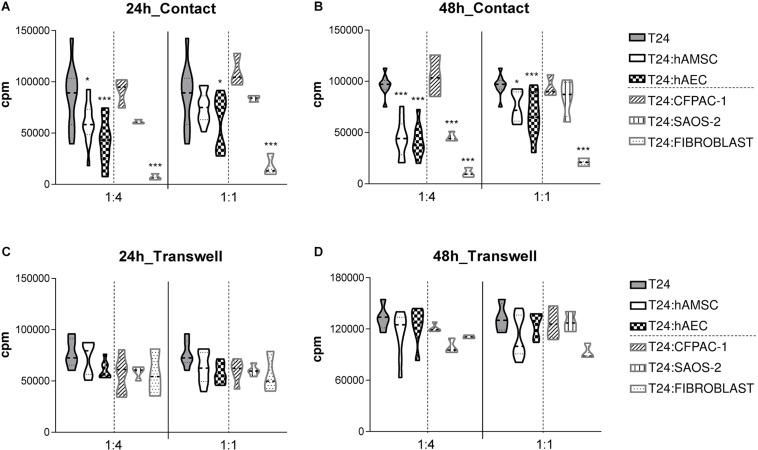
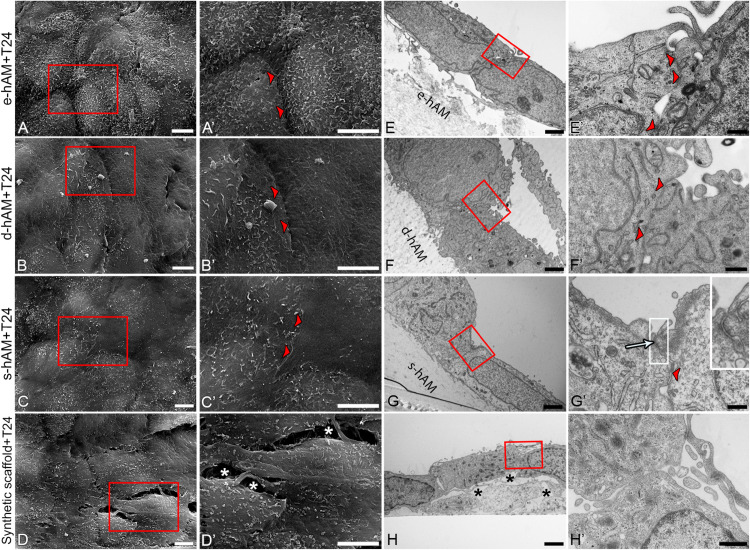
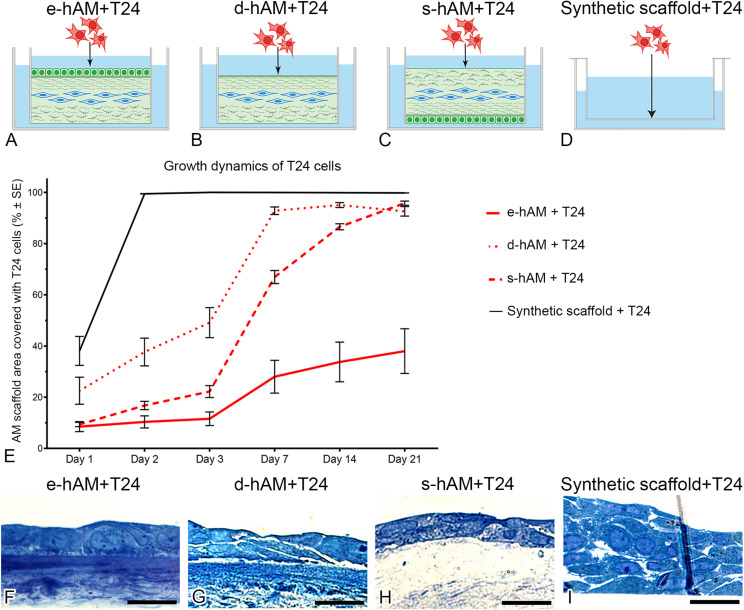
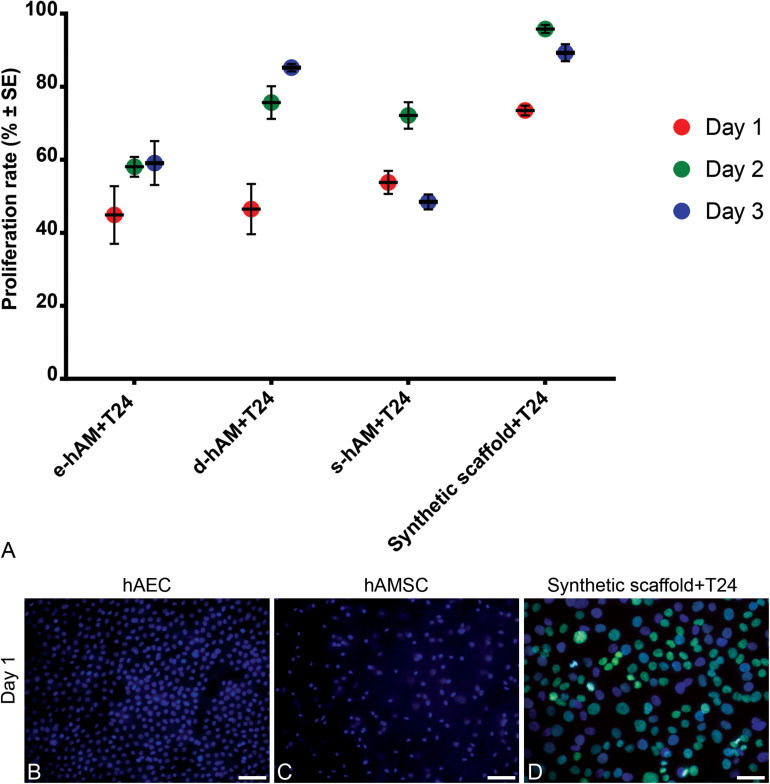
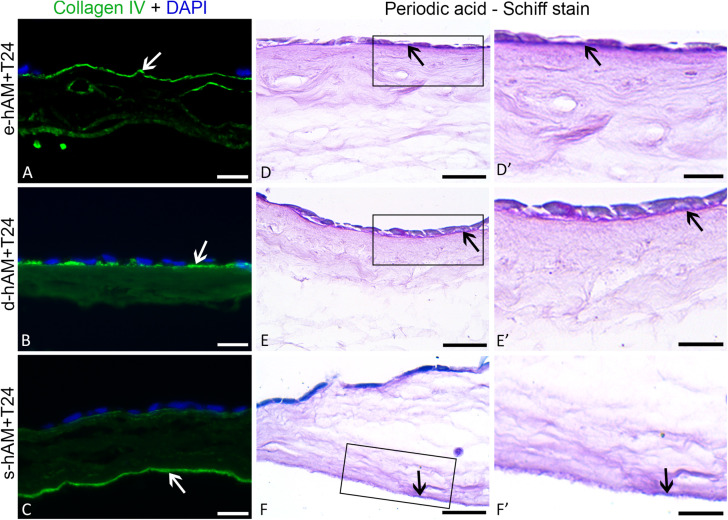
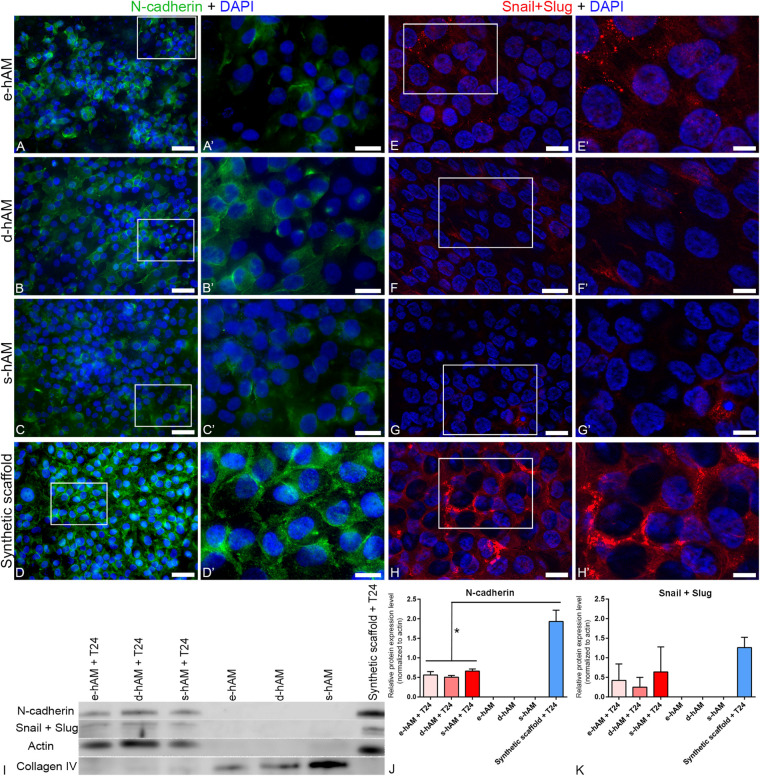
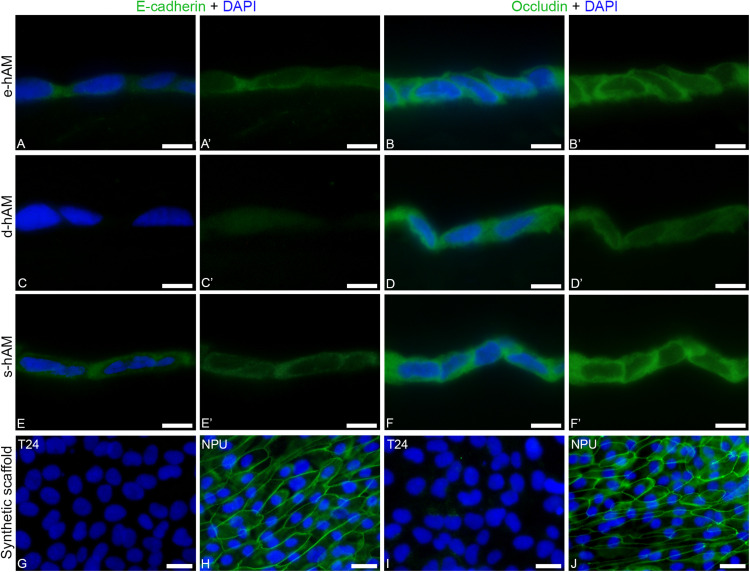
Bladder cancer is one of the most common cancers among men in industrialized countries and on the global level incidence and mortality rates are increasing. In spite of progress in surgical treatment and chemotherapy, the prognosis remains poor for patients with muscle-invasive bladder cancer. Therefore, there is a great need for the development of novel therapeutic approaches. The human amniotic membrane (hAM) is a multi-layered membrane that comprises the innermost part of the placenta. It has unique properties that make it suitable for clinical use, such as the ability to promote wound healing and decrease scarring, low immunogenicity, and immunomodulatory, antimicrobial and anticancer properties. This study aimed to investigate the effect of (i) hAM-derived cells and (ii) hAM scaffolds on the growth dynamics, proliferation rate, and invasive potential of muscle-invasive bladder cancer T24 cells. Our results show that 24 and 48 h of co-culturing T24 cells with hAM-derived cells (at 1:1 and 1:4 ratios) diminished the proliferation rate of T24 cells. Furthermore, when seeded on hAM scaffolds, namely (1) epithelium of hAM (e-hAM), (2) basal lamina of hAM (denuded; d-hAM), and (3) stroma of hAM (s-hAM), the growth dynamic of T24 cells was altered and proliferation was reduced, even more so by the e-hAM scaffolds. Importantly, despite their muscle-invasive potential, the T24 cells did not disrupt the basal lamina of hAM scaffolds. Furthermore, we observed a decrease in the expression of epithelial-mesenchymal transition (EMT) markers N-cadherin, Snail and Slug in T24 cells grown on hAM scaffolds and individual T24 cells even expressed epithelial markers E-cadherin and occludin. Our study brings new knowledge on basic mechanisms of hAM affecting bladder carcinogenesis and the results serve as a good foundation for further research into the potential of hAM-derived cells and the hAM extracellular matrix to serve as a novel bladder cancer treatment.
膀胱癌是工业化国家男性中最常见的癌症之一,在全球范围内,其发病率和死亡率都在上升。尽管手术治疗和化疗取得了进展,但肌肉浸润性膀胱癌患者的预后仍然很差。因此,迫切需要开发新的治疗方法。人羊膜(hAM)是一种多层膜,构成胎盘的最内层。它具有使其适用于临床的独特特性,例如促进伤口愈合和减少疤痕形成的能力、低免疫原性以及免疫调节、抗菌和抗癌特性。本研究旨在探讨(i)hAM来源的细胞和(ii)hAM支架对肌肉浸润性膀胱癌T24细胞生长动力学、增殖率和侵袭潜能的影响。我们的结果表明,将T24细胞与hAM来源的细胞以1:1和1:4的比例共培养24小时和48小时,会降低T24细胞的增殖率。此外,当接种在hAM支架上时,即(1)hAM的上皮(e-hAM)、(2)hAM的基底层(去上皮;d-hAM)和(3)hAM的基质(s-hAM),T24细胞的生长动力学发生改变,增殖减少,e-hAM支架的作用更明显。重要的是,尽管T24细胞具有肌肉浸润潜能,但它们并未破坏hAM支架的基底层。此外,我们观察到在hAM支架上生长的T24细胞中,上皮-间质转化(EMT)标志物N-钙黏蛋白、Snail和Slug的表达降低,单个T24细胞甚至表达上皮标志物E-钙黏蛋白和闭合蛋白。我们的研究为hAM影响膀胱癌发生的基本机制带来了新知识,其结果为进一步研究hAM来源的细胞和hAM细胞外基质作为新型膀胱癌治疗方法的潜力奠定了良好基础。