Chuang Hsiao-Chi, Chen Hsin-Chang, Chai Pei-Jui, Liao Ho-Tang, Wu Chang-Fu, Chen Chia-Ling, Jhan Ming-Kai, Hsieh Hui-I, Wu Kuen-Yuh, Chen Ta-Fu, Cheng Tsun-Jen
School of Respiratory Therapy, College of Medicine, Taipei Medical University, Taipei, Taiwan.
Division of Pulmonary Medicine, Department of Internal Medicine, Shuang Ho Hospital, Taipei Medical University, New Taipei City, Taiwan.
Part Fibre Toxicol. 2020 Nov 26;17(1):59. doi: 10.1186/s12989-020-00388-6.
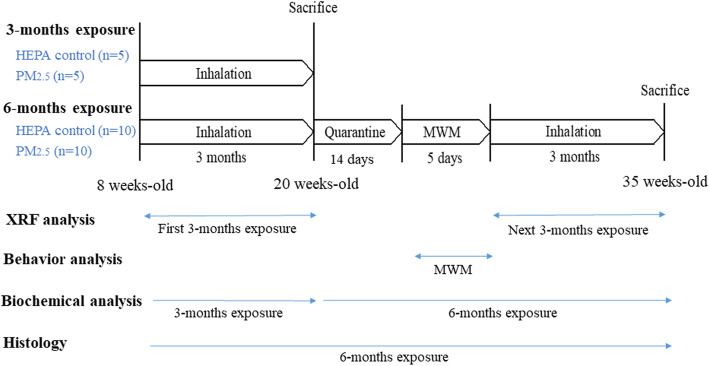
Epidemiological evidence has linked fine particulate matter (PM) to neurodegenerative diseases; however, the toxicological evidence remains unclear. The objective of this study was to investigate the effects of PM on neuropathophysiology in a hypertensive animal model. We examined behavioral alterations (Morris water maze), lipid peroxidation (malondialdehyde (MDA)), tau and autophagy expressions, neuron death, and caspase-3 levels after 3 and 6 months of whole-body exposure to urban PM in spontaneously hypertensive (SH) rats.
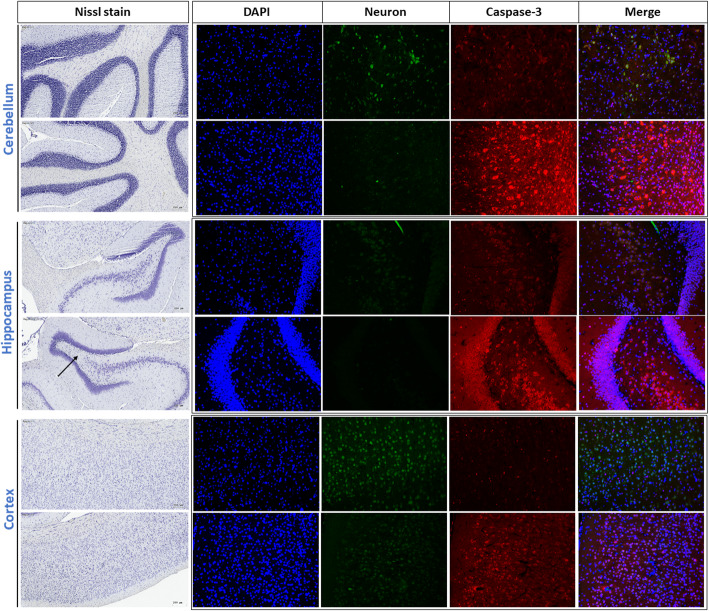
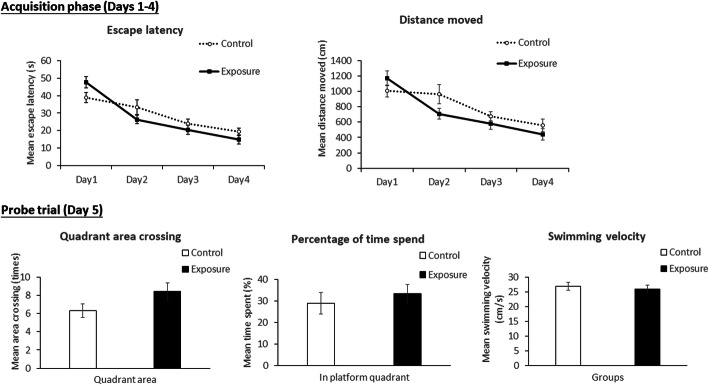
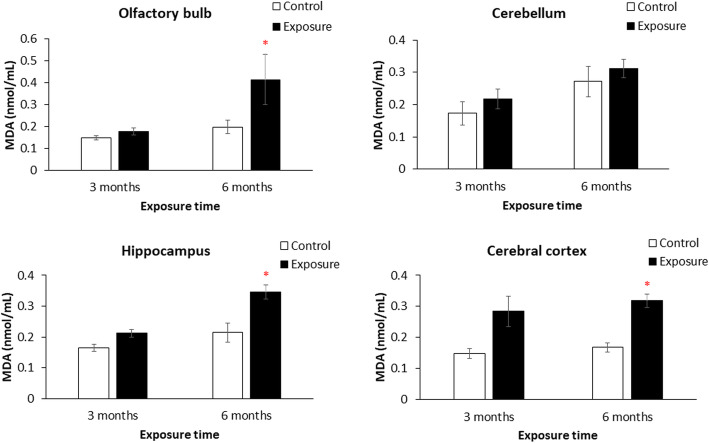
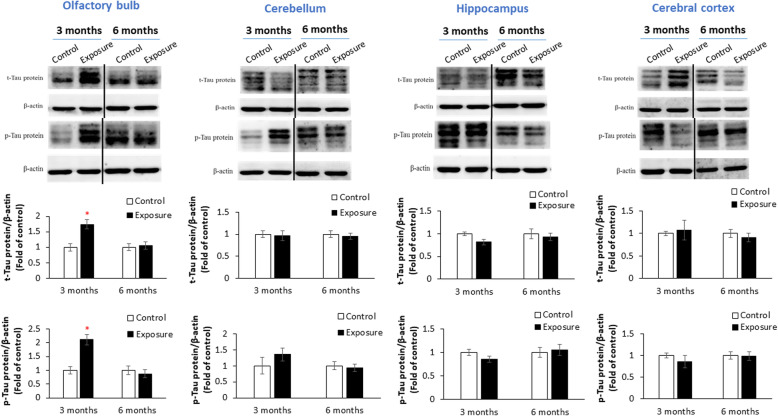
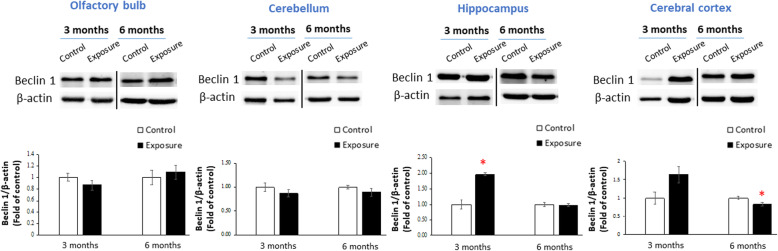
SH rats were exposed to S-, K-, Si-, and Fe-dominated PM at 8.6 ± 2.5 and 10.8 ± 3.8 μg/m for 3 and 6 months, respectively. We observed no significant alterations in the escape latency, distance moved, mean area crossing, mean time spent, or mean swimming velocity after PM exposure. Notably, levels of MDA had significantly increased in the olfactory bulb, hippocampus, and cortex after 6 months of PM exposure (p < 0.05). We observed that 3 months of exposure to PM caused significantly higher expressions of t-tau and p-tau in the olfactory bulb (p < 0.05) but not in other brain regions. Beclin 1 was overexpressed in the hippocampus with 3 months of PM exposure, but significantly decreased in the cortex with 6 months exposure to PM. Neuron numbers had decreased with caspase-3 activation in the cerebellum, hippocampus, and cortex after 6 months of PM exposure.
Chronic exposure to low-level PM could accelerate the development of neurodegenerative pathologies in subjects with hypertension.
流行病学证据已将细颗粒物(PM)与神经退行性疾病联系起来;然而,毒理学证据仍不明确。本研究的目的是在高血压动物模型中研究PM对神经病理生理学的影响。我们在自发性高血压(SH)大鼠全身暴露于城市PM 3个月和6个月后,检测了行为改变(莫里斯水迷宫)、脂质过氧化(丙二醛(MDA))、tau和自噬表达、神经元死亡以及半胱天冬酶-3水平。
SH大鼠分别在8.6±2.5和10.8±3.8μg/m³的条件下暴露于以硫、钾、硅和铁为主的PM中3个月和6个月。PM暴露后,我们未观察到逃避潜伏期、移动距离、平均穿越面积、平均停留时间或平均游泳速度有显著改变。值得注意的是,PM暴露6个月后,嗅球、海马体和皮质中的MDA水平显著升高(p<0.05)。我们观察到,暴露于PM 3个月会导致嗅球中t-tau和p-tau的表达显著升高(p<0.05),但在其他脑区则没有。Beclin 1在PM暴露3个月的海马体中过表达,但在PM暴露6个月的皮质中显著降低。PM暴露6个月后,小脑、海马体和皮质中的神经元数量随着半胱天冬酶-3的激活而减少。
长期暴露于低水平的PM可能会加速高血压患者神经退行性病变的发展。