Centre for Sustainable, Healthy and Learning Cities and Neighbourhoods, University of Glasgow, Glasgow, UK.
Urban Big Data Centre, School of Social & Political Sciences, University of Glasgow, 7 Lilybank Gardens, Glasgow, G12 8RZ, UK.
Int J Health Geogr. 2020 Nov 26;19(1):52. doi: 10.1186/s12942-020-00249-7.
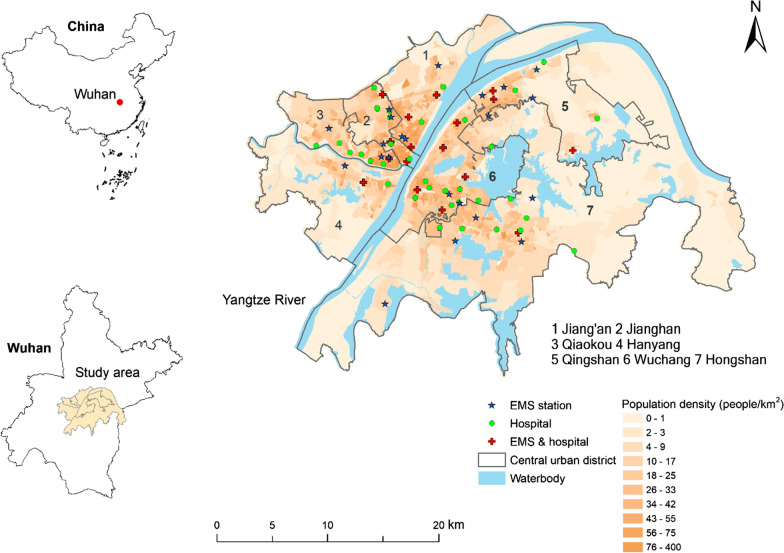
Access as a primary indicator of Emergency Medical Service (EMS) efficiency has been widely studied over the last few decades. Most previous studies considered one-way trips, either getting ambulances to patients or transporting patients to hospitals. This research assesses spatiotemporal access to EMS at the shequ (the smallest administrative unit) level in Wuhan, China, attempting to fill a gap in literature by considering and comparing both trips in the evaluation of EMS access.
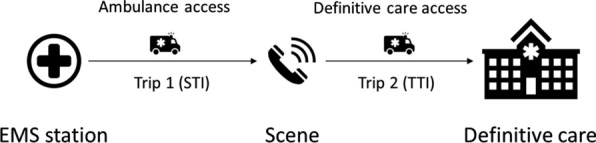
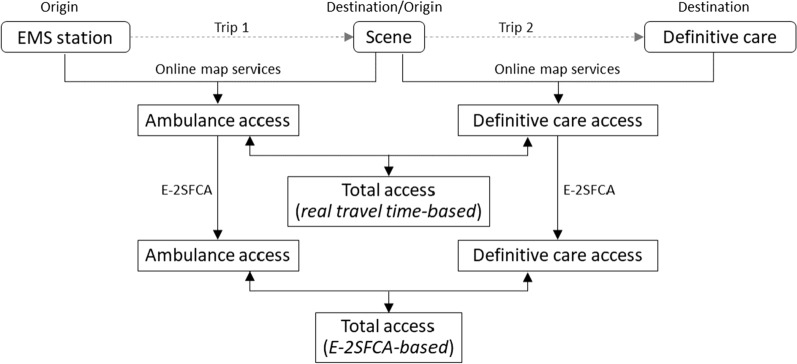
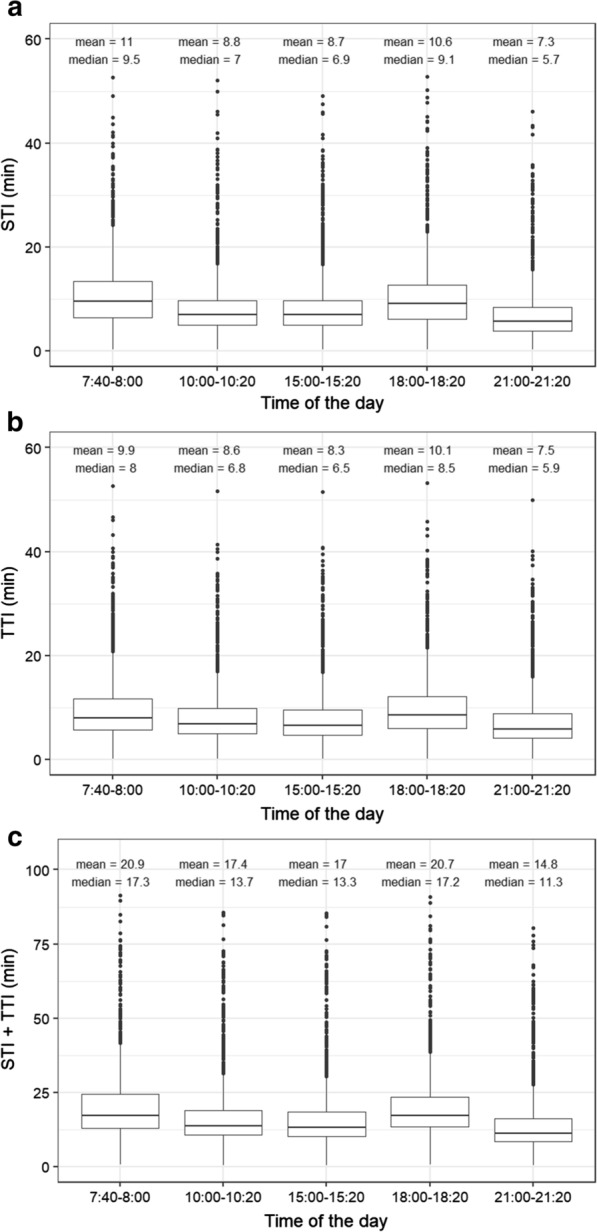
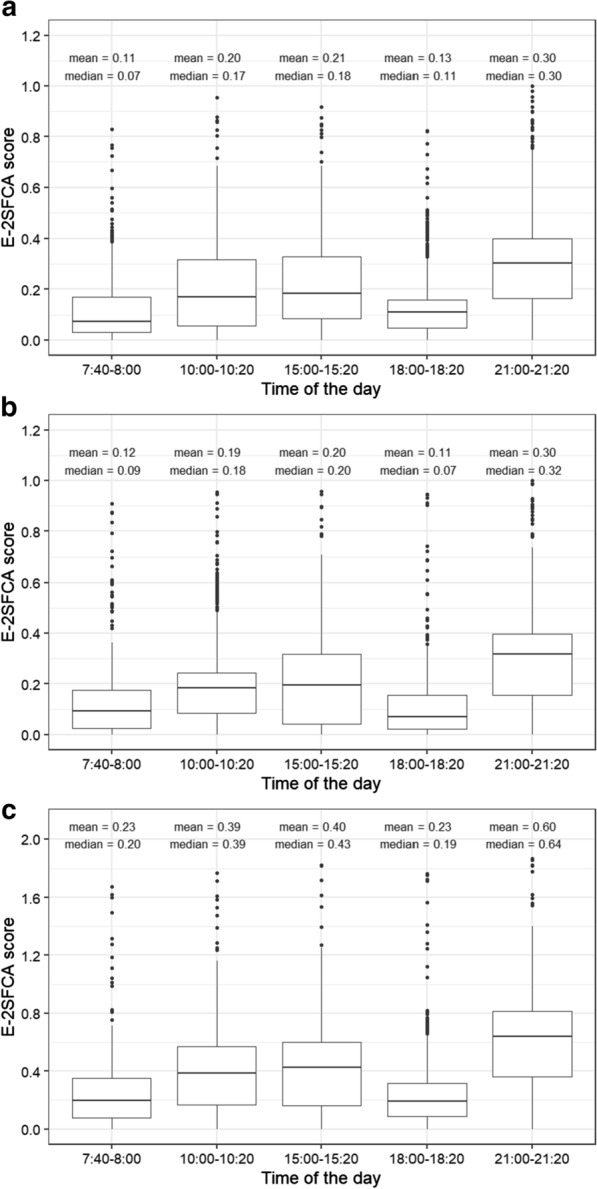
Two spatiotemporal access measures are adopted here: the proximity-based travel time obtained from online map services and the enhanced two-step floating catchment area (E-2SFCA) which is a gravity-based model. First, the travel time is calculated for the two trips involved in one EMS journey: one is from the nearest EMS station to the scene (i.e. scene time interval (STI)) and the other is from the scene to the nearest hospital (i.e. transport time interval (TTI)). Then, the predicted travel time is incorporated into the E-2SFCA model to calculate the access measure considering the availability of the service provider as well as the population in need. For both access measures, the calculation is implemented for peak hours and off-peak hours.
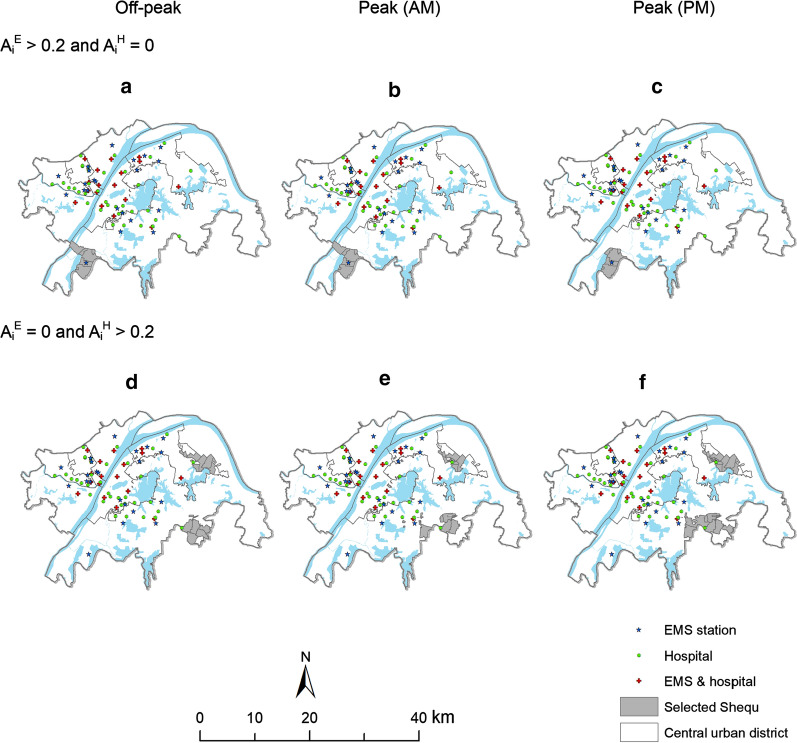
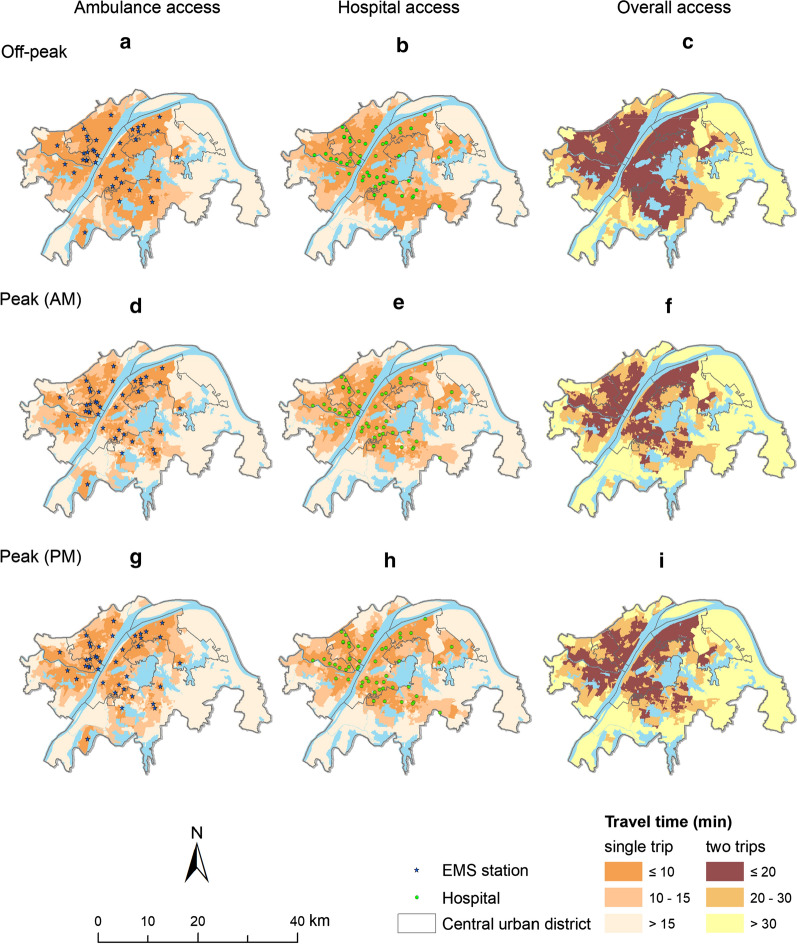
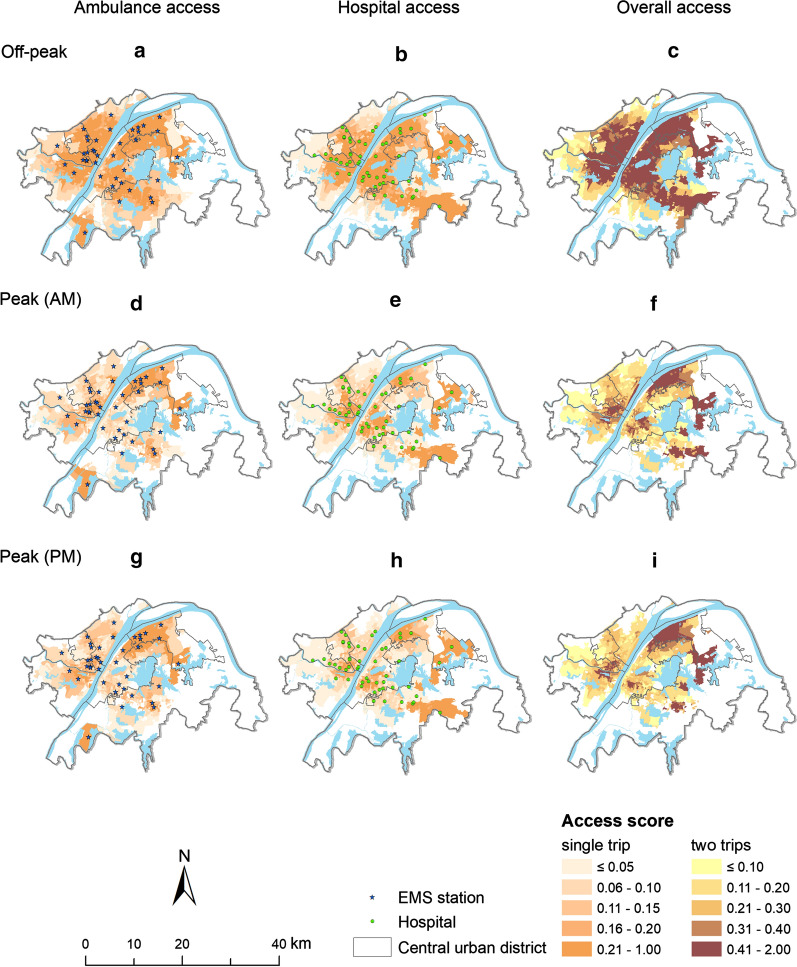
Both methods showed a marked decrease in EMS access during peak traffic hours, and differences in spatial patterns of ambulance and hospital access. About 73.9% of shequs can receive an ambulance or get to the nearest hospital within 10 min during off-peak periods, and this proportion decreases to about 45.5% for peak periods. Most shequs with good ambulance access but poor hospital access are in the south of the study area. In general, the central areas have better ambulance, hospital and overall access than peripheral areas, particularly during off-peak periods.
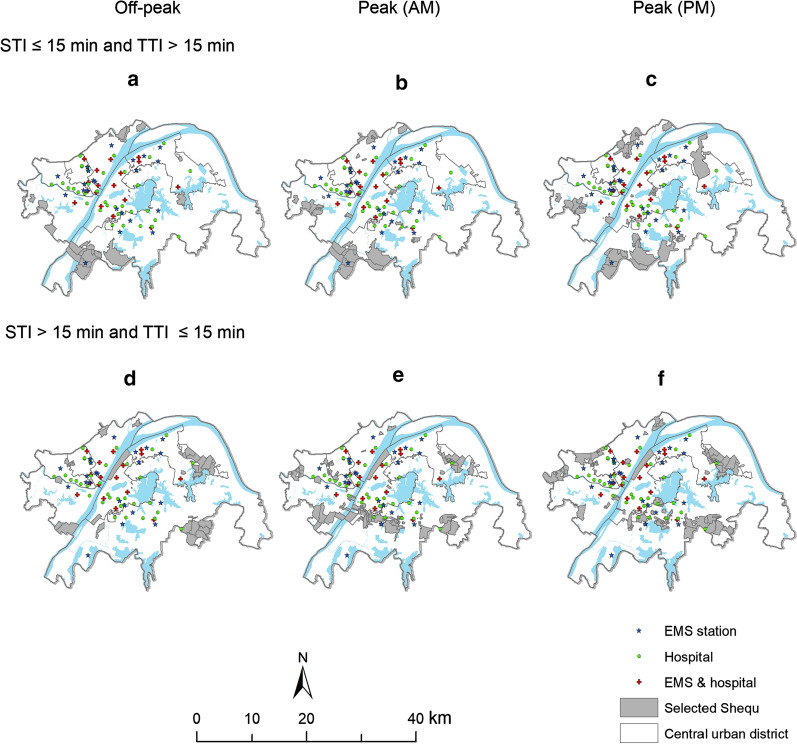
In addition to the impact of peak traffic periods on EMS access, we found that good ambulance access does not necessarily guarantee good hospital access nor the overall access, and vice versa.
作为紧急医疗服务(EMS)效率的主要指标,可及性在过去几十年中得到了广泛研究。大多数先前的研究都考虑了单向行程,要么将救护车送到患者处,要么将患者送往医院。本研究评估了中国武汉市 shequ(最小行政单位)层面的 EMS 时空可达性,试图通过考虑和比较评估 EMS 可达性的这两种行程,填补文献中的空白。
本研究采用了两种时空可达性衡量标准:一种是基于在线地图服务获取的基于接近度的旅行时间,另一种是增强两步浮动集水区(E-2SFCA),这是一种基于重力的模型。首先,计算一次 EMS 行程中涉及的两个行程的旅行时间:一个是从最近的 EMS 站到现场(即现场时间间隔(STI)),另一个是从现场到最近的医院(即运输时间间隔(TTI))。然后,将预测的旅行时间纳入 E-2SFCA 模型,以计算考虑服务提供商可用性和有需求的人口的可达性衡量标准。对于这两种可达性衡量标准,都在高峰时段和非高峰时段进行计算。
两种方法都表明,在高峰交通时段,EMS 可达性显著降低,并且救护车和医院可达性的空间模式存在差异。在非高峰时段,约 73.9%的 shequs 在 10 分钟内可以接收救护车或到达最近的医院,而在高峰时段,这一比例下降到约 45.5%。大多数救护车可达性好但医院可达性差的 shequs 都在研究区域的南部。总体而言,中心区域的救护车、医院和整体可达性优于周边区域,尤其是在非高峰时段。
除了高峰交通时段对 EMS 可达性的影响外,我们还发现,良好的救护车可达性不一定保证良好的医院可达性或整体可达性,反之亦然。