Yan Kangkang, Yang Caijun, Zhang Hongli, Ye Dan, Liu Shengyuan, Chang Jie, Jiang Minghuan, Zhao Mingyue, Fang Yu
Department of Pharmacy Administration and Clinical Pharmacy, School of Pharmacy, Xi'an Jiaotong University, Xi'an, China.
Department of Pharmacy, Xi'an No. 3 Hospital, the Affiliated Hospital of Northwest University, Xi'an, China.
BMJ Open. 2020 Nov 26;10(11):e037034. doi: 10.1136/bmjopen-2020-037034.
The aim of this study was to measure the impact of zero-mark-up drug policy (ZMDP) on drug-related expenditures and use in urban hospitals.
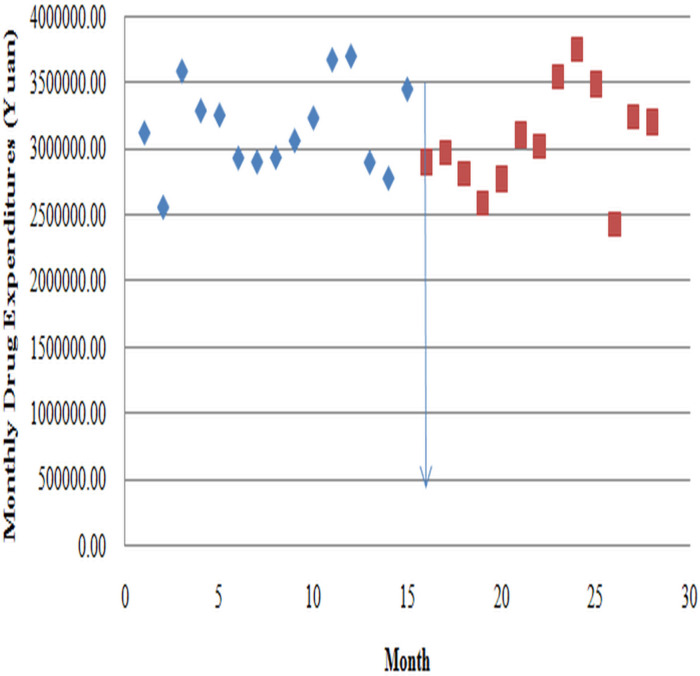
This was a retrospective observational study of trends in drug expenses and use in the context of the ZMDP using an interrupted time series analysis.
Twelve hospitals (three tertiary hospitals and nine secondary hospitals) in Xi'an, which is the capital of Shaanxi Province in Western China.
The prescription information for all outpatients and inpatients in the study hospitals from January 2016 to April 2018 was used in this study.
The Chinese government announced the policy intervention measure of the ZMDP, which was implemented in all public hospitals as of 1 April 2017.
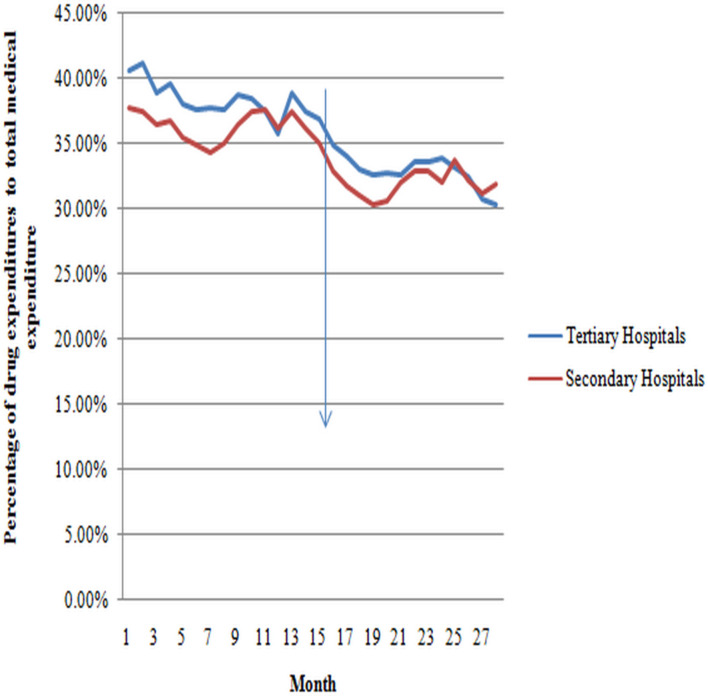
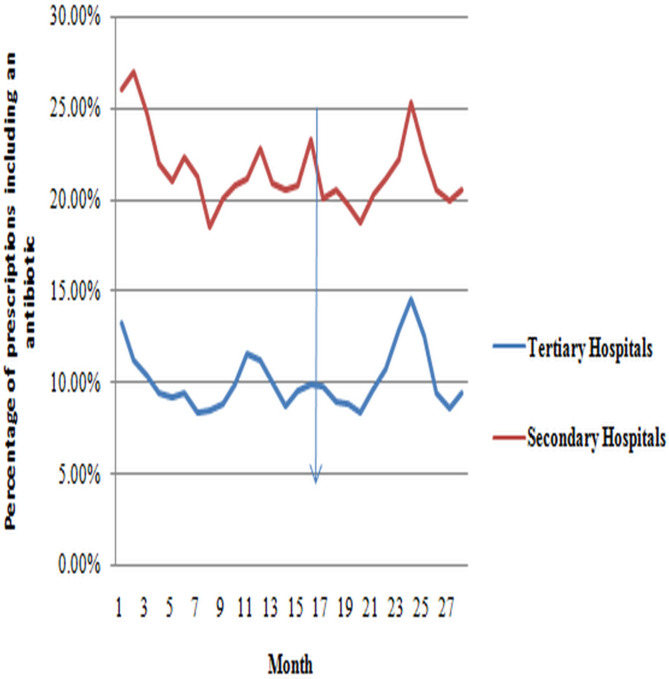
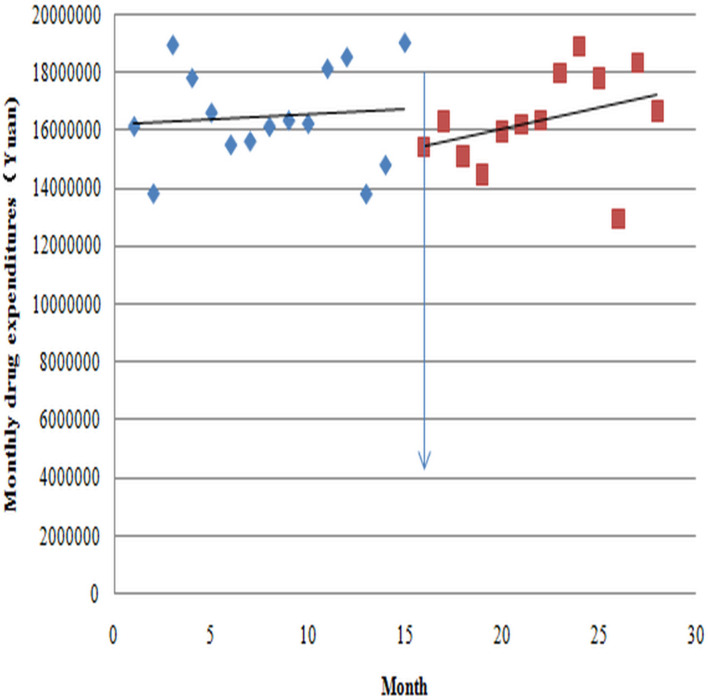
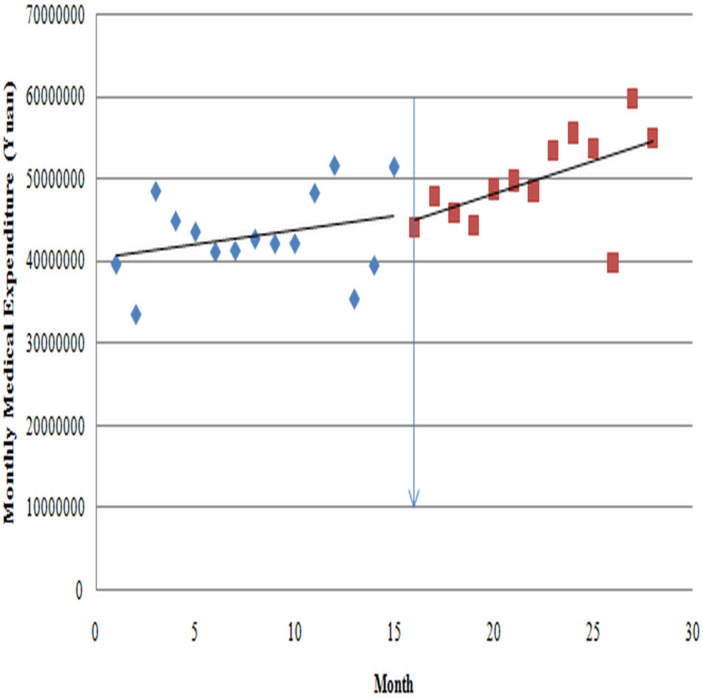
Monthly drug expenditures, monthly medical expenditures, the percentage of drug expenditures among total medical expenditures, the average outpatient drug expenditure per visit, the percentage of prescriptions that include an injection and the percentage of prescriptions that include an antibiotic.
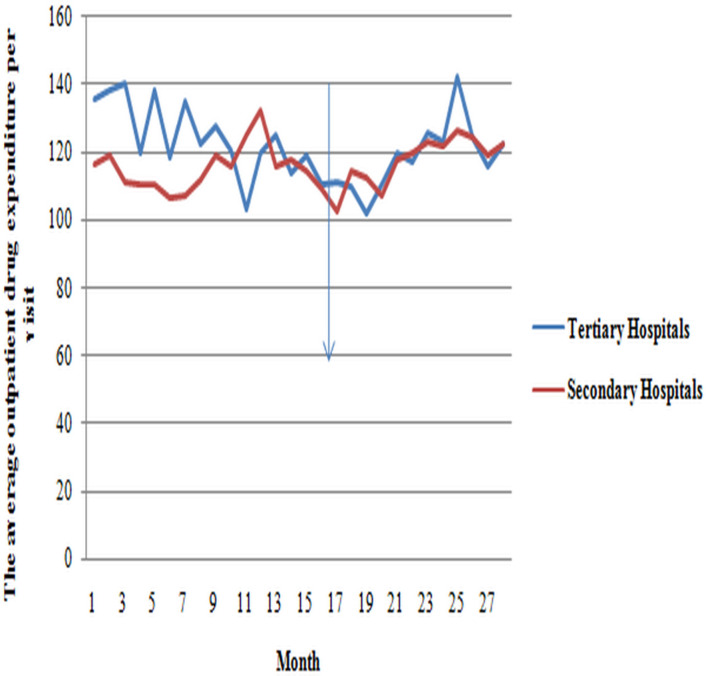
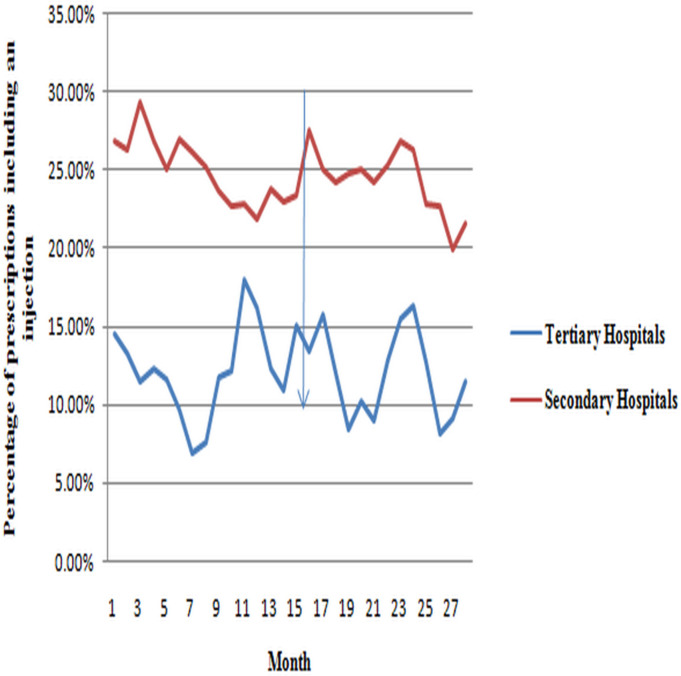
Monthly total medical expenses increased in both tertiary and secondary hospitals after the ZMDP was implemented. In tertiary hospitals, the average outpatient drug expenditures per visit showed a slow decreasing trend before the intervention and an increasing trend after the intervention, with statistically significant changes in both the level (p<0.001) and the trend (p=0.02). Secondary hospitals showed a slow increasing trend both before and after the policy implementation, with no significant change in the trend (p=0.205). The proportion of prescriptions, including injections, was over 20% in secondary hospitals and less than 20% in tertiary hospitals, with no significant changes to this indicator observed after implementation of ZMDP.
The effect of the ZMDP on drug-related expenditures and use in Chinese public hospitals was not substantially evident. Future pharmaceutical reform measures should give more consideration to physician prescription behaviours.
本研究旨在衡量零加成药品政策(ZMDP)对城市医院药品相关支出及使用情况的影响。
这是一项回顾性观察研究,采用中断时间序列分析方法,研究在零加成药品政策背景下药品费用及使用情况的趋势。
中国西部陕西省省会西安市的12家医院(3家三级医院和9家二级医院)。
本研究使用了研究医院2016年1月至2018年4月所有门诊和住院患者的处方信息。
中国政府宣布了零加成药品政策的政策干预措施,该政策于2017年4月1日起在所有公立医院实施。
每月药品支出、每月医疗支出、药品支出占总医疗支出的百分比、每次门诊平均药品支出、包含注射剂的处方百分比以及包含抗生素的处方百分比。
实施零加成药品政策后,三级医院和二级医院的每月总医疗费用均有所增加。在三级医院,每次门诊平均药品支出在干预前呈缓慢下降趋势,干预后呈上升趋势,水平(p<0.001)和趋势(p=0.02)均有统计学显著变化。二级医院在政策实施前后均呈缓慢上升趋势,趋势无显著变化(p=0.205)。包含注射剂的处方比例在二级医院超过20%,在三级医院低于20%,实施零加成药品政策后该指标无显著变化。
零加成药品政策对中国公立医院药品相关支出及使用情况的影响并不明显。未来的医药改革措施应更多考虑医生的处方行为。