School of Dentistry, College of Dental Medicine, Kaohsiung Medical University, Kaohsiung, 80708, Taiwan.
Department of Oral Hygiene, College of Dental Medicine, Kaohsiung Medical University, Kaohsiung, 80708, Taiwan.
BMC Palliat Care. 2020 Nov 27;19(1):181. doi: 10.1186/s12904-020-00684-0.
In end-of-life patients with advanced cancers, oral examination, oral care, and oral re-examination are crucial. Although oral symptoms are among the major complaints of end-of-life patients, few studies have focused on oral care in these patients. In this study, the association between oral symptoms and oral dryness among end-of-life patients was examined, and improvement of oral conditions after oral care interventions by a professional dentist was quantified.
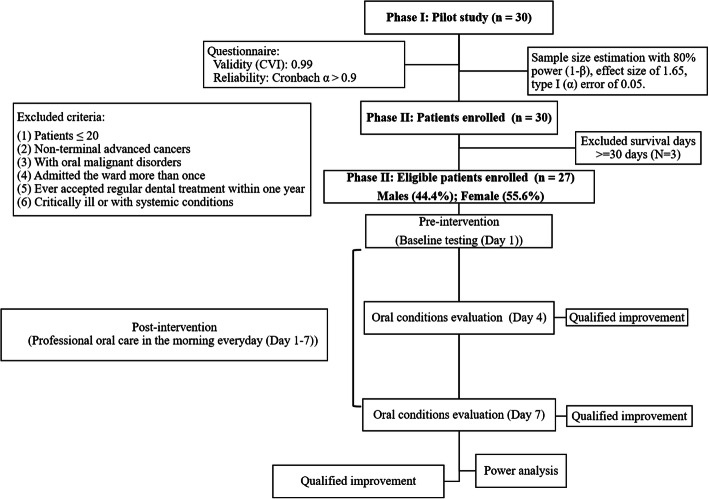
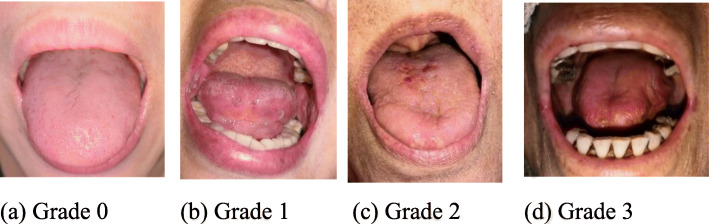
This prospective intervention study included 27 terminally ill patients with advanced cancers in a hospice ward. Professional oral care was administered every morning, and the improvement of oral conditions was assessed by comparing oral conditions before and after the intervention. Oral assessment was performed using the Oral Health Assessment Tool (OHAT) and Oral Assessment Guide. Oral dryness was evaluated through Clinical Diagnosis Classification of oral dryness and an oral moisture device. Oral cleanliness was evaluated using a bacterial counter, and tongue smears were collected for Candida examination; furthermore, oral function was recorded.
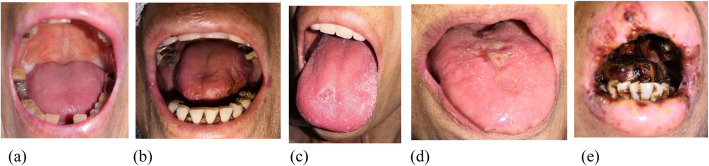
The presence of oral mucositis was closely associated with severe oral dryness (odds ratio [OR] = 14.93; 95% confidence interval [CI]: 1.95-114.38). The level of oral debris retention was significantly related to the degree of oral dryness (OR = 15.97; 95% CI: 2.06-123.72). The group with higher scores (OHAT > 8), which represent poor oral conditions, showed severe oral dryness (OR = 17.97; 95% CI: 1.45-223.46). Total OHAT scores (median: 7 vs 2) and those of other subgroups (lip, tongue, gums and tissues, saliva, and oral cleanliness showed a significant decrease after the intervention. Furthermore, the occurrence of mucositis (47.1% vs 0%), candidiasis rate (68.8% vs 43.8%), oral dryness self-sensation (63.6% vs 9.1%), and severe oral debris (52.9% vs 11.8%) decreased significantly.
Proper oral care can improve oral health and hygiene, reduce the rate of mucositis, reduce the sensation of oral dryness, increase oral moisture, and reduce the chances of oral infections among end-of-life patients. Daily oral care is necessary and can alleviate oral discomfort, increase food intake, and increase the chances of communication between end-of-life patients and their families.
在晚期癌症的临终患者中,口腔检查、口腔护理和口腔复查至关重要。尽管口腔症状是临终患者的主要主诉之一,但很少有研究关注这些患者的口腔护理。在这项研究中,我们检查了口腔症状与临终患者口腔干燥之间的关系,并量化了专业牙医进行口腔护理干预后口腔状况的改善。
这是一项前瞻性干预研究,纳入了临终关怀病房的 27 名晚期癌症终末期患者。每天早上进行专业的口腔护理,通过比较干预前后的口腔状况来评估口腔状况的改善。口腔评估使用口腔健康评估工具(OHAT)和口腔评估指南进行。口腔干燥通过临床诊断分类的口腔干燥和口腔水分装置进行评估。口腔清洁度使用细菌计数器进行评估,并收集舌涂片进行念珠菌检查;此外,还记录了口腔功能。
口腔黏膜炎的存在与严重的口腔干燥密切相关(比值比 [OR] = 14.93;95%置信区间 [CI]:1.95-114.38)。口腔碎屑滞留程度与口腔干燥程度显著相关(OR = 15.97;95%CI:2.06-123.72)。OHAT 评分较高(> 8)的组,代表口腔状况较差,表现为严重的口腔干燥(OR = 17.97;95%CI:1.45-223.46)。OHAT 总分(中位数:7 分比 2 分)和其他亚组的评分(唇、舌、牙龈和组织、唾液和口腔清洁度)在干预后显著降低。此外,黏膜炎的发生(47.1%比 0%)、念珠菌病发生率(68.8%比 43.8%)、口腔干燥自我感知(63.6%比 9.1%)和严重口腔碎屑(52.9%比 11.8%)显著降低。
适当的口腔护理可以改善临终患者的口腔健康和卫生,降低黏膜炎的发生率,减轻口腔干燥感,增加口腔水分,降低口腔感染的机会。每日口腔护理是必要的,可以减轻临终患者的口腔不适,增加食物摄入,并增加临终患者及其家属之间的沟通机会。