Vai Benedetta, Cazzetta Silvia, Ghiglino Davide, Parenti Lorenzo, Saibene Giacomo, Toti Michelle, Verga Chiara, Wykowska Agnieszka, Benedetti Francesco
Psychiatry and Clinical Psychobiology, Division of Neuroscience, IRCCS San Raffaele Scientific Institute, Milan, Italy.
Vita-Salute San Raffaele University, Milan, Italy.
Front Psychol. 2020 Nov 5;11:563426. doi: 10.3389/fpsyg.2020.563426. eCollection 2020.
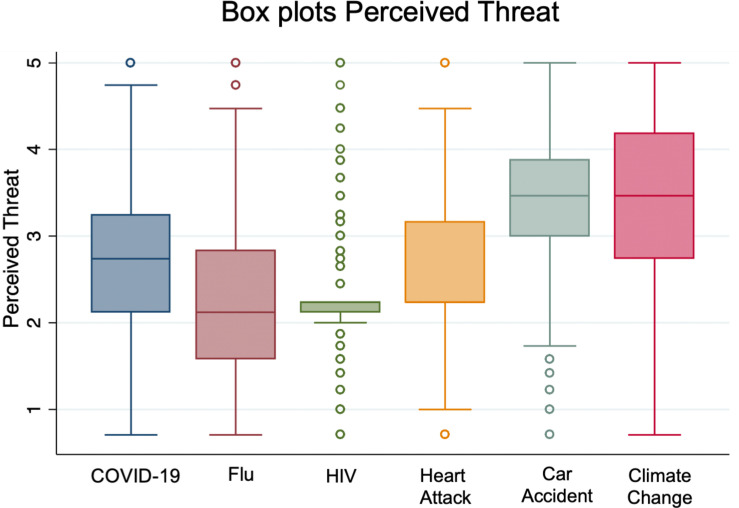
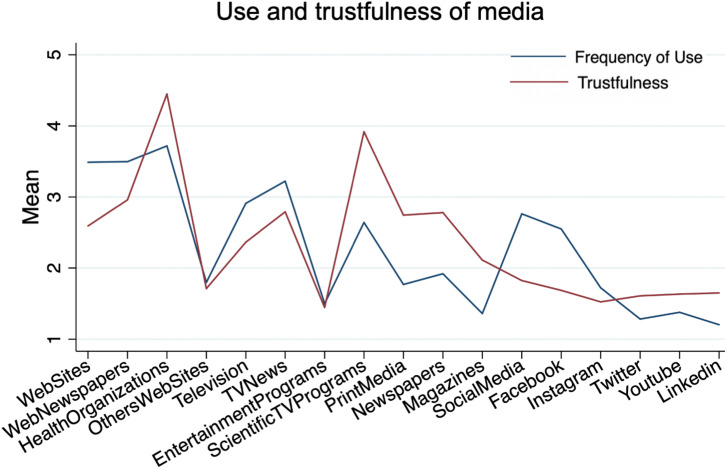
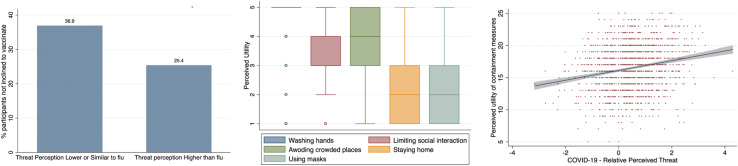
In the absence of target treatments or vaccination, the SARS-CoV-2 pandemic can be impeded by effectively implementing containment measures and behaviors. This relies on individuals' adoption of protective behaviors, their perceived risk, and the use and trust of information sources. During a health emergency, receiving timely and accurate information enables individuals to take appropriate actions to protect themselves, shaping their risk perception. Italy was the first western country plagued by COVID-19 and one of the most affected in the early phase. During this period, we surveyed 2,223 Italians before the national lockdown. A quarter of the sample perceived COVID-19 less threatening than flu and would not vaccinate, if a vaccine was available. Besides, most people perceived containment measures, based on social distancing or wearing masks, not useful. This perceived utility was related to COVID-19 threat perception and efficacy beliefs. All these measures were associated with the use of media and their truthfulness: participants declared to mainly use the Internet, while health organizations' websites were the most trusted. Although social networks were frequently used, they were rated lower for trustfulness. Our data differ from those obtained in other community samples, suggesting the relevance to explore changes across different countries and during the different phases of the pandemic. Understanding these phenomena, and how people access the media, may contribute to improve the efficacy of containment measures, tailoring specific policies and health communications.
在缺乏针对性治疗方法或疫苗的情况下,有效实施防控措施和行为可以阻止新冠病毒大流行。这依赖于个人采取保护行为、他们感知到的风险以及对信息来源的使用和信任。在突发卫生事件期间,及时获得准确信息能使个人采取适当行动保护自己,塑造他们的风险认知。意大利是首个受新冠疫情困扰的西方国家,也是早期受影响最严重的国家之一。在此期间,我们在全国封锁前对2223名意大利人进行了调查。四分之一的样本认为新冠病毒的威胁小于流感,即使有疫苗也不会接种。此外,大多数人认为基于社交距离或戴口罩的防控措施没有用。这种感知到的效用与对新冠病毒的威胁认知和效果信念有关。所有这些措施都与媒体的使用及其真实性有关:参与者宣称主要使用互联网,而卫生组织的网站是最受信任的。尽管社交网络经常被使用,但人们对其信任度较低。我们的数据与在其他社区样本中获得的数据不同,这表明探索不同国家以及疫情不同阶段的变化具有重要意义。了解这些现象以及人们如何获取媒体信息,可能有助于提高防控措施的效果,制定具体政策和开展卫生宣传。