Department of Infectious Diseases, Medical Microbiology and Hygiene, Heidelberg University Hospital, Heidelberg, Germany.
Institute of Medical Microbiology and Hygiene, Technische Universität Dresden, Dresden, Germany.
Front Immunol. 2020 Oct 30;11:598636. doi: 10.3389/fimmu.2020.598636. eCollection 2020.
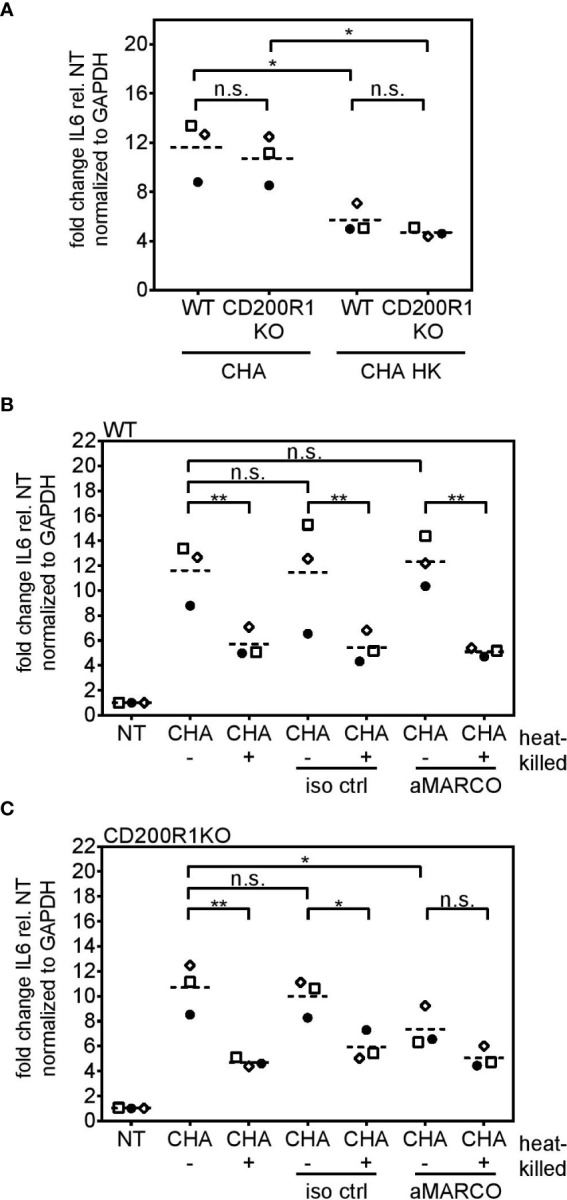
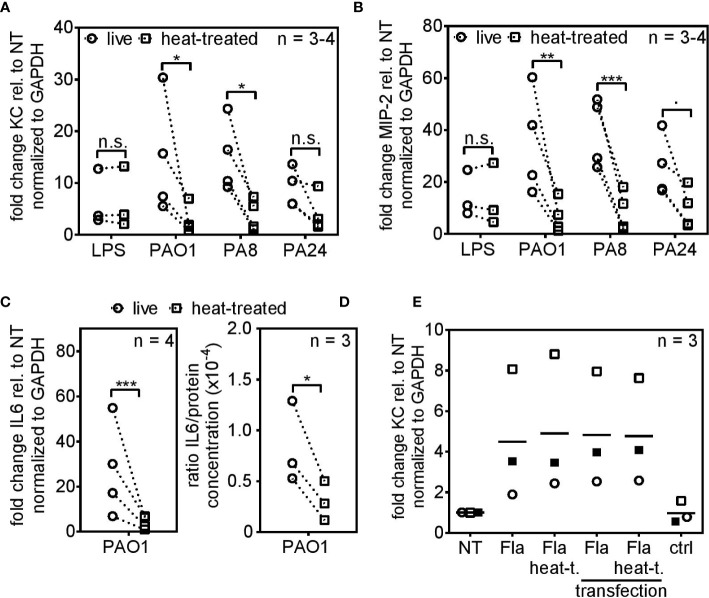
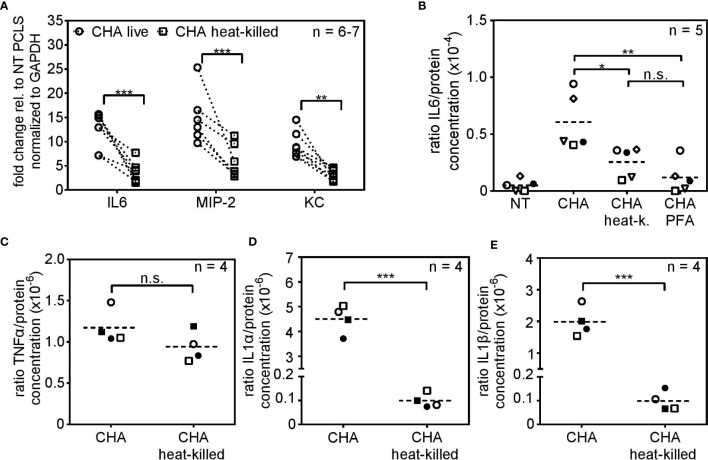
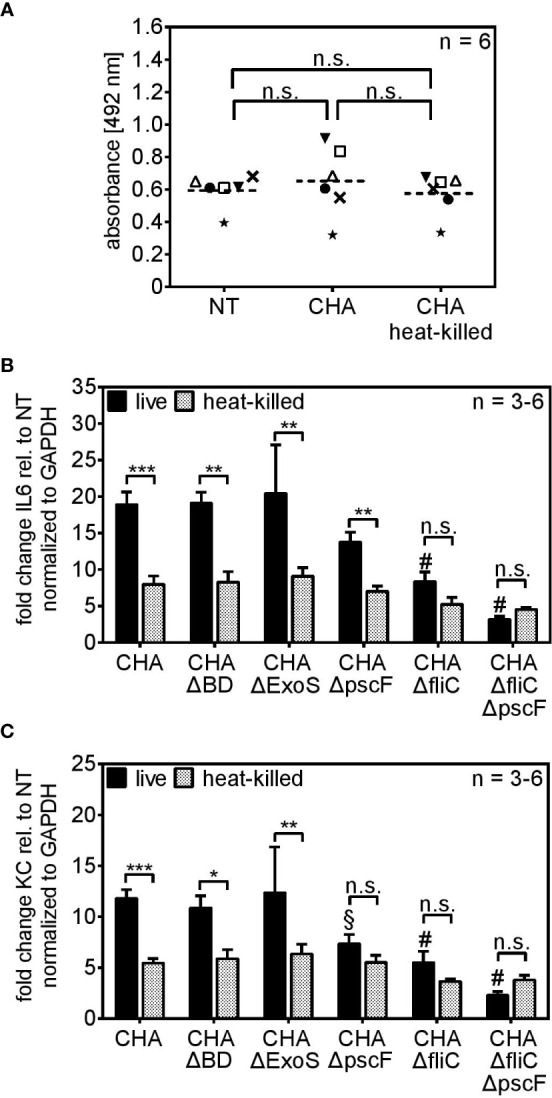
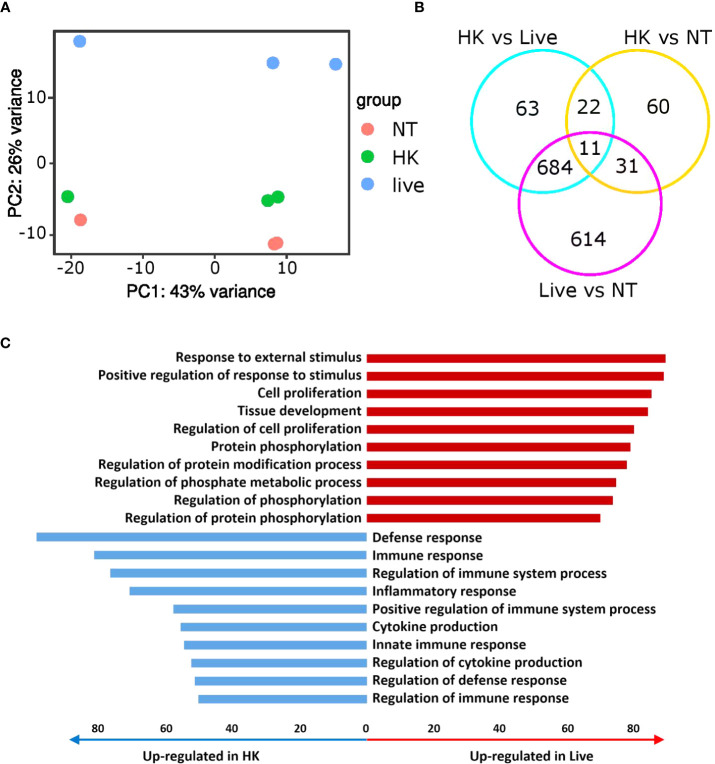
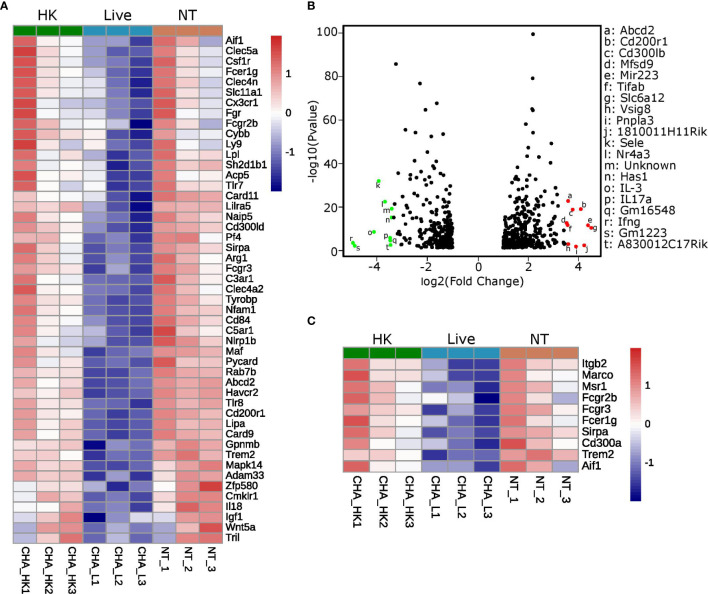
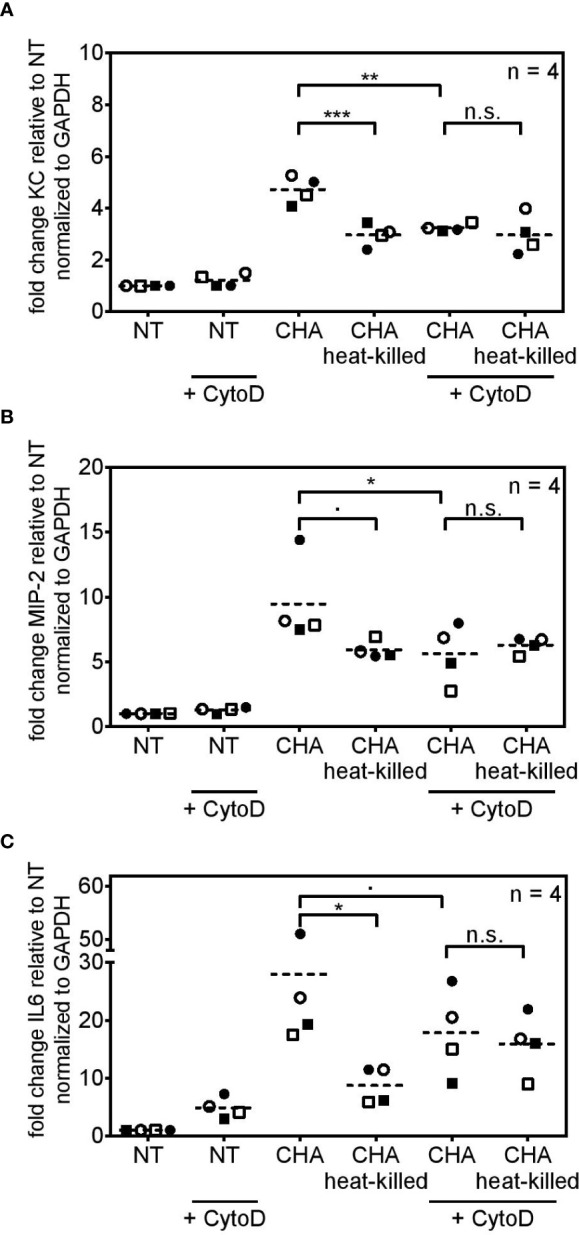
Breathing allows a multitude of airborne microbes and microbial compounds to access the lung. Constant exposure of the pulmonary microenvironment to immunogenic particles illustrates the need for proper control mechanisms ensuring the differentiation between threatening and harmless encounters. Discrimination between live and dead bacteria has been suggested to be such a mechanism. In this study, we performed infection studies of murine precision cut lung slices (PCLS) with live or heat-killed , in order to investigate the role of viability for induction of an innate immune response. We demonstrate that PCLS induce a robust transcriptomic rewiring upon infection with live but not heat-killed . Using mutants of the clinical isolate CHA, we show that the viability status of is assessed in PCLS by TLR5-independent sensing of flagellin and recognition of the type three secretion system. We further demonstrate that enhanced cytokine expression towards live is mediated by uptake of viable but not heat-killed bacteria. Finally, by using a combined approach of receptor blockage and genetically modified PCLS we report a redundant involvement of MARCO and CD200R1 in the uptake of live in PCLS. Altogether, our results show that PCLS adapt the extent of cytokine expression to the viability status of by specifically internalizing live bacteria.
呼吸使大量空气传播的微生物和微生物化合物能够进入肺部。肺部微环境不断暴露于免疫原性颗粒,这说明了需要适当的控制机制来确保区分威胁和无害的接触。区分活细菌和死细菌被认为是这样一种机制。在这项研究中,我们用活细菌或热灭活细菌对小鼠精密切割肺切片(PCLS)进行了感染研究,以研究细菌活力对诱导先天免疫反应的作用。我们证明,PCLS 在感染活细菌但不是热灭活细菌时会引起强大的转录组重排。使用临床分离株 CHA 的突变体,我们表明 PCLS 通过非 TLR5 依赖性检测鞭毛蛋白和识别 III 型分泌系统来评估细菌的活力状态。我们进一步证明,对活细菌的增强的细胞因子表达是通过摄取活细菌而不是热灭活细菌介导的。最后,通过使用受体阻断和基因修饰的 PCLS 的联合方法,我们报告了 MARCO 和 CD200R1 在 PCLS 中摄取活细菌中的冗余作用。总之,我们的研究结果表明,PCLS 通过特异性内化活细菌来适应细菌活力状态下细胞因子表达的程度。