Department of Analytical Chemistry, Faculty of Chemistry, Gdańsk University of Technology, Gabriela Narutowicza 11/12, 80-233 Gdańsk, Poland.
i3S-Instituto de Investigação e Inovação em Saúde, Universidade do Porto, R. Alfredo Allen 208, 4200-135 Porto, Portugal.
Int J Mol Sci. 2020 Nov 24;21(23):8883. doi: 10.3390/ijms21238883.
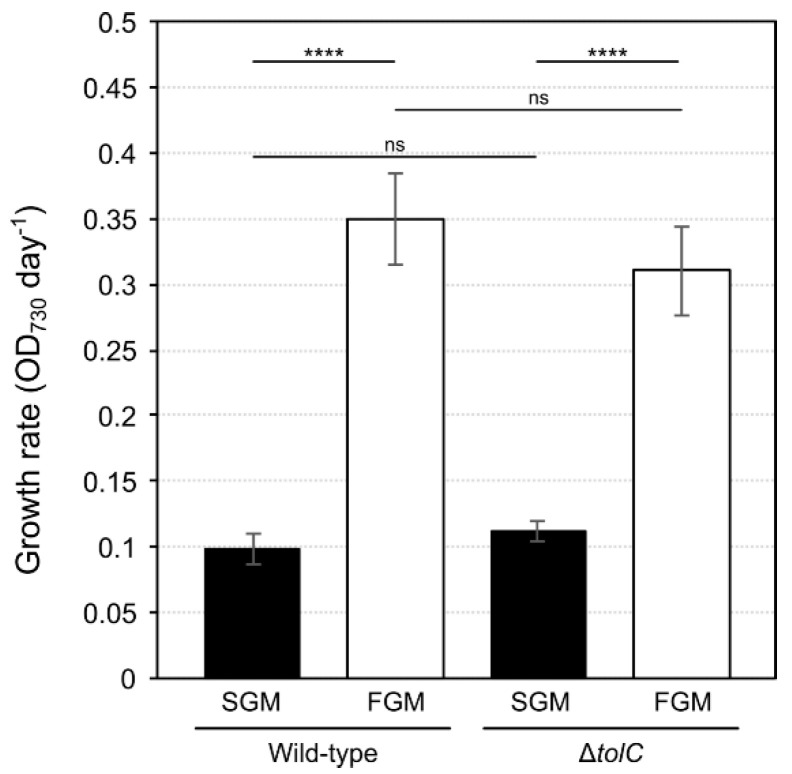
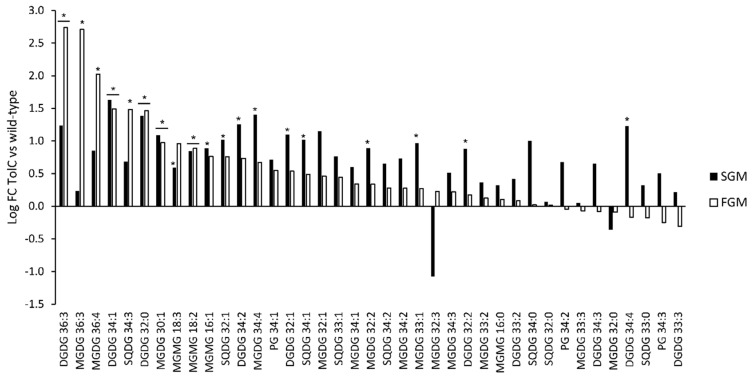
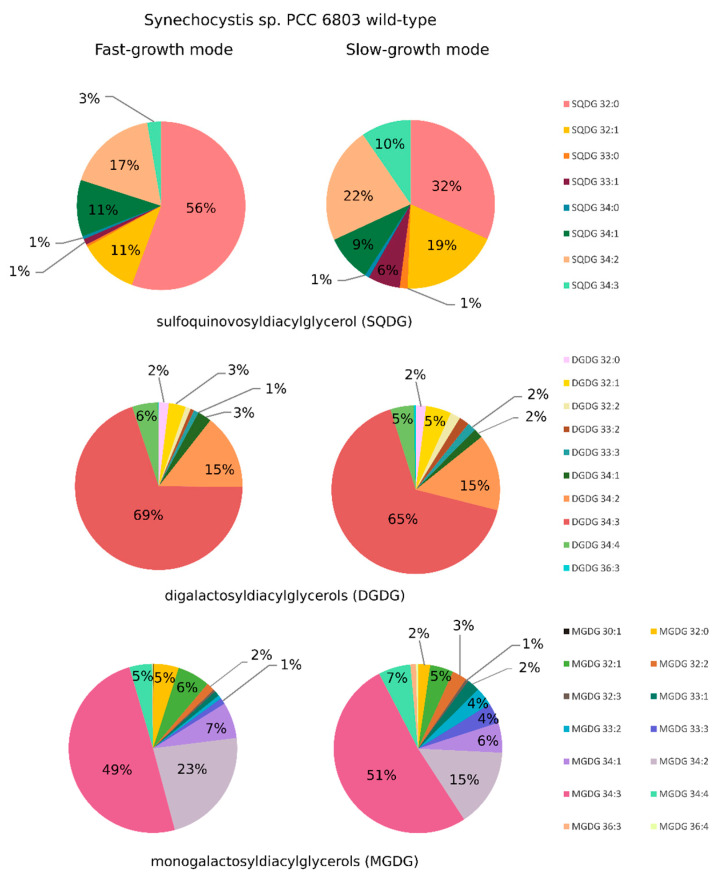
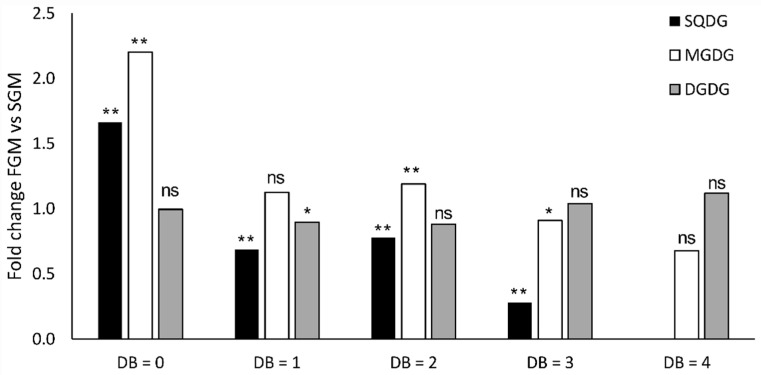
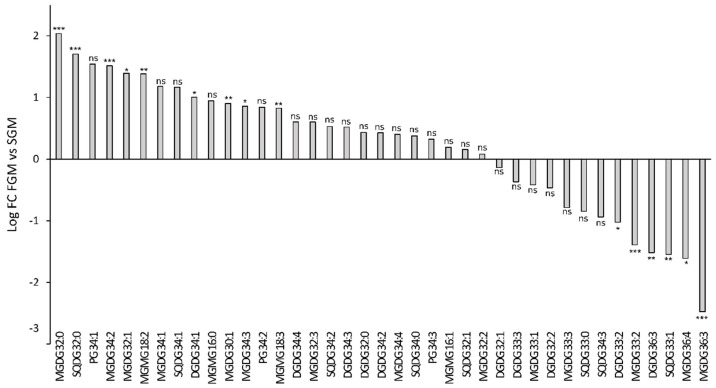
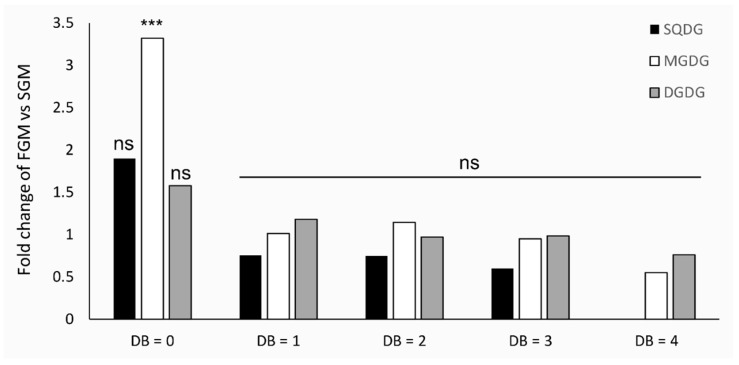
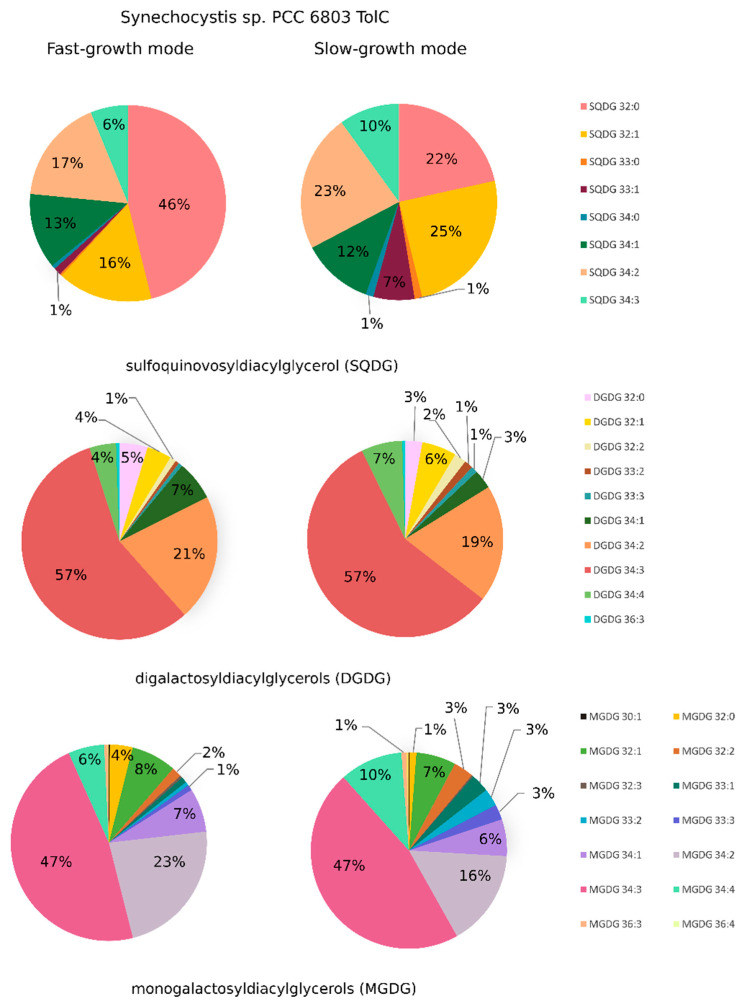
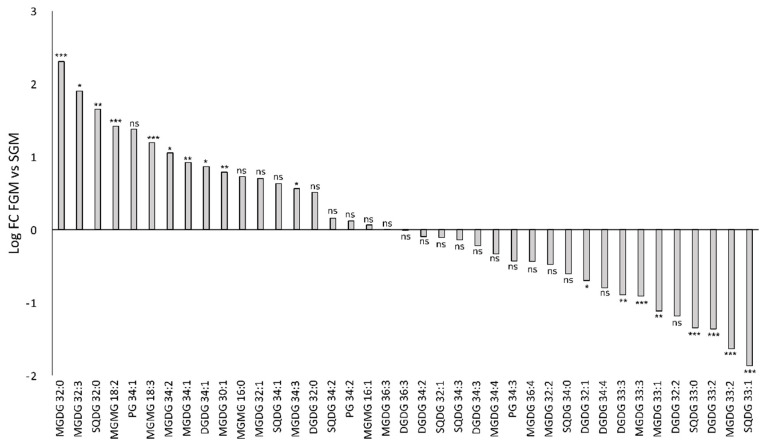
Cyanobacteria play an important role in several ecological environments, and they are widely accepted to be the ancestors of chloroplasts in modern plants and green algae. Cyanobacteria have become attractive models for metabolic engineering, with the goal of exploring them as microbial cell factories. However, the study of cyanobacterial lipids' composition and variation, and the assessment of the lipids' functional and structural roles have been largely overlooked. Here, we aimed at expanding the cyanobacterial lipidomic analytical pipeline by using an untargeted lipidomics approach. Thus, the lipid composition variation of the model cyanobacterium sp. PCC 6803 was investigated in response to both alternative cultivation setups and gene deletion. This approach allowed for detecting differences in total lipid content, alterations in fatty-acid unsaturation level, and adjustments of specific lipid species among the identified lipid classes. The employed method also revealed that the cultivation setup tested in this work induced a deeper alteration of the cyanobacterial cell lipidome than the deletion of a gene that results in a dramatic increase in the release of lipid-rich outer membrane vesicles. This study further highlights how growth conditions must be carefully selected when cyanobacteria are to be engineered and/or scaled-up for lipid or fatty acids production.
蓝细菌在几种生态环境中起着重要作用,它们被广泛认为是现代植物和绿藻中叶绿体的祖先。蓝细菌已成为代谢工程的有吸引力的模型,目的是探索它们作为微生物细胞工厂。然而,蓝细菌脂质组成和变化的研究,以及脂质功能和结构作用的评估在很大程度上被忽视了。在这里,我们旨在通过使用非靶向脂质组学方法扩展蓝细菌脂质组学分析管道。因此,研究了模式蓝细菌 sp. PCC 6803 对替代培养方案和基因缺失的响应中脂质组成的变化。这种方法可以检测总脂质含量的差异、脂肪酸不饱和水平的改变以及鉴定脂质类别的特定脂质种类的调整。所采用的方法还表明,与导致富含脂质的外膜囊泡大量释放的基因缺失相比,本研究中测试的培养方案诱导了蓝细菌细胞脂质组的更深层次改变。这项研究进一步强调了在对蓝细菌进行工程改造和/或扩大脂质或脂肪酸生产时,必须仔细选择生长条件。