Department of Cardiovascular Surgery, Osaka University Graduate School of Medicine, 2-2 Yamadaoka, Suita, Osaka 565-0871, Japan.
Department of Cell Design for Tissue Construction, Faculty of Medicine, Osaka University Graduate School of Medicine, 2-2 Yamadaoka, Suita, Osaka 565-0871, Japan.
Int J Mol Sci. 2020 Nov 24;21(23):8893. doi: 10.3390/ijms21238893.
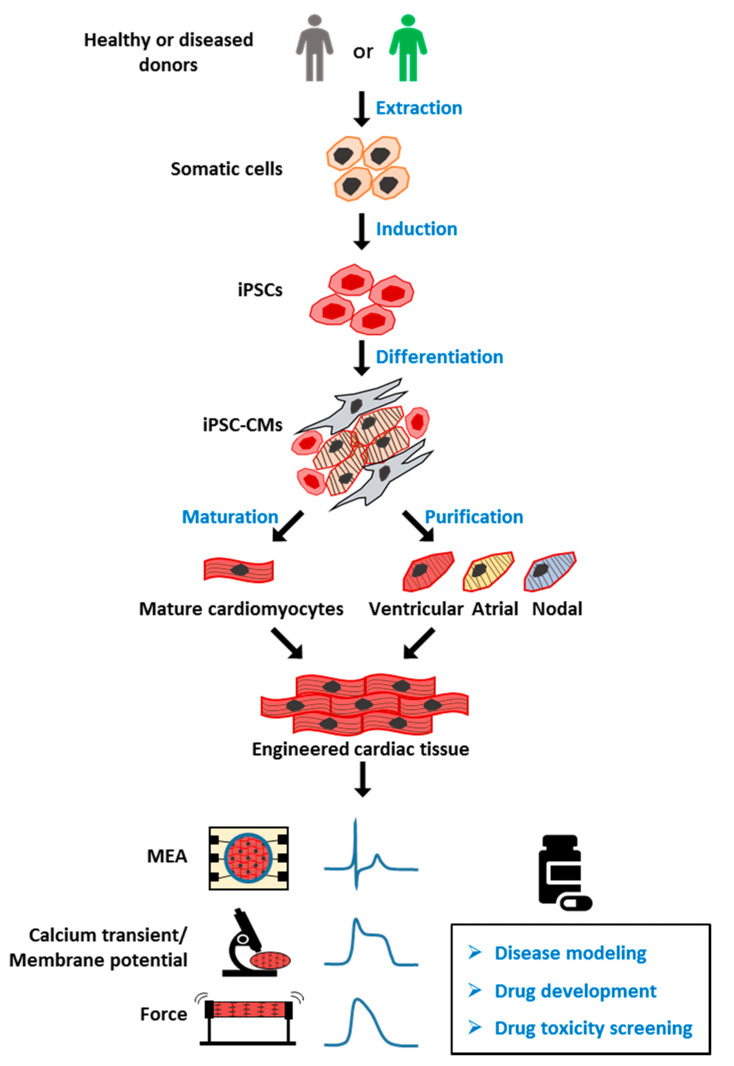
Relevant, predictive normal, or disease model systems are of vital importance for drug development. The difference between nonhuman models and humans could contribute to clinical trial failures despite ideal nonhuman results. As a potential substitute for animal models, human induced pluripotent stem cell (hiPSC)-derived cardiomyocytes (CMs) provide a powerful tool for drug toxicity screening, modeling cardiovascular diseases, and drug discovery. Here, we review recent hiPSC-CM disease models and discuss the features of hiPSC-CMs, including subtype and maturation and the tissue engineering technologies for drug assessment. Updates from the international multisite collaborators/administrations for development of novel drug discovery paradigms are also summarized.
相关的、有预测价值的正常或疾病模型系统对于药物开发至关重要。尽管非人类模型的结果理想,但与人类之间的差异可能导致临床试验失败。人诱导多能干细胞(hiPSC)衍生的心肌细胞(CMs)作为动物模型的潜在替代品,为药物毒性筛选、心血管疾病建模和药物发现提供了有力工具。在这里,我们回顾了最近的 hiPSC-CM 疾病模型,并讨论了 hiPSC-CMs 的特征,包括亚型和成熟度,以及用于药物评估的组织工程技术。还总结了国际多站点合作者/管理机构在开发新型药物发现范例方面的最新进展。