Department of Cell Biology and Ludwig Center at Harvard, Harvard Medical School, 240 Longwood Avenue, Boston, MA, 02115, USA.
Department of Medical Oncology, Dana-Farber Cancer Institute, Boston, MA, USA.
Breast Cancer Res. 2020 Nov 30;22(1):132. doi: 10.1186/s13058-020-01374-8.
Targeted therapies for triple-negative breast cancer (TNBC) are limited; however, the epidermal growth factor receptor (EGFR) represents a potential target, as the majority of TNBC express EGFR. The purpose of these studies was to evaluate the effectiveness of two EGFR-targeted antibody-drug conjugates (ADC: ABT-414; ABBV-321) in combination with navitoclax, an antagonist of the anti-apoptotic BCL-2 and BCL-X proteins, in order to assess the translational relevance of these combinations for TNBC.
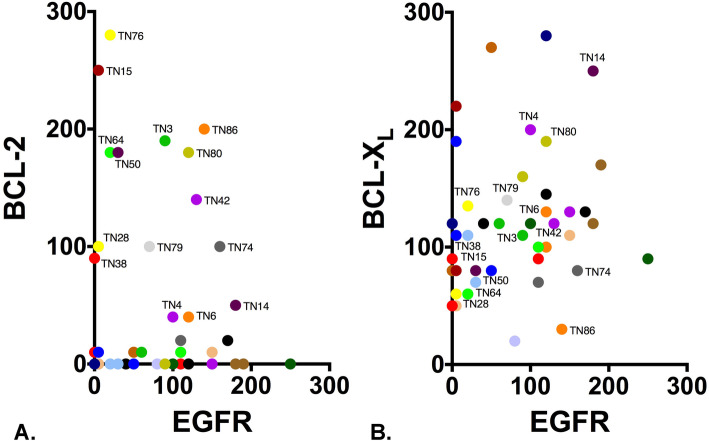
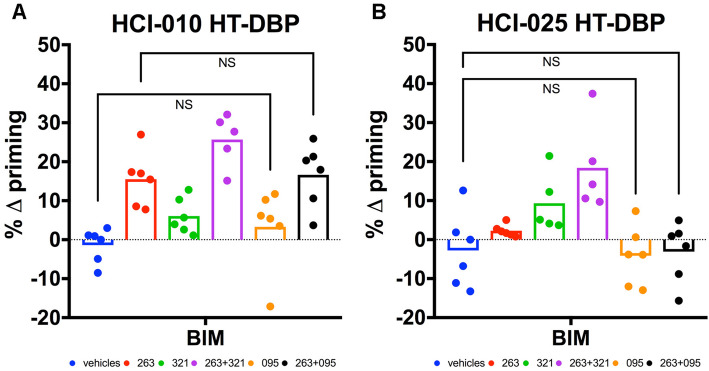
The pre-clinical efficacy of combined treatments was evaluated in multiple patient-derived xenograft (PDX) models of TNBC. Microscopy-based dynamic BH3 profiling (DBP) was used to assess mitochondrial apoptotic signaling induced by navitoclax and/or ADC treatments, and the expression of EGFR and BCL-2/X was analyzed in 46 triple-negative patient tumors.
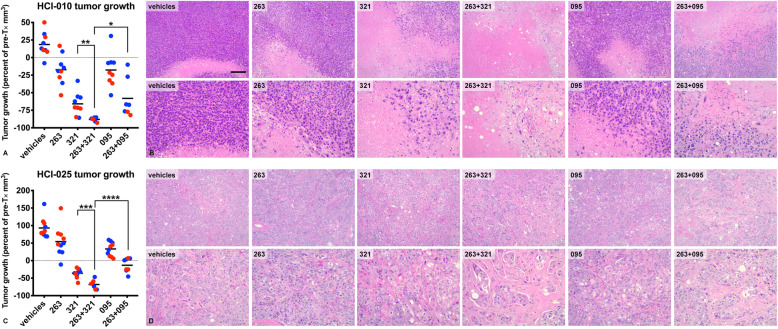
Treatment with navitoclax plus ABT-414 caused a significant reduction in tumor growth in five of seven PDXs and significant tumor regression in the highest EGFR-expressing PDX. Navitoclax plus ABBV-321, an EGFR-targeted ADC that displays more effective wild-type EGFR-targeting, elicited more significant tumor growth inhibition and regressions in the two highest EGFR-expressing models evaluated. The level of mitochondrial apoptotic signaling induced by single or combined drug treatments, as measured by DBP, correlated with the treatment responses observed in vivo. Lastly, the majority of triple-negative patient tumors were found to express EGFR and co-express BCL-X and/or BCL-2.
The dramatic tumor regressions achieved using combined agents in pre-clinical TNBC models underscore the abilities of BCL-2/X antagonists to enhance the effectiveness of EGFR-targeted ADCs and highlight the clinical potential for usage of such targeted ADCs to alleviate toxicities associated with combinations of BCL-2/X inhibitors and systemic chemotherapies.
针对三阴性乳腺癌(TNBC)的靶向治疗方法有限;然而,表皮生长因子受体(EGFR)是一个潜在的靶点,因为大多数 TNBC 表达 EGFR。这些研究的目的是评估两种 EGFR 靶向抗体药物偶联物(ADC:ABT-414;ABBV-321)与 navitoclax 联合使用的有效性,navitoclax 是抗凋亡 BCL-2 和 BCL-X 蛋白的拮抗剂,以评估这些组合对 TNBC 的转化相关性。
在多个 TNBC 患者来源的异种移植(PDX)模型中评估联合治疗的临床前疗效。基于显微镜的动态 BH3 分析(DBP)用于评估 navitoclax 和/或 ADC 治疗诱导的线粒体凋亡信号,并且在 46 个三阴性患者肿瘤中分析 EGFR 和 BCL-2/X 的表达。
navitoclax 加 ABT-414 治疗导致 7 个 PDX 中的 5 个肿瘤生长显著减少,并且在 EGFR 表达最高的 PDX 中出现显著肿瘤消退。navitoclax 加 ABBV-321,一种 EGFR 靶向 ADC,对野生型 EGFR 具有更有效的靶向作用,在评估的两个 EGFR 表达最高的模型中引起更显著的肿瘤生长抑制和消退。由单药或联合药物治疗诱导的线粒体凋亡信号的水平,如 DBP 测量所示,与体内观察到的治疗反应相关。最后,大多数三阴性患者肿瘤被发现表达 EGFR 并共同表达 BCL-X 和/或 BCL-2。
在临床前 TNBC 模型中使用联合药物实现的显著肿瘤消退突出了 BCL-2/X 拮抗剂增强 EGFR 靶向 ADC 有效性的能力,并强调了使用此类靶向 ADC 缓解 BCL-2/X 抑制剂和全身化疗联合毒性的临床潜力。