Africa Health Research Institute, Durban, 4001, South Africa.
Janssen Pharmaceutica, Global Public Health, Turnhoutseweg 30, 2340, Beerse, Belgium.
Nat Commun. 2020 Nov 30;11(1):6092. doi: 10.1038/s41467-020-19959-4.
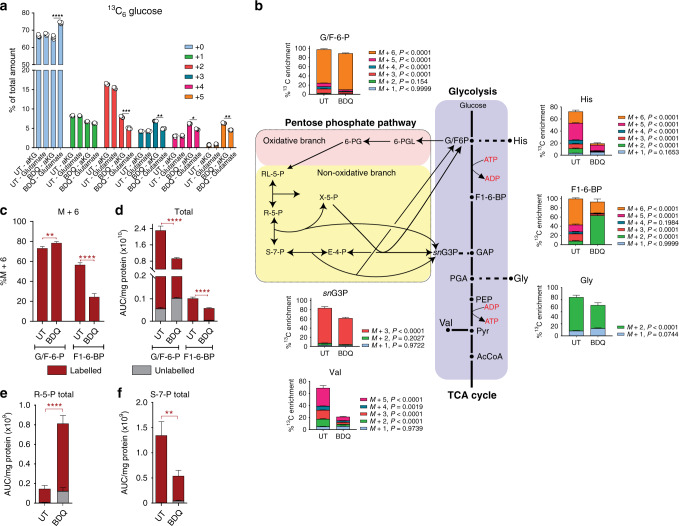
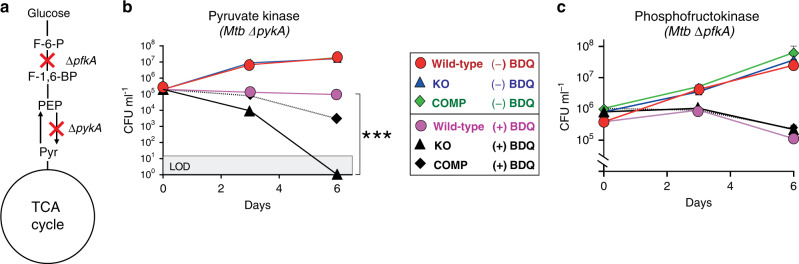
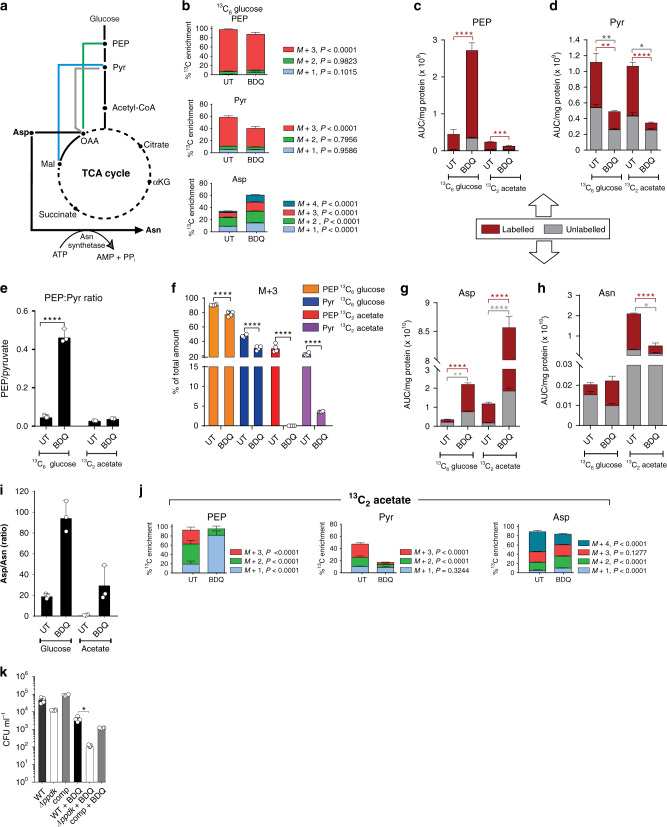
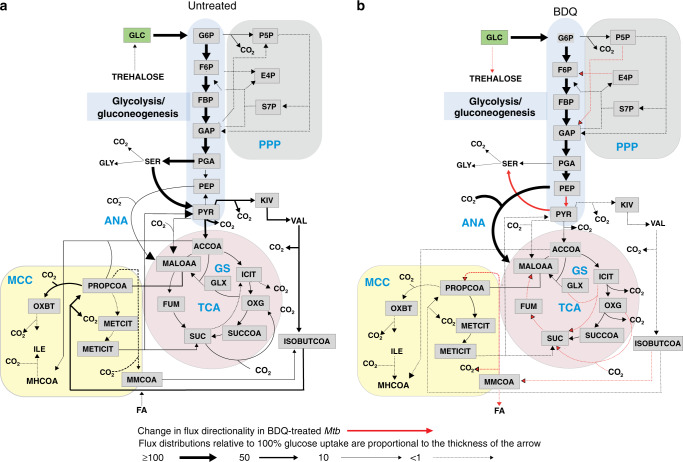
The approval of bedaquiline (BDQ) for the treatment of tuberculosis has generated substantial interest in inhibiting energy metabolism as a therapeutic paradigm. However, it is not known precisely how BDQ triggers cell death in Mycobacterium tuberculosis (Mtb). Using C isotopomer analysis, we show that BDQ-treated Mtb redirects central carbon metabolism to induce a metabolically vulnerable state susceptible to genetic disruption of glycolysis and gluconeogenesis. Metabolic flux profiles indicate that BDQ-treated Mtb is dependent on glycolysis for ATP production, operates a bifurcated TCA cycle by increasing flux through the glyoxylate shunt, and requires enzymes of the anaplerotic node and methylcitrate cycle. Targeting oxidative phosphorylation (OXPHOS) with BDQ and simultaneously inhibiting substrate level phosphorylation via genetic disruption of glycolysis leads to rapid sterilization. Our findings provide insight into the metabolic mechanism of BDQ-induced cell death and establish a paradigm for the development of combination therapies that target OXPHOS and glycolysis.
苯并恶嗪酮(BDQ)获批用于结核病治疗,这极大地激发了人们将抑制能量代谢作为一种治疗范例的兴趣。然而,BDQ 究竟如何引发结核分枝杆菌(Mtb)细胞死亡尚不清楚。我们采用 C 同位素分馏分析方法,发现 BDQ 处理后的 Mtb 将中心碳代谢重新导向,导致其进入易受代谢抑制影响的脆弱状态,此时对糖酵解和糖异生的遗传干扰即可引发细胞死亡。代谢通量分析表明,BDQ 处理后的 Mtb 依赖糖酵解生成 ATP,通过增加乙醛酸支路通量使三羧酸循环发生分叉,并需要依赖于柠檬酸循环和甲基柠檬酸循环的酶。BDQ 靶向氧化磷酸化(OXPHOS)并通过糖酵解的遗传干扰同时抑制底物水平磷酸化,可迅速实现杀菌。本研究结果为 BDQ 诱导细胞死亡的代谢机制提供了深入了解,并为开发靶向 OXPHOS 和糖酵解的联合治疗方案奠定了基础。