Division of Digestive and Liver Diseases, Department of Medicine, Columbia University Irving Medical Center, New York, NY, USA.
Division of General Medicine, Department of Medicine, Columbia University Irving Medical Center, New York, NY, USA.
Cancer Med. 2021 Jan;10(2):684-692. doi: 10.1002/cam4.3615. Epub 2020 Dec 1.
High sodium consumption has been associated with an increased risk of gastric cancer. The mean daily sodium intake in the United States substantially exceeds the national recommended amount. The low sodium-DASH diet has been shown to decrease the risk of cardiovascular disease in the United States, but its impact on gastric cancer has not been well studied. We therefore aimed to model the impact and cost-effectiveness of the low sodium-DASH diet for gastric cancer prevention in the U.S.
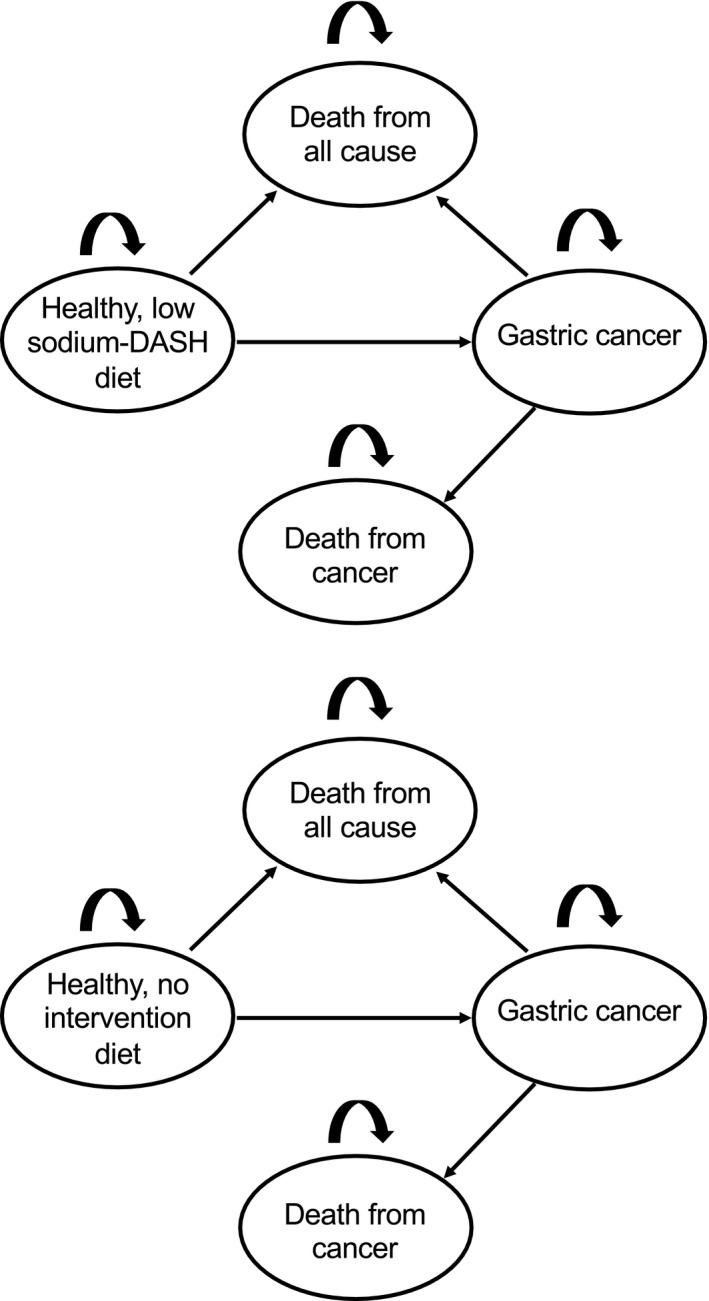
A Markov cohort state-transition model was developed to simulate the impact of the low sodium-DASH diet on gastric cancer outcomes for the average 40-year-old in the United States compared to no intervention. Primary outcomes of interest were gastric cancer incidence and incremental cost-effectiveness ratios (ICER).
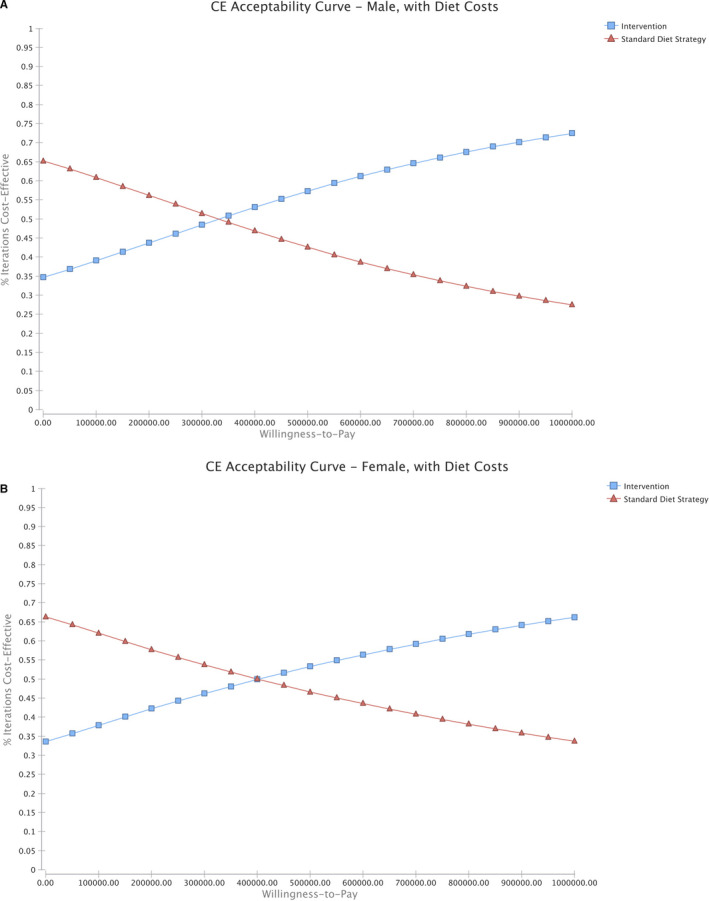
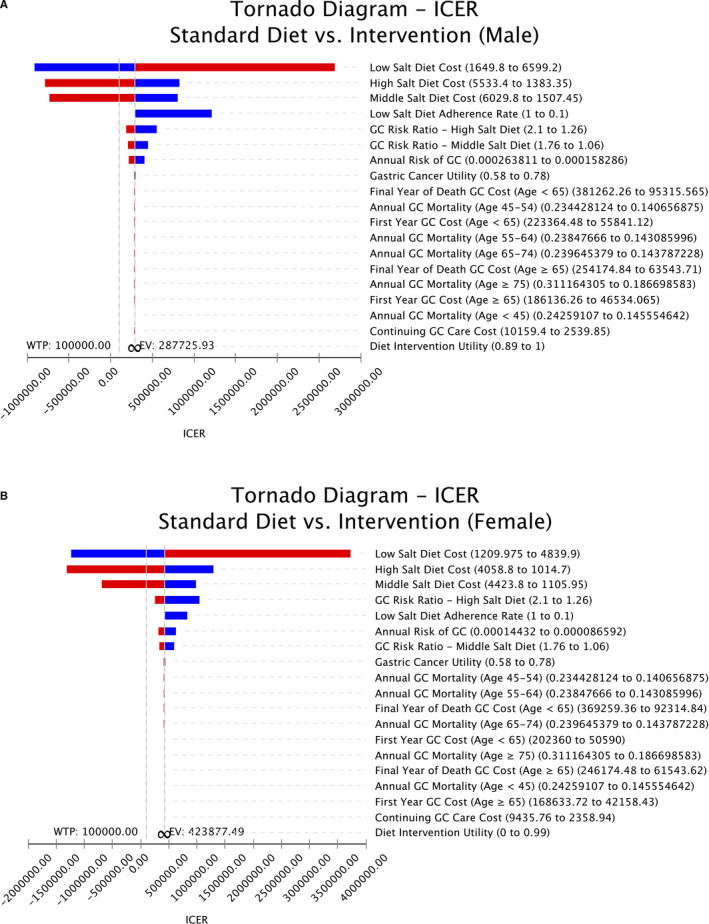
Our model found that compared to the no intervention cohort, the risk of gastric cancer decreased by 24.8% for males and 21.2% for females on the low sodium-DASH diet. 27 cases and 14 cases per 10,000 individuals were prevented for males and females, respectively, in the intervention group. The ICER for the low sodium-DASH diet strategy was $287,726 for males and $423,878 for females compared to the no intervention strategy.
Using a Markov model of gastric cancer risk, we found that adherence to a low sodium-DASH diet could decrease the risk of gastric cancer. This intervention was not cost-effective due to the high cost of a low sodium-DASH accordant diet, but significantly improved for high-risk populations and when the cost of the diet became slightly more affordable.
高钠摄入量与胃癌风险增加有关。美国的平均日钠摄入量大大超过国家推荐量。低钠-DASH 饮食已被证明可降低美国心血管疾病的风险,但对胃癌的影响尚未得到充分研究。因此,我们旨在模拟低钠-DASH 饮食对美国胃癌预防的影响和成本效益。
我们开发了一个马尔可夫队列状态转移模型,以模拟低钠-DASH 饮食对美国 40 岁平均人群胃癌结局的影响,与无干预相比。主要研究结果是胃癌发病率和增量成本效益比(ICER)。
我们的模型发现,与无干预组相比,男性和女性在低钠-DASH 饮食组中胃癌的风险分别降低了 24.8%和 21.2%。在干预组中,男性和女性分别预防了每 10000 人 27 例和 14 例病例。与无干预策略相比,低钠-DASH 饮食策略的 ICER 分别为男性 287726 美元和女性 423878 美元。
我们使用胃癌风险的马尔可夫模型发现,遵循低钠-DASH 饮食可以降低胃癌的风险。由于低钠-DASH 饮食的成本较高,该干预措施不具有成本效益,但对于高危人群和当饮食成本变得稍微负担得起时,其效果显著改善。