Chair and Department of Pharmaceutical Botany, Faculty of Pharmacy, Jagiellonian University, Medical College, ul. Medyczna 9, 30-688 Kraków, Poland.
Chair and Department of Pharmacognosy, Faculty of Pharmacy, Medical University of Gdansk, al. gen. J. Hallera 107, 80-416 Gdańsk, Poland.
Molecules. 2020 Nov 28;25(23):5609. doi: 10.3390/molecules25235609.
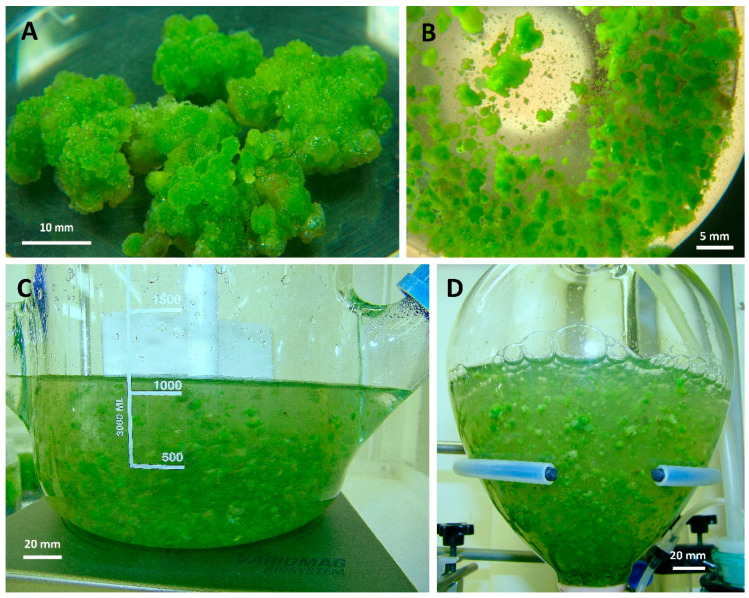
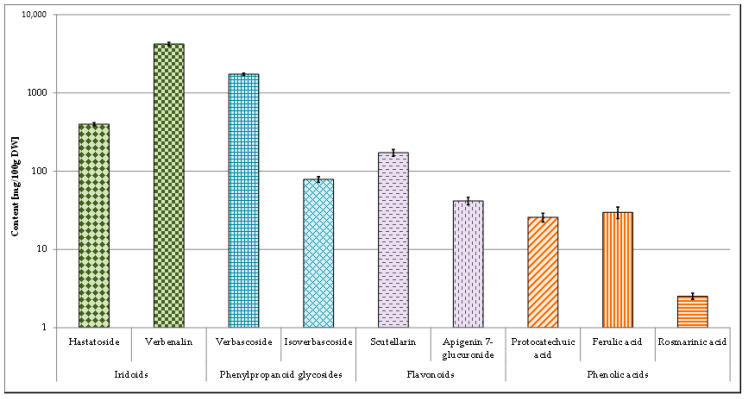
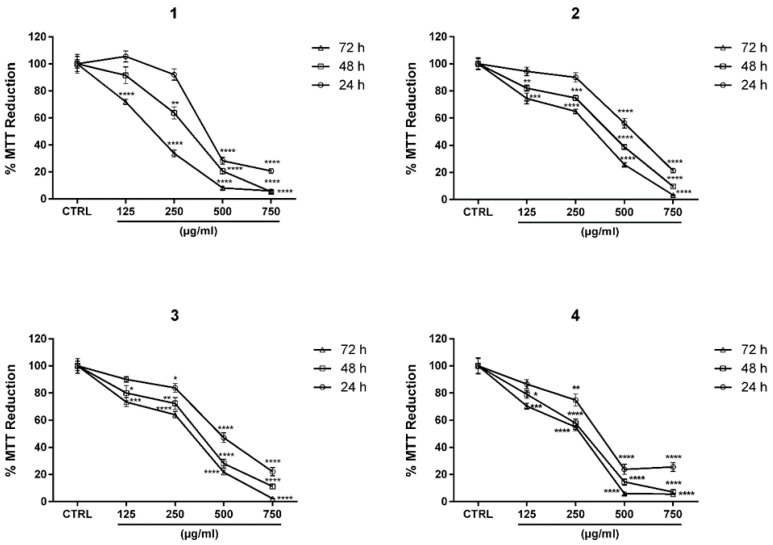
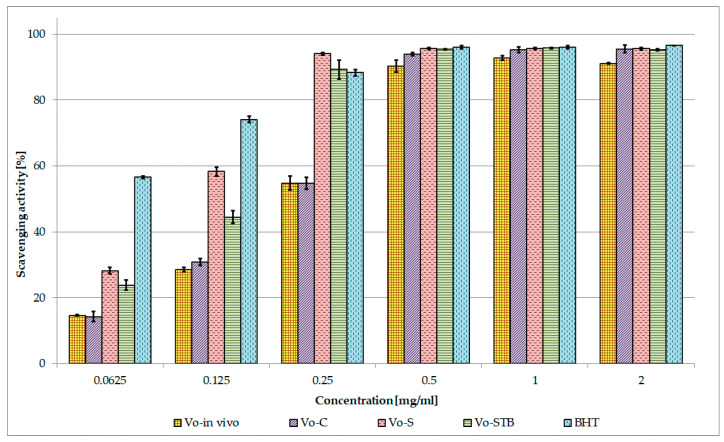
Callus, suspension and bioreactor cultures of were established, and optimized for biomass growth and production of phenylpropanoid glycosides, phenolic acids, flavonoids and iridoids. All types of cultures were maintained on/in the Murashige and Skoog (MS) media with 1 mg/L BAP and 1 mg/L NAA. The inoculum sizes were optimized in callus and suspension cultures. Moreover, the growth of the culture in two different types of bioreactors-a balloon bioreactor (BB) and a stirred-tank bioreactor (STB) was tested. In methanolic extracts from biomass of all types of in vitro cultures the presence of the same metabolites-verbascoside, isoverbascoside, and six phenolic acids: protocatechuic, chlorogenic, vanillic, caffeic, ferulic and rosmarinic acids was confirmed and quantified by the HPLC-DAD method. In the extracts from lyophilized culture media, no metabolites were found. The main metabolites in biomass extracts were verbascoside and isoverbascoside. Their maximum amounts in g/100 g DW (dry weight) in the tested types of cultures were as follow: 7.25 and 0.61 (callus), 7.06 and 0.48 (suspension), 7.69 and 0.31 (BB), 9.18 and 0.34 (STB). The amounts of phenolic acids were many times lower, max. total content reached of 26.90, 50.72, 19.88, and 36.78 mg/100 g DW, respectively. The highest content of verbascoside and also a high content of isoverbascoside obtained in STB (stirred-tank bioreactor) were 5.3 and 7.8 times higher than in extracts from overground parts of the parent plant. In the extracts from parent plant two iridoids-verbenalin and hastatoside, were also abundant. All investigated biomass extracts and the extracts from parent plant showed the antiproliferative, antioxidant and antibacterial activities. The strongest activities were documented for the cultures maintained in STB. We propose extracts from in vitro cultured biomass of vervain, especially from STB, as a rich source of bioactive metabolites with antiproliferative, antioxidant and antibacterial properties.
建立了绒毛状悬钩子的愈伤组织、悬浮和生物反应器培养,并对其生物量生长和苯丙素糖苷、酚酸、类黄酮和环烯醚萜的生产进行了优化。所有类型的培养都在 Murashige 和 Skoog (MS) 培养基上进行,其中含有 1 mg/L BAP 和 1 mg/L NAA。在愈伤组织和悬浮培养中优化了接种量。此外,还测试了两种不同类型的生物反应器——气球生物反应器 (BB) 和搅拌罐生物反应器 (STB) 中培养物的生长情况。通过 HPLC-DAD 法证实并定量了所有类型的体外培养物生物量的甲醇提取物中存在相同的代谢物——毛蕊花糖苷、异毛蕊花糖苷和六种酚酸:原儿茶酸、绿原酸、香草酸、咖啡酸、阿魏酸和迷迭香酸。在冻干培养物培养基的提取物中,未发现代谢物。生物量提取物中的主要代谢物是毛蕊花糖苷和异毛蕊花糖苷。在测试的培养物类型中,其 g/100 g DW(干重)中的最大含量分别为 7.25 和 0.61(愈伤组织)、7.06 和 0.48(悬浮液)、7.69 和 0.31(BB)、9.18 和 0.34(STB)。酚酸的含量要低得多,最大总含量分别达到 26.90、50.72、19.88 和 36.78 mg/100 g DW。在 STB(搅拌罐生物反应器)中获得的毛蕊花糖苷和异毛蕊花糖苷含量最高,分别比亲本地上部分提取物高 5.3 和 7.8 倍。在亲本植物提取物中还含有两种环烯醚萜——马鞭草定和哈托苷。所有研究的生物量提取物和亲本植物提取物均表现出抗增殖、抗氧化和抗菌活性。在 STB 中维持的培养物记录的活性最强。我们建议将马鞭草的体外培养生物量提取物,特别是来自 STB 的提取物,作为具有抗增殖、抗氧化和抗菌特性的生物活性代谢物的丰富来源。