Fernández-Ortiz Marisol, Sayed Ramy K A, Fernández-Martínez José, Cionfrini Antonia, Aranda-Martínez Paula, Escames Germaine, de Haro Tomás, Acuña-Castroviejo Darío
Centro de Investigación Biomédica, Departamento de Fisiología, Facultad de Medicina, Instituto de Biotecnología, Parque Tecnológico de Ciencias de la Salud, Universidad de Granada, 18016 Granada, Spain.
Department of Anatomy and Embryology, Faculty of Veterinary Medicine, Sohag University, Sohag 82524, Egypt.
Antioxidants (Basel). 2020 Nov 27;9(12):1187. doi: 10.3390/antiox9121187.
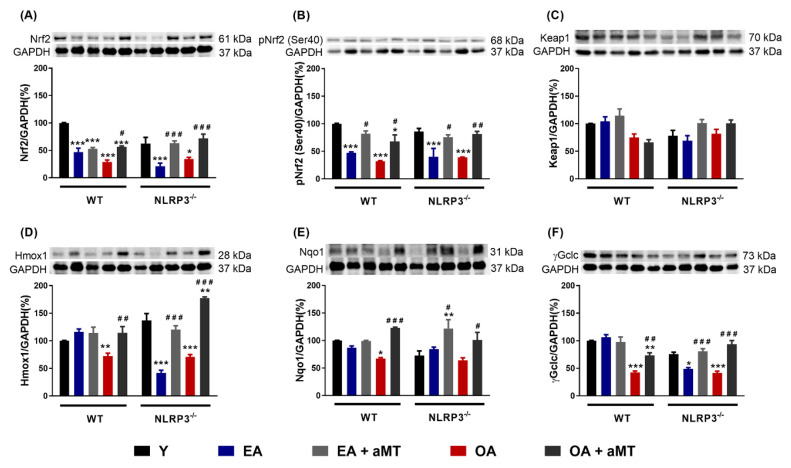
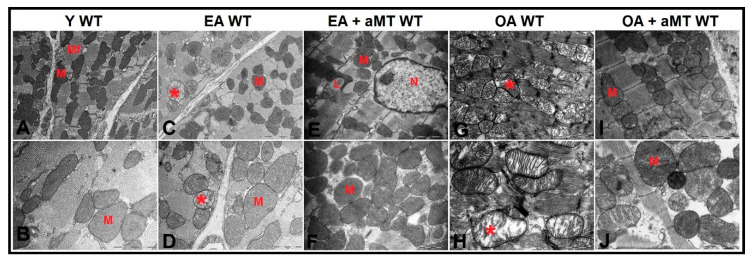
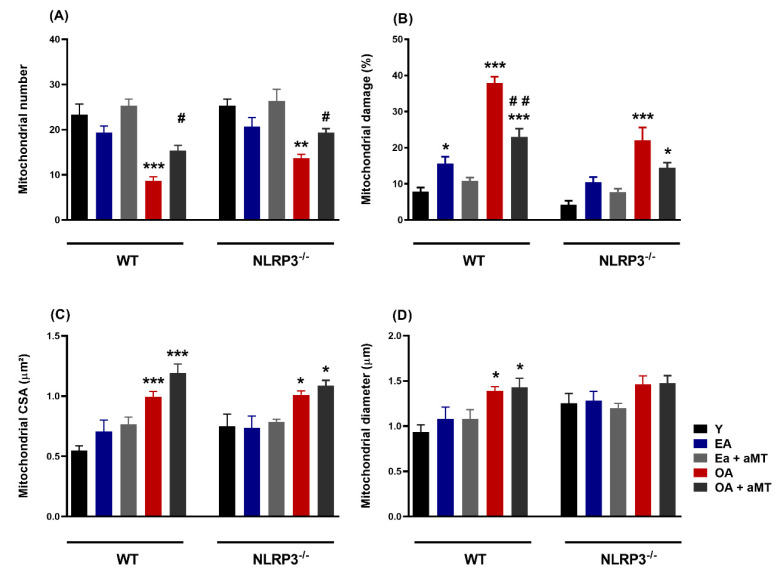
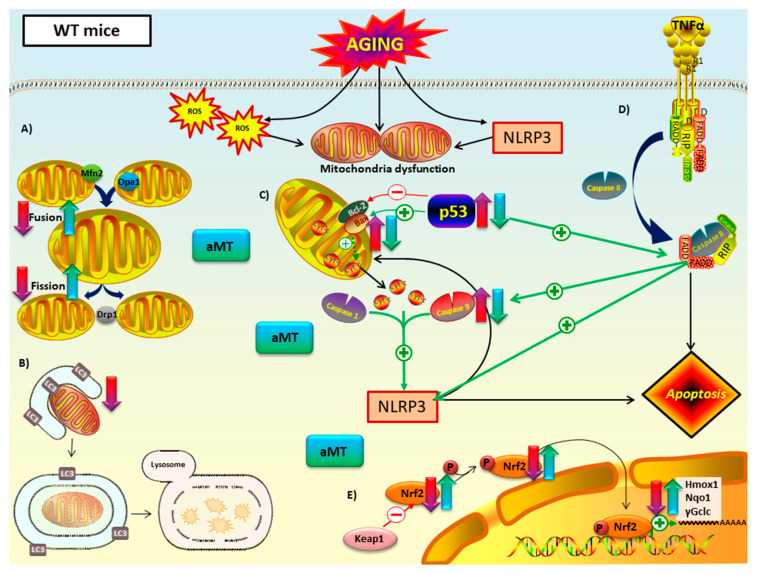
Aging is a major risk for cardiovascular diseases (CVD). Age-related disorders include oxidative stress, mitochondria dysfunction, and exacerbation of the NF-κB/NLRP3 innate immune response pathways. Some of the molecular mechanisms underlying these processes, however, remain unclear. This study tested the hypothesis that NLRP3 inflammasome plays a role in cardiac aging and melatonin is able to counteract its effects. With the aim of investigating the impact of NLRP3 inflammasome and the actions and target of melatonin in aged myocardium, we analyzed the expression of proteins implied in mitochondria dynamics, autophagy, apoptosis, Nrf2-dependent antioxidant response and mitochondria ultrastructure in heart of wild-type and NLRP3-knockout mice of 3, 12, and 24 months-old, with and without melatonin treatment. Our results showed that the absence of NLRP3 prevented age-related mitochondrial dynamic alterations in cardiac muscle with minimal effects in cardiac autophagy during aging. The deficiency of the inflammasome affected Bax/Bcl2 ratio, but not p53 or caspase 9. The Nrf2-antioxidant pathway was also unaffected by the absence of NLRP3. Furthermore, NLRP3-deficiency prevented the drop in autophagy and mice showed less mitochondrial damage than wild-type animals. Interestingly, melatonin treatment recovered mitochondrial dynamics altered by aging and had few effects on cardiac autophagy. Melatonin supplementation also had an anti-apoptotic action in addition to restoring Nrf2-antioxidant capacity and improving mitochondria ultrastructure altered by aging.
衰老 是心血管疾病(CVD)的主要风险因素。与年龄相关的病症包括氧化应激、线粒体功能障碍以及NF-κB/NLRP3先天免疫反应途径的加剧。然而,这些过程背后的一些分子机制仍不清楚。本研究检验了NLRP3炎性小体在心脏衰老中起作用且褪黑素能够抵消其作用这一假说。为了研究NLRP3炎性小体的影响以及褪黑素在老年心肌中的作用和靶点,我们分析了3、12和24月龄野生型和NLRP3基因敲除小鼠心脏中与线粒体动力学、自噬、凋亡、Nrf2依赖性抗氧化反应及线粒体超微结构相关的蛋白质表达,这些小鼠接受或未接受褪黑素治疗。我们的结果表明,NLRP3的缺失可预防衰老过程中心肌中与年龄相关的线粒体动态改变,且对衰老过程中的心脏自噬影响最小。炎性小体的缺乏影响Bax/Bcl2比值,但不影响p53或半胱天冬酶9。Nrf2抗氧化途径也不受NLRP3缺失的影响。此外,NLRP3缺乏可预防自噬下降,且小鼠的线粒体损伤比野生型动物少。有趣的是,褪黑素治疗可恢复衰老引起的线粒体动态变化,且对心脏自噬影响较小。补充褪黑素除了能恢复Nrf2抗氧化能力和改善衰老引起的线粒体超微结构改变外,还具有抗凋亡作用。