Département des Sciences Fondamentales, Université du Québec à Chicoutimi, Saguenay, QC G7H 2B1, Canada.
Centre Intersectoriel en Santé Durable, Université du Québec à Chicoutimi, Saguenay, QC G7H 2B1, Canada.
Int J Mol Sci. 2020 Nov 27;21(23):9011. doi: 10.3390/ijms21239011.
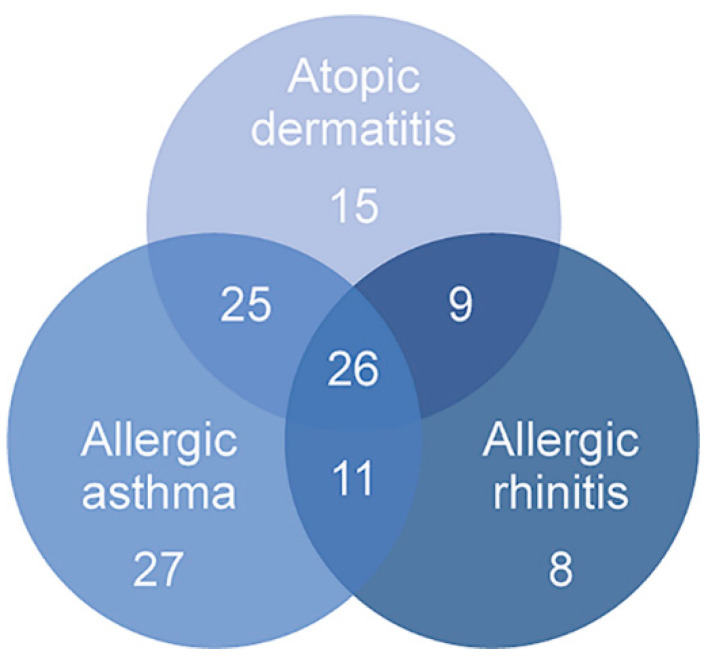
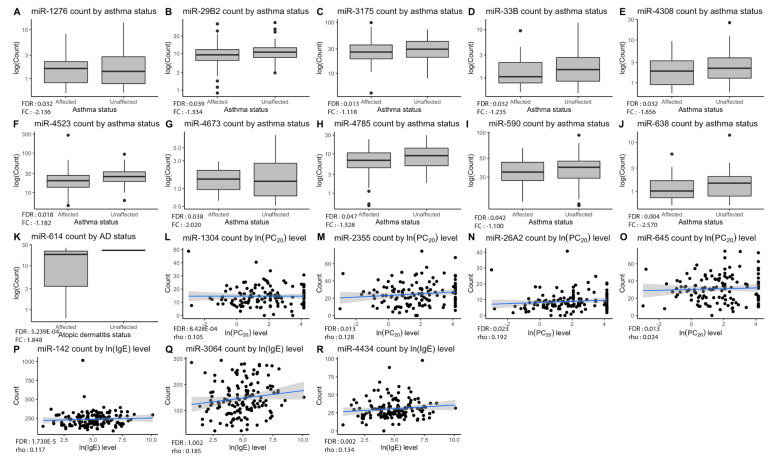
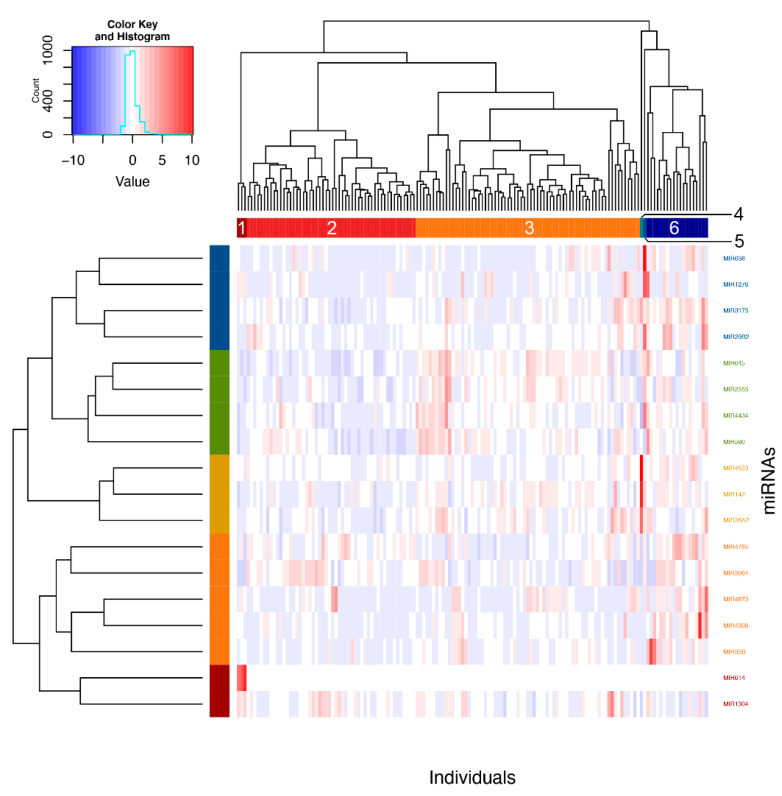
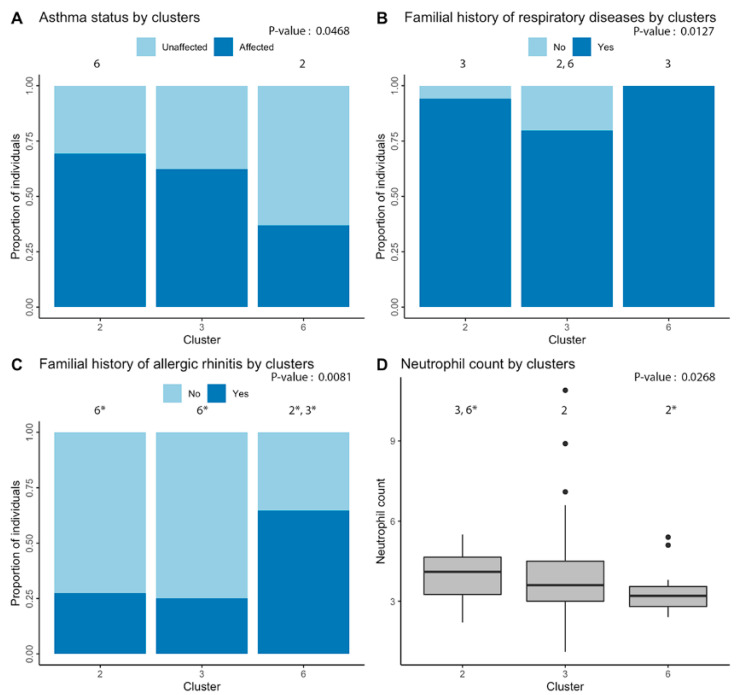
(1) Background: The atopic march is defined by the increased prevalence of allergic diseases after atopic dermatitis onset. In fact, atopic dermatitis is believed to play an important role in allergen sensitization via the damaged skin barrier, leading to allergic diseases such as allergic asthma and allergic rhinitis. The eosinophil, a pro-inflammatory cell that contributes to epithelial damage, is one of the various cells recruited in the inflammatory reactions characterizing these diseases. Few studies were conducted on the transcriptome of this cell type and even less on their specific microRNA (miRNA) profile, which could modulate pathogenesis of allergic diseases and clinical manifestations post-transcriptionally. Actually, their implication in allergic diseases is not fully understood, but they are believed to play a role in inflammation-related patterns and epithelial cell proliferation. (2) Methods: Next-generation sequencing was performed on RNA samples from eosinophils of individuals with atopic dermatitis, atopy, allergic rhinitis and asthma to obtain differential counts of primary miRNA (pri-miRNA); these were also analyzed for asthma-related phenotypes such as forced expiratory volume in one second (FEV), immunoglobulin E (IgE) and provocative concentration of methacholine inducing a 20% fall in forced expiratory volume in 1 s (PC) levels, as well as FEV to forced vital capacity (FEV/FVC) ratio. (3) Results: Eighteen miRNAs from eosinophils were identified to be significantly different between affected individuals and unaffected ones. Based on counts from these miRNAs, individuals were then clustered into groups using Ward's method on Euclidian distances. Groups were found to be explained by asthma diagnosis, familial history of respiratory diseases and allergic rhinitis as well as neutrophil counts. (4) Conclusions: The 18 differential miRNA counts for the studying phenotypes allow a better understanding of the epigenetic mechanisms underlying the development of the allergic diseases included in the atopic march.
(1)背景:特应性进程是指特应性皮炎发病后过敏性疾病发病率增加。事实上,特应性皮炎被认为通过受损的皮肤屏障在过敏原致敏中起重要作用,导致特应性疾病,如过敏性哮喘和过敏性鼻炎。嗜酸性粒细胞是一种促炎细胞,有助于上皮损伤,是参与这些疾病炎症反应的各种细胞之一。针对这种细胞类型的转录组进行的研究很少,针对其特定 microRNA(miRNA)谱的研究则更少,而 miRNA 谱可能会在后转录水平上调节过敏性疾病的发病机制和临床表现。实际上,它们在过敏性疾病中的作用尚未完全了解,但据信它们在炎症相关模式和上皮细胞增殖中起作用。(2)方法:对特应性皮炎、特应症、过敏性鼻炎和哮喘患者的嗜酸性粒细胞 RNA 样本进行下一代测序,以获得初级 miRNA(pri-miRNA)的差异计数;还对与哮喘相关的表型(如一秒用力呼气量(FEV)、免疫球蛋白 E(IgE)和引起一秒用力呼气量下降 20%的乙酰甲胆碱激发浓度(PC)水平)以及 FEV/FVC 比值进行了分析。(3)结果:从嗜酸性粒细胞中鉴定出 18 种 miRNA 在受影响个体和未受影响个体之间存在显著差异。基于这些 miRNA 的计数,然后使用 Ward 方法基于欧几里得距离对个体进行聚类。发现聚类由哮喘诊断、呼吸道疾病和过敏性鼻炎家族史以及嗜中性粒细胞计数解释。(4)结论:针对研究表型的 18 个差异 miRNA 计数可更好地理解特应性进程中包括的过敏性疾病的表观遗传机制。