Department of Biotechnology, Helmholtz Institute Freiberg for Resource Technology, Helmholtz Center Dresden-Rossendorf, 01328 Dresden, Germany.
Microbial Genomics and Biotechnology, CeBiTec-Center for Biotechnology, Bielefeld University, 33594 Bielefeld, Germany.
Viruses. 2020 Nov 27;12(12):1360. doi: 10.3390/v12121360.
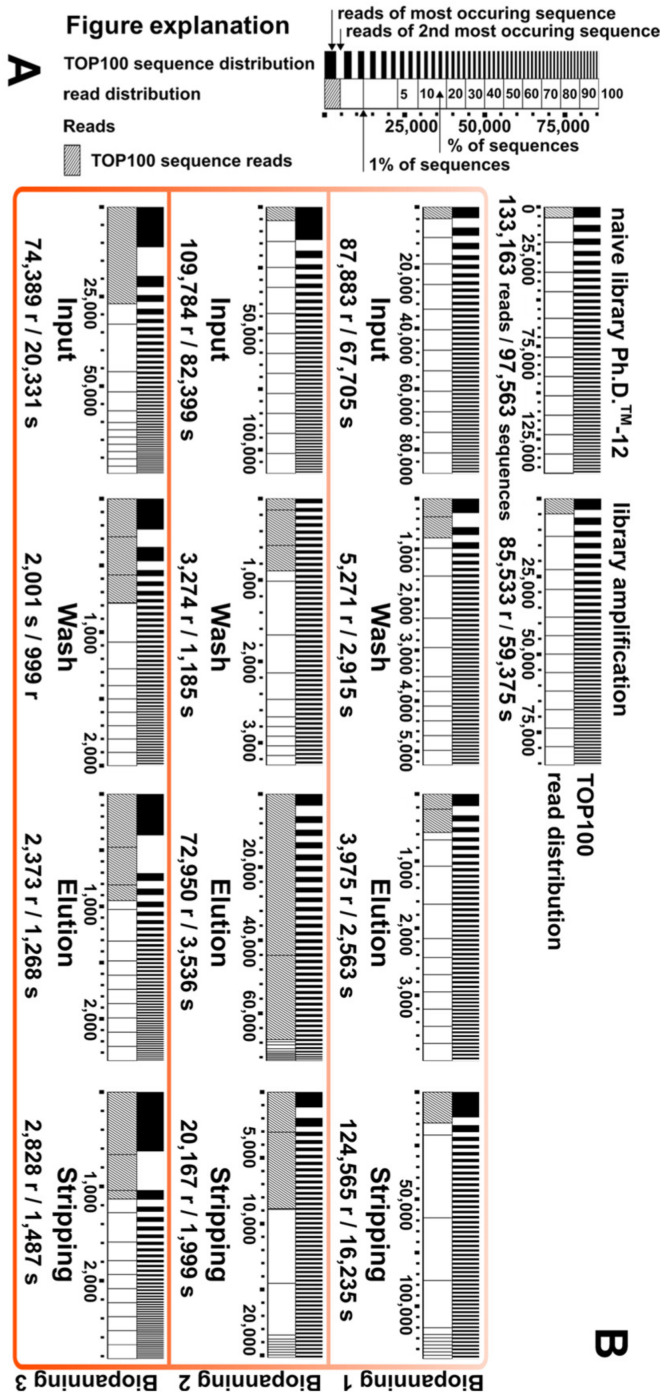
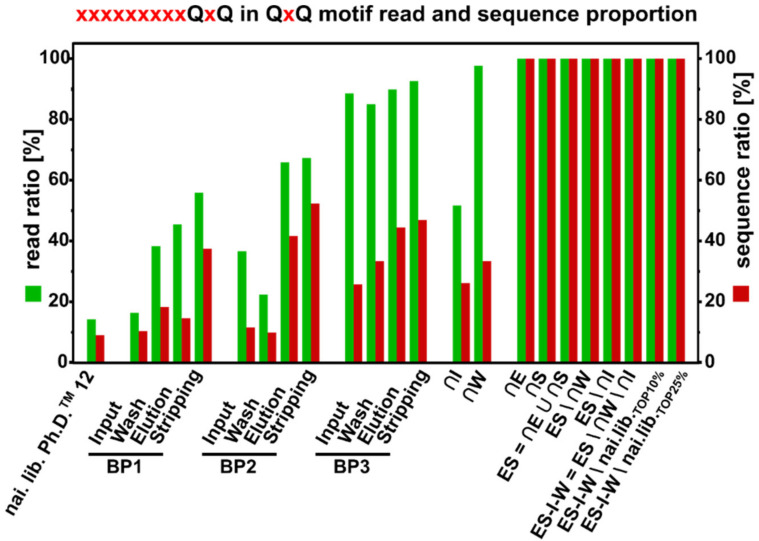
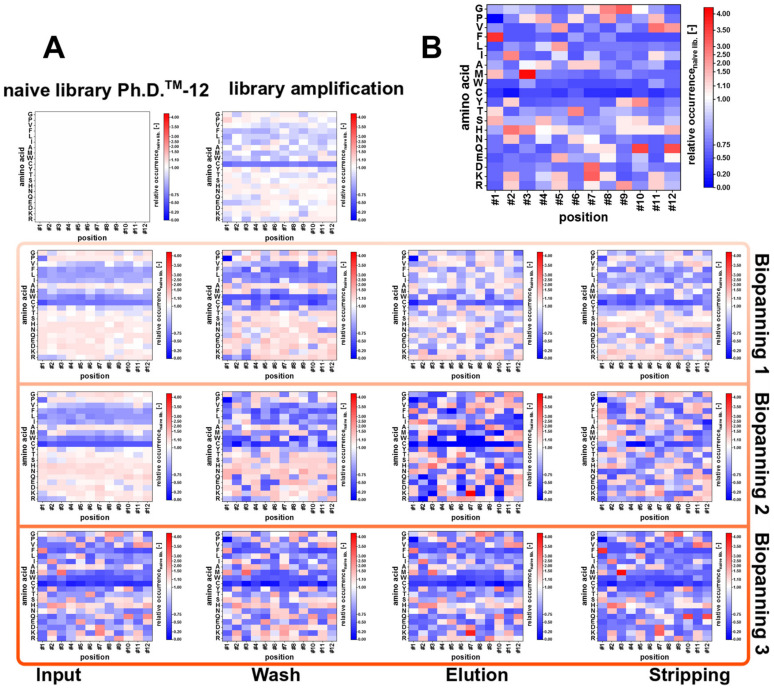
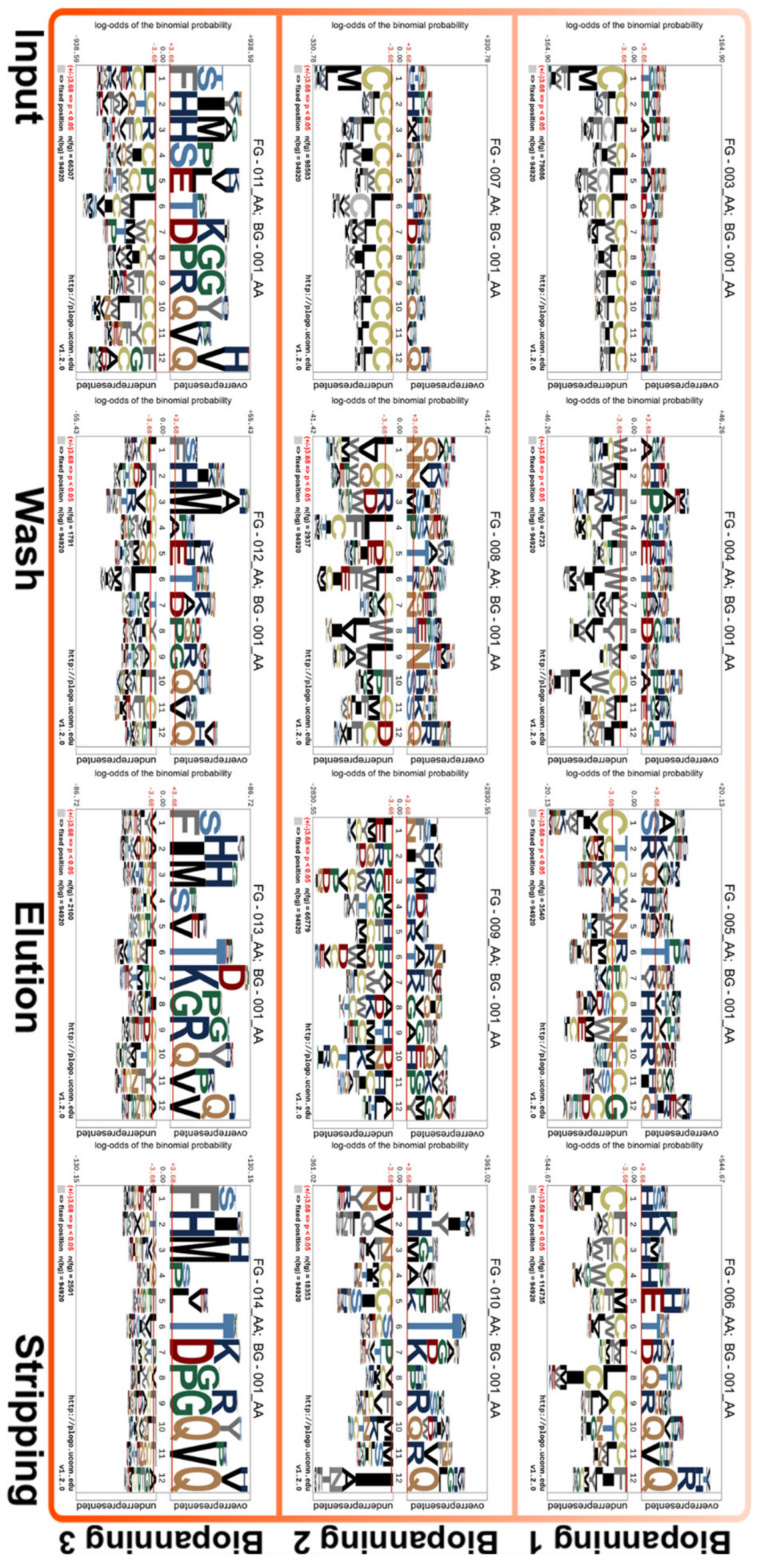
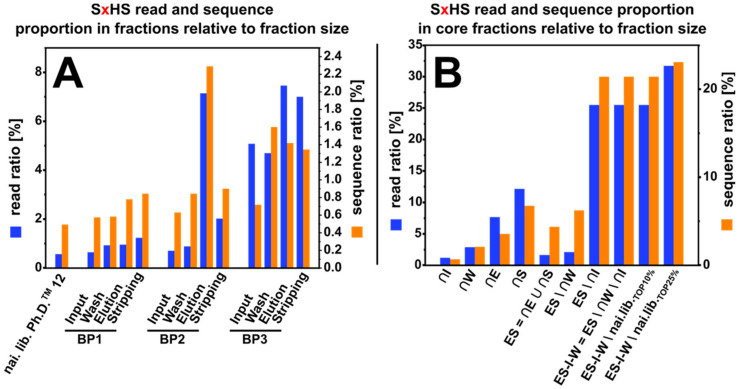
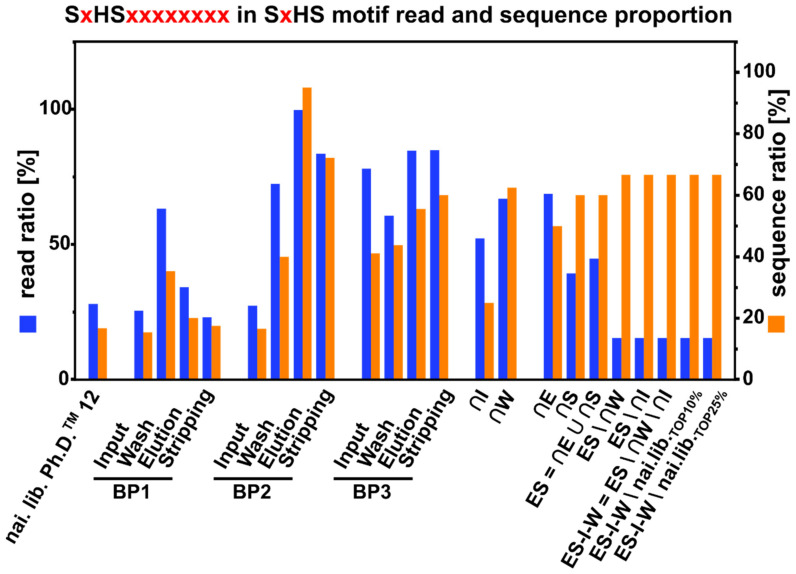
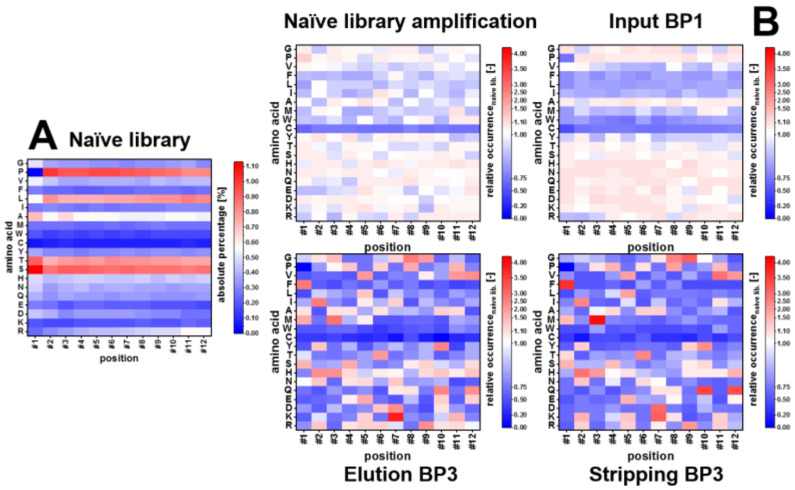
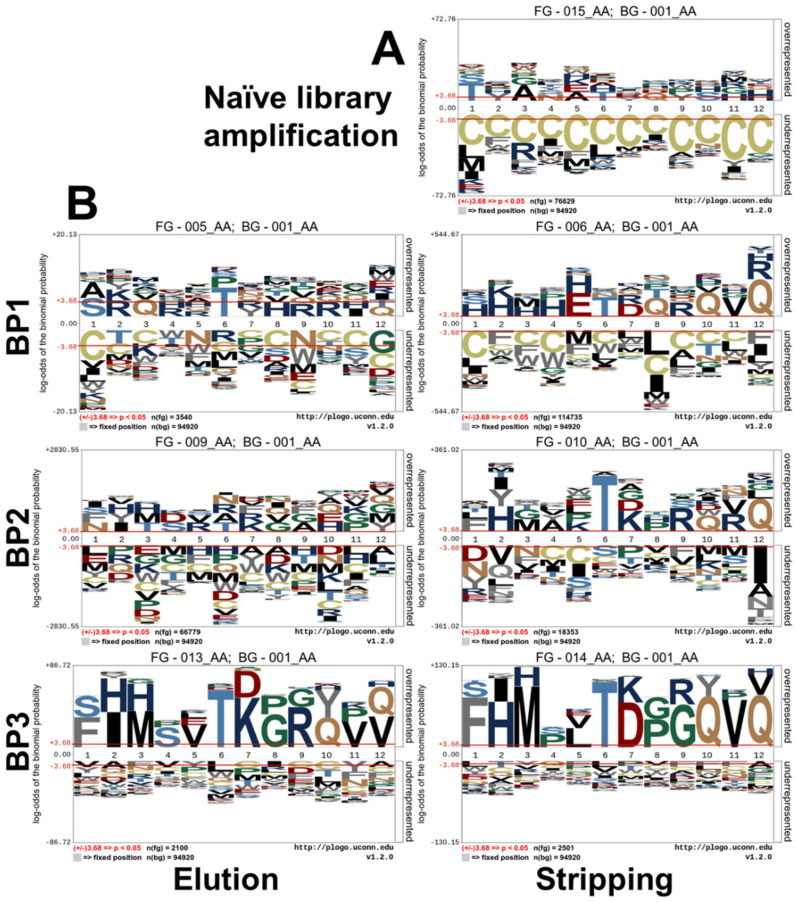
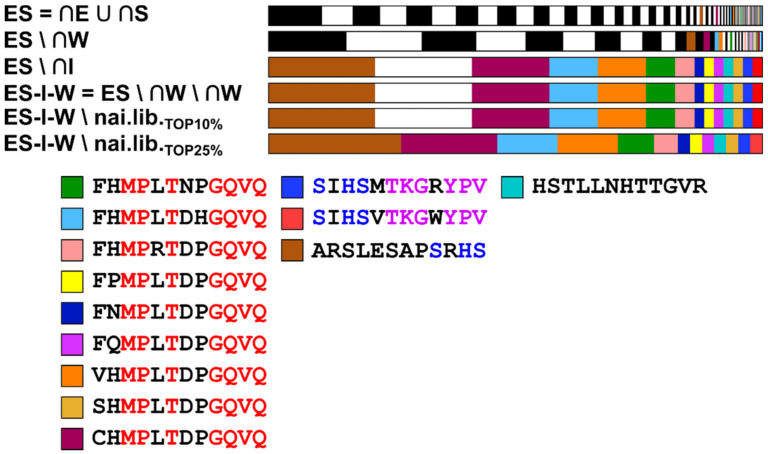
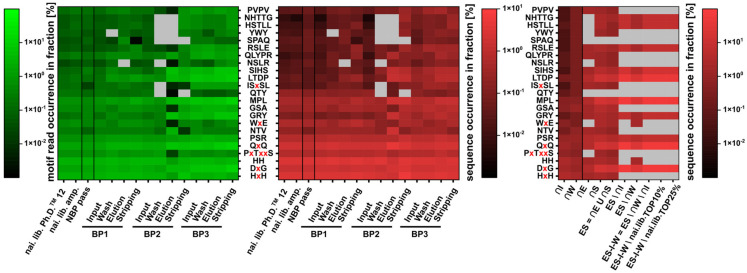
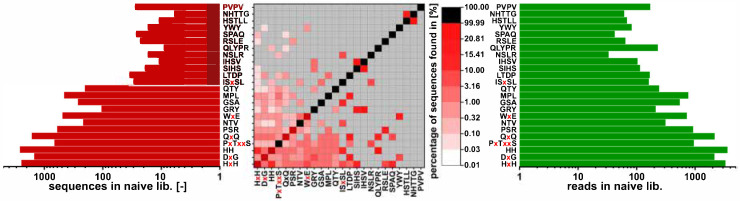
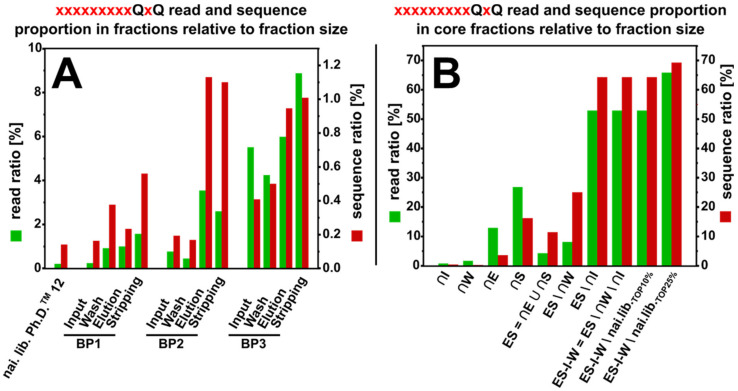
Next generation sequencing (NGS) in combination with phage surface display (PSD) are powerful tools in the newly equipped molecular biology toolbox for the identification of specific target binding biomolecules. Application of PSD led to the discovery of manifold ligands in clinical and material research. However, limitations of traditional phage display hinder the identification process. Growth-based library biases and target-unrelated peptides often result in the dominance of parasitic sequences and the collapse of library diversity. This study describes the effective enrichment of specific peptide motifs potentially binding to arsenic as proof-of-concept using the combination of PSD and NGS. Arsenic is an environmental toxin, which is applied in various semiconductors as gallium arsenide and selective recovery of this element is crucial for recycling and remediation. The development of biomolecules as specific arsenic-binding sorbents is a new approach for its recovery. Usage of NGS for all biopanning fractions allowed for evaluation of motif enrichment, in-depth insight into the selection process and the discrimination of biopanning artefacts, e.g., the amplification-induced library-wide reduction in hydrophobic amino acid proportion. Application of bioinformatics tools led to the identification of an SxHS and a carboxy-terminal QxQ motif, which are potentially involved in the binding of arsenic. To the best of our knowledge, this is the first report of PSD combined with NGS of all relevant biopanning fractions.
下一代测序(NGS)与噬菌体表面展示(PSD)相结合,是分子生物学工具新装备中用于鉴定特定靶标结合生物分子的强大工具。PSD 的应用导致了在临床和材料研究中发现了多种配体。然而,传统噬菌体展示的局限性阻碍了鉴定过程。基于生长的文库偏倚和与靶标无关的肽常常导致寄生序列的优势和文库多样性的崩溃。本研究描述了使用 PSD 和 NGS 的组合,有效富集可能与砷结合的特定肽基序的方法,这是一个概念验证。砷是一种环境毒素,作为砷化镓应用于各种半导体中,因此选择性回收这种元素对于回收和修复至关重要。作为特定砷结合吸附剂的生物分子的开发是其回收的一种新方法。对所有生物淘选级分进行 NGS 检测,可用于评估基序富集、深入了解选择过程和区分生物淘选假象,例如,由于扩增诱导导致疏水性氨基酸比例文库-wide 降低。生物信息学工具的应用导致了两个基序的鉴定,即 SxHS 和羧基末端 QxQ 基序,它们可能参与了砷的结合。据我们所知,这是首次报道使用 NGS 对所有相关生物淘选级分进行 PSD 分析。