He Hanchang, Xu Haoming, Xu Jing, Zhao Hailan, Lin Qianyun, Zhou Youlian, Nie Yuqiang
Department of Nephrology, The First People's Hospital of Foshan, Foshan, China.
Department of Medicine, Beth Israel Deaconess Medical Center, Harvard Medical School, Boston, MA, United States.
Front Nutr. 2020 Nov 11;7:604283. doi: 10.3389/fnut.2020.604283. eCollection 2020.
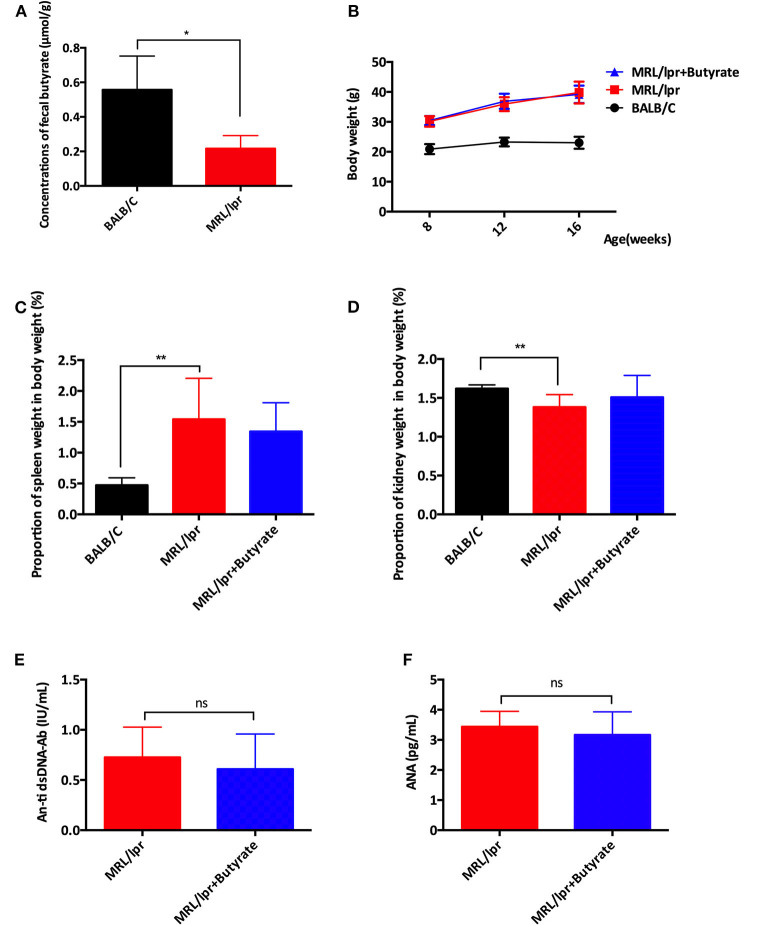
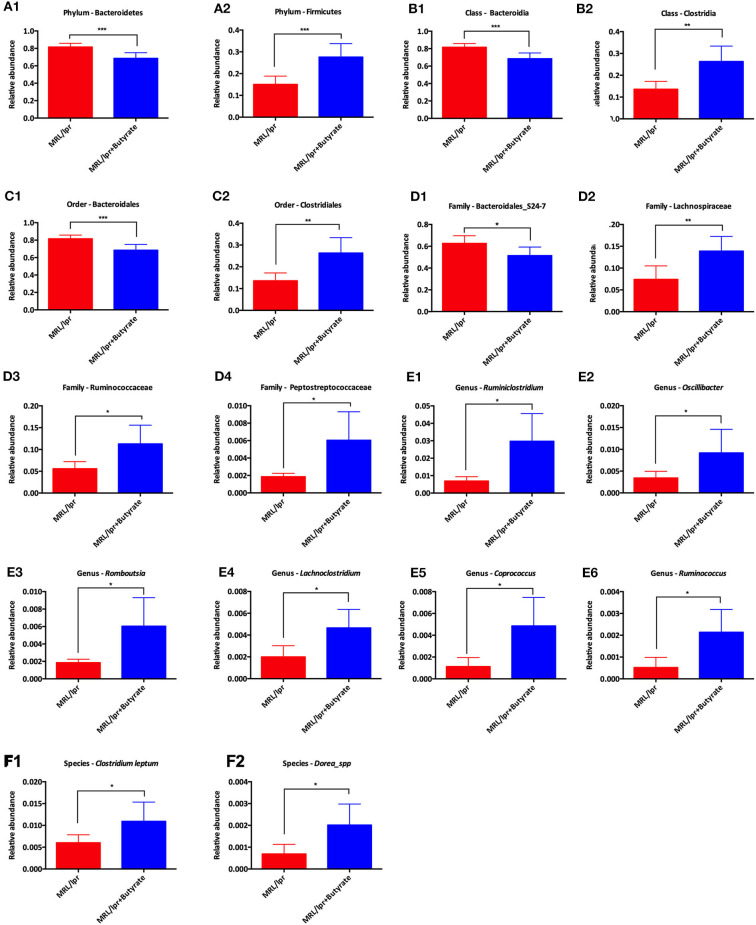
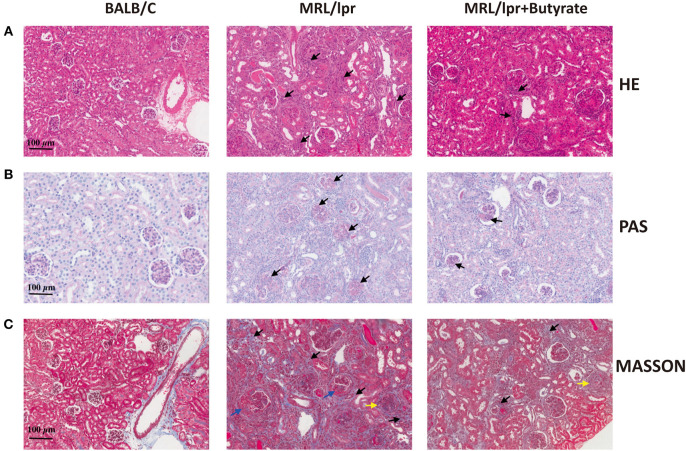
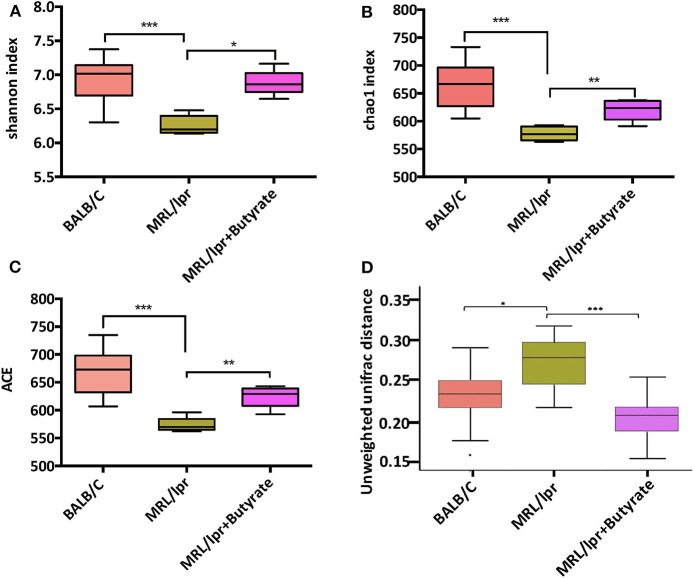
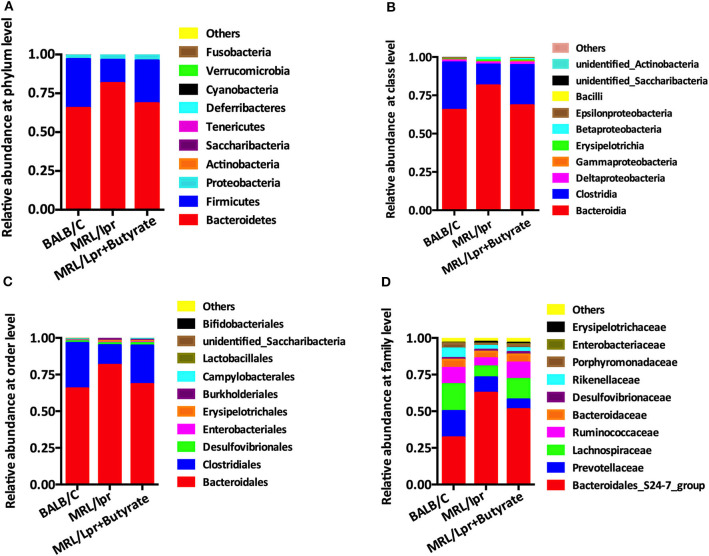
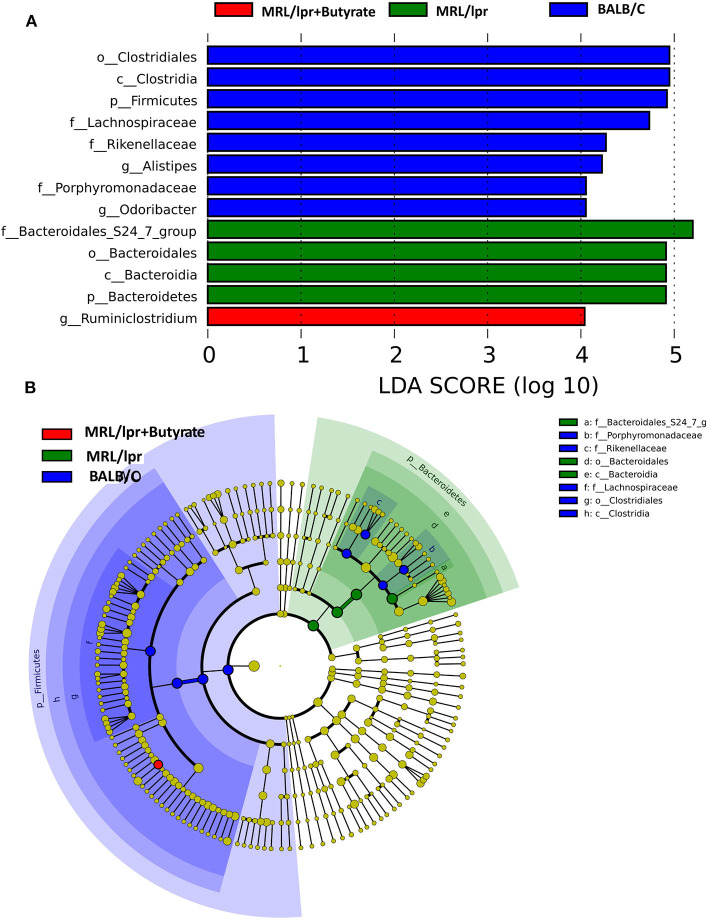
Gut microbiota has a strong influence on the onset and development of systemic lupus erythematosus (SLE), and several studies have demonstrated the effectiveness of microbiota-derived butyrate to ameliorate SLE. However, the roles of butyrate on gut microbiota in SLE are not understood. Using MRL/lpr lupus-prone mice, we examined gut microbiota profiles after butyrate treatment by 16S rRNA sequencing. Alterations in intestinal microbiome in mice with lupus-like disease were mainly characterized by a reduction in microbial diversity, with an increased abundance of Bacteroidetes and a decrease of Firmicutes. Treatment of lupus-prone mice with butyrate resulted in increased abundance of Firmicutes ( = 0.003), Clostridia ( = 0.005), Clostridiales ( = 0.005), ( = 0.009), ( = 0.021), ( = 0.021), ( = 0.016), ( = 0.048), ( = 0.025), ( = 0.012), ( = 0.015), ( = 0.011), ( < 0.05), and . ( = 0.019), and a reduced proportion of Bacteroidetes ( = 0.004), Bacteroidia ( = 0.004), and Bacteroidales ( = 0.004). Further, butyrate supplementation could ameliorate kidney damage. Overall, this study suggests that gut microbiota alterations occur in MRL/lpr lupus-prone mice following treatment with butyrate. Butyrate supplementation ameliorated gut microbiota dysbiosis. These findings support the use of butyrate and butyrate-producing bacteria as potential treatments for SLE.
肠道微生物群对系统性红斑狼疮(SLE)的发病和发展有很大影响,多项研究已证明微生物群衍生的丁酸盐对改善SLE有效。然而,丁酸盐在SLE中对肠道微生物群的作用尚不清楚。我们使用MRL/lpr狼疮易感小鼠,通过16S rRNA测序检测丁酸盐处理后的肠道微生物群谱。狼疮样疾病小鼠肠道微生物组的改变主要表现为微生物多样性降低,拟杆菌门丰度增加,厚壁菌门减少。用丁酸盐处理狼疮易感小鼠导致厚壁菌门(P = 0.003)、梭菌纲(P = 0.005)、梭菌目(P = 0.005)、[具体菌属1](P = 0.009)、[具体菌属2](P = 0.021)、[具体菌属3](P = 0.021)、[具体菌属4](P = 0.016)、[具体菌属5](P = 0.048)、[具体菌属6](P = 0.025)、[具体菌属7](P = 0.012)、[具体菌属8](P = 0.015)、[具体菌属9](P = 0.011)、[具体菌属10](P < 0.05)和[具体菌属11](P = 0.019)丰度增加,拟杆菌门(P = 0.004)、拟杆菌纲(P = 0.004)和拟杆菌目(P = 0.004)比例降低。此外,补充丁酸盐可改善肾脏损伤。总体而言,本研究表明丁酸盐处理后MRL/lpr狼疮易感小鼠肠道微生物群发生改变。补充丁酸盐改善了肠道微生物群失调。这些发现支持使用丁酸盐和产丁酸盐细菌作为SLE的潜在治疗方法。