Vanderbilt Institute for Infection, Immunology and Inflammation, Vanderbilt University Medical Center, Nashville, Tennessee, United States.
ACS Infect Dis. 2020 Dec 11;6(12):3174-3189. doi: 10.1021/acsinfecdis.0c00500. Epub 2020 Dec 2.
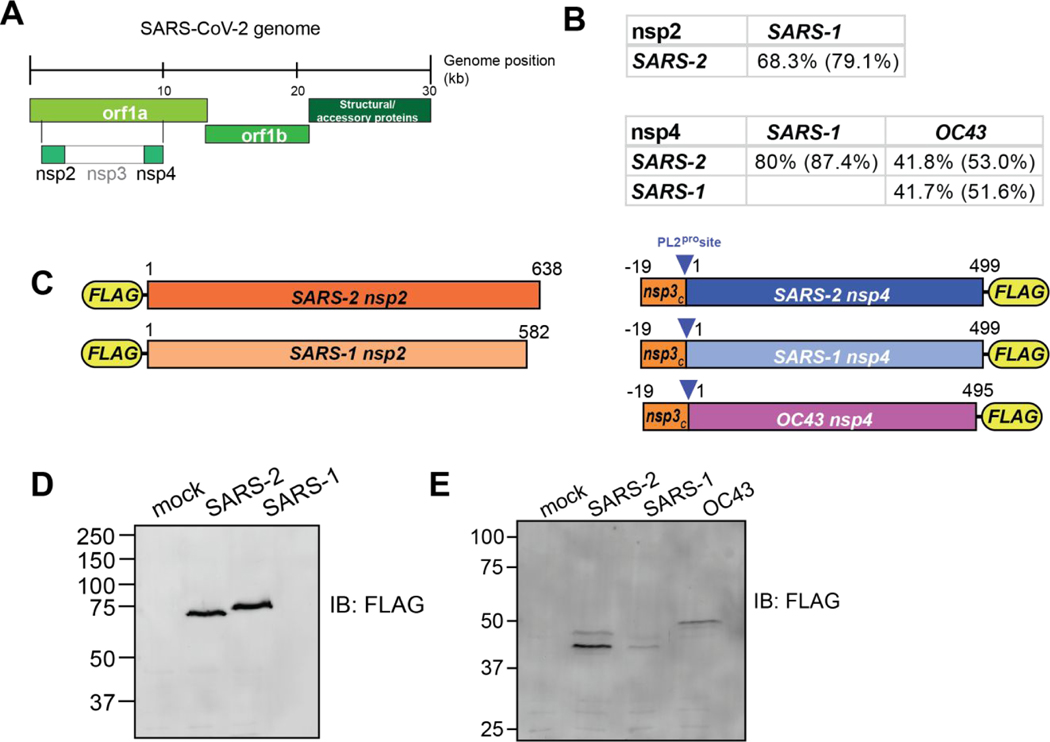
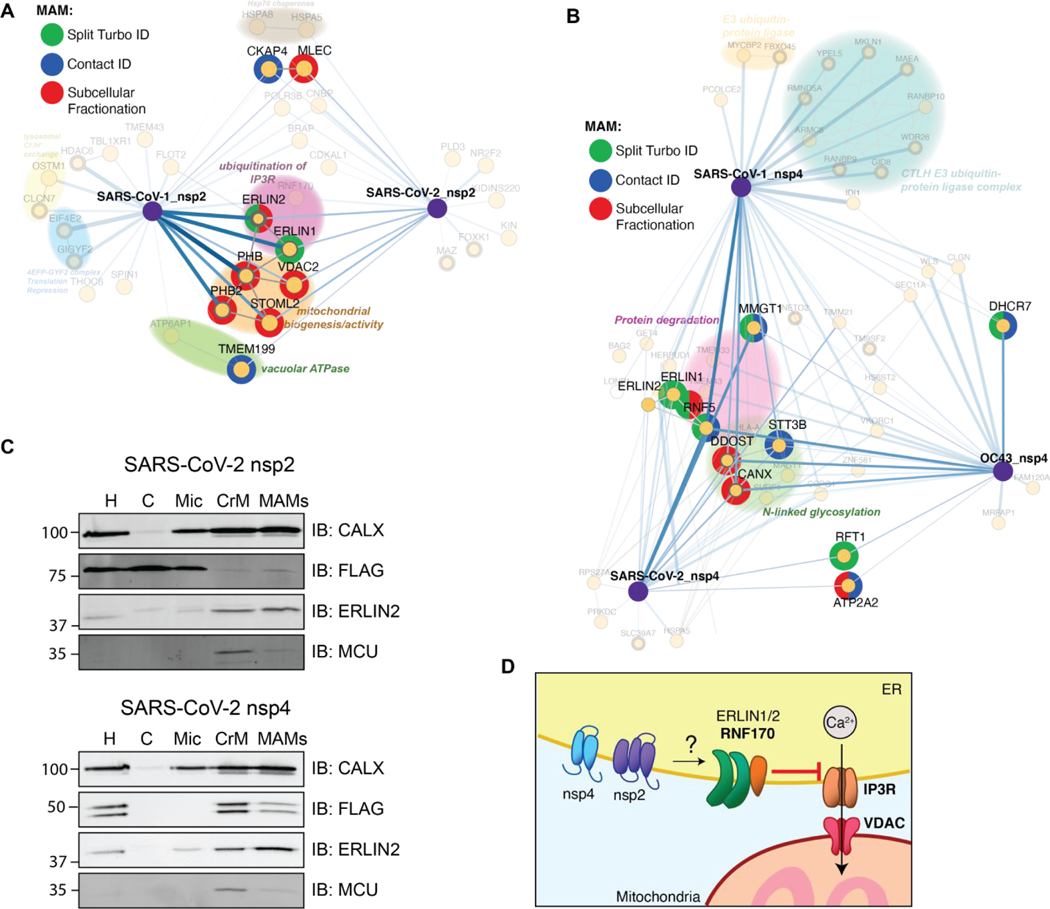
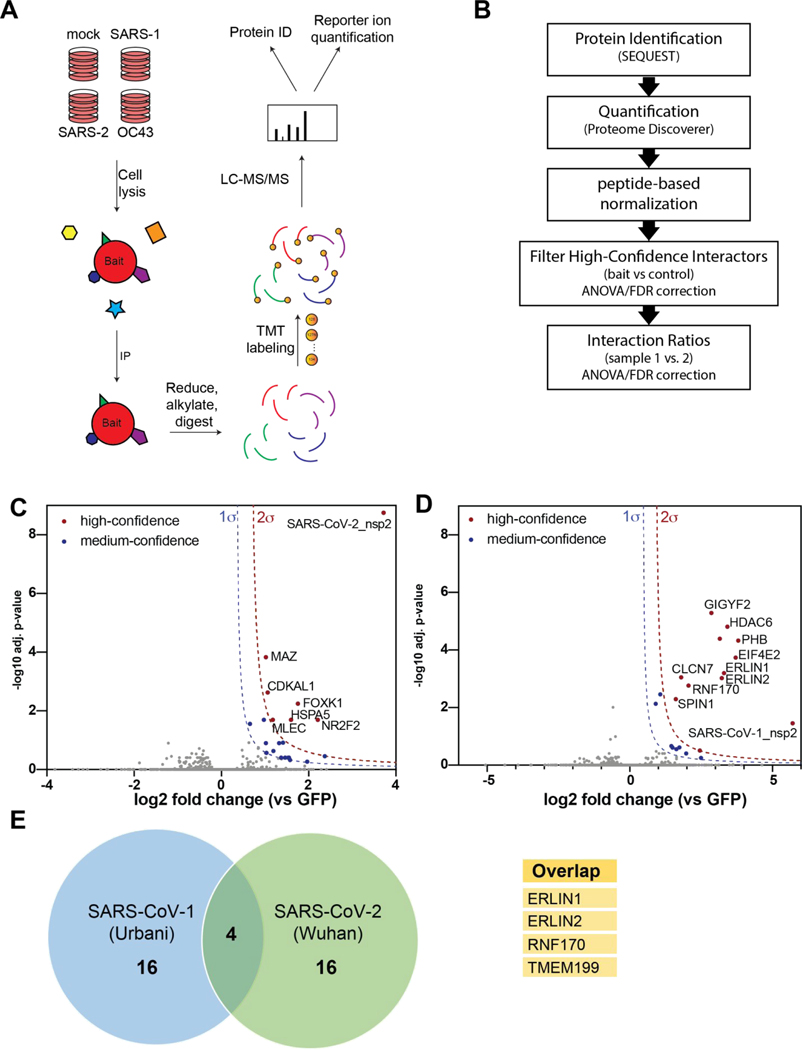
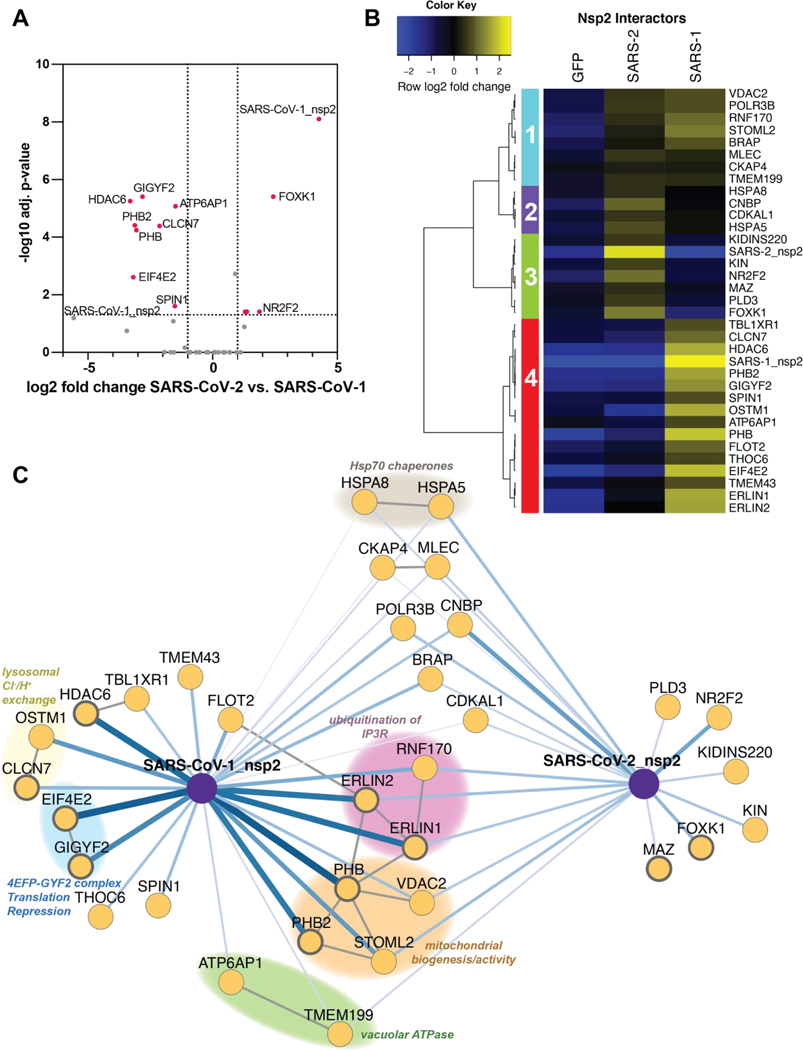
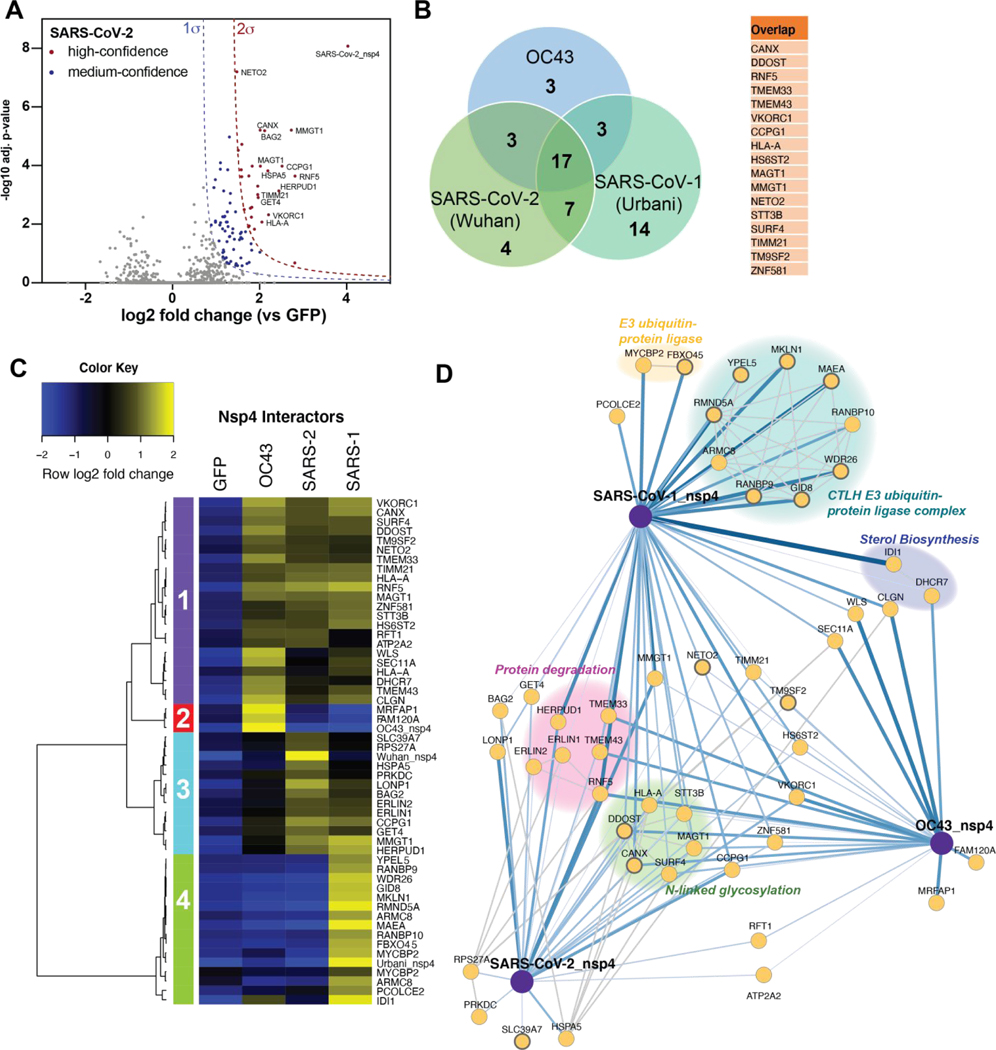
Human coronaviruses (hCoVs) have become a threat to global health and society, as evident from the SARS outbreak in 2002 caused by SARS-CoV-1 and the most recent COVID-19 pandemic caused by SARS-CoV-2. Despite a high sequence similarity between SARS-CoV-1 and -2, each strain has a distinctive virulence. A better understanding of the basic molecular mechanisms mediating changes in virulence is needed. Here, we profile the virus-host protein-protein interactions of two hCoV nonstructural proteins (nsps) that are critical for virus replication. We use tandem mass tag-multiplexed quantitative proteomics to sensitively compare and contrast the interactomes of nsp2 and nsp4 from three betacoronavirus strains: SARS-CoV-1, SARS-CoV-2, and hCoV-OC43-an endemic strain associated with the common cold. This approach enables the identification of both unique and shared host cell protein binding partners and the ability to further compare the enrichment of common interactions across homologues from related strains. We identify common nsp2 interactors involved in endoplasmic reticulum (ER) Ca signaling and mitochondria biogenesis. We also identify nsp4 interactors unique to each strain, such as E3 ubiquitin ligase complexes for SARS-CoV-1 and ER homeostasis factors for SARS-CoV-2. Common nsp4 interactors include -linked glycosylation machinery, unfolded protein response associated proteins, and antiviral innate immune signaling factors. Both nsp2 and nsp4 interactors are strongly enriched in proteins localized at mitochondria-associated ER membranes suggesting a new functional role for modulating host processes, such as calcium homeostasis, at these organelle contact sites. Our results shed light on the role these hCoV proteins play in the infection cycle, as well as host factors that may mediate the divergent pathogenesis of OC43 from SARS strains. Our mass spectrometry workflow enables rapid and robust comparisons of multiple bait proteins, which can be applied to additional viral proteins. Furthermore, the identified common interactions may present new targets for exploration by host-directed antiviral therapeutics.
人类冠状病毒(HCoV)已成为全球健康和社会的威胁,这从 2002 年由 SARS-CoV-1 引起的 SARS 爆发以及最近由 SARS-CoV-2 引起的 COVID-19 大流行中可见一斑。尽管 SARS-CoV-1 和 -2 之间具有很高的序列相似性,但每种菌株都具有独特的毒力。需要更好地了解介导毒力变化的基本分子机制。在这里,我们描述了两种对病毒复制至关重要的 HCoV 非结构蛋白(nsp)的病毒-宿主蛋白-蛋白相互作用。我们使用串联质量标签-多重定量蛋白质组学技术,灵敏地比较和对比了三种β冠状病毒株(SARS-CoV-1、SARS-CoV-2 和 hCoV-OC43)的 nsp2 和 nsp4 的互作组,其中 hCoV-OC43 是一种与普通感冒相关的地方性菌株。这种方法能够鉴定出独特和共享的宿主细胞蛋白结合伴侣,并能够进一步比较同源物中常见相互作用的富集情况。我们鉴定出了共同的 nsp2 相互作用物,这些相互作用物参与内质网(ER)Ca 信号和线粒体生物发生。我们还鉴定出了每种菌株特有的 nsp4 相互作用物,如 SARS-CoV-1 的 E3 泛素连接酶复合物和 SARS-CoV-2 的 ER 稳态因子。共同的 nsp4 相互作用物包括-连接的糖基化机制、未折叠蛋白反应相关蛋白和抗病毒先天免疫信号因子。nsp2 和 nsp4 的相互作用物都强烈富集在定位于线粒体相关 ER 膜的蛋白上,这表明在这些细胞器接触部位调节宿主过程(如钙稳态)具有新的功能作用。我们的研究结果揭示了这些 HCoV 蛋白在感染周期中的作用,以及宿主因子可能介导 OC43 与 SARS 株之间不同发病机制的作用。我们的质谱工作流程能够快速而稳健地比较多种诱饵蛋白,这可应用于其他病毒蛋白。此外,鉴定出的共同相互作用物可能为探索宿主导向的抗病毒治疗提供新的靶标。