Ayala-Torres Carlos, Liu Jiangnan, Dantuma Nico P, Masucci Maria G
Department of Cell and Molecular Biology, Karolinska Institutet, Solna, Sweden.
Autophagy. 2025 May;21(5):1019-1038. doi: 10.1080/15548627.2024.2442849. Epub 2025 Jan 2.
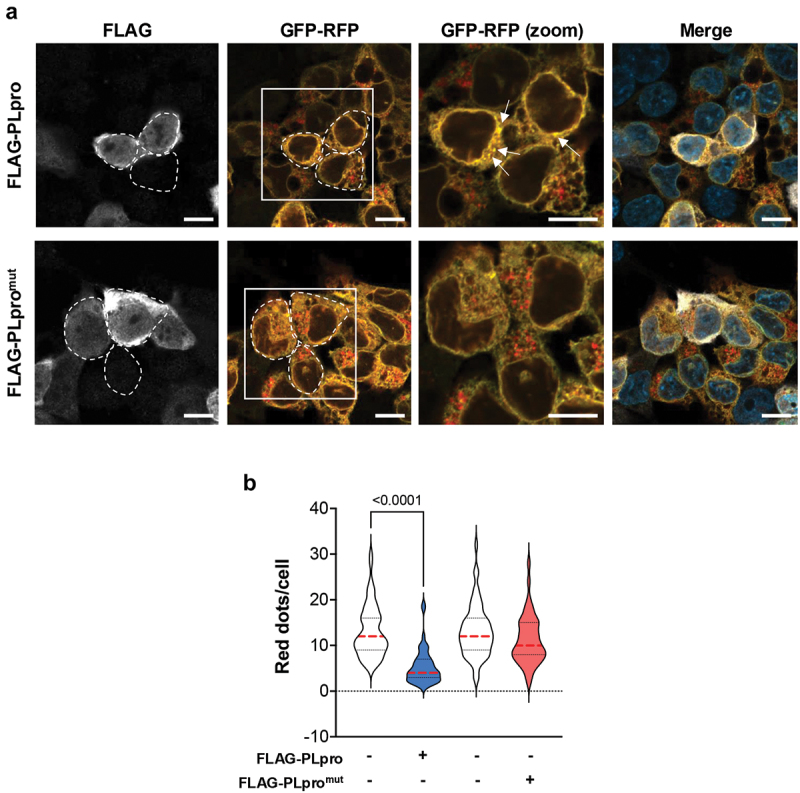
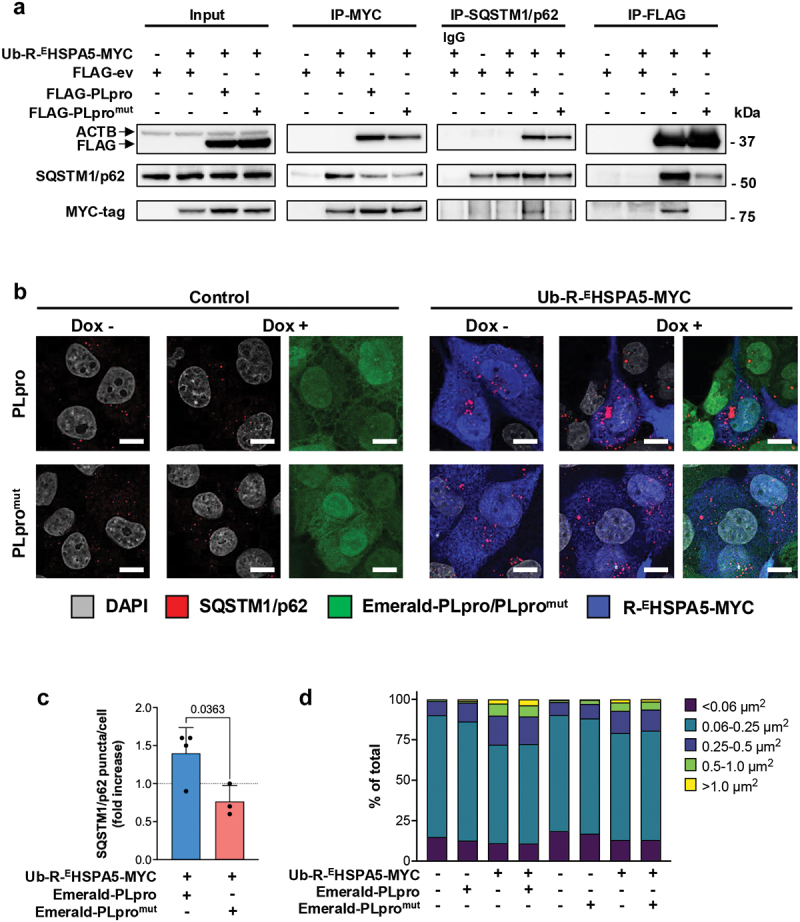
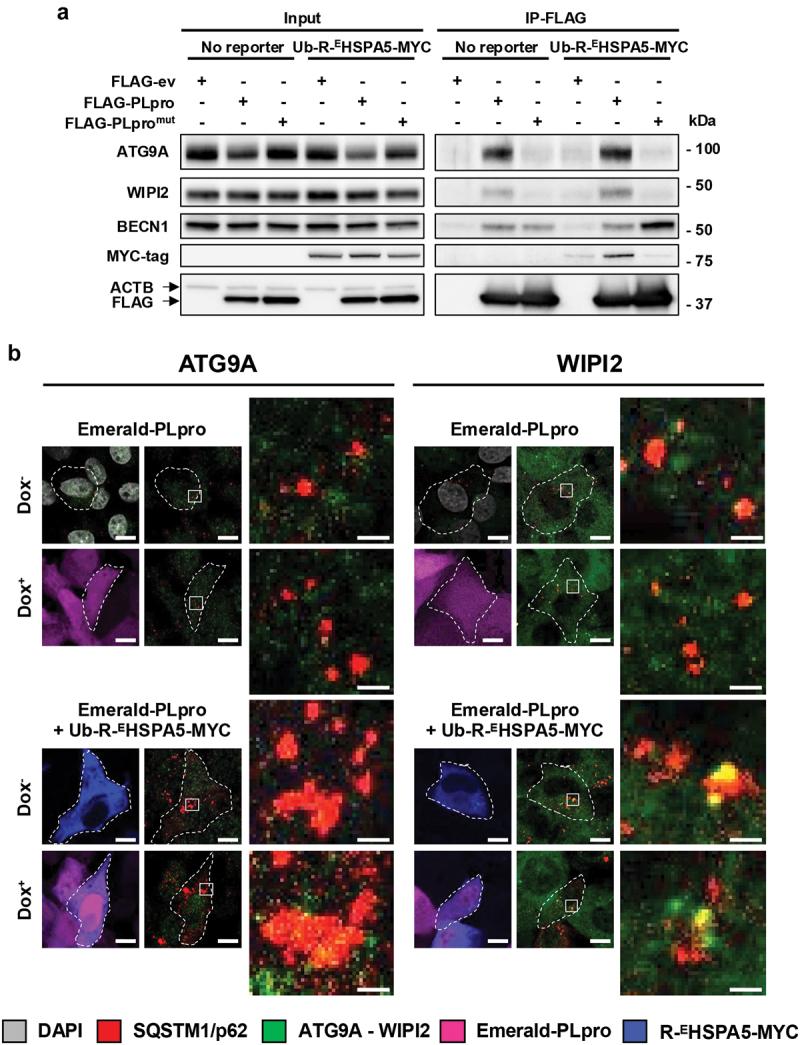
Viral proteases play critical roles in the host cell and immune remodeling that allows virus production. The severe acute respiratory syndrome coronavirus-2 (SARS-CoV-2) papain-like protease (PLpro) encoded in the large nonstructural protein 3 (Nsp3) also possesses isopeptidase activity with specificity for ubiquitin and ISG15 conjugates. Here, we interrogated the cellular interactome of the SARS-CoV-2 PLpro catalytic domain to gain insight into the putative substrates and cellular functions affected by the viral deubiquitinase. PLpro was detected in protein complexes that control multiple ubiquitin and ubiquitin-like (UbL) regulated signaling and effector pathways. By restricting the analysis to cytosolic and membrane-associated ubiquitin ligases, we found that PLpro interacts with N-recognin ubiquitin ligases and preferentially rescues type I N-degron substrates from proteasomal degradation. PLpro stabilized N-degron carrying HSPA5/BiP/GRP78, which is arginylated in the cytosol upon release from the endoplasmic reticulum (ER) during ER stress, and enhanced the Arg-HSPA5-driven oligomerization of the N-recognin SQSTM1/p62 that serves as a platform for phagophore assembly. However, while in addition to Arg-HSPA5 and SQSTM1/p62, ATG9A, WIPI2, and BECN1/Beclin 1 were detected in PLpro immunoprecipitates, other components of the autophagosome biogenesis machinery, such as the ATG12-ATG5-ATG16L1 complex and MAP1LC3/LC3 were absent, which correlated with proteolytic inactivation of ULK1, impaired production of lipidated LC3-II, and inhibition of reticulophagy. The findings highlight a novel mechanism by which, through the reprogramming of autophagy, the PLpro deubiquitinase may contribute to the remodeling of intracellular membranes in coronavirus-infected cells.
病毒蛋白酶在宿主细胞和免疫重塑中发挥关键作用,这使得病毒能够产生。严重急性呼吸综合征冠状病毒2(SARS-CoV-2)在大非结构蛋白3(Nsp3)中编码的木瓜样蛋白酶(PLpro)也具有对泛素和ISG15缀合物具有特异性的异肽酶活性。在这里,我们研究了SARS-CoV-2 PLpro催化结构域的细胞相互作用组,以深入了解受病毒去泛素酶影响的假定底物和细胞功能。在控制多种泛素和泛素样(UbL)调节的信号传导和效应途径的蛋白质复合物中检测到PLpro。通过将分析限制在胞质和膜相关的泛素连接酶上,我们发现PLpro与N-识别泛素连接酶相互作用,并优先从蛋白酶体降解中拯救I型N-降解子底物。PLpro稳定了携带HSPA5/BiP/GRP78的N-降解子,其在内质网(ER)应激期间从内质网释放后在胞质溶胶中被精氨酸化,并增强了作为吞噬体组装平台的N-识别蛋白SQSTM1/p62的Arg-HSPA5驱动的寡聚化。然而,除了Arg-HSPA5和SQSTM1/p62之外,在PLpro免疫沉淀中还检测到ATG9A、WIPI2和BECN1/Beclin 1,而自噬体生物发生机制的其他成分,如ATG12-ATG5-ATG16L1复合物和MAP1LC3/LC3不存在,这与ULK1的蛋白水解失活、脂化LC3-II的产生受损以及网状自噬的抑制相关。这些发现突出了一种新机制,通过这种机制,PLpro去泛素酶可能通过自噬的重新编程,有助于冠状病毒感染细胞中内膜的重塑。