Cui Limei, Zheng Jing, Zhao Qiong, Chen Jia-Rong, Liu Hanqing, Peng Guanghua, Wu Yue, Chen Chao, He Qiufen, Shi Haosong, Yin Shankai, Friedman Rick A, Chen Ye, Guan Min-Xin
Division of Medical Genetics and Genomics, The Children's Hospital.
Institute of Genetics and.
JCI Insight. 2020 Dec 3;5(23):136046. doi: 10.1172/jci.insight.136046.
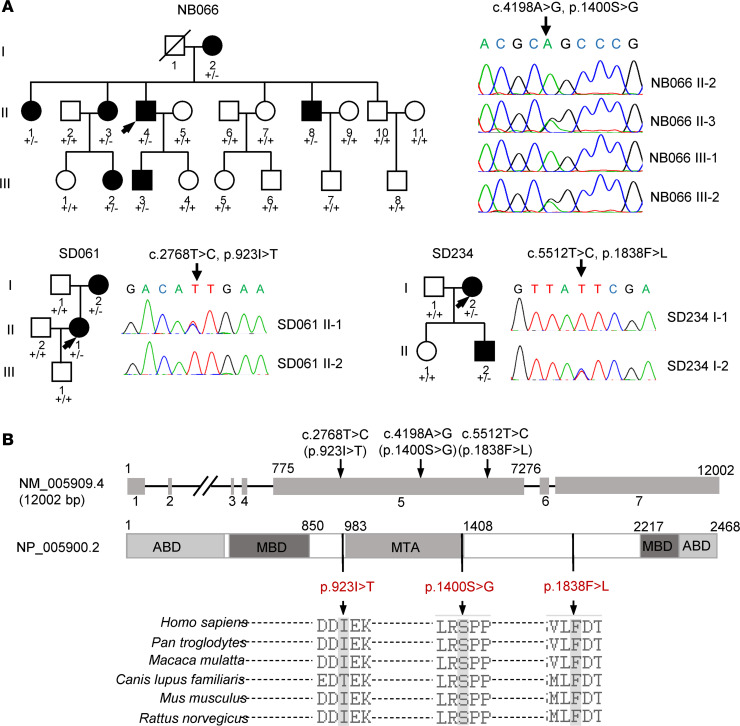
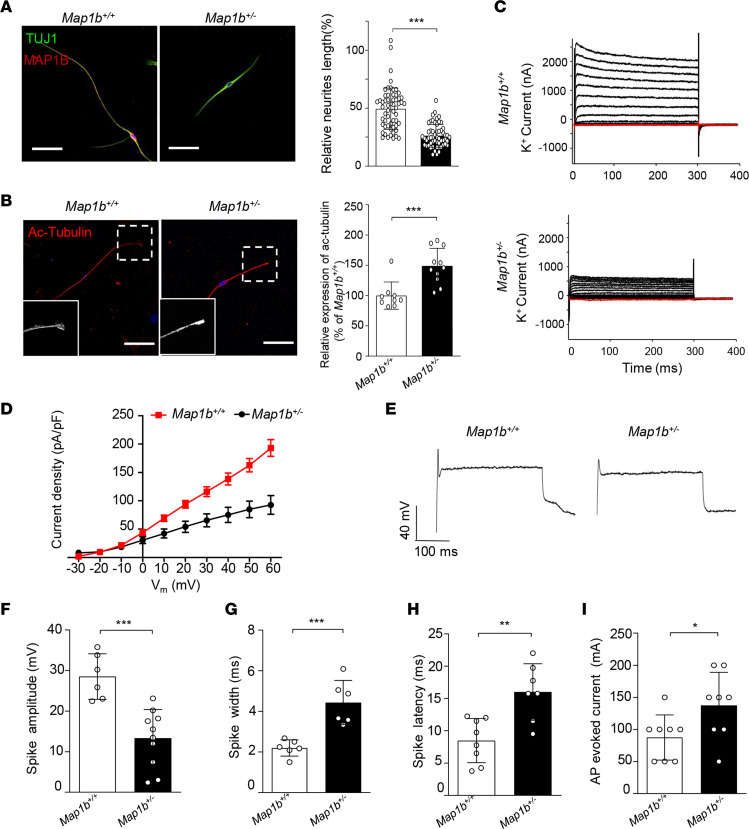
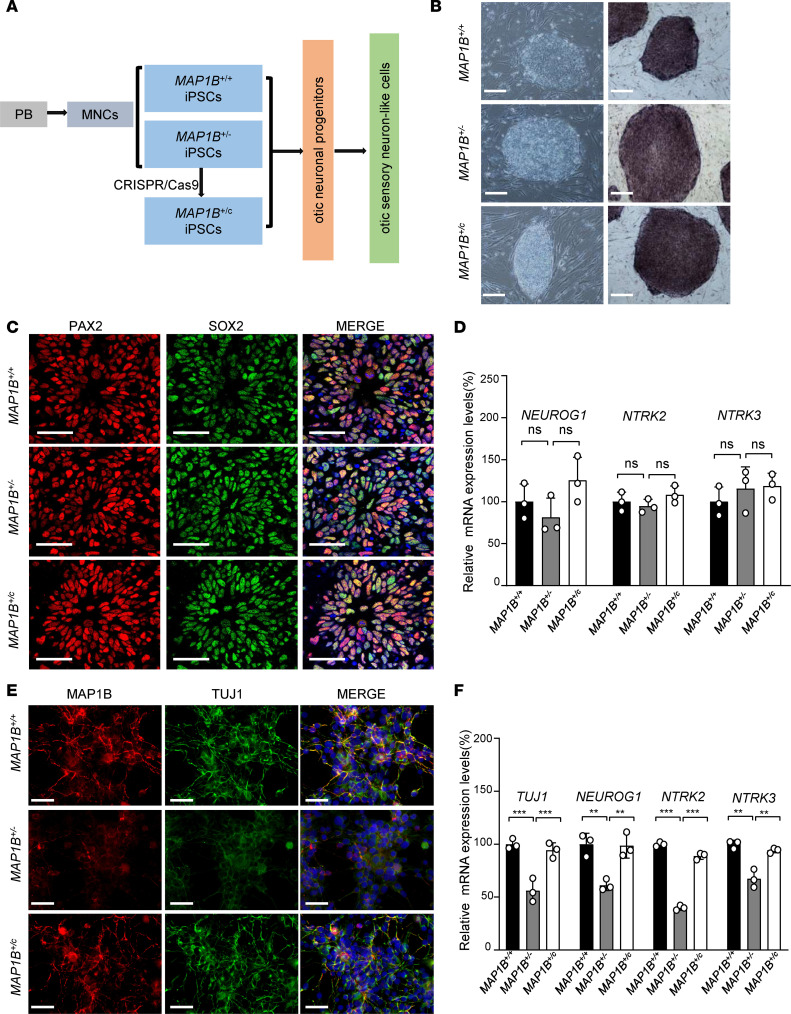
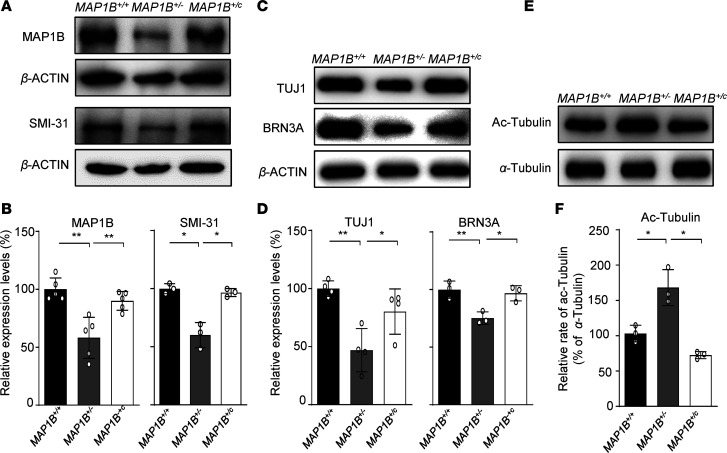
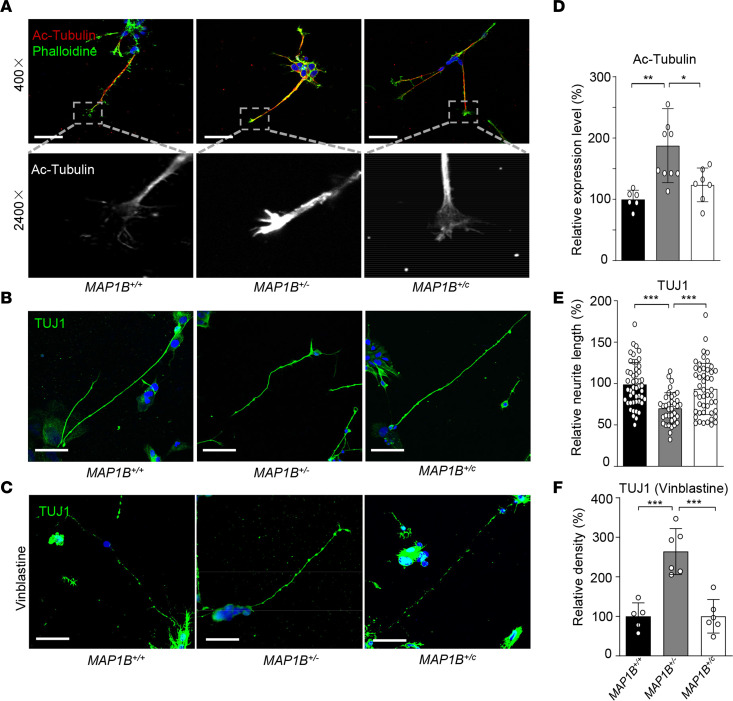
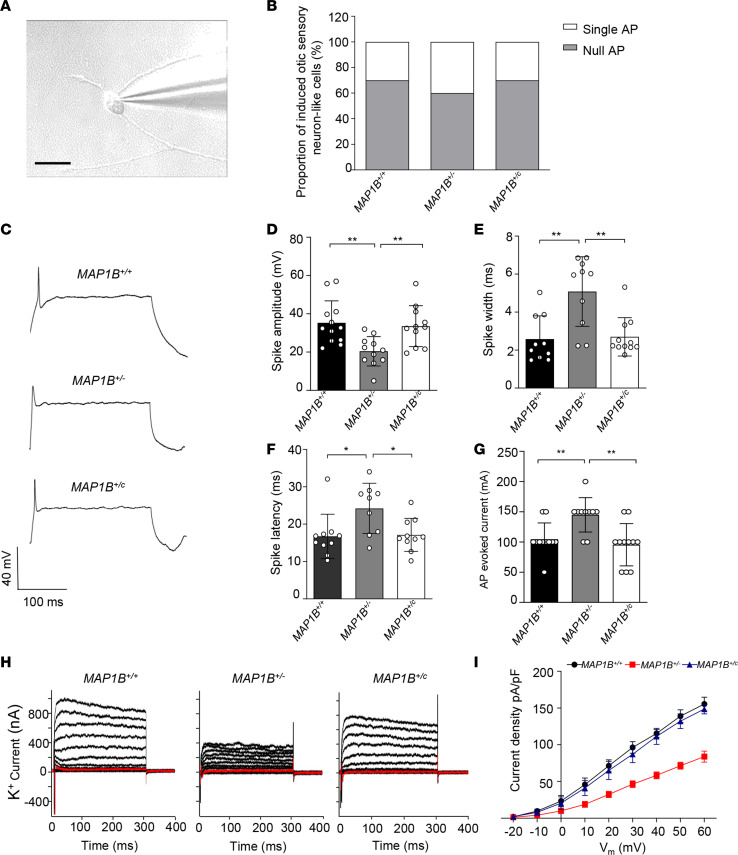
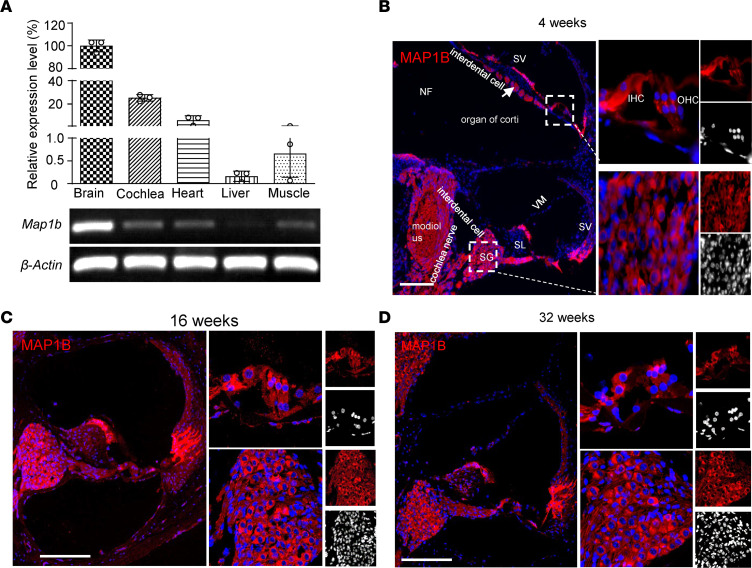
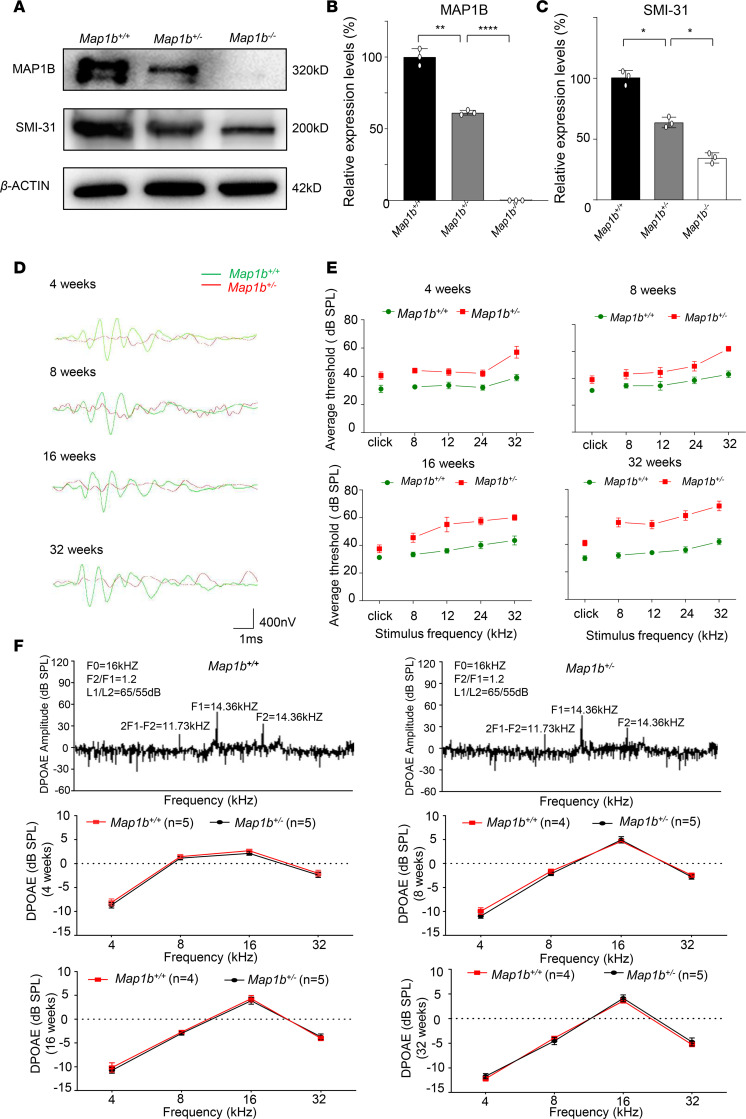
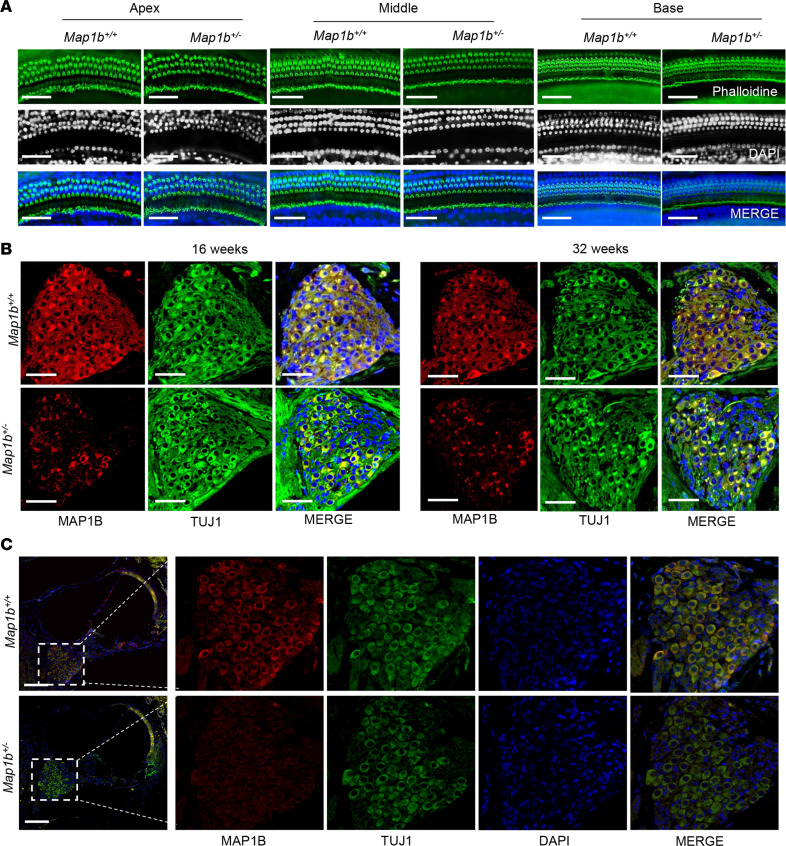
The pathophysiology underlying spiral ganglion cell defect-induced deafness remains elusive. Using the whole exome sequencing approach, in combination with functional assays and a mouse disease model, we identified the potentially novel deafness-causative MAP1B gene encoding a highly conserved microtubule-associated protein. Three novel heterozygous MAP1B mutations (c.4198A>G, p.1400S>G; c.2768T>C, p.923I>T; c.5512T>C, p.1838F>L) were cosegregated with autosomal dominant inheritance of nonsyndromic sensorineural hearing loss in 3 unrelated Chinese families. Here, we show that MAP1B is highly expressed in the spiral ganglion neurons in the mouse cochlea. Using otic sensory neuron-like cells, generated by pluripotent stem cells from patients carrying the MAP1B mutation and control subject, we demonstrated that the p.1400S>G mutation caused the reduced levels and deficient phosphorylation of MAP1B, which are involved in the microtubule stability and dynamics. Strikingly, otic sensory neuron-like cells exhibited disturbed dynamics of microtubules, axonal elongation, and defects in electrophysiological properties. Dysfunctions of these derived otic sensory neuron-like cells were rescued by genetically correcting MAP1B mutation using CRISPR/Cas9 technology. Involvement of MAP1B in hearing was confirmed by audiometric evaluation of Map1b heterozygous KO mice. These mutant mice displayed late-onset progressive sensorineural hearing loss that was more pronounced in the high frequencies. The spiral ganglion neurons isolated from Map1b mutant mice exhibited the deficient phosphorylation and disturbed dynamics of microtubules. Map1b deficiency yielded defects in the morphology and electrophysiology of spiral ganglion neurons, but it did not affect the morphologies of cochlea in mice. Therefore, our data demonstrate that dysfunctions of spiral ganglion neurons induced by MAP1B deficiency caused hearing loss.
螺旋神经节细胞缺陷所致耳聋的病理生理学机制仍不清楚。我们采用全外显子组测序方法,结合功能分析和小鼠疾病模型,鉴定出可能导致耳聋的新基因MAP1B,该基因编码一种高度保守的微管相关蛋白。在3个不相关的中国家庭中,3种新的杂合MAP1B突变(c.4198A>G,p.1400S>G;c.2768T>C,p.923I>T;c.5512T>C,p.1838F>L)与常染色体显性遗传的非综合征性感音神经性听力损失共分离。在此,我们表明MAP1B在小鼠耳蜗的螺旋神经节神经元中高表达。利用携带MAP1B突变患者和对照受试者的多能干细胞生成的耳感觉神经元样细胞,我们证明p.1400S>G突变导致MAP1B水平降低和磷酸化缺陷,这与微管稳定性和动力学有关。令人惊讶的是,耳感觉神经元样细胞表现出微管动力学紊乱、轴突伸长以及电生理特性缺陷。通过使用CRISPR/Cas9技术对MAP1B突变进行基因校正,挽救了这些衍生的耳感觉神经元样细胞的功能障碍。通过对Map1b杂合敲除小鼠的听力测定评估,证实了MAP1B与听力有关。这些突变小鼠表现出迟发性进行性感音神经性听力损失,在高频中更为明显。从Map1b突变小鼠分离的螺旋神经节神经元表现出微管磷酸化缺陷和动力学紊乱。Map1b缺陷导致螺旋神经节神经元的形态和电生理缺陷,但不影响小鼠耳蜗的形态。因此,我们的数据表明,MAP1B缺陷诱导的螺旋神经节神经元功能障碍导致听力损失。