Pessoa Michelle Liz de Souza, Silva Leiliane Macena Oliveira, Araruna Maria Elaine Cristina, Serafim Catarina Alves de Lima, Júnior Edvaldo Balbino Alves, Silva Alessa Oliveira, Pessoa Matheus Marley Bezerra, Neto Hermes Diniz, Lima Edeltrudes de Oliveira, Batista Leônia Maria
Department of Pharmaceutical Sciences, IPeFarM, Federal University of Paraíba, João Pessoa 58051-970, Paraíba, Brazil.
Health Sciences Center, Federal University of Paraíba, João Pessoa 58051-970, Paraíba, Brazil.
World J Gastroenterol. 2020 Nov 21;26(43):6795-6809. doi: 10.3748/wjg.v26.i43.6795.
(-)-Fenchone is a bicyclic monoterpene present in essential oils of plant species, such as and , used to treatment of gastrointestinal diseases. Pharmacological studies report its anti-inflammatory, antioxidant, and antinociceptive activity.
To investigate antidiarrheal activity related to gastrointestinal motility, intestinal secretion and antimicrobial activity.
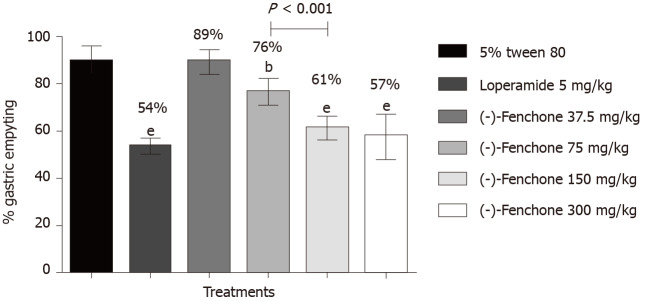
A castor oil-induced diarrhea model was used to evaluate antidiarrheal activity. Intestinal transit and gastric emptying protocols were used to assess a possible antimotility effect. Muscarinic receptors, presynaptic α-adrenergic and tissue adrenergic receptors, K channels, nitric oxide were investigated to uncover antimotility mechanisms of action and castor oil-induced enteropooling to elucidate antisecretory mechanisms. The antimicrobial activity was evaluated in the minimum inhibitory concentration model, the fractional inhibitory concentration index using the (-)-fenchone association method with standard antifungal agents.
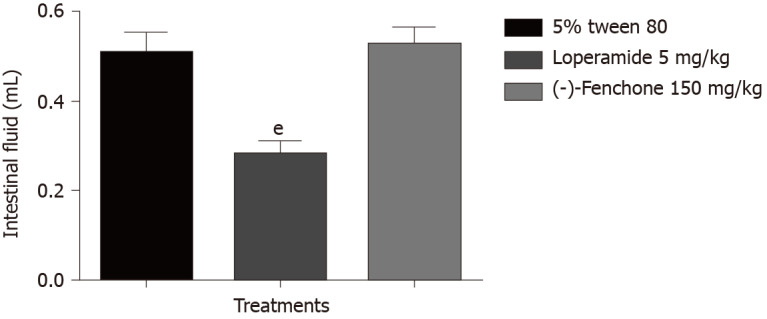
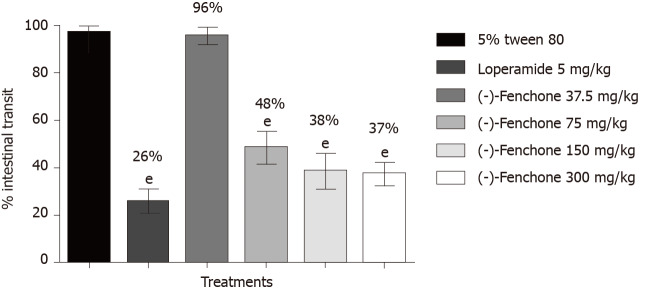
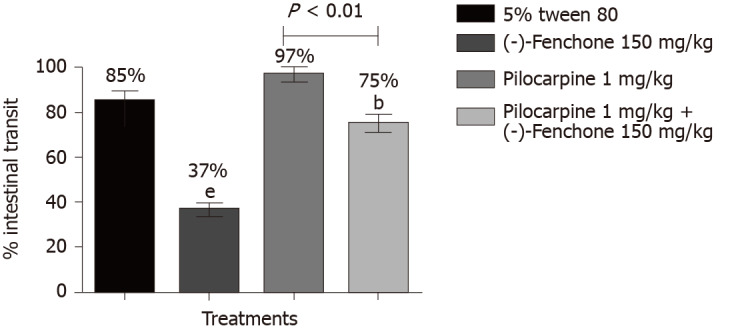
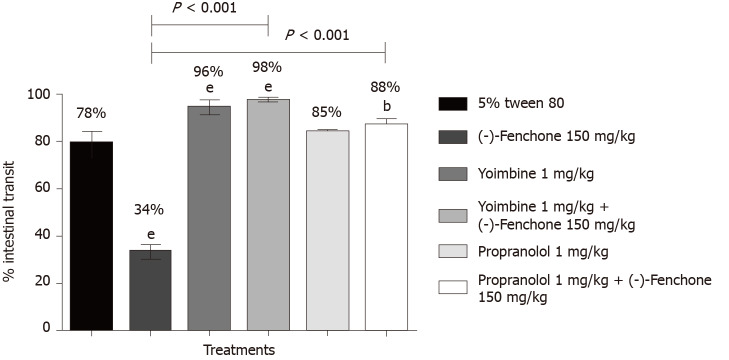
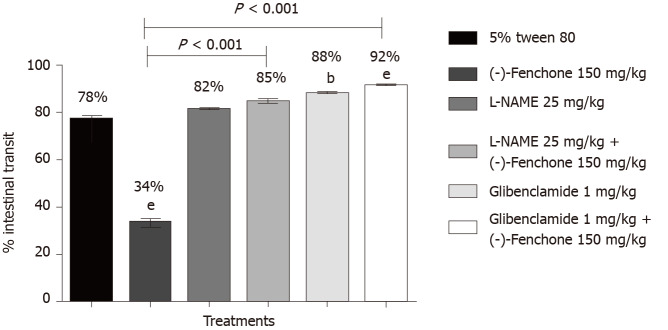
(-)-Fenchone (75, 150 and 300 mg/kg) showed antidiarrheal activity, with a significant decrease in the evacuation index. This activity is possibly related to a percentage of reduced intestinal transit (75, 150 and 300 mg/kg). The antimotility effect of (-)-fenchone decreased in the presence of pilocarpine, yohimbine, propranolol, L-NG-nitroarginine methyl ester or glibenclamide. In the enteropooling model, no reduction in intestinal fluid weight was observed. (-)- Fenchone did not show antibacterial activity; on the other hand, inhibits the growth of strains of fungi with a minimum fungicide concentration of 32 μg/mL. However, when it was associated with amphotericin B, no synergism was observed.
The antidiarrheal effect of (-)-fenchone in this study involves antimotility effect and not involve antisecretory mechanisms. (-)-Fenchone presents antifungal activity; however, it did not show antibacterial activity.
(-)-小茴香酮是一种双环单萜,存在于植物物种的精油中,如[未提及的植物名称1]和[未提及的植物名称2],用于治疗胃肠道疾病。药理学研究报道了其抗炎、抗氧化和抗伤害感受活性。
研究与胃肠动力、肠道分泌及抗菌活性相关的止泻活性。
采用蓖麻油诱导的腹泻模型评估止泻活性。采用肠道转运和胃排空实验评估可能的抗动力作用。研究毒蕈碱受体、突触前α-肾上腺素能和组织肾上腺素能受体、钾通道、一氧化氮以揭示抗动力作用机制,并采用蓖麻油诱导的肠积液实验阐明抗分泌机制。在最小抑菌浓度模型中评估抗菌活性,采用(-)-小茴香酮与标准抗真菌剂联合使用的分数抑菌浓度指数法。
(-)-小茴香酮(75、150和300mg/kg)显示出止泻活性,排空指数显著降低。该活性可能与肠道转运减少的百分比有关(75、150和300mg/kg)。在毛果芸香碱、育亨宾、普萘洛尔、L-NG-硝基精氨酸甲酯或格列本脲存在的情况下,(-)-小茴香酮的抗动力作用减弱。在肠积液模型中,未观察到肠液重量减少。(-)-小茴香酮未显示抗菌活性;另一方面,其对真菌菌株生长有抑制作用,最小杀菌浓度为32μg/mL。然而,当它与两性霉素B联合使用时,未观察到协同作用。
本研究中(-)-小茴香酮的止泻作用涉及抗动力作用,而非抗分泌机制。(-)-小茴香酮具有抗真菌活性;然而,它未显示抗菌活性。