Department of Clinical and Molecular Sciences-DISCLIMO, Università Politecnica delle Marche, Ancona.
Eur J Histochem. 2020 Dec 3;64(4):3176. doi: 10.4081/ejh.2020.3176.
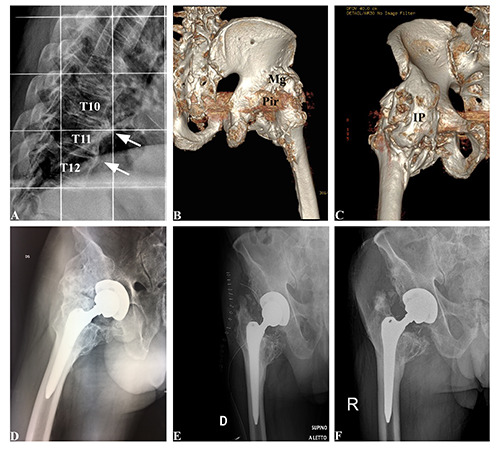
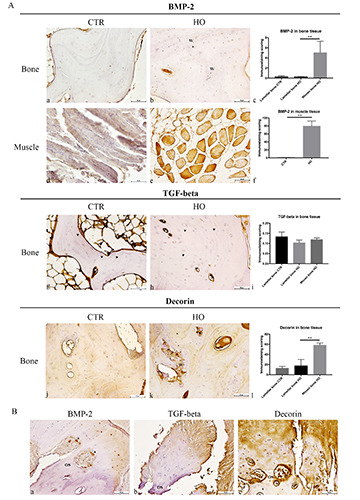
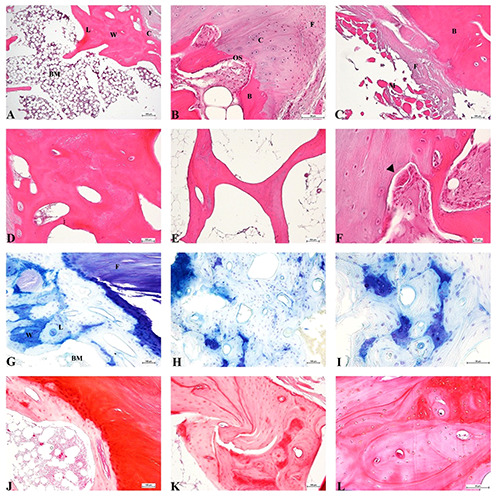
A high incidence of heterotopic ossification (HO) has been reported in patients with diffuse idiopathic skeletal hyperostosis (DISH), a metabolic disease characterized by calcifications of entheses at spine and peripheral sites. We performed histological and immunohistochemical analyses in five different HO sites in a patient with DISH to study a possible mutual interaction of bone morphogenetic protein 2 (BMP-2), transforming growth factor beta (TGF-β), and decorin, crucial for bone mass increasing, matrix calcification, and endochondral bone formation. We speculated that the surgical trauma triggered HO, inducing TGF-β release at the lesion site. TGF-β recruits osteoblast precursor cells and determines the overexpression of BMP-2 in the surrounding skeletal muscle, inducing a further osteogenic differentiation, contributing to HO onset.
弥漫性特发性骨肥厚(DISH)是一种代谢性疾病,其特征为脊柱和外周附着点的钙化,有报道称该病患者的异位骨化(HO)发病率较高。我们对一名 DISH 患者的五个不同 HO 部位进行了组织学和免疫组织化学分析,以研究对骨量增加、基质钙化和软骨内骨形成至关重要的骨形态发生蛋白 2(BMP-2)、转化生长因子-β(TGF-β)和核心蛋白聚糖(decorin)之间可能的相互作用。我们推测手术创伤引发了 HO,导致病变部位 TGF-β 的释放。TGF-β 募集成骨前体细胞,并确定周围骨骼肌中 BMP-2 的过度表达,诱导进一步的成骨分化,有助于 HO 的发生。