Department for Cognitive Neuroscience, Faculty of Biology, Bielefeld University, D-33615 Bielefeld, Germany
Center for Cognitive Interaction Technology, Bielefeld University, D-33615 Bielefeld, Germany.
J Neurosci. 2021 Feb 3;41(5):1068-1079. doi: 10.1523/JNEUROSCI.2091-20.2020. Epub 2020 Dec 3.
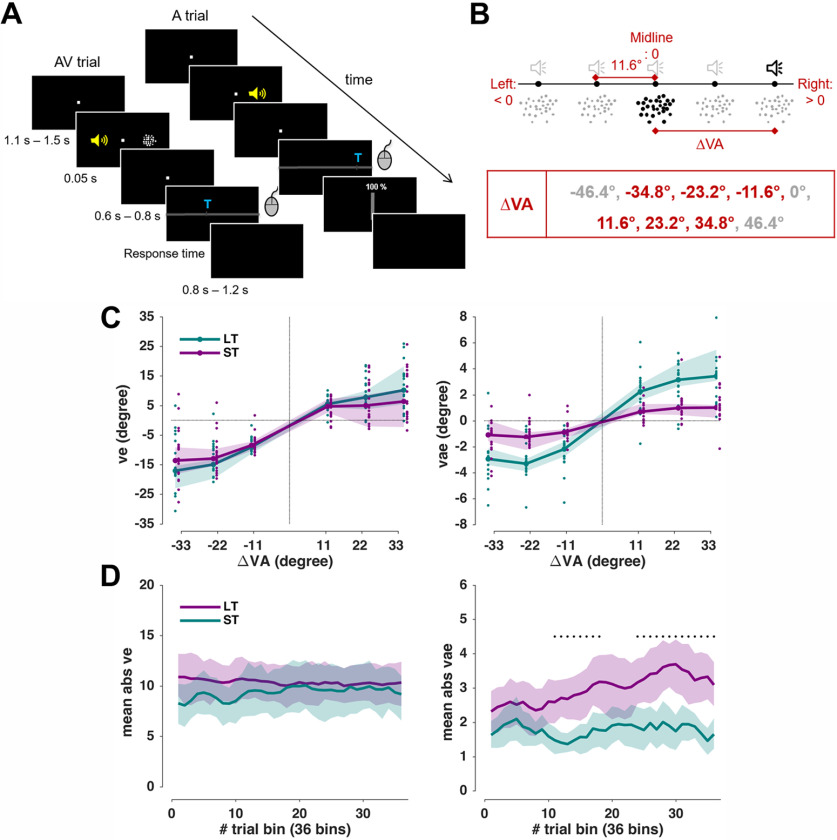
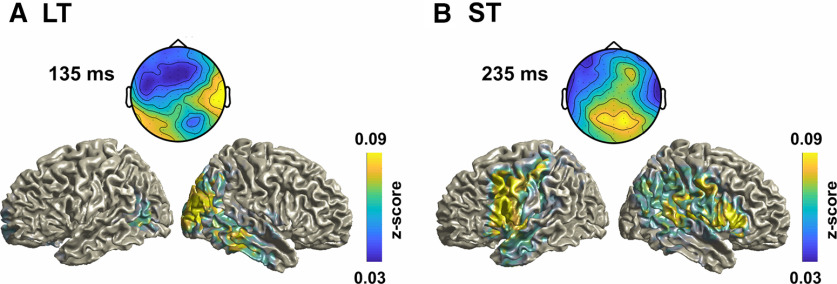
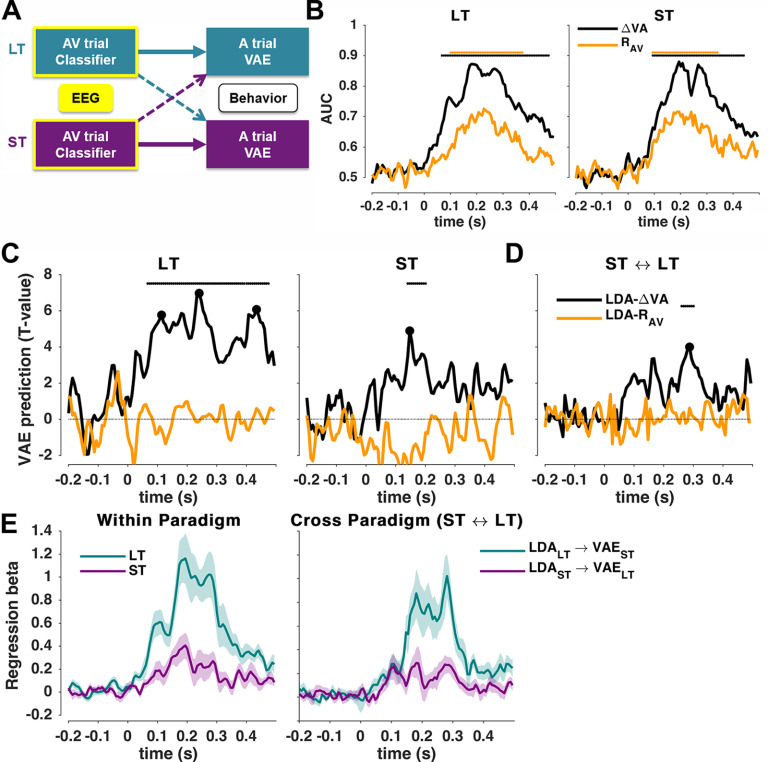
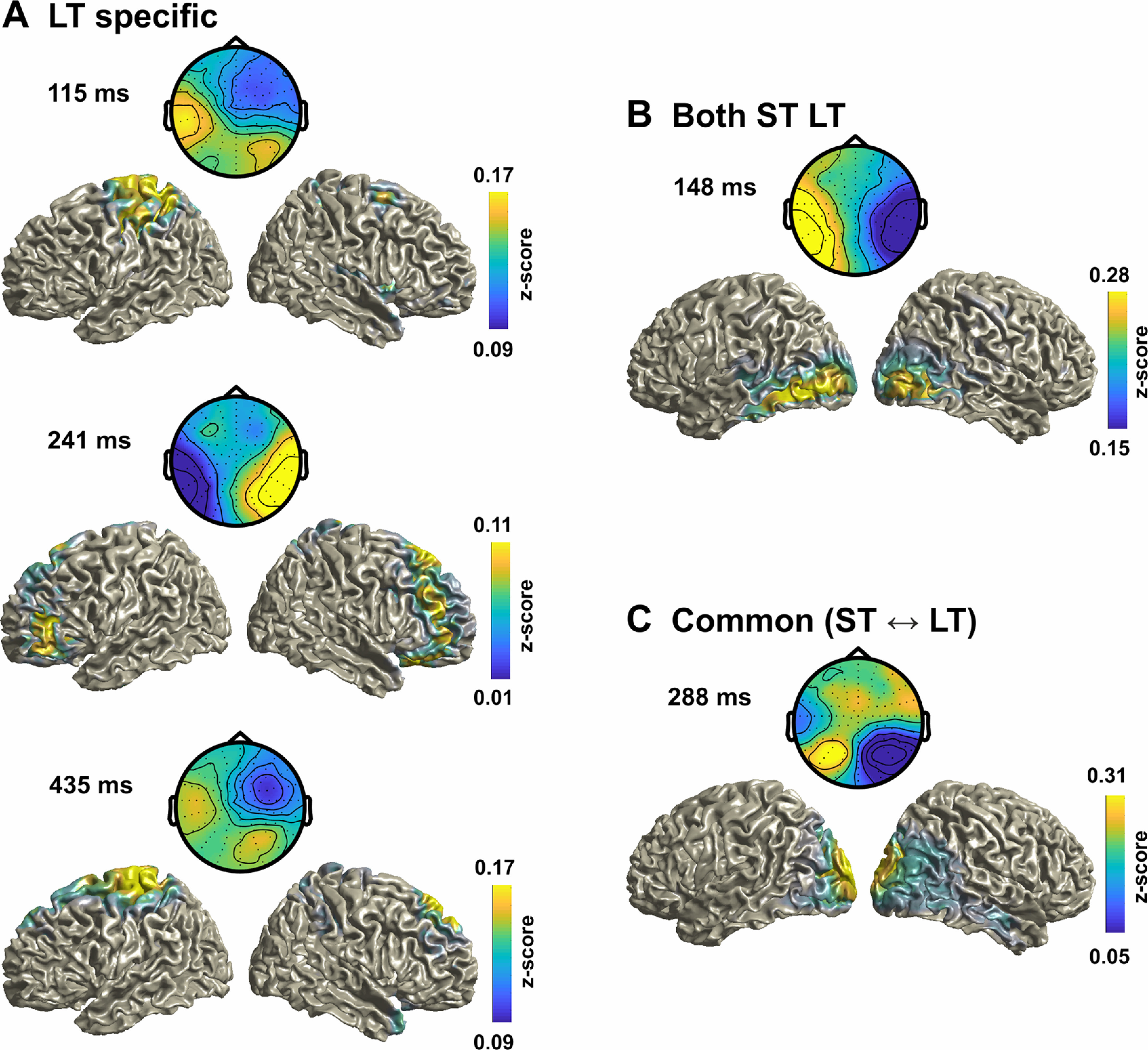
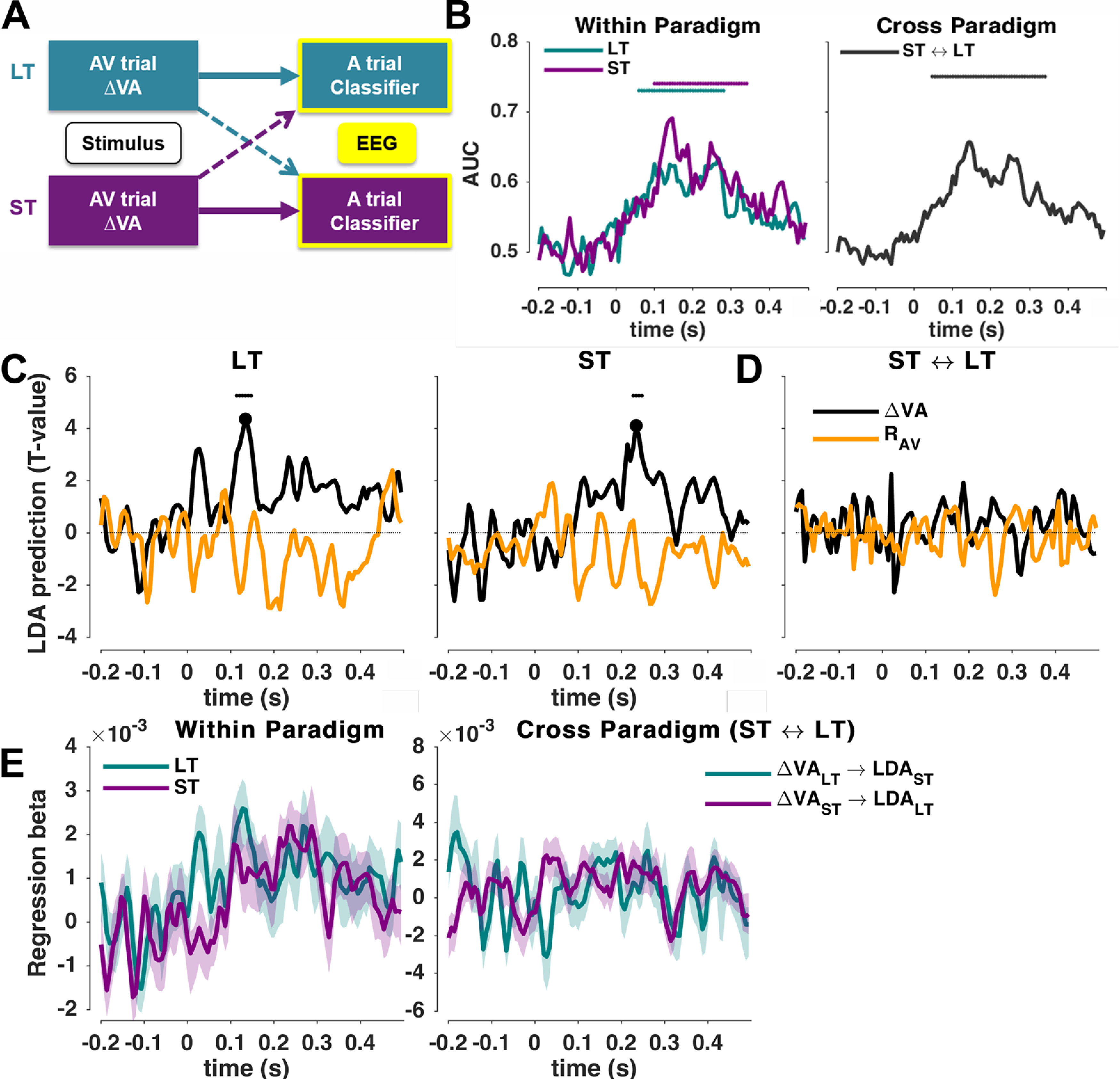
Our senses often receive conflicting multisensory information, which our brain reconciles by adaptive recalibration. A classic example is the ventriloquism aftereffect, which emerges following both cumulative (long-term) and trial-wise exposure to spatially discrepant multisensory stimuli. Despite the importance of such adaptive mechanisms for interacting with environments that change over multiple timescales, it remains debated whether the ventriloquism aftereffects observed following trial-wise and cumulative exposure arise from the same neurophysiological substrate. We address this question by probing electroencephalography recordings from healthy humans (both sexes) for processes predictive of the aftereffect biases following the exposure to spatially offset audiovisual stimuli. Our results support the hypothesis that discrepant multisensory evidence shapes aftereffects on distinct timescales via common neurophysiological processes reflecting sensory inference and memory in parietal-occipital regions, while the cumulative exposure to consistent discrepancies additionally recruits prefrontal processes. During the subsequent unisensory trial, both trial-wise and cumulative exposure bias the encoding of the acoustic information, but do so distinctly. Our results posit a central role of parietal regions in shaping multisensory spatial recalibration, suggest that frontal regions consolidate the behavioral bias for persistent multisensory discrepancies, but also show that the trial-wise and cumulative exposure bias sound position encoding via distinct neurophysiological processes. Our brain easily reconciles conflicting multisensory information, such as seeing an actress on screen while hearing her voice over headphones. These adaptive mechanisms exert a persistent influence on the perception of subsequent unisensory stimuli, known as the ventriloquism aftereffect. While this aftereffect emerges following trial-wise or cumulative exposure to multisensory discrepancies, it remained unclear whether both arise from a common neural substrate. We here rephrase this hypothesis using human electroencephalography recordings. Our data suggest that parietal regions involved in multisensory and spatial memory mediate the aftereffect following both trial-wise and cumulative adaptation, but also show that additional and distinct processes are involved in consolidating and implementing the aftereffect following prolonged exposure.
我们的感官经常会接收到相互冲突的多感官信息,大脑会通过自适应重新校准来对这些信息进行协调。一个经典的例子是语音错觉后效,这种现象出现在长时间(长期)和单次试验暴露于空间上不一致的多感官刺激之后。尽管这种自适应机制对于与随多个时间尺度变化的环境进行交互非常重要,但仍存在争议的是,单次试验和累积暴露后观察到的语音错觉后效是否来自相同的神经生理基础。我们通过探测健康人类(男女皆有)的脑电图记录,来探究对暴露于空间偏移视听刺激后的后效偏差有预测作用的过程,以此来解决这个问题。我们的结果支持这样一种假设,即通过反映顶枕区域的感觉推断和记忆的共同神经生理过程,不一致的多感官证据在不同的时间尺度上塑造了后效,而对一致差异的累积暴露则额外招募了前额叶过程。在随后的单感官试验中,单次试验和累积暴露都会使对声音信息的编码产生偏差,但方式不同。我们的结果提出了顶叶区域在塑造多感官空间重新校准中的核心作用,表明前额区域巩固了对持续多感官差异的行为偏差,但也表明单次试验和累积暴露通过不同的神经生理过程来影响声音位置的编码。我们的大脑很容易协调相互冲突的多感官信息,例如在屏幕上看到一位女演员,同时通过耳机听到她的声音。这些自适应机制对后续单感官刺激的感知产生持久的影响,这种现象被称为语音错觉后效。虽然这种后效出现在单次试验或多感官差异的累积暴露之后,但仍不清楚两者是否都来自共同的神经基础。我们在这里使用人类脑电图记录重新表述了这个假设。我们的数据表明,涉及多感官和空间记忆的顶叶区域介导了单次试验和累积适应后的后效,但也表明在长时间暴露后,巩固和实施后效需要额外的和不同的过程。