Department for Cognitive Neuroscience, Faculty of Biology, Bielefeld University, Bielefeld, Germany.
Center of Excellence Cognitive Interaction Technology, Bielefeld University, Bielefeld, Germany.
Elife. 2019 Jun 27;8:e47001. doi: 10.7554/eLife.47001.
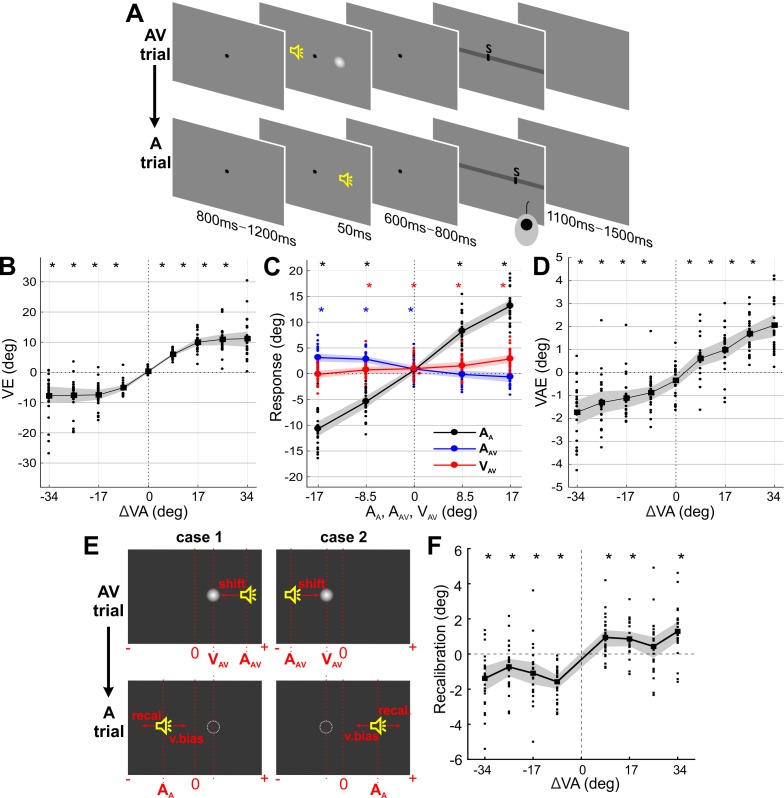
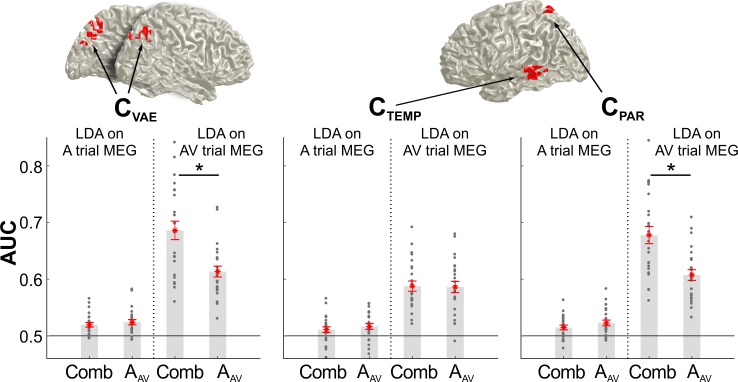
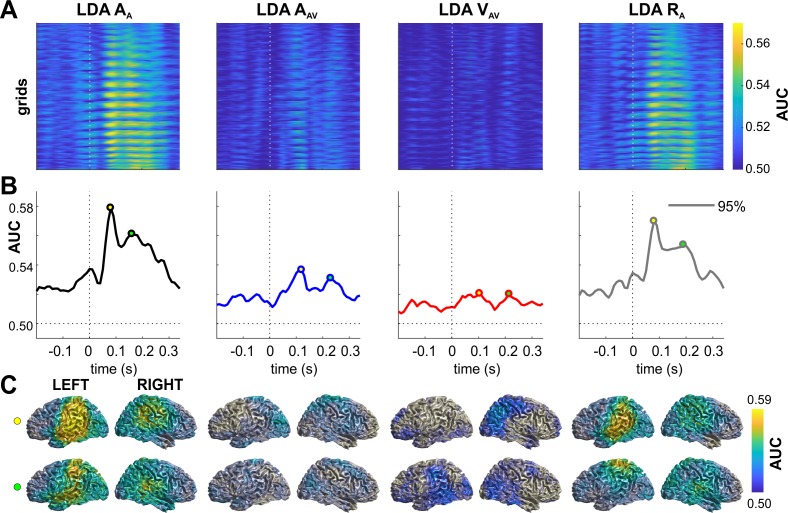
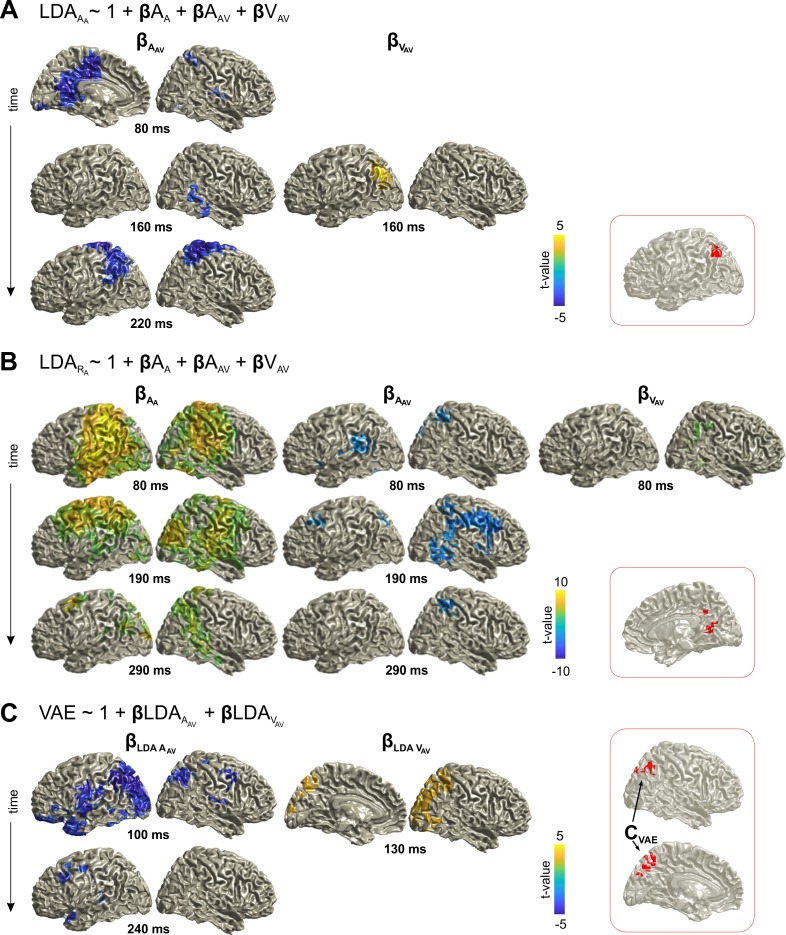
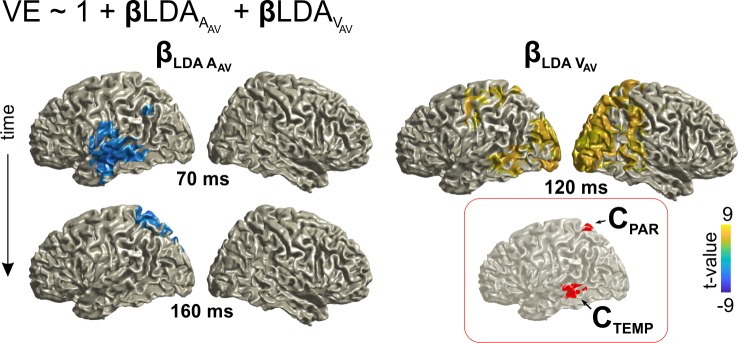
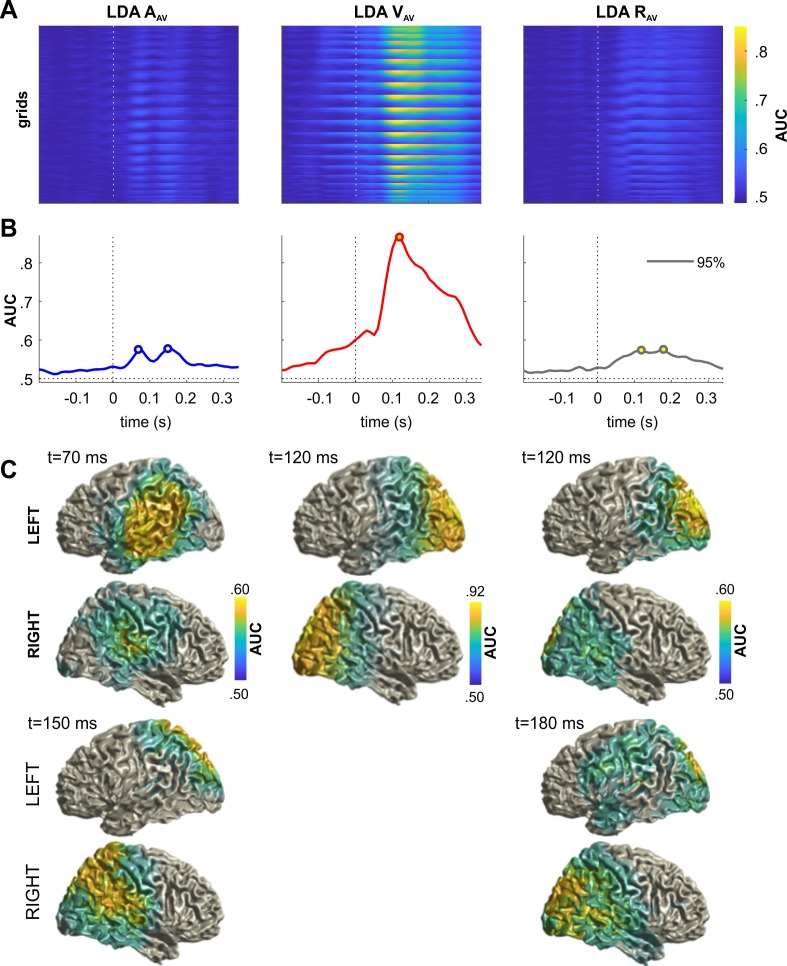
Perception adapts to mismatching multisensory information, both when different cues appear simultaneously and when they appear sequentially. While both multisensory integration and adaptive trial-by-trial recalibration are central for behavior, it remains unknown whether they are mechanistically linked and arise from a common neural substrate. To relate the neural underpinnings of sensory integration and recalibration, we measured whole-brain magnetoencephalography while human participants performed an audio-visual ventriloquist task. Using single-trial multivariate analysis, we localized the perceptually-relevant encoding of multisensory information within and between trials. While we found neural signatures of multisensory integration within temporal and parietal regions, only medial superior parietal activity encoded past and current sensory information and mediated the perceptual recalibration within and between trials. These results highlight a common neural substrate of sensory integration and perceptual recalibration, and reveal a role of medial parietal regions in linking present and previous multisensory evidence to guide adaptive behavior.
感知会适应不匹配的多感觉信息,无论是在不同的线索同时出现,还是在它们顺序出现的情况下。虽然多感觉整合和自适应逐次重新校准对于行为都很重要,但尚不清楚它们是否在机制上相关联,是否来自共同的神经基础。为了将感觉整合和重新校准的神经基础联系起来,我们在人类参与者进行视听腹语任务时测量了全脑脑磁图。使用单试次多变量分析,我们在试内和试间定位了多感觉信息的知觉相关编码。虽然我们在颞叶和顶叶区域内发现了多感觉整合的神经特征,但只有内侧上顶叶活动编码了过去和当前的感觉信息,并介导了试内和试间的知觉重新校准。这些结果突出了感觉整合和知觉重新校准的共同神经基础,并揭示了内侧顶叶区域在将当前和以前的多感觉证据联系起来以指导适应性行为方面的作用。