Sorbonne Université, CNRS, INSERM, Institut de Biologie Paris Seine-Neuroscience, 75005, Paris, France.
Physique pour la Médecine Paris, INSERM U1273, ESPCI Paris, CNRS FRE 2031, PSL Université Recherche, Paris, France.
Nat Commun. 2020 Dec 3;11(1):6193. doi: 10.1038/s41467-020-19948-7.
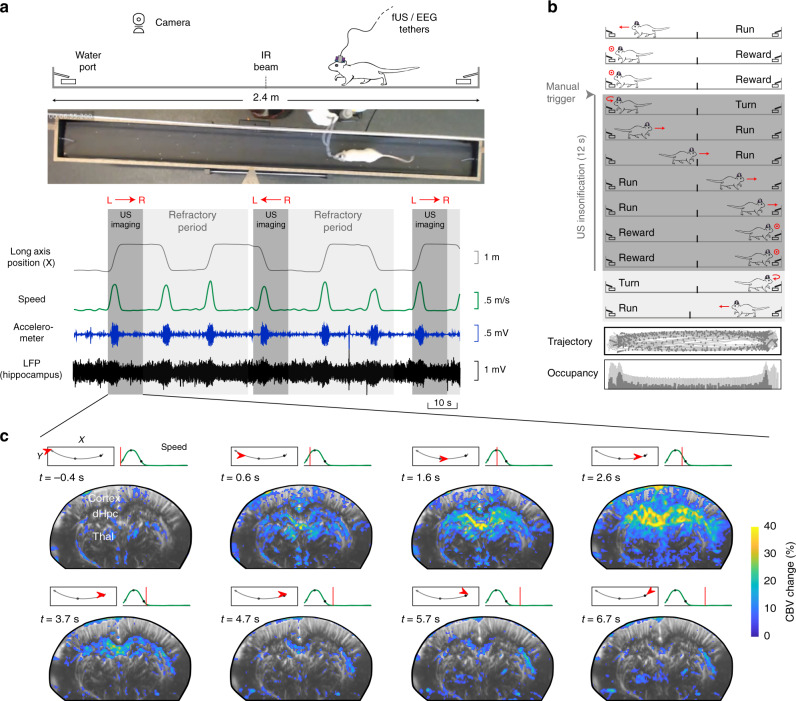
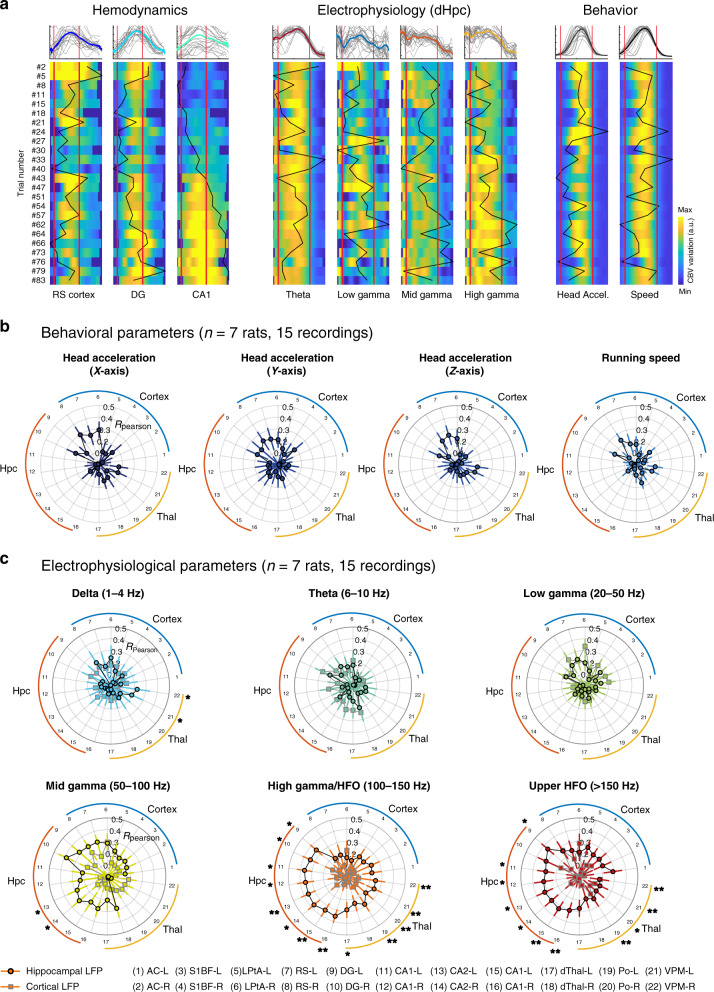
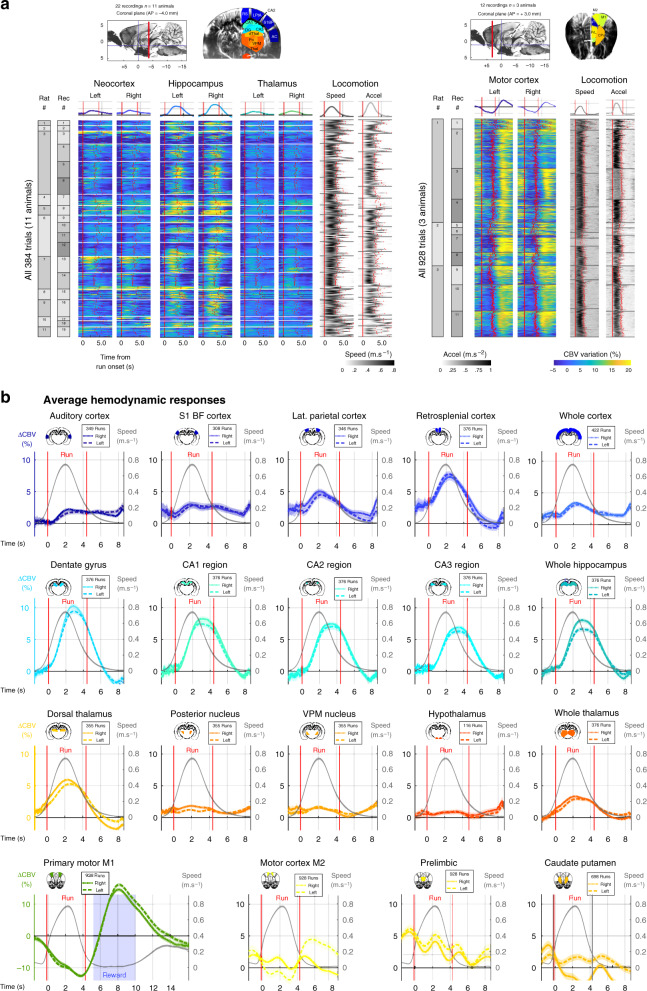
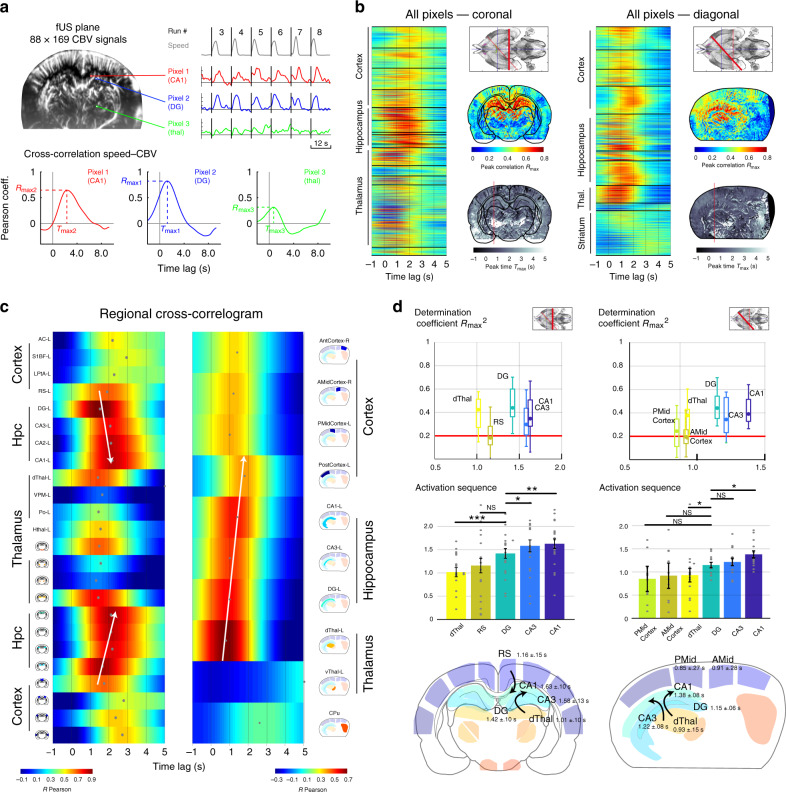
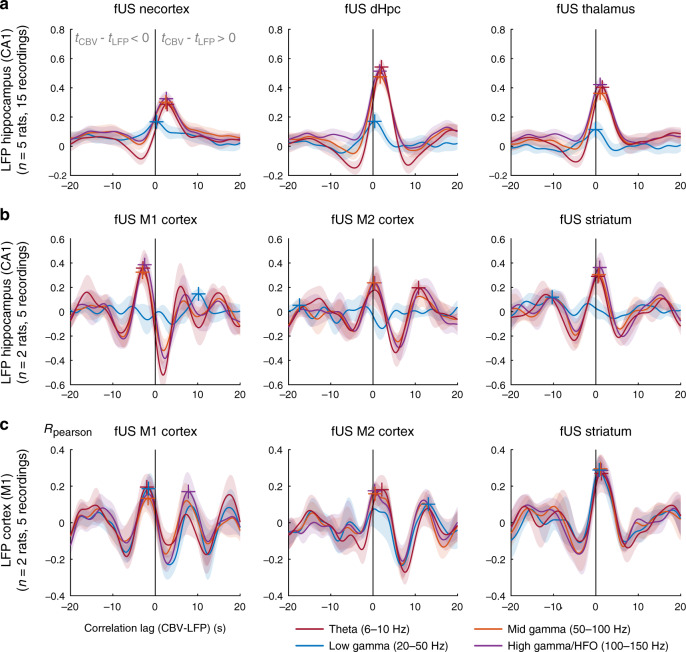
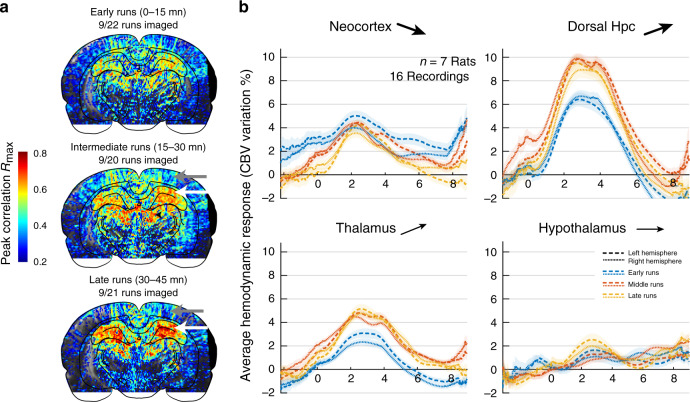
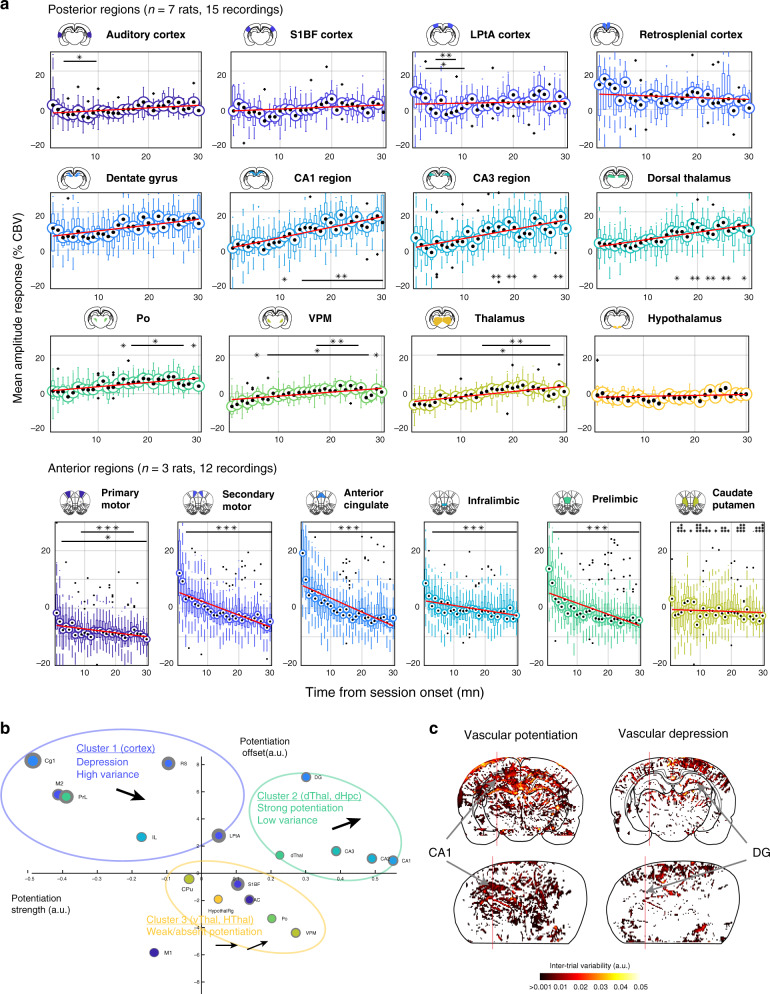
During locomotion, theta and gamma rhythms are essential to ensure timely communication between brain structures. However, their metabolic cost and contribution to neuroimaging signals remain elusive. To finely characterize neurovascular interactions during locomotion, we simultaneously recorded mesoscale brain hemodynamics using functional ultrasound (fUS) and local field potentials (LFP) in numerous brain structures of freely-running overtrained rats. Locomotion events were reliably followed by a surge in blood flow in a sequence involving the retrosplenial cortex, dorsal thalamus, dentate gyrus and CA regions successively, with delays ranging from 0.8 to 1.6 seconds after peak speed. Conversely, primary motor cortex was suppressed and subsequently recruited during reward uptake. Surprisingly, brain hemodynamics were strongly modulated across trials within the same recording session; cortical blood flow sharply decreased after 10-20 runs, while hippocampal responses strongly and linearly increased, particularly in the CA regions. This effect occurred while running speed and theta activity remained constant and was accompanied by an increase in the power of hippocampal, but not cortical, high-frequency oscillations (100-150 Hz). Our findings reveal distinct vascular subnetworks modulated across fast and slow timescales and suggest strong hemodynamic adaptation, despite the repetition of a stereotyped behavior.
在运动过程中,θ节律和γ节律对于确保大脑结构之间的及时通讯至关重要。然而,它们的代谢成本及其对神经影像学信号的贡献仍然难以捉摸。为了精细地表征运动过程中的神经血管相互作用,我们使用功能超声(fUS)和局部场电位(LFP)在经过过度训练的自由奔跑大鼠的众多大脑结构中同时记录中尺度脑血液动力学。运动事件可靠地伴随着一系列血流激增,依次涉及后扣带回皮层、背侧丘脑、齿状回和 CA 区,延迟范围为 0.8 到 1.6 秒后达到峰值速度。相反,初级运动皮层在奖励摄取期间被抑制,随后被募集。令人惊讶的是,在同一个记录会话中,大脑血液动力学在不同试验中被强烈调制;皮质血流在 10-20 次跑步后急剧下降,而海马体的反应强烈且呈线性增加,尤其是在 CA 区。这种效应发生在跑步速度和θ活动保持不变的情况下,伴随着海马体高频振荡(100-150 Hz)功率的增加,而皮质高频振荡的功率没有增加。我们的发现揭示了在快速和慢速时间尺度上调制的不同血管子网,并表明尽管重复了刻板的行为,但仍存在强烈的血液动力学适应。