Laboratory of Neurophysiology and New Microscopy, INSERM U1128, Université Paris Descartes, Paris, France.
Institute of Pharmacology and Toxicology, University of Zurich, Zurich, Switzerland.
Elife. 2019 Aug 9;8:e47324. doi: 10.7554/eLife.47324.
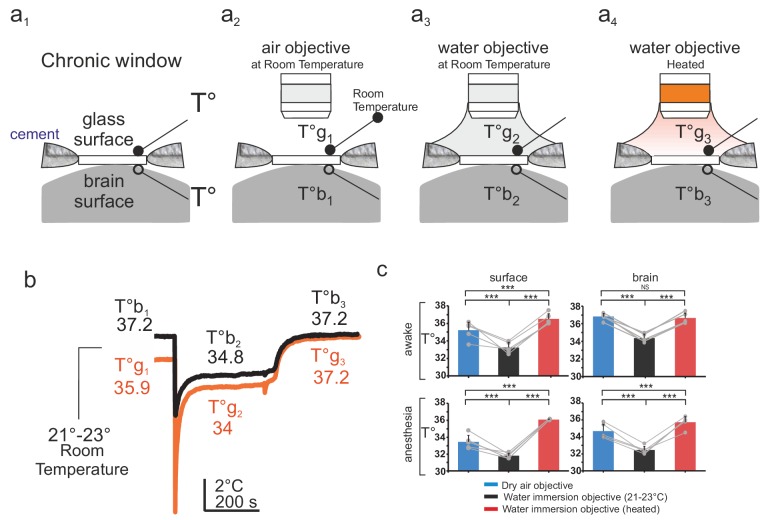
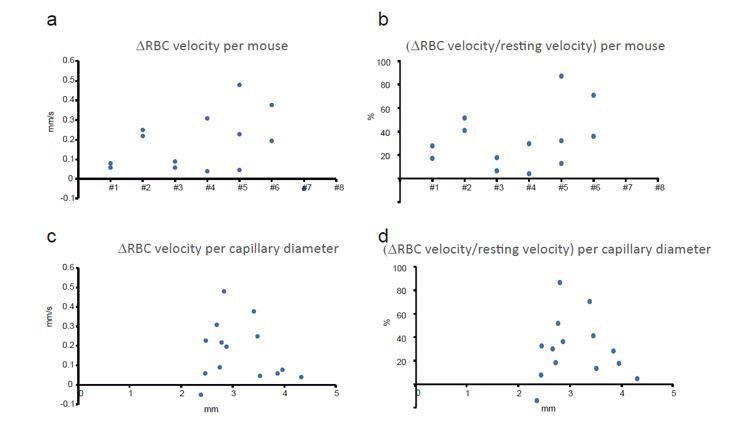
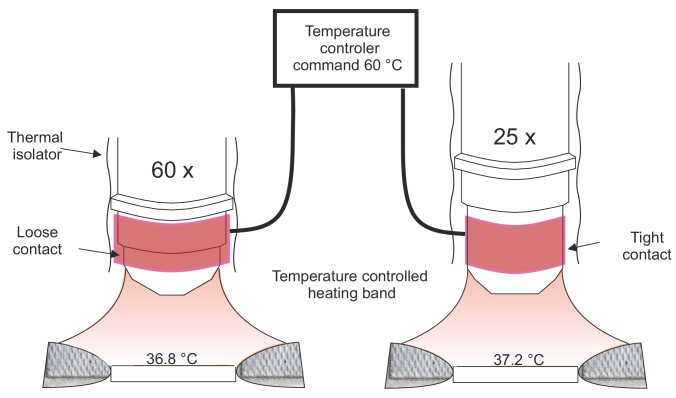
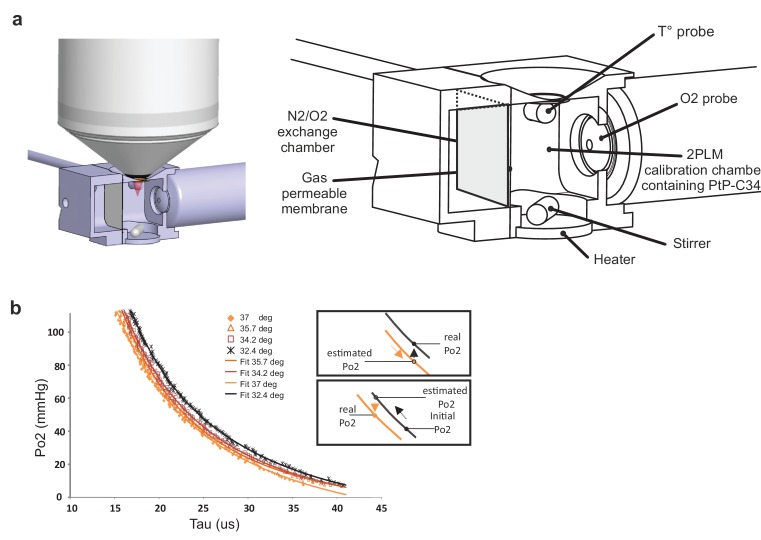
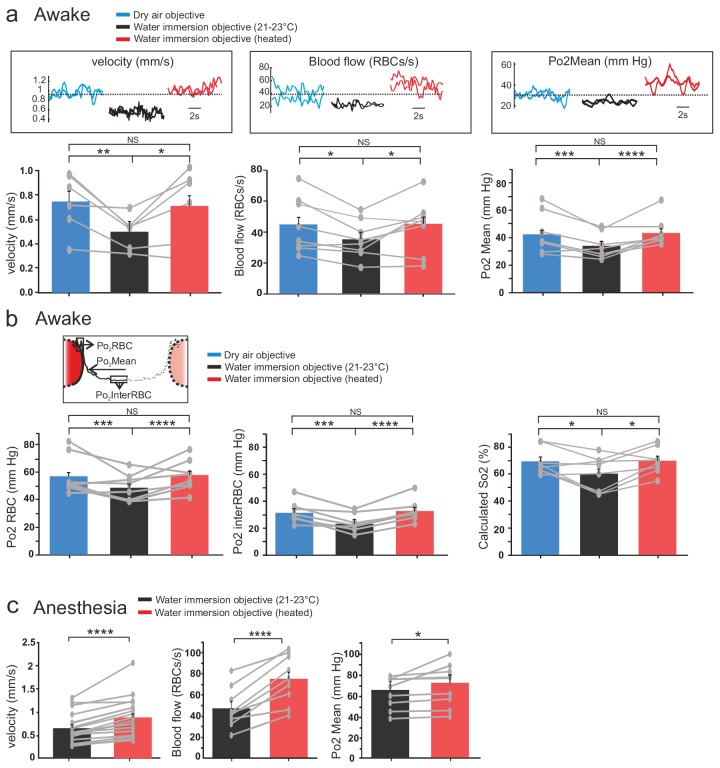
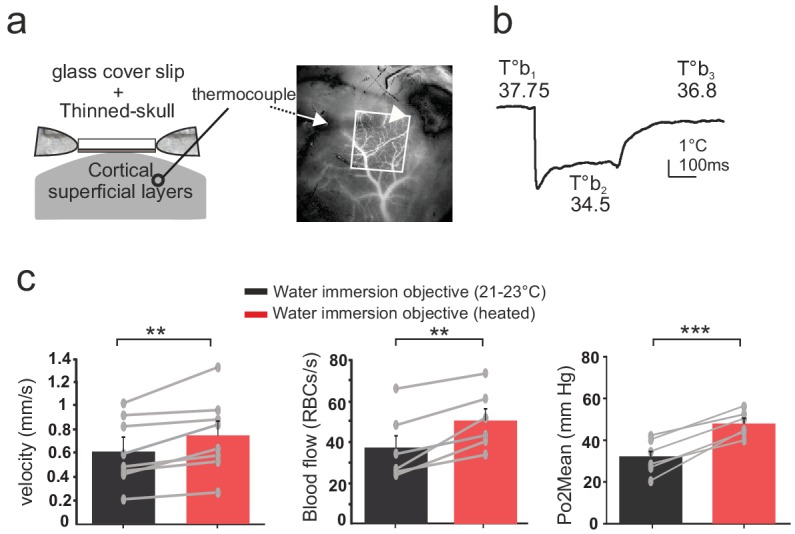
Previously, we reported the first oxygen partial pressure (Po2) measurements in the brain of awake mice, by performing two-photon phosphorescence lifetime microscopy at micrometer resolution (Lyons et al., 2016). However, this study disregarded that imaging through a cranial window lowers brain temperature, an effect capable of affecting cerebral blood flow, the properties of the oxygen sensors and thus Po2 measurements. Here, we show that in awake mice chronically implanted with a glass window over a craniotomy or a thinned-skull surface, the postsurgical decrease of brain temperature recovers within a few days. However, upon imaging with a water immersion objective at room temperature, brain temperature decreases by ~2-3°C, causing drops in resting capillary blood flow, capillary Po2, hemoglobin saturation, and tissue Po2. These adverse effects are corrected by heating the immersion objective or avoided by imaging through a dry air objective, thereby revealing the physiological values of brain oxygenation.
此前,我们通过在微尺度下进行双光子磷光寿命显微镜技术,首次报告了清醒小鼠大脑中的氧分压(Po2)测量结果(Lyons 等人,2016 年)。然而,这项研究忽略了一个事实,即通过颅窗进行成像会降低大脑温度,这种效应会影响脑血流、氧传感器的特性,从而影响 Po2 的测量结果。在这里,我们表明,在经过开颅术或颅骨表面变薄后,长期植入玻璃窗口的清醒小鼠中,手术后大脑温度的下降会在几天内恢复。然而,当在室温下使用水浸物镜进行成像时,大脑温度会下降约 2-3°C,导致静息毛细血管血流、毛细血管 Po2、血红蛋白饱和度和组织 Po2 下降。这些不利影响可以通过加热浸液物镜来纠正,或者通过使用干燥空气物镜进行成像来避免,从而揭示出大脑氧合的生理值。