DentaQuest Partnership for Oral Health Advancement, 465 Medford Street, Boston, MA, 02129, USA.
DentaQuest, 11100 West Liberty Drive, Milwaukee, WI, 53224, USA.
BMC Oral Health. 2020 Dec 4;20(1):355. doi: 10.1186/s12903-020-01345-7.
Better understanding of the frequency of dental emergencies and the procedures performed during those emergency visits can help providers, insurers, and policymakers understand workforce and care provision needs.
Procedures performed at an emergency dental encounter and in the encounter following that encounter are assessed. Emergency dental encounters are those with a CDT code of D0140, D0160, or D0170. Data was analyzed from the IBM Watson Medicaid Marketscan data from 2013 to 2017, a nationally representative dental and medical claims database from 13 deidentified states in the United States.
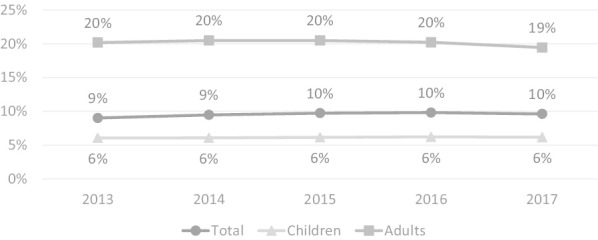
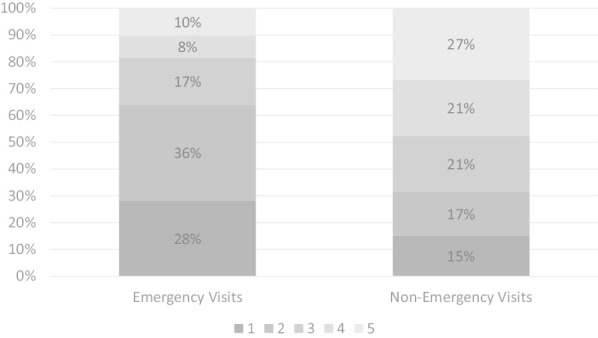
Consistently over time, about 10% of all dental encounters are due to a dental emergency. 28% of emergency dental encounters had no other procedure performed during those encounters. When other procedures were performed during the encounter, the majority were diagnostic in nature, primarily radiographs. Among patients who returned to the dentists following an emergency visit, 43% returned for more definitive dental treatment, most within 30 days.
The majority of dental emergency encounters do not result in definitive treatment, rather patients often return to the dentist at a later date for that treatment. Where possible, dental providers could utilize teledental services to triage patients to appropriate care.
更好地了解牙科急诊的频率和这些急诊就诊期间所进行的程序,可以帮助提供者、保险公司和政策制定者了解劳动力和护理提供需求。
评估在急诊牙科就诊期间和随后的就诊期间进行的程序。急诊牙科就诊是指使用 CDT 代码 D0140、D0160 或 D0170 的就诊。该数据来自 IBM Watson Medicaid Marketscan 数据库 2013 年至 2017 年的数据,该数据库来自美国 13 个未识别州的全国代表性牙科和医疗索赔数据库。
随着时间的推移,大约 10%的所有牙科就诊是由于牙科急诊。28%的急诊牙科就诊在就诊期间没有进行其他治疗。当在就诊期间进行其他治疗时,大多数是诊断性质的,主要是放射线照相。在急诊就诊后返回牙医处的患者中,43%的患者返回进行更明确的牙科治疗,大多数在 30 天内返回。
大多数牙科急诊就诊并不导致明确的治疗,而是患者通常会在以后的日期返回牙医处进行治疗。在可能的情况下,牙科提供者可以利用远程牙科服务对患者进行分诊,以获得适当的护理。