Department of Anesthesiology, Peking University Third Hospital, Beijing, China.
Department of Biochemistry and Molecular Biology, Dalian Medical University, Dalian, China.
Cancer Med. 2021 Jan;10(1):337-349. doi: 10.1002/cam4.3621. Epub 2020 Dec 6.
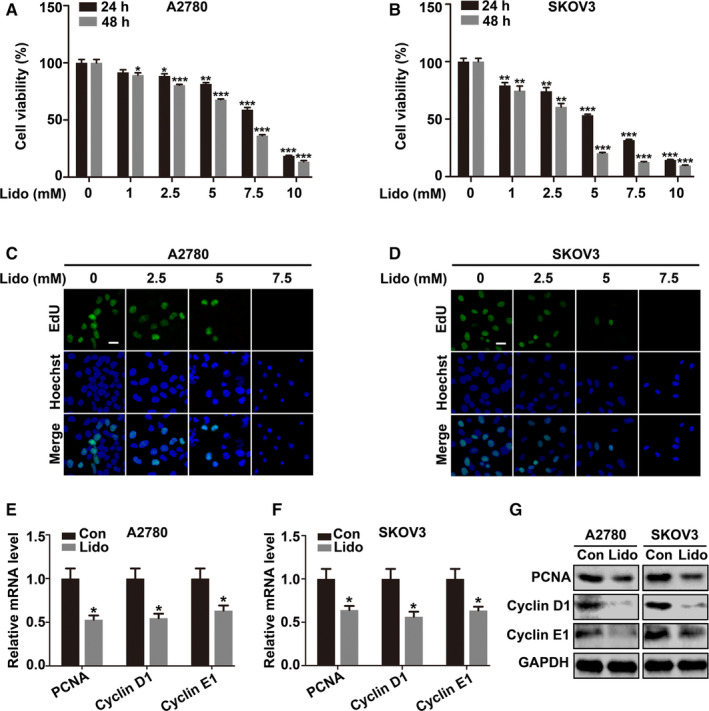
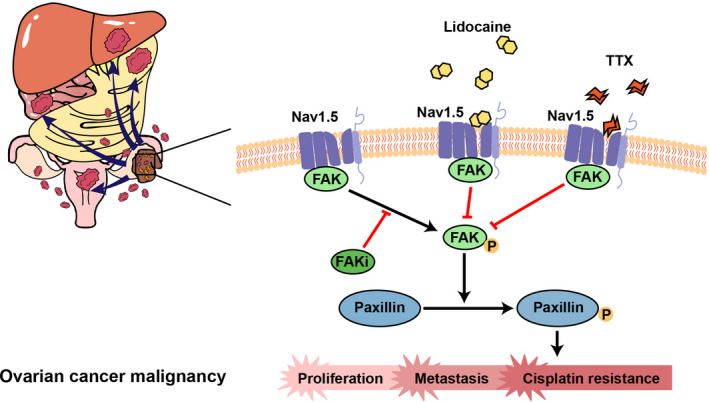
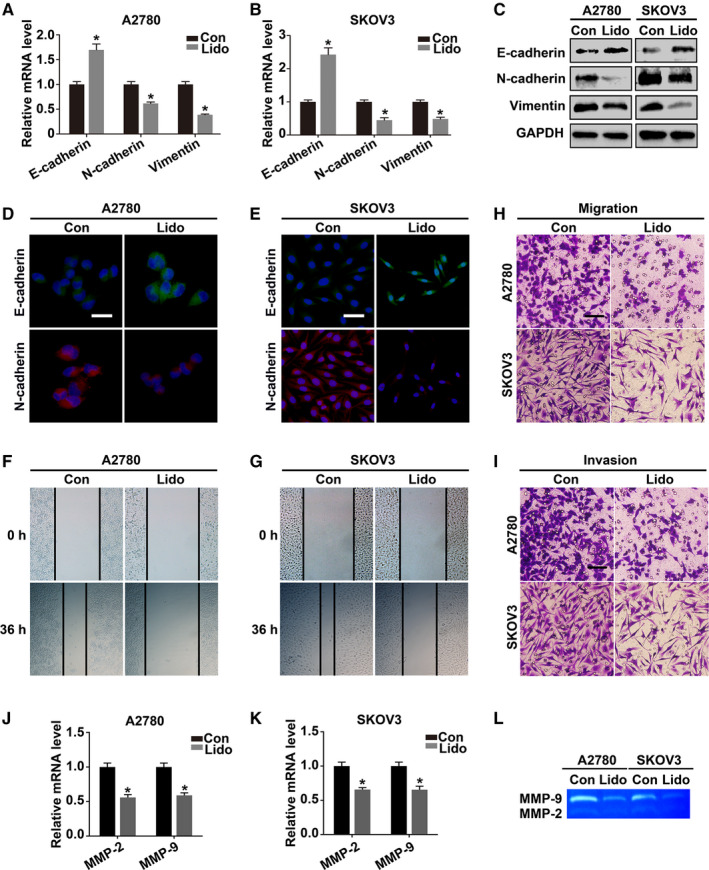
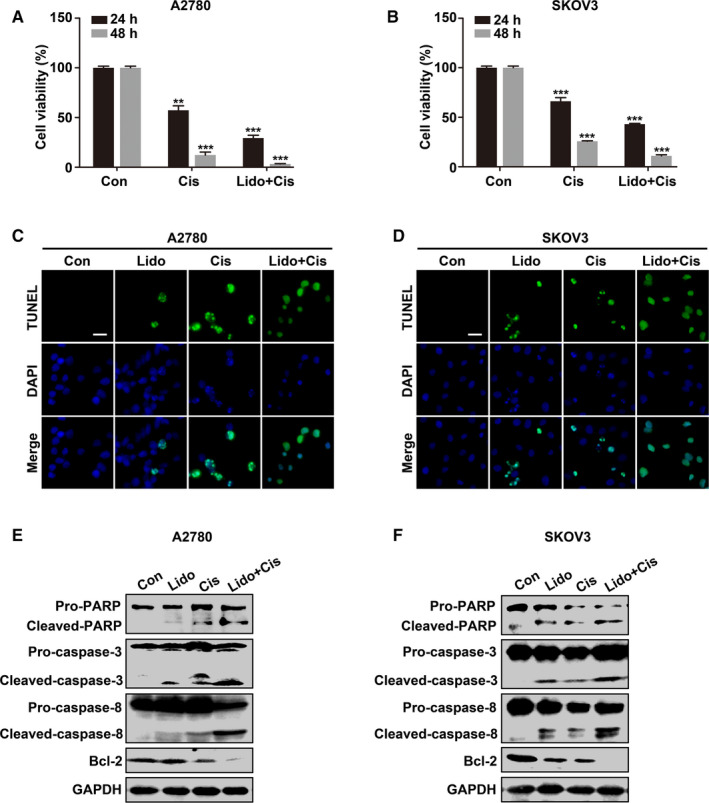
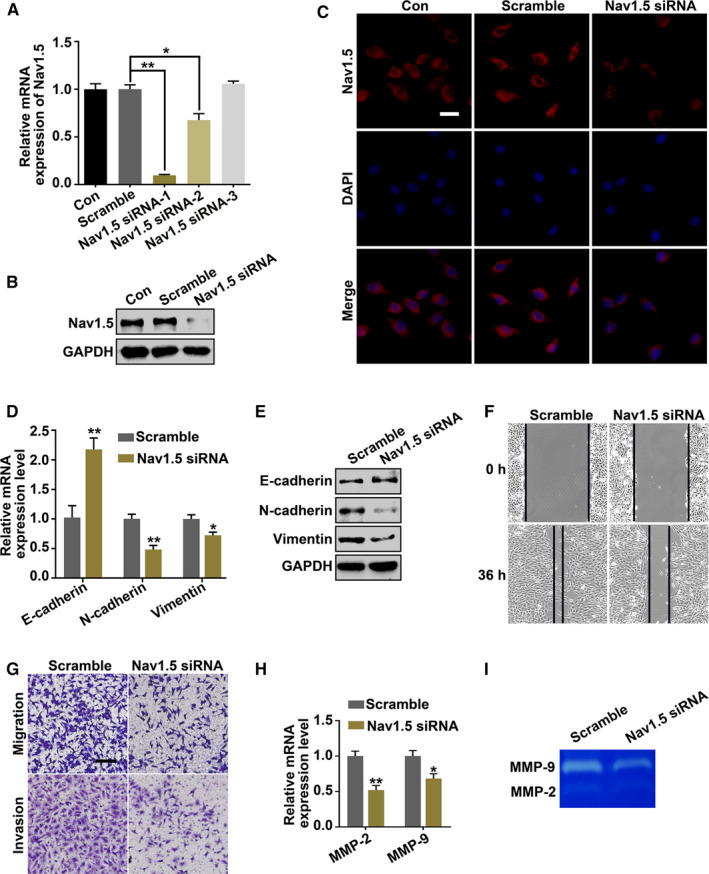
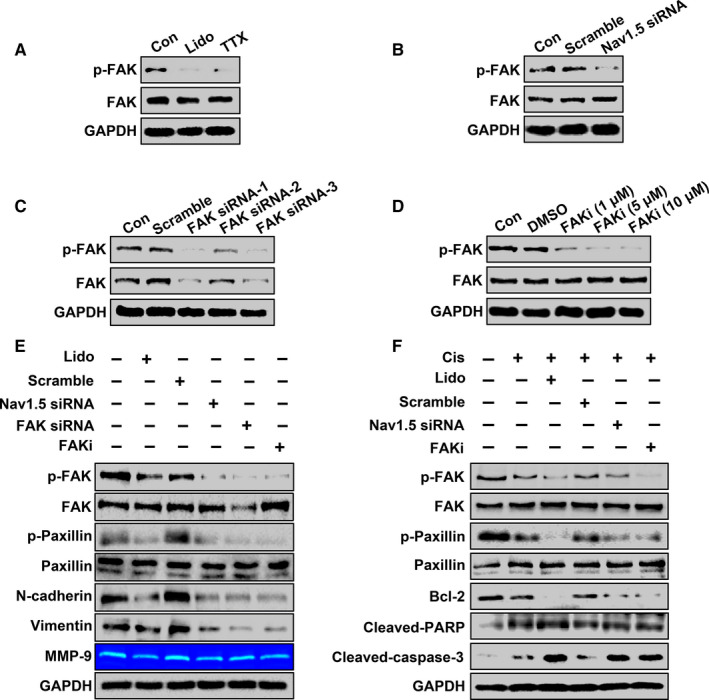
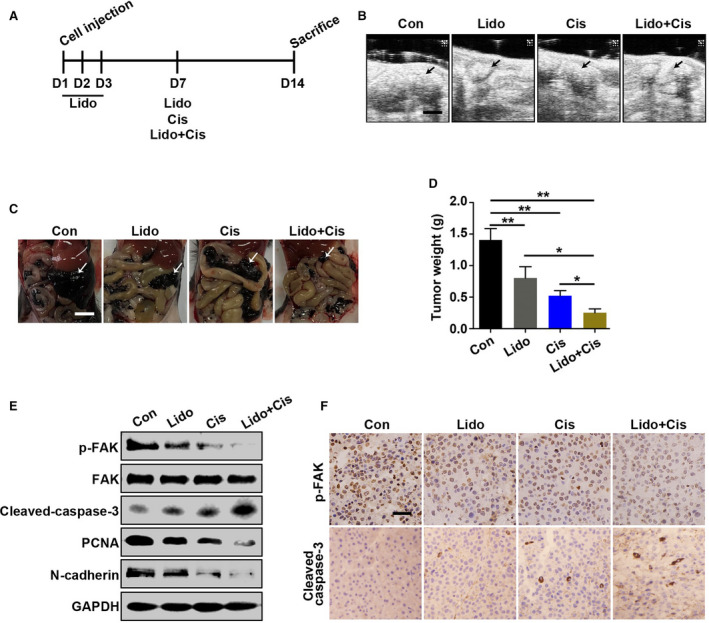
Lidocaine, one of the most commonly used local anesthetics during surgery, has been reported to suppress cancer cell growth via blocking voltage-gated sodium channels (VGSCs). VGSC 1.5 (Na 1.5) is highly expressed in invasive cancers including ovarian cancer. This study aims to investigate whether lidocaine inhibits the malignancy of ovarian cancer through Na 1.5 blockage. Human ovarian cancer, its metastatic cancer and normal ovarian tissues were probed with anti-Na 1.5 antibody in situ. Human ovarian cancer A2780 and SKOV3 cells were cultured and their growth, epithelial-mesenchymal transition (EMT), migration, and invasion in the presence or absence of lidocaine together with underlying molecular mechanisms were assessed. Murine syngeneic ovarian cancer (ID8) model was also used to determine the chemotherapeutic efficiency of cisplatin in combination with lidocaine. The high level of Na 1.5 expression was found in human ovarian cancer and even higher in its metastatic cancer but not in normal ovarian tissues. Lidocaine decreased the growth, EMT, migration, and invasion of human ovarian cancer A2780 and SKOV3 cells. Lidocaine enhanced the chemotherapeutic efficiency of cisplatin in both ovarian cancer cell cultures and a murine ovarian metastatic model. Furthermore, a downregulation of Na 1.5 by siRNA transfection, or FAK inhibitor application, inhibited the malignant properties of SKOV3 cells through inactivating FAK/Paxillin signaling pathway. Our data may indicate that lidocaine suppresses the metastasis of ovarian cancer and sensitizes cisplatin through blocking Na 1.5-mediated EMT and FAK/paxillin signaling pathway. The translational value of lidocaine local application as an ovarian cancer adjuvant treatment warrants further study.
利多卡因是手术中最常用的局部麻醉剂之一,据报道,它通过阻断电压门控钠离子通道(VGSCs)抑制癌细胞生长。VGSC1.5(Na1.5)在包括卵巢癌在内的侵袭性癌症中高度表达。本研究旨在探讨利多卡因是否通过 Na1.5 阻断抑制卵巢癌的恶性程度。用抗 Na1.5 抗体原位探测人卵巢癌、其转移性癌症和正常卵巢组织。培养人卵巢癌细胞 A2780 和 SKOV3,并评估它们在存在或不存在利多卡因的情况下的生长、上皮-间充质转化(EMT)、迁移和侵袭以及潜在的分子机制。还使用鼠同源卵巢癌(ID8)模型来确定顺铂联合利多卡因的化疗效果。在人卵巢癌中发现了高水平的 Na1.5 表达,甚至在其转移性癌症中更高,但在正常卵巢组织中没有。利多卡因降低了人卵巢癌细胞 A2780 和 SKOV3 的生长、EMT、迁移和侵袭。利多卡因增强了顺铂在卵巢癌细胞培养和鼠卵巢转移模型中的化疗效果。此外,通过 siRNA 转染下调 Na1.5 或应用 FAK 抑制剂,通过抑制 FAK/Paxillin 信号通路,抑制了 SKOV3 细胞的恶性特性。我们的数据可能表明,利多卡因通过阻断 Na1.5 介导的 EMT 和 FAK/paxillin 信号通路抑制卵巢癌转移并增敏顺铂。利多卡因局部应用作为卵巢癌辅助治疗的转化价值值得进一步研究。