
在听觉脑干发育过程中,半胱天冬酶-3切割细胞外囊泡蛋白。
Caspase-3 Cleaves Extracellular Vesicle Proteins During Auditory Brainstem Development.
作者信息
Weghorst Forrest, Mirzakhanyan Yeva, Samimi Kian, Dhillon Mehron, Barzik Melanie, Cunningham Lisa L, Gershon Paul D, Cramer Karina S
机构信息
Department of Neurobiology and Behavior, University of California, Irvine, Irvine, CA, United States.
Department of Molecular Biology and Biochemistry, University of California, Irvine, Irvine, CA, United States.
出版信息
Front Cell Neurosci. 2020 Nov 12;14:573345. doi: 10.3389/fncel.2020.573345. eCollection 2020.
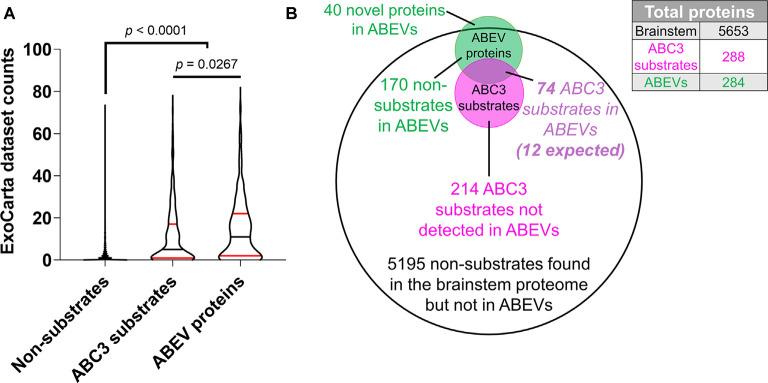
Sound localization requires extremely precise development of auditory brainstem circuits, the molecular mechanisms of which are largely unknown. We previously demonstrated a novel requirement for non-apoptotic activity of the protease caspase-3 in chick auditory brainstem development. Here, we used mass spectrometry to identify proteolytic substrates of caspase-3 during chick auditory brainstem development. These auditory brainstem caspase-3 substrates were enriched for proteins previously shown to be cleaved by caspase-3, especially in non-apoptotic contexts. Functional annotation analysis revealed that our caspase-3 substrates were also enriched for proteins associated with several protein categories, including proteins found in extracellular vesicles (EVs), membrane-bound nanoparticles that function in intercellular communication. The proteome of EVs isolated from the auditory brainstem was highly enriched for our caspase-3 substrates. Additionally, we identified two caspase-3 substrates with known functions in axon guidance, namely Neural Cell Adhesion Molecule (NCAM) and Neuronal-glial Cell Adhesion Molecule (Ng-CAM), that were found in auditory brainstem EVs and expressed in the auditory pathway alongside cleaved caspase-3. Taken together, these data suggest a novel developmental mechanism whereby caspase-3 influences auditory brainstem circuit formation through the proteolytic cleavage of extracellular vesicle (EV) proteins.
声音定位需要听觉脑干回路极其精确地发育,但其分子机制在很大程度上尚不清楚。我们之前证明了蛋白酶caspase-3的非凋亡活性在雏鸡听觉脑干发育中具有新的作用。在这里,我们使用质谱法来鉴定雏鸡听觉脑干发育过程中caspase-3的蛋白水解底物。这些听觉脑干caspase-3底物富含先前显示可被caspase-3切割的蛋白质,特别是在非凋亡环境中。功能注释分析表明,我们的caspase-3底物还富含与几种蛋白质类别相关的蛋白质,包括在细胞外囊泡(EV)中发现的蛋白质,细胞外囊泡是在细胞间通讯中起作用的膜结合纳米颗粒。从听觉脑干分离的细胞外囊泡的蛋白质组高度富含我们的caspase-3底物。此外,我们鉴定了两种在轴突导向中具有已知功能的caspase-3底物,即神经细胞粘附分子(NCAM)和神经胶质细胞粘附分子(Ng-CAM),它们存在于听觉脑干细胞外囊泡中,并与切割的caspase-3一起在听觉通路中表达。综上所述,这些数据表明了一种新的发育机制,即caspase-3通过细胞外囊泡(EV)蛋白的蛋白水解切割来影响听觉脑干回路的形成。



 Zotero 插件