Tsai Yun, Xia Changbo, Sun Zhongwen
Nanjing University of Chinese Medicine, Nanjing, China.
Shandong University of Traditional Chinese Medicine, Jinan, China.
Front Pharmacol. 2020 Nov 13;11:598555. doi: 10.3389/fphar.2020.598555. eCollection 2020.
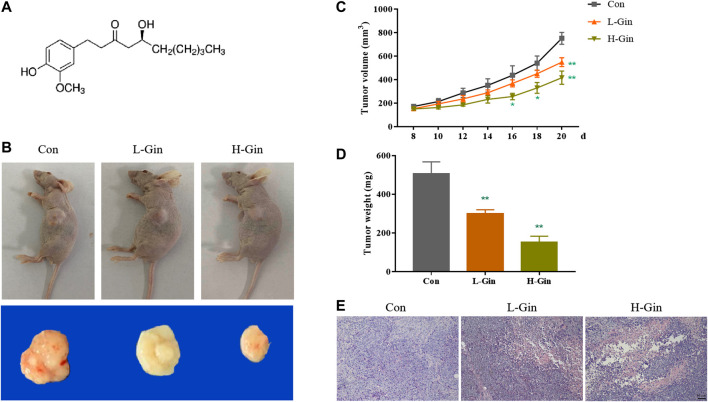
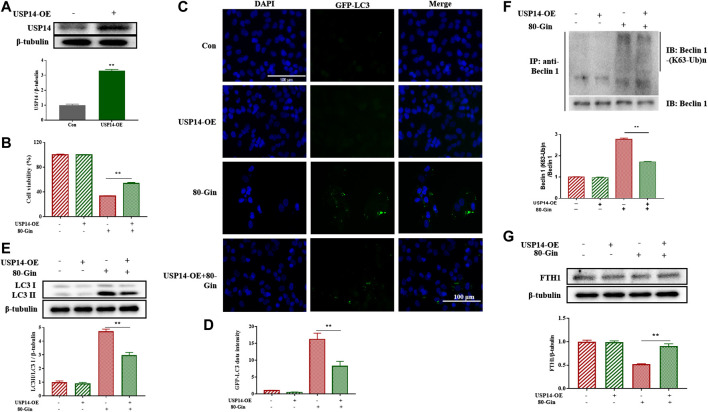
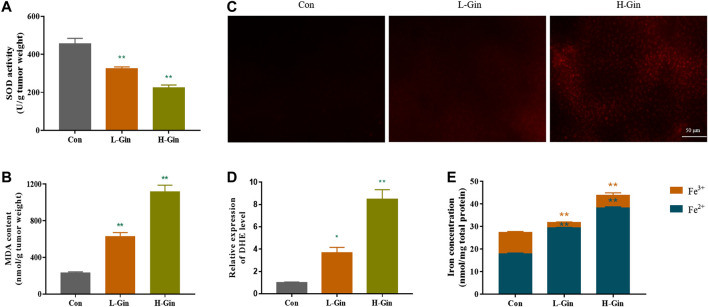
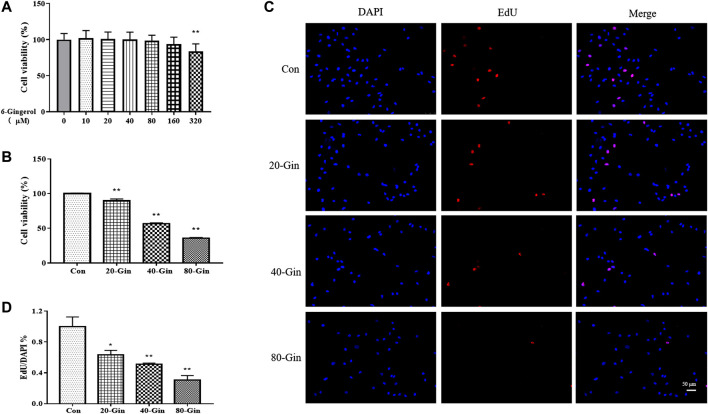
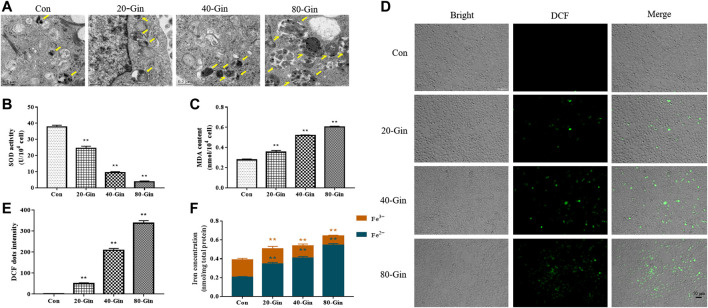
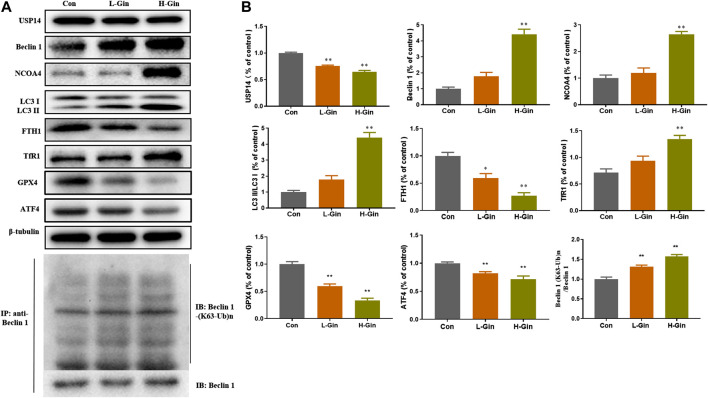
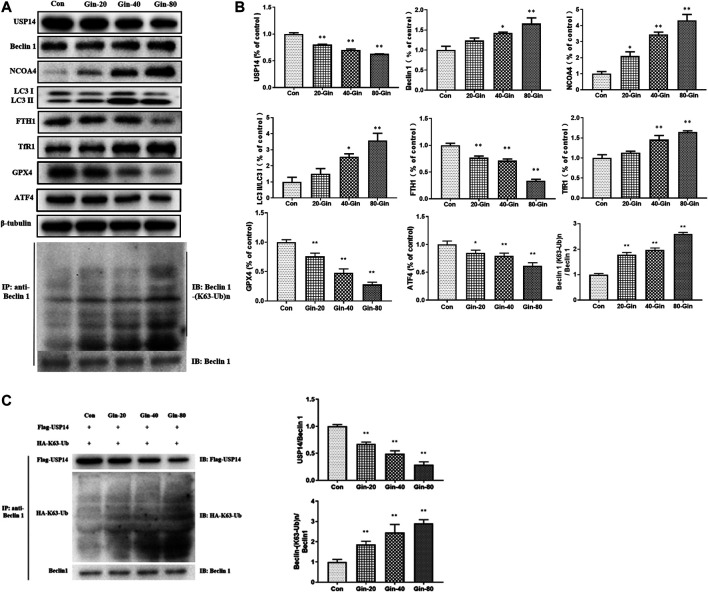
Lung cancer is the most common malignant tumor and is the leading cause of cancer-related deaths worldwide. Extraction of bioactive substances from herbs is considered as an alternative method to traditional treatment. 6-Gingerol is a naturally occurring phenol found in ginger that can be used to treat tumors and suppress inflammation. To determine whether 6-Gingerol can be used as a therapeutic agent for tumors. In this study, tumor-bearing mice were used as an animal model and A549 as a cell model. Western blot was used to detect the expression of autophagy related proteins ubiquitin-specific peptidase 14 (USP14), Beclin1, microtubule-associated protein light chain 3 (LC3) and ferroptosis related proteins nuclear receptor coactivator 4 (NCOA4), ferritin heavy chain 1 (FTH1), transferrin receptor 1 (TfR1), glutathione peroxidase 4 (GPX4), activating transcription factor4 (ATF4) and . MTT and EdU were used to detect the viability of A549 cells. H&E and immunofluorescence were used to localize and detect the expression of proteins. The detection of reactive oxygen species was performed using fluorescence probes. It was found that the administration of 6-Gingerol decreased the expression of USP14, greatly increased the number of autophagosomes, reactive oxygen species (ROS) and iron concentration, decreased the survival and proliferation rate of A549 cells, and significantly decreased tumor volume and weight. The results indicate that 6-Gingerol inhibits lung cancer cell growth via suppression of USP14 expression and its downstream regulation of autophagy-dependent ferroptosis, revealing the function and efficacy of 6-Gingerol as a therapeutic compound in A549 and its possible mechanism of action.
肺癌是最常见的恶性肿瘤,也是全球癌症相关死亡的主要原因。从草药中提取生物活性物质被认为是一种替代传统治疗的方法。6-姜酚是一种天然存在于生姜中的酚类物质,可用于治疗肿瘤和抑制炎症。为了确定6-姜酚是否可作为肿瘤治疗药物。在本研究中,将荷瘤小鼠用作动物模型,A549用作细胞模型。采用蛋白质免疫印迹法检测自噬相关蛋白泛素特异性肽酶14(USP14)、Beclin1、微管相关蛋白轻链3(LC3)以及铁死亡相关蛋白核受体辅激活因子4(NCOA4)、铁蛋白重链1(FTH1)、转铁蛋白受体1(TfR1)、谷胱甘肽过氧化物酶4(GPX4)、激活转录因子4(ATF4)的表达。采用MTT法和EdU法检测A549细胞的活力。采用苏木精-伊红染色(H&E)和免疫荧光法对蛋白进行定位和检测。使用荧光探针检测活性氧。结果发现,给予6-姜酚可降低USP14的表达,显著增加自噬体数量、活性氧(ROS)和铁浓度,降低A549细胞的存活率和增殖率,并显著减小肿瘤体积和重量。结果表明,6-姜酚通过抑制USP14表达及其下游自噬依赖性铁死亡调节来抑制肺癌细胞生长,揭示了6-姜酚作为A549治疗化合物的功能和疗效及其可能的作用机制。