Fan Ruiyi, Peng Cheng, Zhang Xinxin, Qiu Diyang, Mao Genlin, Lu Yusheng, Zeng Jiwu
Institute of Fruit Tree Research, Guangdong Academy of Agricultural Sciences Key Laboratory of South Subtropical Fruit Biology and Genetic Resource Utilization (MOA) Guangdong Province Key Laboratory of Tropical and Subtropical Fruit Tree Research Guangzhou China.
Food Sci Nutr. 2020 Oct 3;8(11):5811-5822. doi: 10.1002/fsn3.1841. eCollection 2020 Nov.
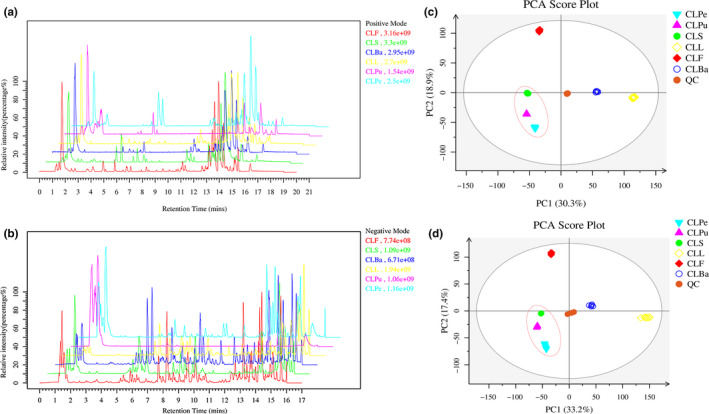
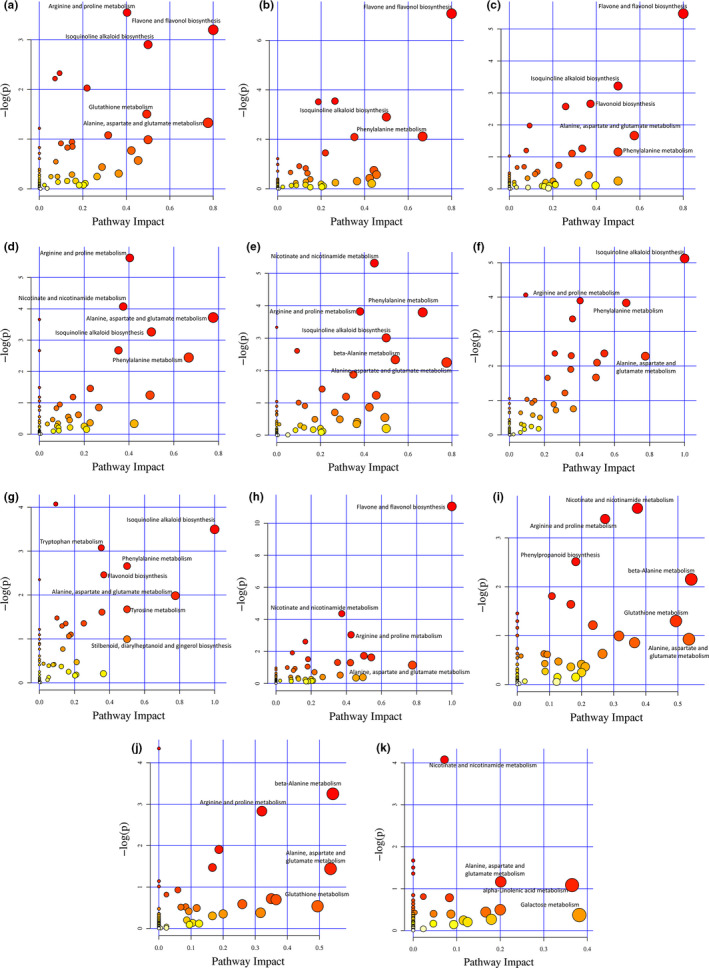
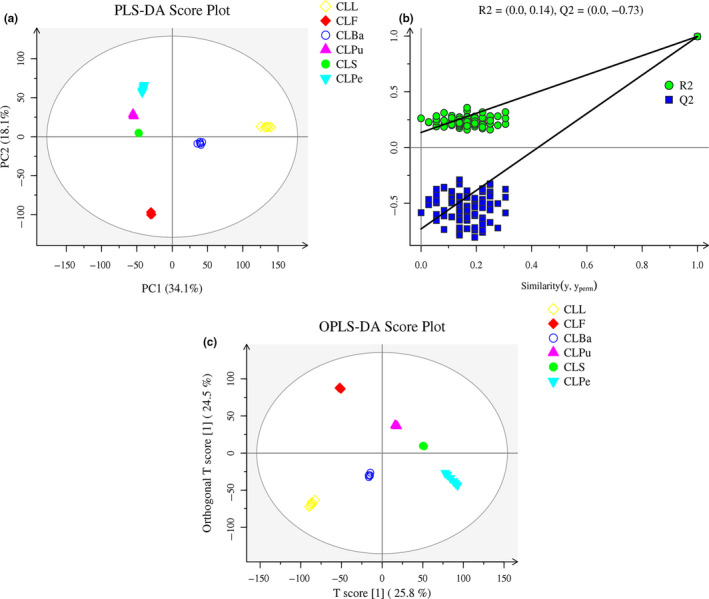
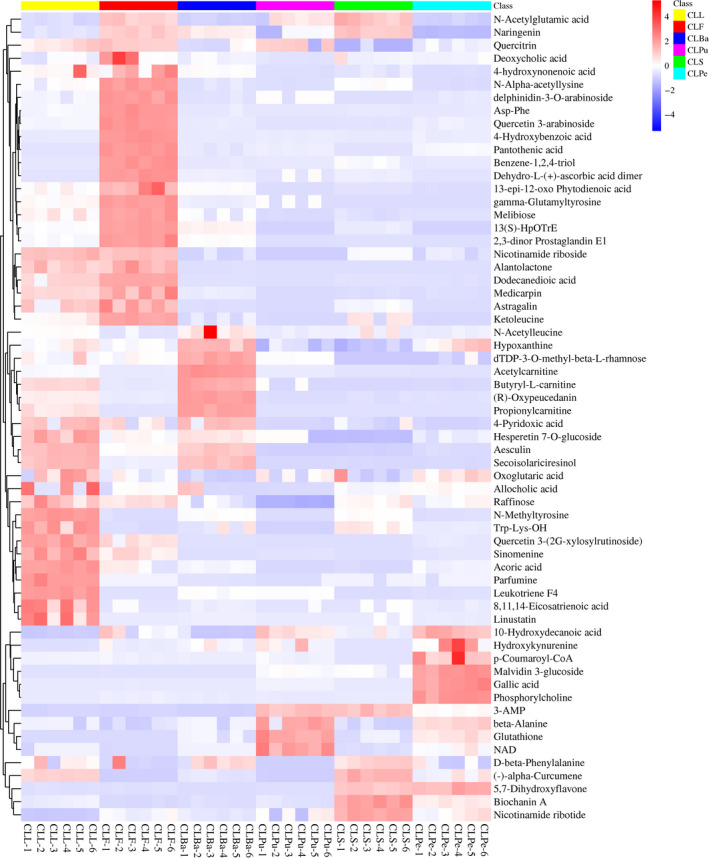
In this study, the non-targeted large-scale plant metabolomics (UPLC-Q-Orbitrap-MS) was performed for the comparison of chemical profiling of the leaves, barks, flowers, peels, pulps, and seeds of (Lour.) Skeels (called "wampee"). A total of 364 metabolites were identified, and 62 potential biomarkers were selected by the multivariate statistical analysis. Hierarchical cluster analysis suggested that the selected biomarkers were significant differential metabolites among various parts of wampee. Metabolic pathway analysis showed a significant enrichment of the "Flavone and flavonol synthesis" and "Isoquinoline alkaloid biosynthesis" pathway. This study provides important information for the isolation and identification of functional components from different tissues of wampee and the metabolic biosynthesis pathway elucidation in detail.
在本研究中,采用非靶向大规模植物代谢组学(超高效液相色谱-四极杆-轨道阱质谱联用技术)对黄皮(学名:(Lour.) Skeels)的叶、树皮、花、果皮、果肉和种子进行化学图谱比较。共鉴定出364种代谢物,并通过多元统计分析筛选出62种潜在生物标志物。层次聚类分析表明,所选生物标志物是黄皮不同部位之间的显著差异代谢物。代谢途径分析显示,“黄酮和黄酮醇合成”以及“异喹啉生物碱生物合成”途径显著富集。本研究为从黄皮不同组织中分离和鉴定功能成分以及详细阐明代谢生物合成途径提供了重要信息。