State Key Laboratory of Virology, Wuhan Institute of Virology, Chinese Academy of Sciences, Wuhan, China.
University of Chinese Academy of Sciences, Beijing, China.
PLoS Pathog. 2020 Dec 7;16(12):e1009129. doi: 10.1371/journal.ppat.1009129. eCollection 2020 Dec.
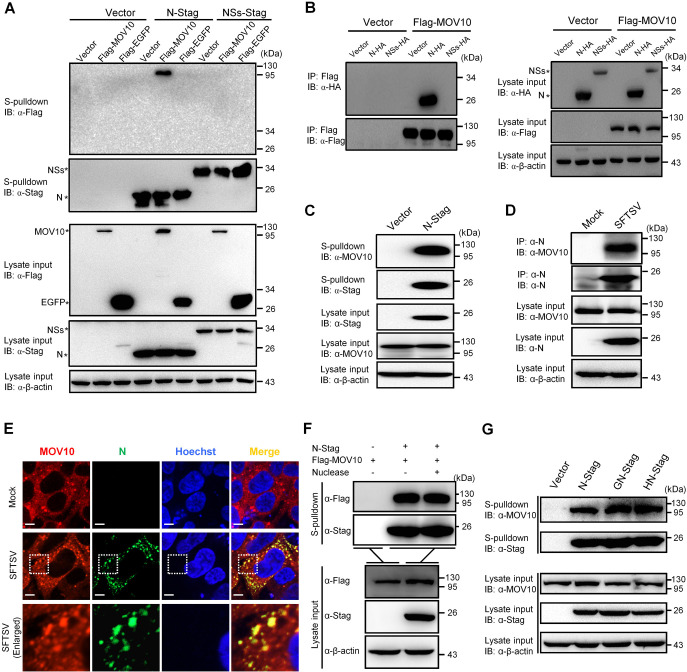
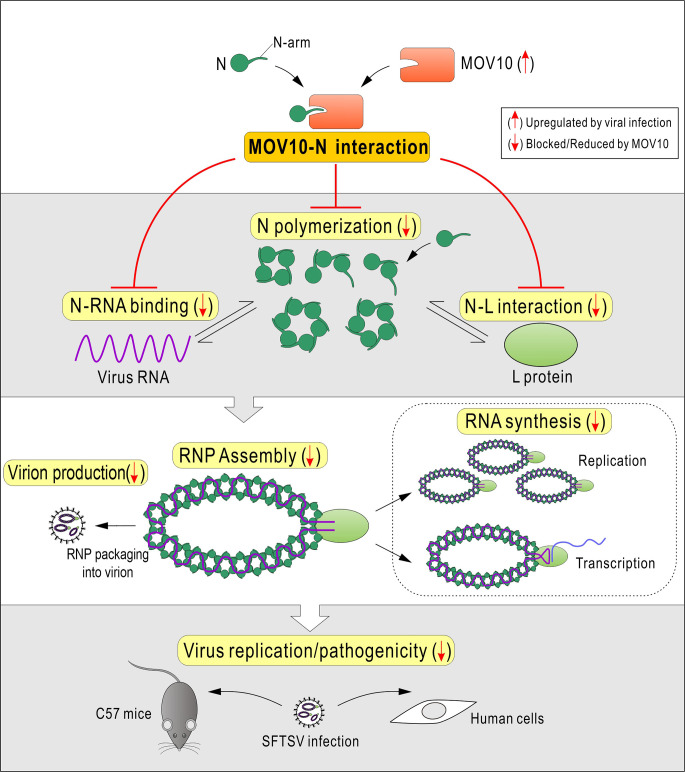
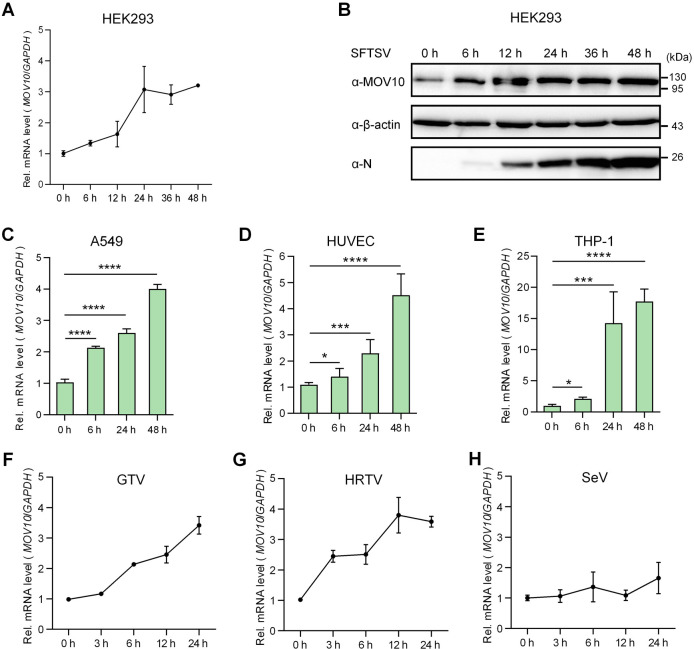
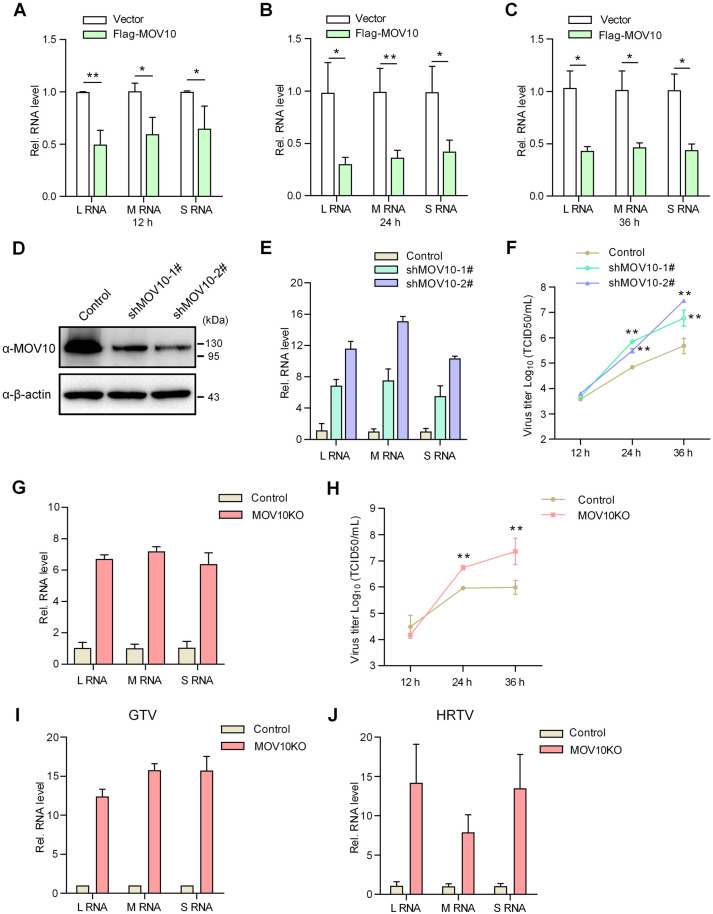
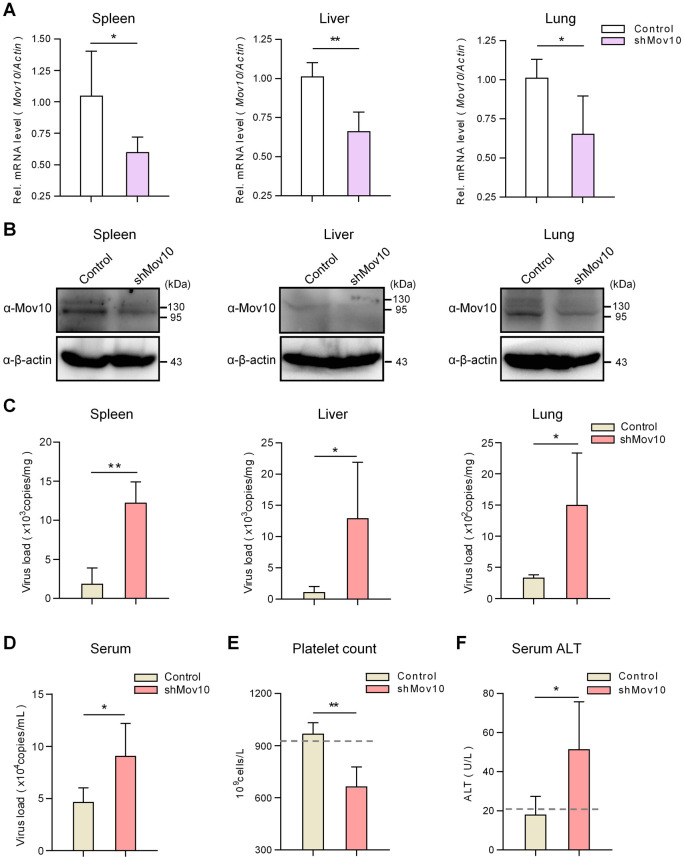
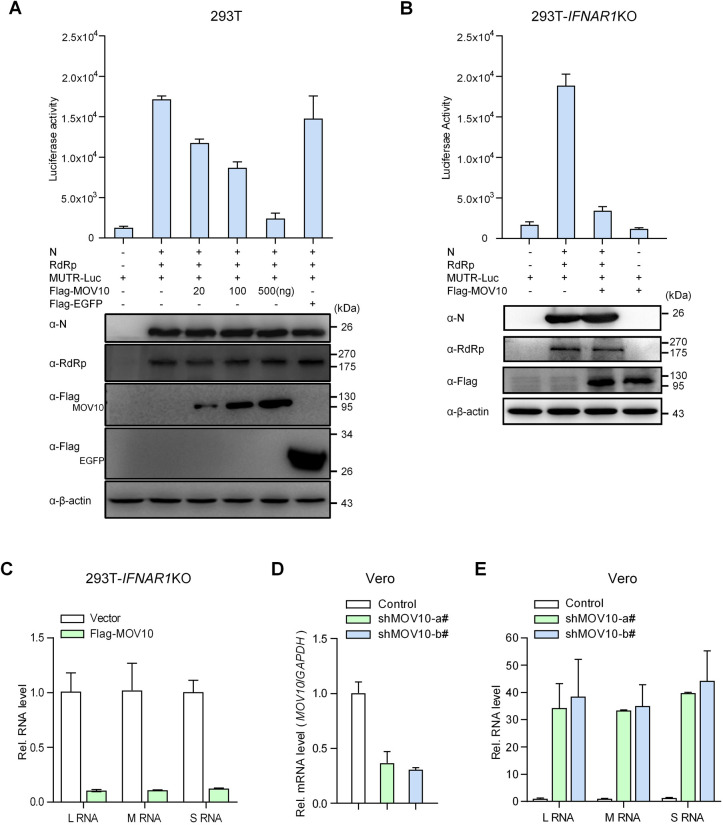
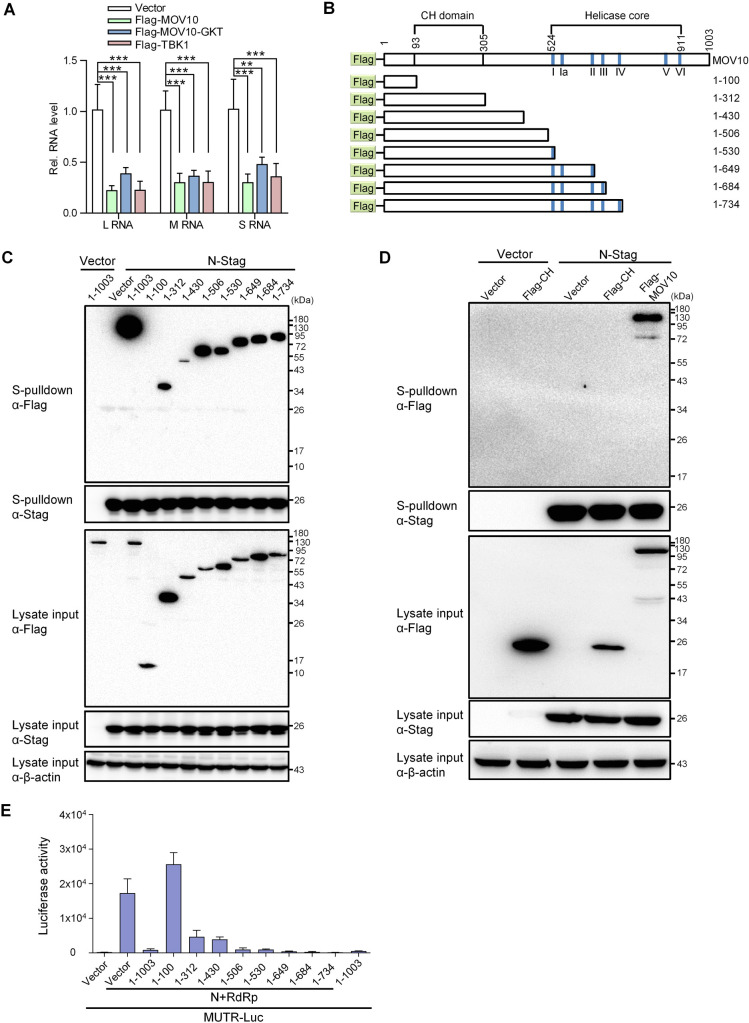
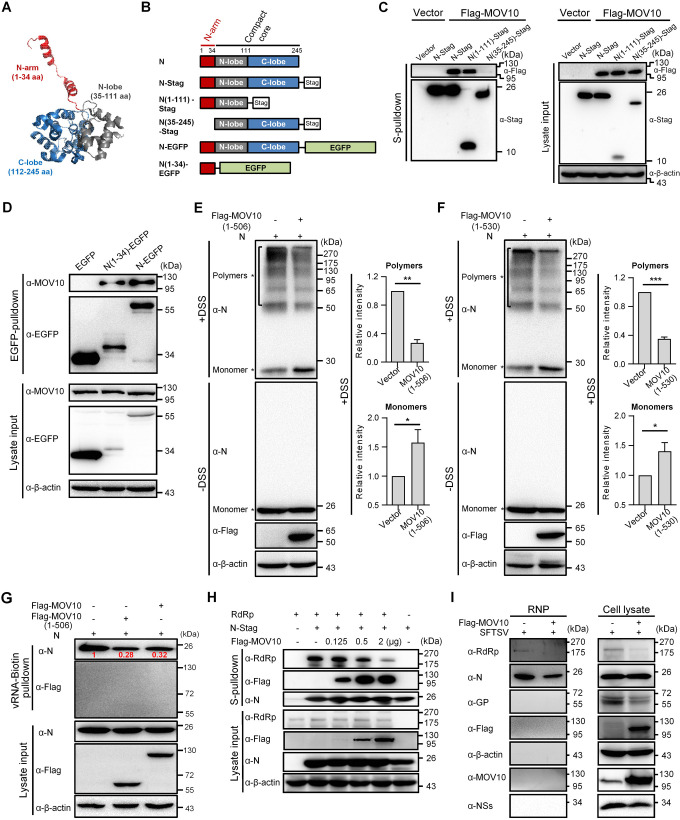
Bunyavirus ribonucleoprotein (RNP) that is assembled by polymerized nucleoproteins (N) coating a viral RNA and associating with a viral polymerase can be both the RNA synthesis machinery and the structural core of virions. Bunyaviral N and RNP thus could be assailable targets for host antiviral defense; however, it remains unclear which and how host factors target N/RNP to restrict bunyaviral infection. By mass spectrometry and protein-interaction analyses, we here show that host protein MOV10 targets the N proteins encoded by a group of emerging high-pathogenic representatives of bunyaviruses including severe fever with thrombocytopenia syndrome virus (SFTSV), one of the most dangerous pathogens listed by World Health Organization, in RNA-independent manner. MOV10 that was further shown to be induced specifically by SFTSV and related bunyaviruses in turn inhibits the bunyaviral replication in infected cells in series of loss/gain-of-function assays. Moreover, animal infection experiments with MOV10 knockdown corroborated the role of MOV10 in restricting SFTSV infection and pathogenicity in vivo. Minigenome assays and additional functional and mechanistic investigations demonstrate that the anti-bunyavirus activity of MOV10 is likely achieved by direct impact on viral RNP machinery but independent of its helicase activity and the cellular interferon pathway. Indeed, by its N-terminus, MOV10 binds to a protruding N-arm domain of N consisting of only 34 amino acids but proving important for N function and blocks N polymerization, N-RNA binding, and N-polymerase interaction, disabling RNP assembly. This study not only advances the understanding of bunyaviral replication and host restriction mechanisms but also presents novel paradigms for both direct antiviral action of MOV10 and host targeting of viral RNP machinery.
Bunyavirus 核糖核蛋白(RNP)是由聚合核蛋白(N)包裹病毒 RNA 并与病毒聚合酶结合而成的,它既是 RNA 合成机制,也是病毒粒子的结构核心。因此,Bunyaviral N 和 RNP 可能是宿主抗病毒防御的可攻击目标;然而,目前尚不清楚宿主因子如何针对 N/RNP 来限制 Bunyaviral 感染。通过质谱分析和蛋白质相互作用分析,我们在这里表明,宿主蛋白 MOV10 以非依赖 RNA 的方式靶向一组新兴的高致病性 Bunyavirus 代表物编码的 N 蛋白,包括世界卫生组织列出的最危险病原体之一的严重发热伴血小板减少综合征病毒(SFTSV)。进一步表明,MOV10 是由 SFTSV 和相关 Bunyavirus 特异性诱导的,反过来又在一系列失活/获得功能实验中抑制感染细胞中的 Bunyaviral 复制。此外,使用 MOV10 敲低的动物感染实验证实了 MOV10 在体内限制 SFTSV 感染和致病性的作用。小基因测定和其他功能和机制研究表明,MOV10 的抗 Bunyavirus 活性可能是通过直接影响病毒 RNP 机制而实现的,但不依赖于其解旋酶活性和细胞干扰素途径。事实上,通过其 N 端,MOV10 结合到 N 由仅 34 个氨基酸组成的突出 N-臂结构域,但对 N 功能很重要,并阻止 N 聚合、N-RNA 结合和 N-聚合酶相互作用,从而阻止 RNP 组装。本研究不仅提高了对 Bunyavirus 复制和宿主限制机制的理解,而且为 MOV10 的直接抗病毒作用和宿主靶向病毒 RNP 机制提供了新的范例。