Department of Neuroscience and Pharmacology, University of Iowa Carver College of Medicine, Iowa City, IA 52242, USA; Fraternal Order of Eagles Diabetes Research Center, University of Iowa Carver College of Medicine, Iowa City, IA 52242, USA; Iowa Neuroscience Institute, University of Iowa Carver College of Medicine, Iowa City, IA 52242, USA.
Department of Neuroscience and Pharmacology, University of Iowa Carver College of Medicine, Iowa City, IA 52242, USA; Fraternal Order of Eagles Diabetes Research Center, University of Iowa Carver College of Medicine, Iowa City, IA 52242, USA; Iowa Neuroscience Institute, University of Iowa Carver College of Medicine, Iowa City, IA 52242, USA; Department of Veterans Affairs Medical Center, Iowa City, IA 52242, USA.
Mol Metab. 2021 Feb;44:101138. doi: 10.1016/j.molmet.2020.101138. Epub 2020 Dec 4.
The liver is a key regulator of systemic energy homeostasis and can sense and respond to nutrient excess and deficiency through crosstalk with multiple tissues. Regulation of systemic energy homeostasis by the liver is mediated in part through regulation of glucose and lipid metabolism. Dysregulation of either process may result in metabolic dysfunction and contribute to the development of insulin resistance or fatty liver disease.
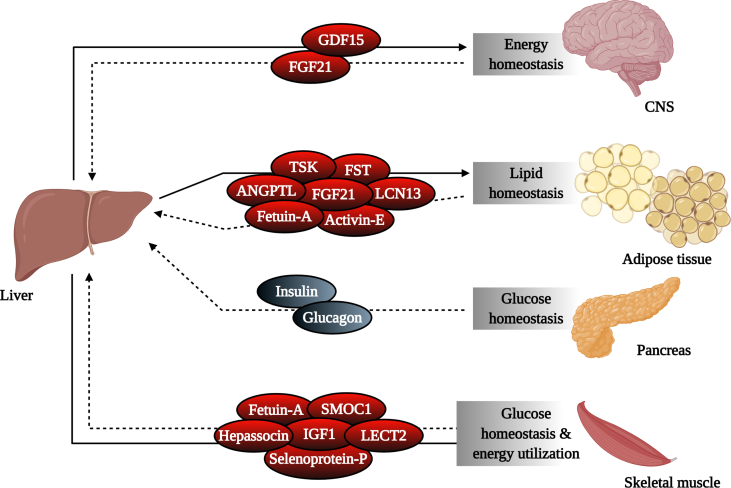
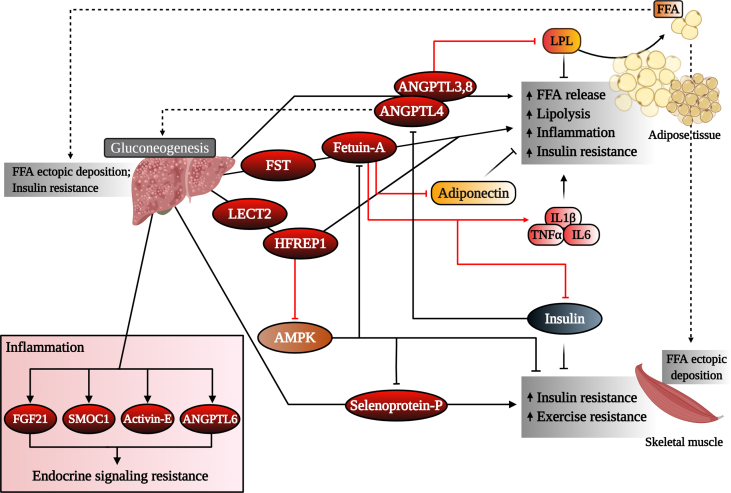
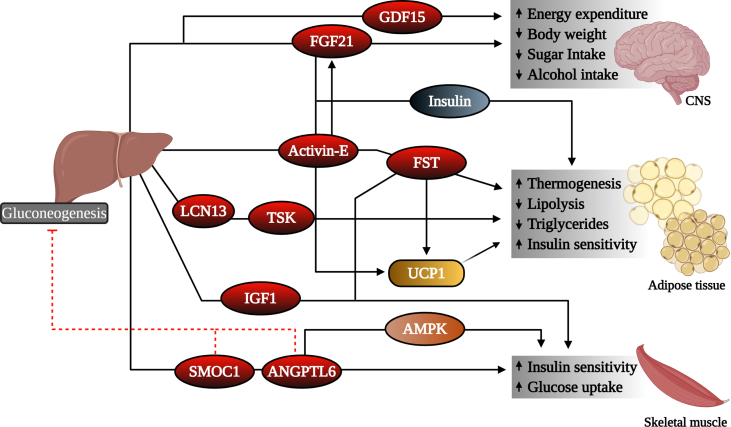
The liver has recently been recognized as an endocrine organ that secretes hepatokines, which are liver-derived factors that can signal to and communicate with distant tissues. Dysregulation of liver-centered inter-organ pathways may contribute to improper regulation of energy homeostasis and ultimately metabolic dysfunction. Deciphering the mechanisms that regulate hepatokine expression and communication with distant tissues is essential for understanding inter-organ communication and for the development of therapeutic strategies to treat metabolic dysfunction.
In this review, we discuss liver-centric regulation of energy homeostasis through hepatokine secretion. We highlight key hepatokines and their roles in metabolic control, examine the molecular mechanisms of each hepatokine, and discuss their potential as therapeutic targets for metabolic disease. We also discuss important areas of future studies that may contribute to understanding hepatokine signaling under healthy and pathophysiological conditions.
肝脏是全身能量稳态的关键调节者,通过与多种组织的相互作用,可以感知和响应营养过剩和不足。肝脏对全身能量稳态的调节部分是通过调节葡萄糖和脂质代谢来实现的。这两个过程中的任何一个失调都可能导致代谢功能障碍,并导致胰岛素抵抗或脂肪肝疾病的发生。
肝脏最近被认为是一种内分泌器官,它分泌肝源因子,这些因子可以向远处的组织发出信号并与之交流。以肝脏为中心的器官间途径的失调可能导致能量稳态调节不当,最终导致代谢功能障碍。解析调节肝源因子表达和与远处组织通讯的机制对于理解器官间通讯以及开发治疗代谢功能障碍的治疗策略至关重要。
在这篇综述中,我们讨论了通过肝源因子分泌来调节能量稳态的以肝脏为中心的机制。我们强调了关键的肝源因子及其在代谢控制中的作用,研究了每种肝源因子的分子机制,并讨论了它们作为代谢疾病治疗靶点的潜力。我们还讨论了未来可能有助于理解健康和病理生理条件下肝源因子信号的重要研究领域。