Zhao Lina, Li Jianqing, Xiong Jinle, Liang Xueyu, Liu Chengyu
The State Key Laboratory of Bioelectronics, School of Instrument Science and Engineering, Southeast University, Nanjing 210096, China.
School of Biomedical Engineering and Informatics, Nanjing Medical University, Nanjing 211166, China.
Entropy (Basel). 2020 Apr 4;22(4):411. doi: 10.3390/e22040411.
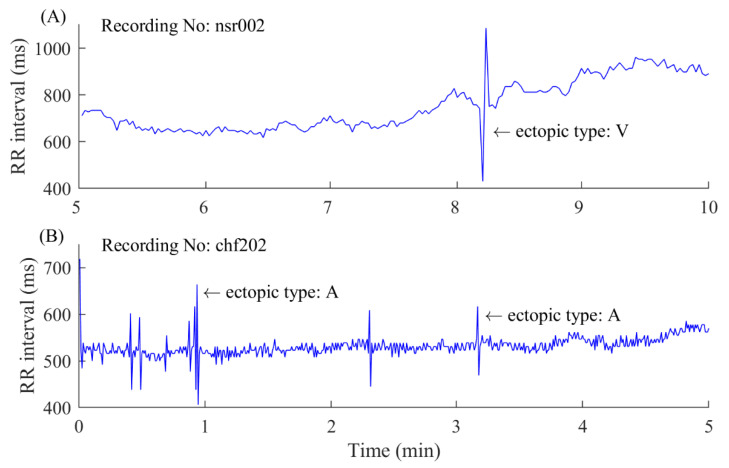
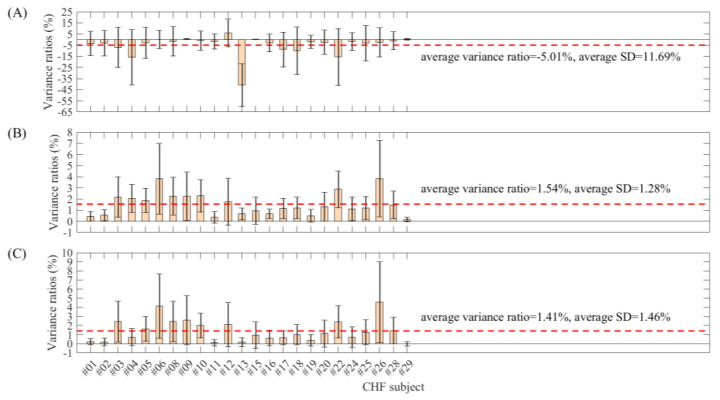
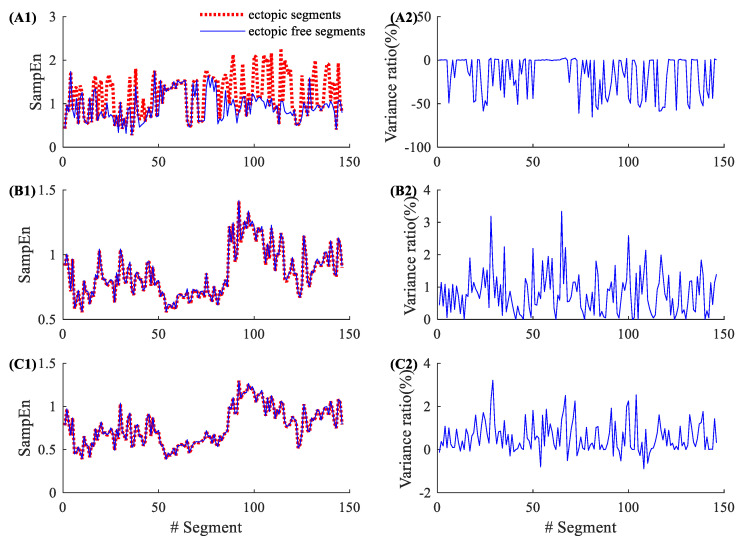
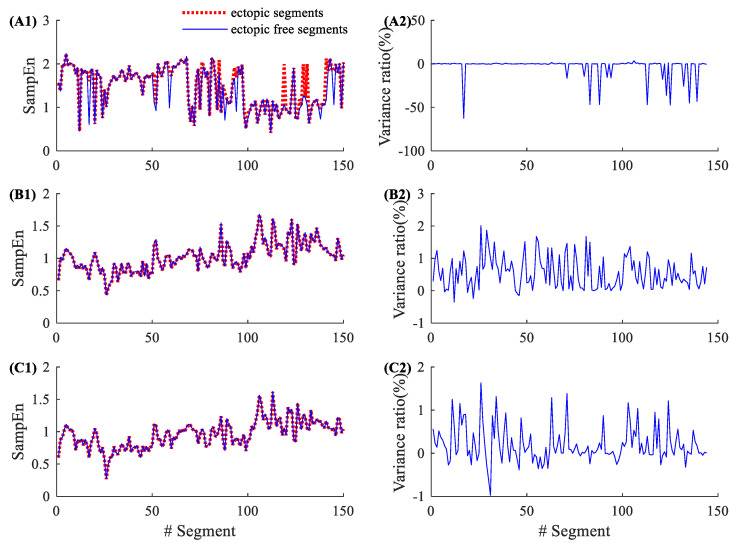
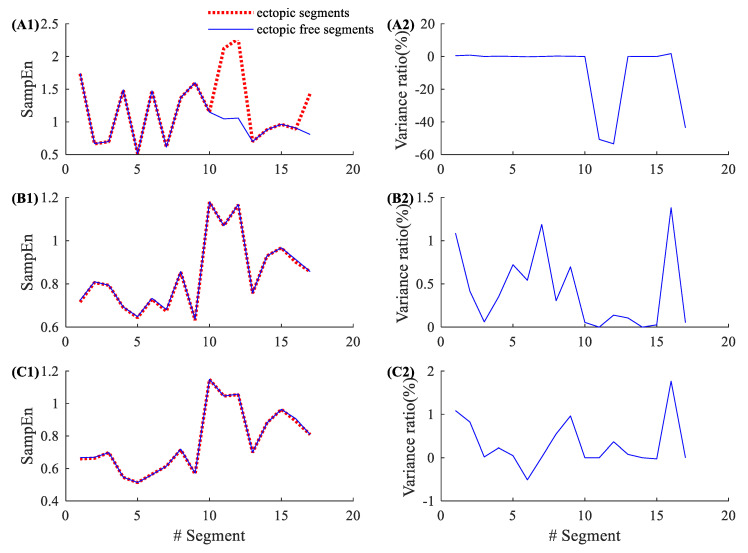
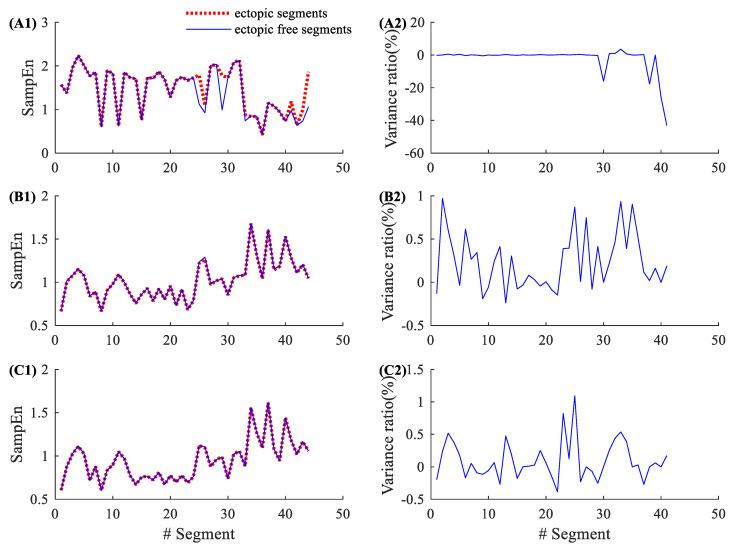
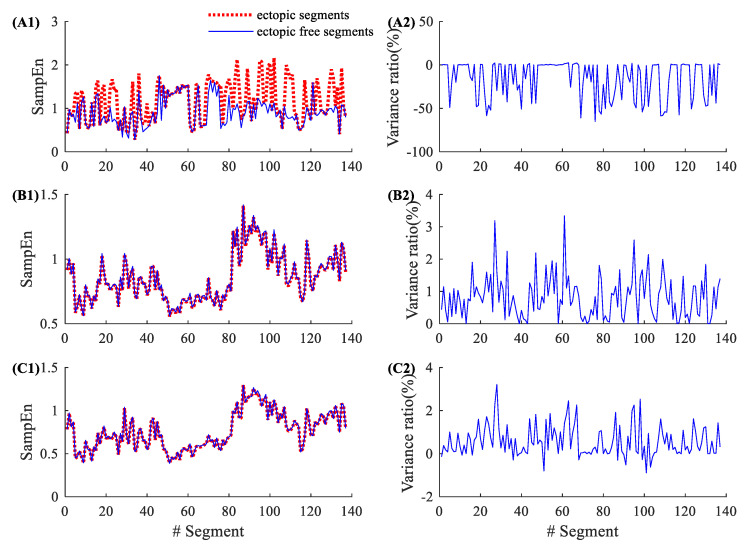
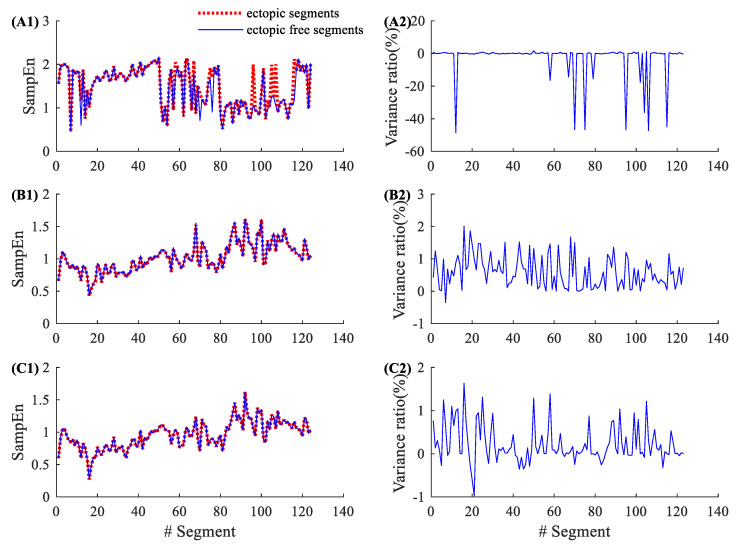
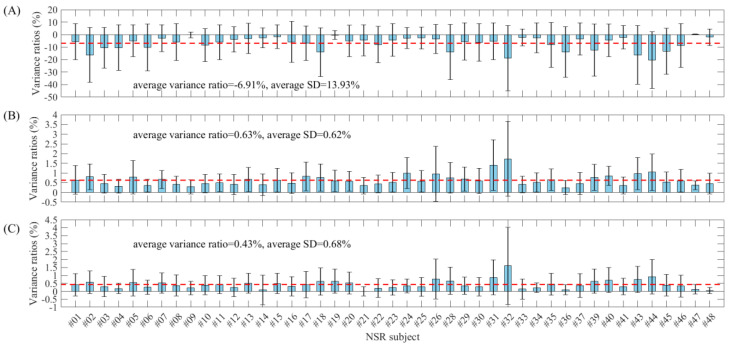
Sample entropy (SampEn) is widely used for electrocardiogram (ECG) signal analysis to quantify the inherent complexity or regularity of RR interval time series (i.e., heart rate variability (HRV)), with the hypothesis that RR interval time series in pathological conditions output lower SampEn values. However, ectopic beats can significantly influence the entropy values, resulting in difficulty in distinguishing the pathological situation from normal situations. Although a theoretical operation is to exclude the ectopic intervals during HRV analysis, it is not easy to identify all of them in practice, especially for the dynamic ECG signal. Thus, it is important to suppress the influence of ectopic beats on entropy results, i.e., to improve the robustness and stability of entropy measurement for ectopic beats-inserted RR interval time series. In this study, we introduced a physical threshold-based SampEn method, and tested its ability to suppress the influence of ectopic beats for HRV analysis. An experiment on the PhysioNet/MIT RR Interval Databases showed that the SampEn use physical meaning threshold has better performance not only for different data types (normal sinus rhythm (NSR) or congestive heart failure (CHF) recordings), but also for different types of ectopic beat (atrial beats, ventricular beats or both), indicating that using a physical meaning threshold makes SampEn become more consistent and stable.
样本熵(SampEn)被广泛用于心电图(ECG)信号分析,以量化RR间期时间序列(即心率变异性(HRV))的内在复杂性或规律性,其假设是病理状态下的RR间期时间序列输出较低的样本熵值。然而,异位搏动会显著影响熵值,导致难以区分病理情况和正常情况。虽然理论上的操作是在HRV分析期间排除异位间期,但在实践中识别所有异位间期并不容易,尤其是对于动态心电图信号。因此,抑制异位搏动对熵结果的影响很重要,即提高对插入异位搏动的RR间期时间序列进行熵测量的稳健性和稳定性。在本研究中,我们引入了一种基于物理阈值的样本熵方法,并测试了其抑制异位搏动对HRV分析影响的能力。对PhysioNet/MIT RR间期数据库进行的一项实验表明,使用具有物理意义阈值的样本熵不仅对不同数据类型(正常窦性心律(NSR)或充血性心力衰竭(CHF)记录),而且对不同类型的异位搏动(房性搏动、室性搏动或两者皆有)都具有更好的性能,这表明使用具有物理意义的阈值可使样本熵变得更加一致和稳定。