• 文献检索
  • 文档翻译
  • 深度研究
  • 学术资讯
  • Suppr Zotero 插件Zotero 插件
  • 邀请有礼
  • 套餐&价格
  • 历史记录
应用&插件
Suppr Zotero 插件Zotero 插件浏览器插件Mac 客户端Windows 客户端微信小程序
定价
高级版会员购买积分包购买API积分包
服务
文献检索文档翻译深度研究API 文档MCP 服务
关于我们
关于 Suppr公司介绍联系我们用户协议隐私条款
关注我们

Suppr 超能文献

核心技术专利:CN118964589B侵权必究
粤ICP备2023148730 号-1Suppr @ 2026

文献检索

告别复杂PubMed语法,用中文像聊天一样搜索,搜遍4000万医学文献。AI智能推荐,让科研检索更轻松。

立即免费搜索

文件翻译

保留排版,准确专业,支持PDF/Word/PPT等文件格式,支持 12+语言互译。

免费翻译文档

深度研究

AI帮你快速写综述,25分钟生成高质量综述,智能提取关键信息,辅助科研写作。

立即免费体验

基于步态的深度学习循环神经网络和加速度模式识别。

Gait-Based Identification Using Deep Recurrent Neural Networks and Acceleration Patterns.

机构信息

School of Engineering, Universidad Carlos III de Madrid, 28911 Leganés, Madrid, Spain.

Department of Telematic Engineering and UC3M-BS Institute of Financial Big Data, Universidad Carlos III de Madrid, 28911 Leganés, Madrid, Spain.

出版信息

Sensors (Basel). 2020 Dec 3;20(23):6900. doi: 10.3390/s20236900.

DOI:10.3390/s20236900
PMID:33287142
原文链接:https://pmc.ncbi.nlm.nih.gov/articles/PMC7729817/
Abstract

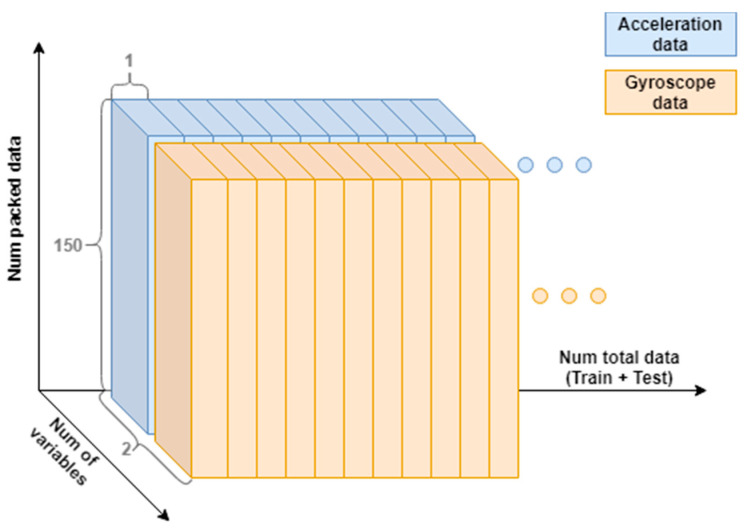
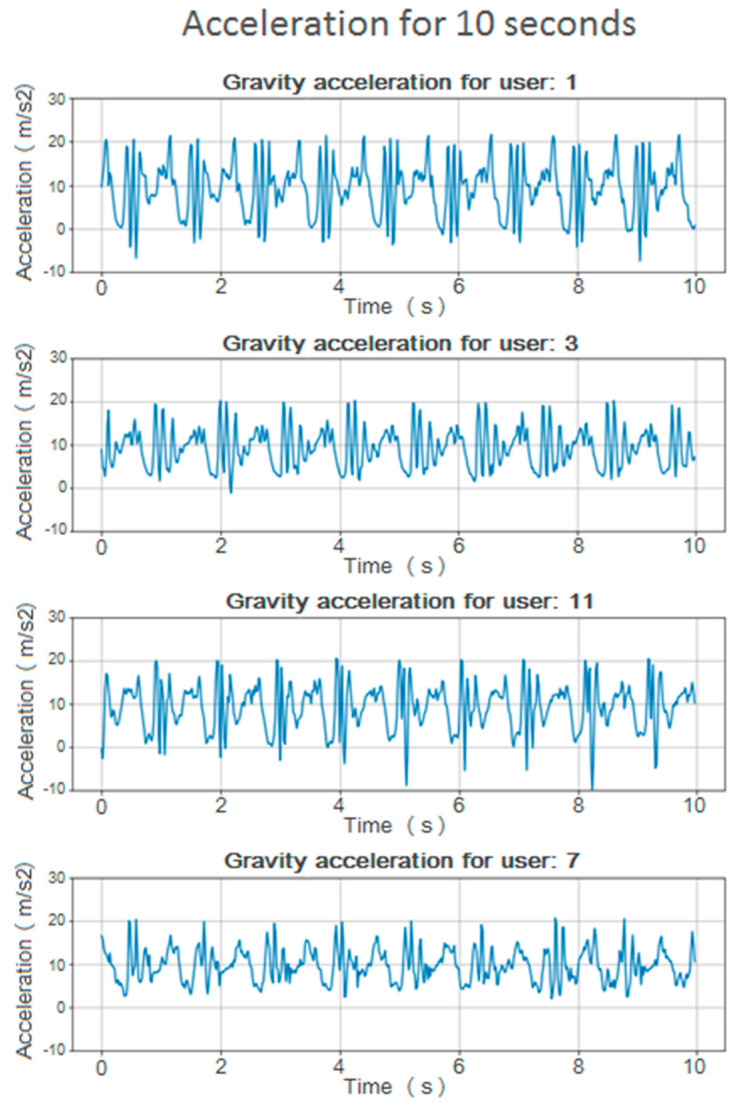
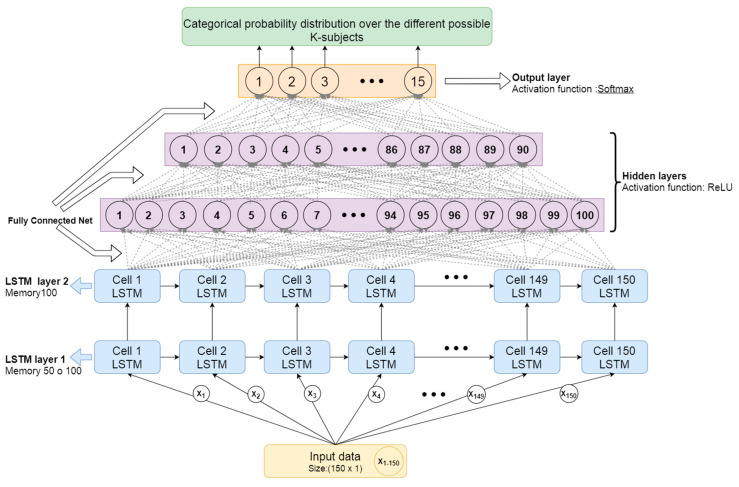
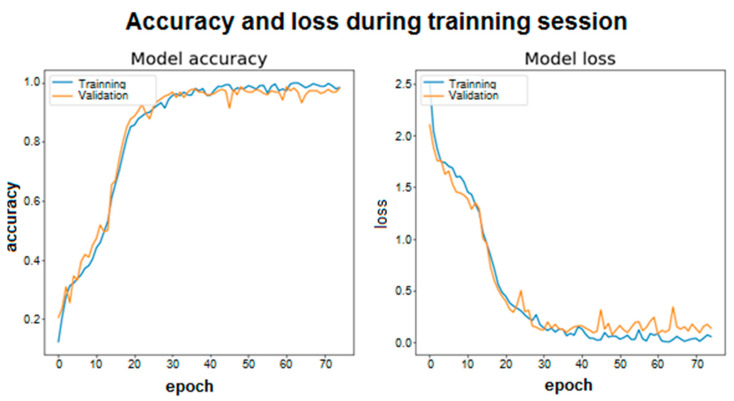
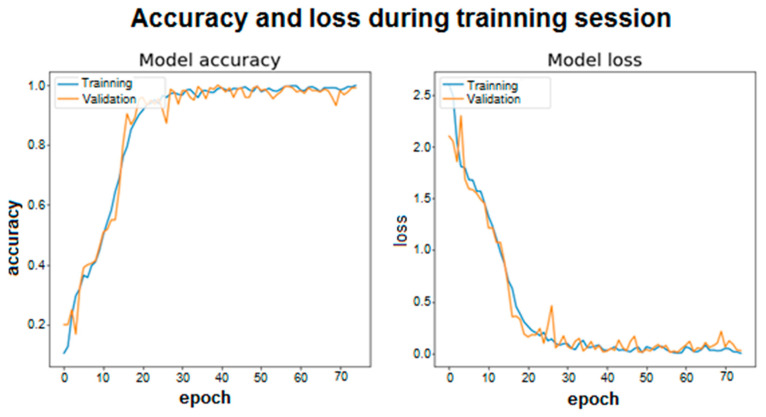
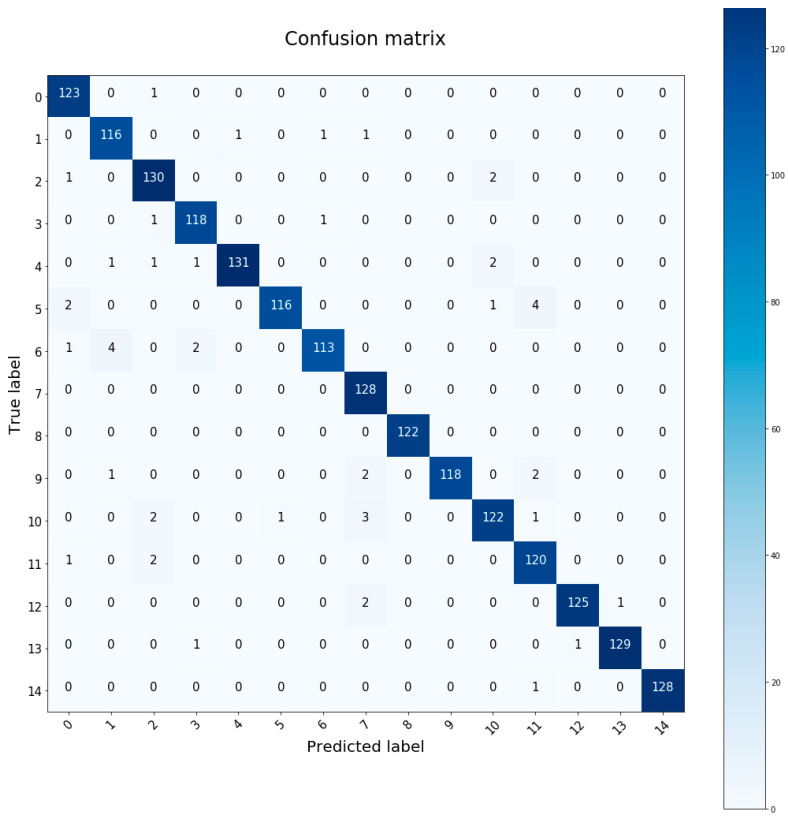
This manuscript presents an approach to the challenge of biometric identification based on the acceleration patterns generated by a user while walking. The proposed approach uses the data captured by a smartphone's accelerometer and gyroscope sensors while the users perform the gait activity and optimizes the design of a recurrent neural network (RNN) to optimally learn the features that better characterize each individual. The database is composed of 15 users, and the acceleration data provided has a tri-axial format in the X-Y-Z axes. Data are pre-processed to estimate the vertical acceleration (in the direction of the gravity force). A deep recurrent neural network model consisting of LSTM cells divided into several layers and dense output layers is used for user recognition. The precision results obtained by the final architecture are above 97% in most executions. The proposed deep neural network-based architecture is tested in different scenarios to check its efficiency and robustness.

摘要

本文提出了一种基于用户行走时产生的加速度模式进行生物识别的方法。该方法使用智能手机的加速度计和陀螺仪传感器捕获用户进行步态活动时的数据,并优化了递归神经网络 (RNN) 的设计,以最佳地学习能够更好地描述每个人的特征。该数据库由 15 名用户组成,提供的加速度数据在 X-Y-Z 轴上具有三轴格式。数据经过预处理以估计垂直加速度(在重力方向上)。使用由 LSTM 单元组成的深度递归神经网络模型,分为几个层和密集输出层,用于用户识别。最终架构获得的精度结果在大多数执行中都超过 97%。所提出的基于深度神经网络的架构在不同场景下进行测试,以检查其效率和鲁棒性。
https://cdn.ncbi.nlm.nih.gov/pmc/blobs/bc54/7729817/d04d84f69cd4/sensors-20-06900-g010.jpg
https://cdn.ncbi.nlm.nih.gov/pmc/blobs/bc54/7729817/53b3c71be9a0/sensors-20-06900-g001.jpg
https://cdn.ncbi.nlm.nih.gov/pmc/blobs/bc54/7729817/37fda0a8b430/sensors-20-06900-g002.jpg
https://cdn.ncbi.nlm.nih.gov/pmc/blobs/bc54/7729817/f382bf875e5d/sensors-20-06900-g003.jpg
https://cdn.ncbi.nlm.nih.gov/pmc/blobs/bc54/7729817/e58f49b3e5c0/sensors-20-06900-g004.jpg
https://cdn.ncbi.nlm.nih.gov/pmc/blobs/bc54/7729817/96e8728e1aa9/sensors-20-06900-g005.jpg
https://cdn.ncbi.nlm.nih.gov/pmc/blobs/bc54/7729817/1b3e830ad7d0/sensors-20-06900-g006.jpg
https://cdn.ncbi.nlm.nih.gov/pmc/blobs/bc54/7729817/c68f3909bb1d/sensors-20-06900-g007.jpg
https://cdn.ncbi.nlm.nih.gov/pmc/blobs/bc54/7729817/0136d507c6a8/sensors-20-06900-g008.jpg
https://cdn.ncbi.nlm.nih.gov/pmc/blobs/bc54/7729817/15c2c9cab239/sensors-20-06900-g009.jpg
https://cdn.ncbi.nlm.nih.gov/pmc/blobs/bc54/7729817/d04d84f69cd4/sensors-20-06900-g010.jpg
https://cdn.ncbi.nlm.nih.gov/pmc/blobs/bc54/7729817/53b3c71be9a0/sensors-20-06900-g001.jpg
https://cdn.ncbi.nlm.nih.gov/pmc/blobs/bc54/7729817/37fda0a8b430/sensors-20-06900-g002.jpg
https://cdn.ncbi.nlm.nih.gov/pmc/blobs/bc54/7729817/f382bf875e5d/sensors-20-06900-g003.jpg
https://cdn.ncbi.nlm.nih.gov/pmc/blobs/bc54/7729817/e58f49b3e5c0/sensors-20-06900-g004.jpg
https://cdn.ncbi.nlm.nih.gov/pmc/blobs/bc54/7729817/96e8728e1aa9/sensors-20-06900-g005.jpg
https://cdn.ncbi.nlm.nih.gov/pmc/blobs/bc54/7729817/1b3e830ad7d0/sensors-20-06900-g006.jpg
https://cdn.ncbi.nlm.nih.gov/pmc/blobs/bc54/7729817/c68f3909bb1d/sensors-20-06900-g007.jpg
https://cdn.ncbi.nlm.nih.gov/pmc/blobs/bc54/7729817/0136d507c6a8/sensors-20-06900-g008.jpg
https://cdn.ncbi.nlm.nih.gov/pmc/blobs/bc54/7729817/15c2c9cab239/sensors-20-06900-g009.jpg
https://cdn.ncbi.nlm.nih.gov/pmc/blobs/bc54/7729817/d04d84f69cd4/sensors-20-06900-g010.jpg

相似文献

1
Gait-Based Identification Using Deep Recurrent Neural Networks and Acceleration Patterns.基于步态的深度学习循环神经网络和加速度模式识别。
Sensors (Basel). 2020 Dec 3;20(23):6900. doi: 10.3390/s20236900.
2
Estimation of Blood Alcohol Concentration From Smartphone Gait Data Using Neural Networks.使用神经网络从智能手机步态数据估计血液酒精浓度
IEEE Access. 2021;9:61237-61255. doi: 10.1109/access.2021.3054515. Epub 2021 Jan 25.
3
Gait-Based Implicit Authentication Using Edge Computing and Deep Learning for Mobile Devices.基于步态的隐式身份认证,使用边缘计算和深度学习技术,用于移动设备。
Sensors (Basel). 2021 Jul 5;21(13):4592. doi: 10.3390/s21134592.
4
Using Recurrent Neural Networks to Compare Movement Patterns in ADHD and Normally Developing Children Based on Acceleration Signals from the Wrist and Ankle.基于腕部和踝部加速度信号,利用递归神经网络比较 ADHD 儿童和正常发育儿童的运动模式。
Sensors (Basel). 2019 Jul 3;19(13):2935. doi: 10.3390/s19132935.
5
Coarse-Fine Convolutional Deep-Learning Strategy for Human Activity Recognition.粗-细卷积深度学习策略在人体活动识别中的应用。
Sensors (Basel). 2019 Mar 31;19(7):1556. doi: 10.3390/s19071556.
6
Gait and posture discrimination in sheep using a tri-axial accelerometer.使用三轴加速度计对绵羊的步态和姿势进行判别
Animal. 2017 Jul;11(7):1249-1257. doi: 10.1017/S175173111600255X. Epub 2016 Dec 1.
7
Recurrent Neural Network for Inertial Gait User Recognition in Smartphones.基于递归神经网络的智能手机惯性步态用户识别
Sensors (Basel). 2019 Sep 19;19(18):4054. doi: 10.3390/s19184054.
8
Stack LSTM-Based User Identification Using Smart Shoes with Accelerometer Data.基于堆叠长短期记忆模型的智能鞋加速度计数据用户身份识别
Sensors (Basel). 2021 Dec 5;21(23):8129. doi: 10.3390/s21238129.
9
Deep Neural Network-Based Gait Classification Using Wearable Inertial Sensor Data.基于深度神经网络的可穿戴惯性传感器数据步态分类
Annu Int Conf IEEE Eng Med Biol Soc. 2019 Jul;2019:3624-3628. doi: 10.1109/EMBC.2019.8857872.
10
ECG Identification For Personal Authentication Using LSTM-Based Deep Recurrent Neural Networks.基于 LSTM 的深度递归神经网络的 ECG 身份识别用于个人认证。
Sensors (Basel). 2020 May 29;20(11):3069. doi: 10.3390/s20113069.

引用本文的文献

1
Reduced Motor Individuality in Older Adults Revealed by Network-Based Gait Fingerprinting.基于网络的步态指纹识别揭示老年人运动个体性降低
Medicina (Kaunas). 2025 Aug 12;61(8):1454. doi: 10.3390/medicina61081454.
2
Hybrid Optimized GRU-ECNN Models for Gait Recognition with Wearable IOT Devices.基于可穿戴物联网设备的步态识别的混合优化 GRU-ECNN 模型。
Comput Intell Neurosci. 2022 May 13;2022:5422428. doi: 10.1155/2022/5422428. eCollection 2022.
3
Gait-Based Implicit Authentication Using Edge Computing and Deep Learning for Mobile Devices.

本文引用的文献

1
Recurrent Neural Network for Inertial Gait User Recognition in Smartphones.基于递归神经网络的智能手机惯性步态用户识别
Sensors (Basel). 2019 Sep 19;19(18):4054. doi: 10.3390/s19184054.
2
Long short-term memory.长短期记忆
Neural Comput. 1997 Nov 15;9(8):1735-80. doi: 10.1162/neco.1997.9.8.1735.
基于步态的隐式身份认证,使用边缘计算和深度学习技术,用于移动设备。
Sensors (Basel). 2021 Jul 5;21(13):4592. doi: 10.3390/s21134592.
4
A Lightweight Attention-Based CNN Model for Efficient Gait Recognition with Wearable IMU Sensors.基于轻量化注意力机制的卷积神经网络模型在可穿戴式 IMU 传感器高效步态识别中的应用
Sensors (Basel). 2021 Apr 19;21(8):2866. doi: 10.3390/s21082866.