Department of Pulmonology and Critical Care Medicine, Asan Medical Center, College of Medicine, University of Ulsan, Seoul 05505, Korea.
Asan Institute for Life Sciences, Asan Medical Center, College of Medicine, University of Ulsan, Seoul 05505, Korea.
Cells. 2020 Dec 3;9(12):2596. doi: 10.3390/cells9122596.
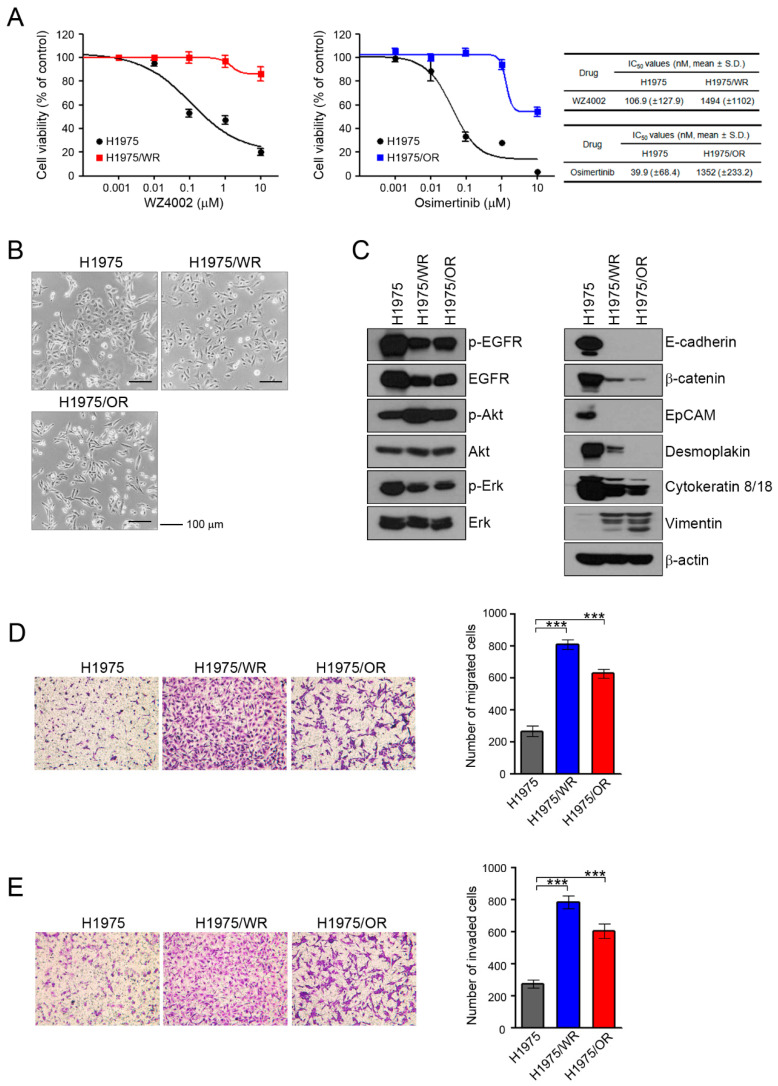
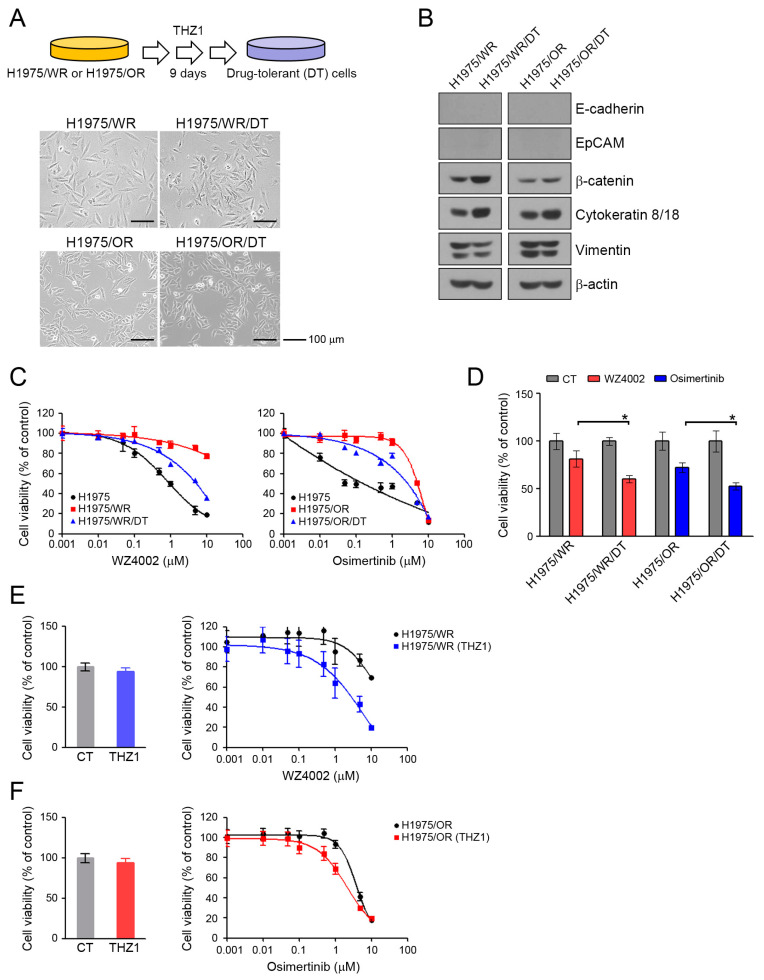
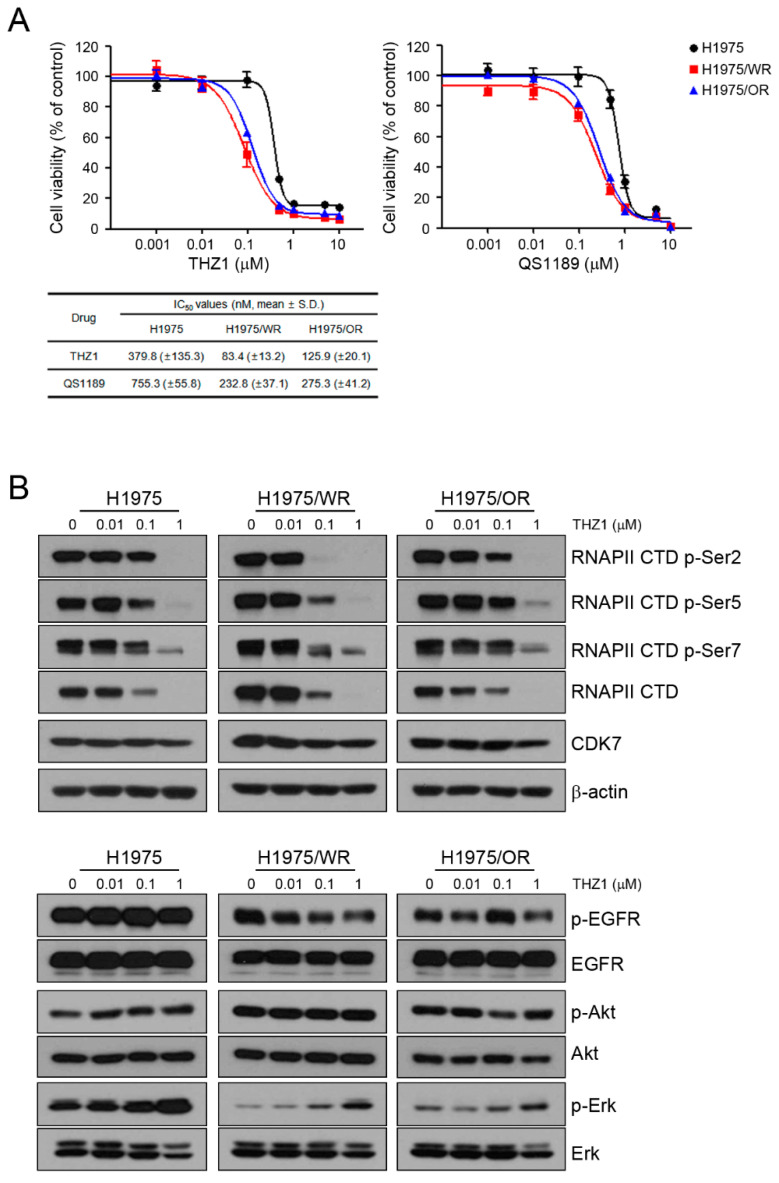
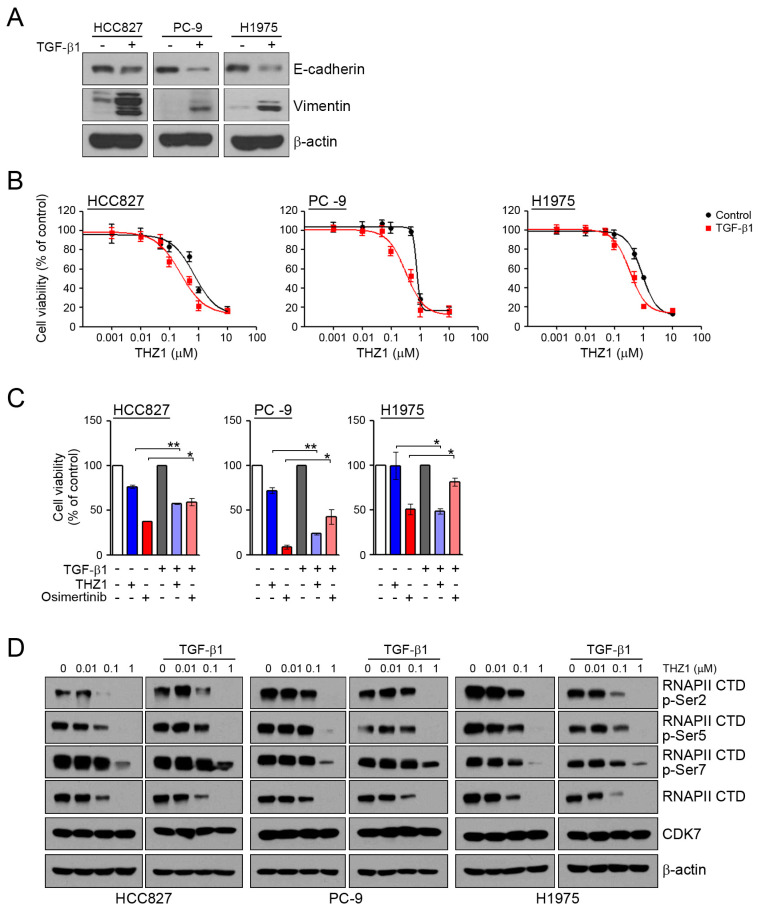
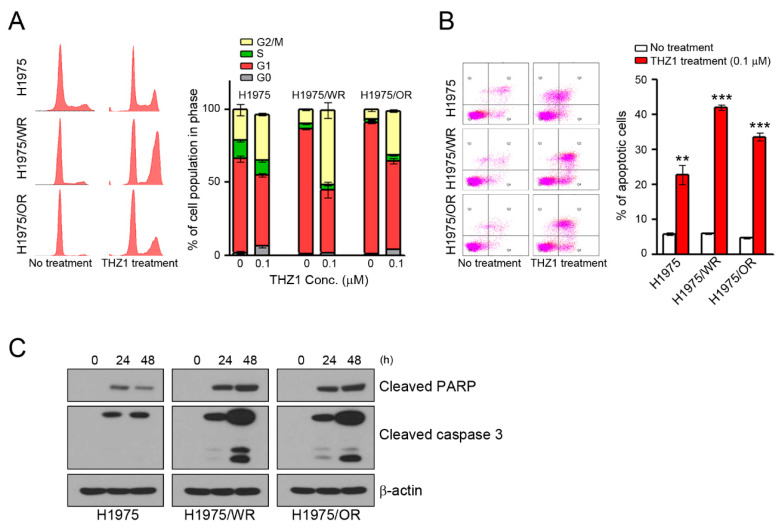
Epithelial to mesenchymal transition (EMT) is associated with resistance during EGFR tyrosine kinase inhibitor (EGFR-TKI) therapy. Here, we investigated whether EMT is associated with acquired resistance to 3rd generation EGFR-TKIs, and we explored the effects of cyclin-dependent kinase 7 (CDK7) inhibitors on EMT-mediated EGFR-TKIs resistance in non-small cell lung cancer (NSCLC). We established 3rd generation EGFR-TKI resistant cell lines (H1975/WR and H1975/OR) via repeated exposure to WZ4002 and osimertinib. The two resistant cell lines showed phenotypic changes to a spindle-cell shape, had a reduction of epithelial marker proteins, an induction of vimentin expression, and enhanced cellular mobility. The EMT-related resistant cells had higher sensitivity to THZ1 than the parental cells, although THZ1 treatment did not inhibit EGFR activity. This phenomenon was also observed in TGF-β1 induced EMT cell lines. THZ1 treatment induced G2/M cell cycle arrest and apoptosis in all of the cell lines. In addition, THZ1 treatment led to drug-tolerant, EMT-related resistant cells, and these THZ1-tolerant cells partially recovered their sensitivity to 3rd generation EGFR-TKIs. Taken together, EMT was associated with acquired resistance to 3rd generation EGFR-TKIs, and CDK7 inhibitors could potentially be used as a therapeutic strategy to overcome EMT associated EGFR-TKI resistance in NSCLC.
上皮间质转化(EMT)与表皮生长因子受体酪氨酸激酶抑制剂(EGFR-TKI)治疗中的耐药性有关。在这里,我们研究了 EMT 是否与第三代 EGFR-TKI 的获得性耐药有关,并探讨了细胞周期蛋白依赖性激酶 7(CDK7)抑制剂对非小细胞肺癌(NSCLC)中 EMT 介导的 EGFR-TKI 耐药的影响。我们通过反复暴露于 WZ4002 和奥希替尼来建立第三代 EGFR-TKI 耐药细胞系(H1975/WR 和 H1975/OR)。这两个耐药细胞系表现出向纺锤形细胞形状的表型变化,上皮标记蛋白减少,波形蛋白表达诱导,细胞迁移增强。与亲本细胞相比,EMT 相关耐药细胞对 THZ1 的敏感性更高,尽管 THZ1 处理不能抑制 EGFR 活性。这种现象也在 TGF-β1 诱导的 EMT 细胞系中观察到。THZ1 处理诱导所有细胞系的 G2/M 细胞周期停滞和细胞凋亡。此外,THZ1 处理导致药物耐受、EMT 相关耐药细胞,这些 THZ1 耐受细胞部分恢复了对第三代 EGFR-TKI 的敏感性。总之,EMT 与第三代 EGFR-TKI 的获得性耐药有关,CDK7 抑制剂可能可作为一种治疗策略,克服 NSCLC 中 EMT 相关的 EGFR-TKI 耐药。