Division of Molecular Biology and Biochemistry, Gottfried Schatz Research Center, Medical University of Graz, 8010 Graz, Austria.
Forensic Medicine, Medical University of Graz, 8010 Graz, Austria.
Int J Mol Sci. 2020 Dec 3;21(23):9235. doi: 10.3390/ijms21239235.
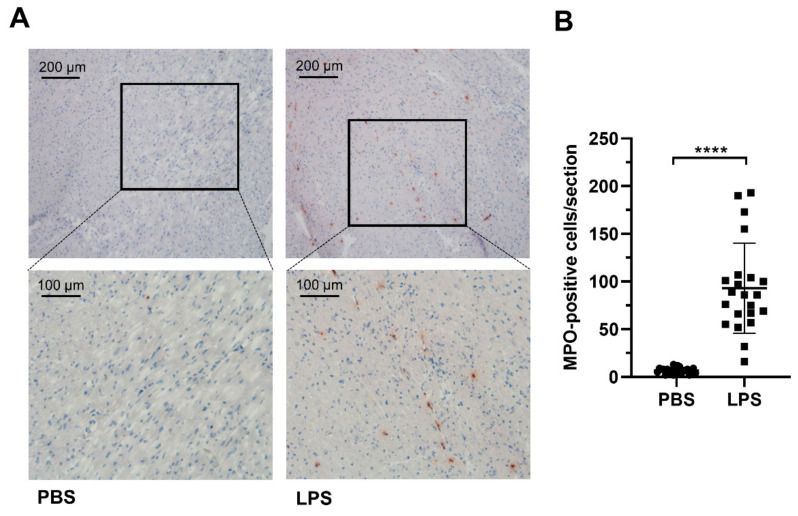
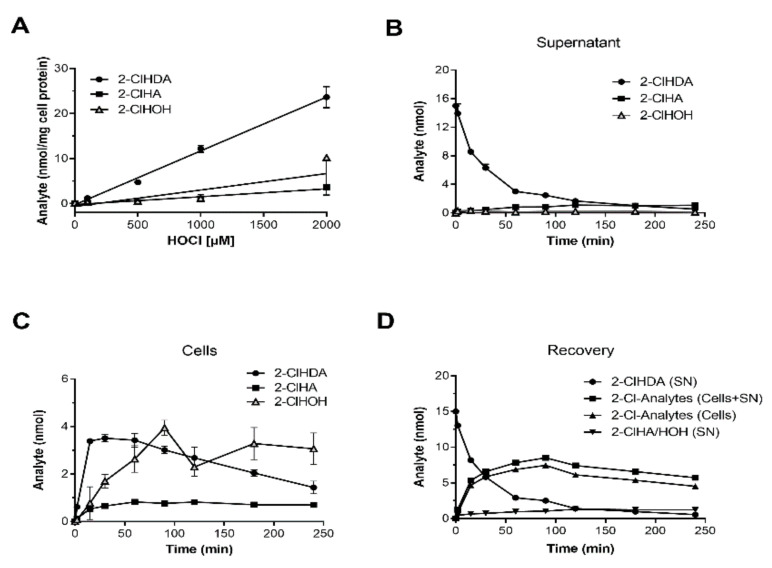
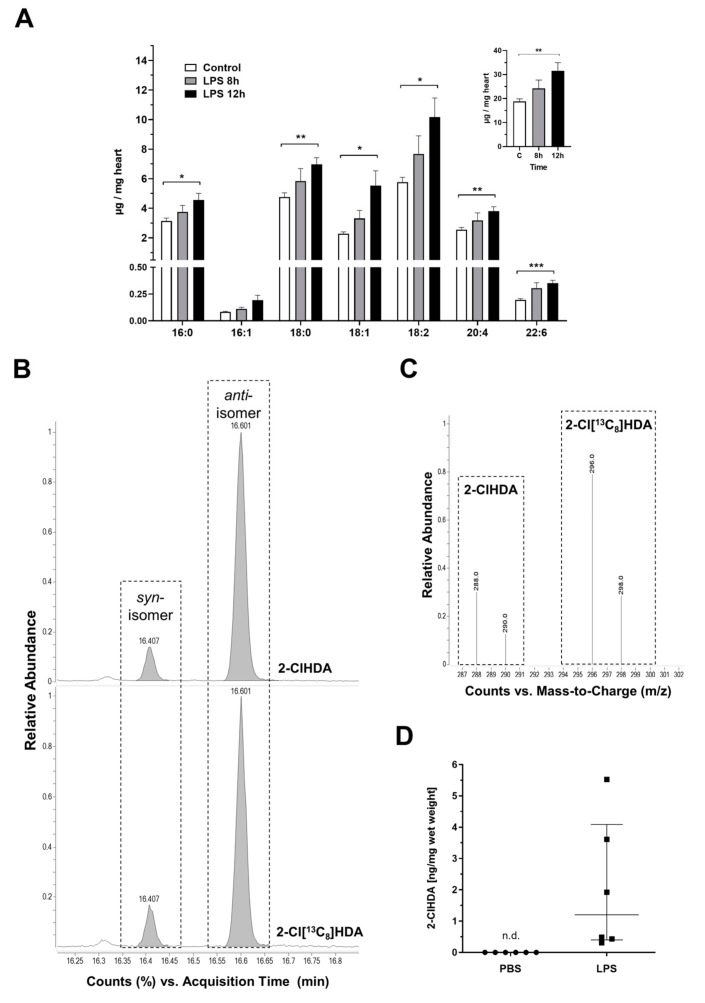
Sepsis is a major cause of mortality in critically ill patients and associated with cardiac dysfunction, a complication linked to immunological and metabolic aberrations. Cardiac neutrophil infiltration and subsequent release of myeloperoxidase (MPO) leads to the formation of the oxidant hypochlorous acid (HOCl) that is able to chemically modify plasmalogens (ether-phospholipids) abundantly present in the heart. This reaction gives rise to the formation of reactive lipid species including aldehydes and chlorinated fatty acids. During the present study, we tested whether endotoxemia increases MPO-dependent lipid oxidation/modification in the mouse heart. In hearts of lipopolysaccharide-injected mice, we observed significantly higher infiltration of MPO-positive cells, increased fatty acid content, and formation of 2-chlorohexadecanal (2-ClHDA), an MPO-derived plasmalogen modification product. Using murine HL-1 cardiomyocytes as in vitro model, we show that exogenously added HOCl attacks the cellular plasmalogen pool and gives rise to the formation of 2-ClHDA. Addition of 2-ClHDA to HL-1 cardiomyocytes resulted in conversion to 2-chlorohexadecanoic acid and 2-chlorohexadecanol, indicating fatty aldehyde dehydrogenase-mediated redox metabolism. However, a recovery of only 40% indicated the formation of non-extractable (protein) adducts. To identify protein targets, we used a clickable alkynyl analog, 2-chlorohexadec-15-yn-1-al (2-ClHDyA). After Huisgen 1,3-dipolar cycloaddition of 5-tetramethylrhodamine azide (N-TAMRA) and two dimensional-gel electrophoresis (2D-GE), we were able to identify 51 proteins that form adducts with 2-ClHDyA. Gene ontology enrichment analyses revealed an overrepresentation of heat shock and chaperone, energy metabolism, and cytoskeletal proteins as major targets. Our observations in a murine endotoxemia model demonstrate formation of HOCl-modified lipids in the heart, while pathway analysis in vitro revealed that the chlorinated aldehyde targets specific protein subsets, which are central to cardiac function.
脓毒症是危重病患者死亡的主要原因,并与心功能障碍有关,这是一种与免疫和代谢异常有关的并发症。中性粒细胞浸润心脏并随后释放髓过氧化物酶 (MPO) 导致形成氧化剂次氯酸 (HOCl),后者能够化学修饰大量存在于心脏中的溶血磷脂(醚磷脂)。该反应产生包括醛和氯代脂肪酸在内的反应性脂质种类。在本研究中,我们测试了内毒素血症是否会增加小鼠心脏中 MPO 依赖性脂质氧化/修饰。在注射脂多糖的小鼠心脏中,我们观察到 MPO 阳性细胞的浸润明显增加,脂肪酸含量增加,并形成 2-氯十六醛(2-ClHDA),这是 MPO 衍生的溶血磷脂修饰产物。使用小鼠 HL-1 心肌细胞作为体外模型,我们表明,外加的 HOCl 攻击细胞内的溶血磷脂池,并形成 2-ClHDA。将 2-ClHDA 添加到 HL-1 心肌细胞中会导致转化为 2-氯十六烷酸和 2-氯十六烷醇,表明脂肪酸醛脱氢酶介导的氧化还原代谢。然而,只有 40%的恢复表明形成了不可提取的(蛋白质)加合物。为了鉴定蛋白质靶标,我们使用了可点击的炔基类似物 2-氯十六-15-炔-1-醛(2-ClHDyA)。在 Huisgen 1,3-偶极环加成 5-四甲基罗丹明叠氮化物(N-TAMRA)和二维凝胶电泳(2D-GE)之后,我们能够鉴定出与 2-ClHDyA 形成加合物的 51 种蛋白质。基因本体富集分析显示,热休克和伴侣、能量代谢和细胞骨架蛋白的过度表达是主要靶点。我们在内毒素血症小鼠模型中的观察结果表明,心脏中形成了 HOCl 修饰的脂质,而体外途径分析表明,氯代醛针对特定的蛋白质亚群,这些蛋白质是心脏功能的核心。